Is PrEP Free? Entitlements and Access to HIV Prevention Medicine in Thailand
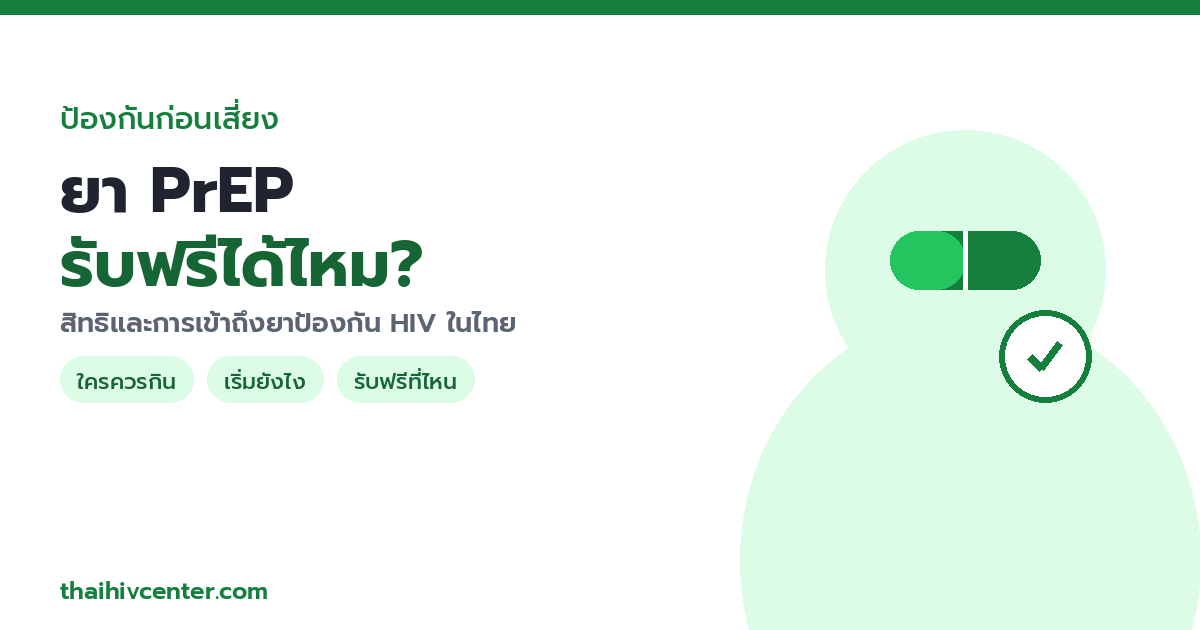
HIV prevention today has more effective options, one of which is PrEP — pre-exposure prophylaxis — which greatly reduces the chance of HIV infection when taken correctly and consistently. A common question is is PrEP free, and how to access it. The good news is that in Thailand, PrEP services are available at many places, and entitlements help eligible people get the medicine at no cost. This article explains what PrEP is, who should consider it, how to start, what to test, and where to access it, so you can decide to care for yourself with confidence.
What is PrEP and why it prevents HIV
PrEP stands for Pre-Exposure Prophylaxis — taking antiretroviral medicine to prevent HIV before a risk occurs. The medicine builds a protective level in the body, so if HIV enters, it cannot establish and multiply. PrEP differs from PEP in that PrEP is taken continuously in advance, not after a risk. When taken correctly and consistently, PrEP is highly effective at preventing sexual transmission. However, PrEP only prevents HIV, not other STIs or pregnancy, so it should be used with other protection as appropriate. Read the basics in what PrEP is.
Is PrEP free
In Thailand, PrEP is supported as part of national HIV prevention, so there are channels through which eligible people can get the medicine at no cost via related entitlements and programs. Access may vary by location and conditions; some services are offered through specialized clinics or community services working directly on HIV. The thing to do is ask a clinic or service whether they offer PrEP and which entitlements apply, because staff will help assess and advise the approach that fits you. Having PrEP accessible makes HIV prevention something anyone at risk can actually do. For more on cost, read how much PrEP costs.
Who should consider PrEP
PrEP suits people with ongoing risk of HIV.
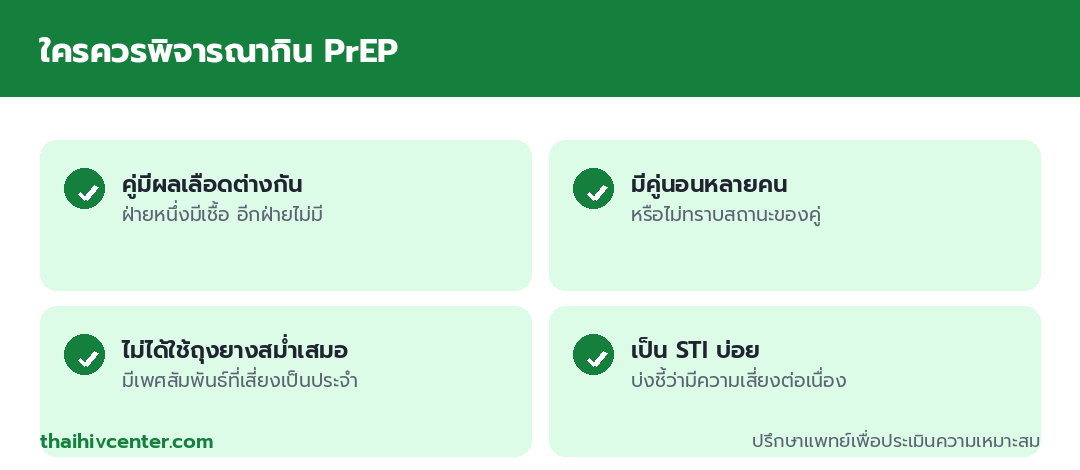
Groups to consider include people with a serodifferent partner — one positive, one negative — people with multiple partners or unknown partner status, people who don't use condoms consistently, people with frequent STIs indicating ongoing risk, and people who use drugs with sex. However, the decision to take PrEP should be made with a doctor to assess suitability and each person's risk. Read more in who should take PrEP.
Steps to start PrEP
Starting PrEP has a safe and straightforward process.
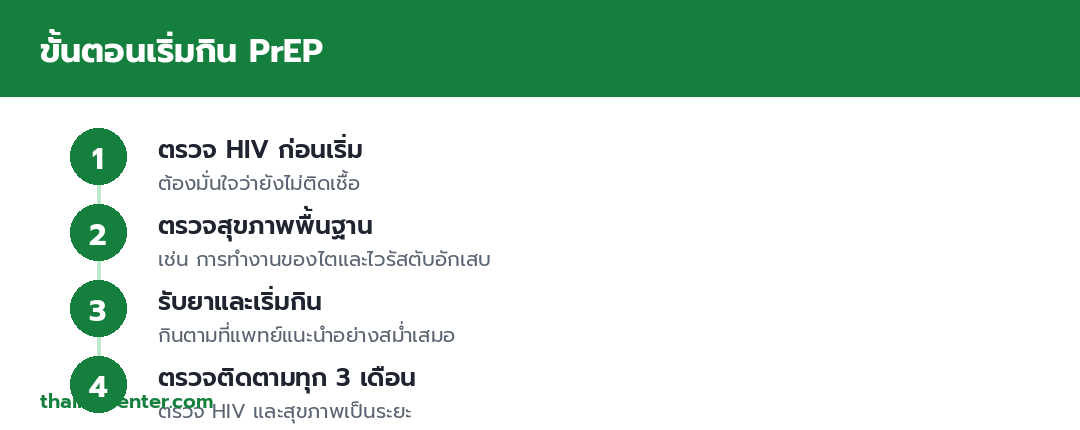
First, always test for HIV before starting, to confirm you are not infected, because PrEP is only for people who are HIV-negative. Second, basic health checks such as kidney function and hepatitis testing, for safe use. Third, receive and start the medicine as the doctor advises. Finally, follow up periodically, generally every 3 months, to retest for HIV and monitor health. Regular follow-up is an important part of using PrEP safely. You can find a clinic near you to start consulting.
Daily PrEP vs event-based PrEP
PrEP has two main dosing forms suiting different lifestyles.
| Aspect | Daily PrEP | Event-based PrEP (2-1-1) |
|---|---|---|
| How to take | Every day, one pill | Before and after sex per the schedule |
| Suits | People with regular risk | People with occasional sex (as advised by a doctor) |
| Pros | Continuous protection, no planning | Fewer pills when risk is infrequent |
| Caution | Must take daily consistently | Must time the schedule correctly |
Which to choose should be discussed with a doctor, as it depends on each person's behavior and suitability. Read more in daily vs event-based PrEP.
Side effects and safety
PrEP is a very safe medicine when used under medical supervision. Some people may have mild side effects early on, such as nausea, headache, or fatigue, which usually improve as the body adjusts. Health checks before starting and follow-up ensure safe use. If side effects are bothersome, consult a doctor rather than stopping on your own. Read more in PrEP side effects.
How PrEP differs from PEP
Many confuse PrEP and PEP. The key difference is that PrEP is taken continuously in advance for people with regular risk, while PEP is emergency medicine taken after a risk within 72 hours, for a specific unplanned event. If you already had a risk and are not on PrEP, promptly consider emergency PEP. And treatment once infected uses antiretrovirals, which are also free under coverage. Read more in free ARV under coverage.
Frequently asked questions
How effective is PrEP at preventing HIV
When taken correctly and consistently, PrEP is highly effective at preventing sexual transmission, but it must be taken as advised.
Can I skip condoms while on PrEP
PrEP only prevents HIV, not other STIs or pregnancy, so using condoms too is still beneficial.
Do I take PrEP forever
Not necessarily — take it during periods of risk; when risk decreases you can stop as advised by a doctor.
What do I test before starting PrEP
You must test for HIV to confirm you are negative, and have basic health checks such as kidney function, before starting.
Summary
PrEP is highly effective HIV prevention when taken correctly and consistently. In Thailand, services are accessible and entitlements help eligible people get it at no cost. People with ongoing risk should consider consulting a doctor to start PrEP, testing for HIV and basic health first, with follow-up every 3 months. PrEP only prevents HIV, so use it with other protection and periodic sexual-health testing. If interested in starting PrEP, find a clinic near you to consult and assess.