Free HIV Antiretrovirals (ARV) in Thailand: Coverage, Cost, and How Treatment Works
A common worry for people newly diagnosed with HIV is the cost of treatment. Many wonder whether HIV antiretrovirals (ARV) are expensive. The good news is that in Thailand, people with HIV can access antiretrovirals free under the main coverage schemes, so HIV treatment is not the huge financial burden many assume. This article explains under which schemes ARV is free, how to enter care, why starting early matters, and the U=U concept that has changed lives — so you or someone close to you can access care with confidence.
What are HIV antiretrovirals (ARV)
Antiretrovirals (ARV) are a group of medicines that control HIV in the body by blocking the virus from multiplying, lowering the viral level until it is undetectable. ARVs do not remove the virus entirely but help the immune system recover and stay strong. People who take ARVs consistently can be healthy and live close to a normal lifespan. Modern ARV treatment is often a single combination pill taken once a day, making it more convenient than in the past. The key is to take it continuously for life without missing doses.
Is ARV really free
The answer is yes. In Thailand, HIV antiretrovirals are included in the health coverage benefit package, so Thai nationals with HIV can receive the medicine at no cost through the three main coverage schemes.
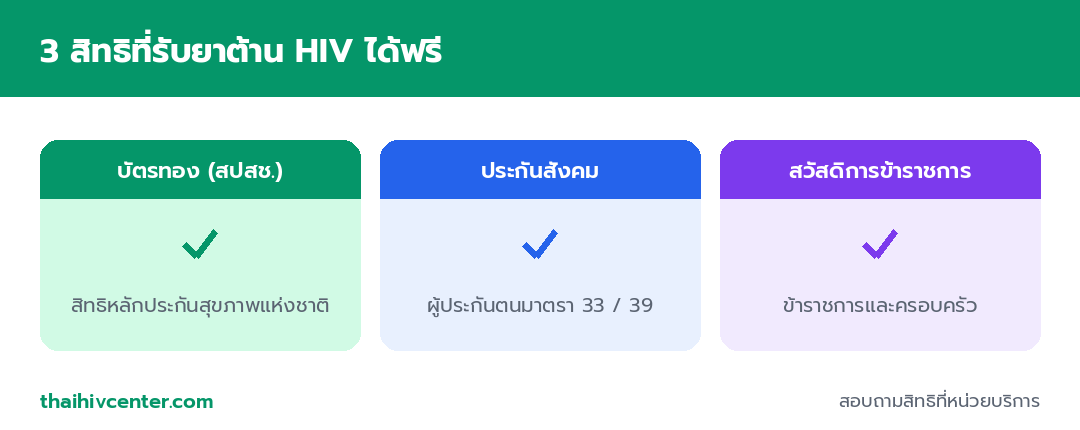
The first is the Gold Card (NHSO), or Universal Coverage, which covers most Thai people without other coverage. The second is Social Security, for insured workers who contribute. The third is Civil Servant benefits, for government officials and their families. All three cover HIV treatment, including ARVs and monitoring. People with HIV should check which scheme they belong to and contact a supporting facility. If unsure, ask a hospital or an HIV clinic.
Steps to enter treatment
Once diagnosed, entering care is easier than expected — and the sooner the better.
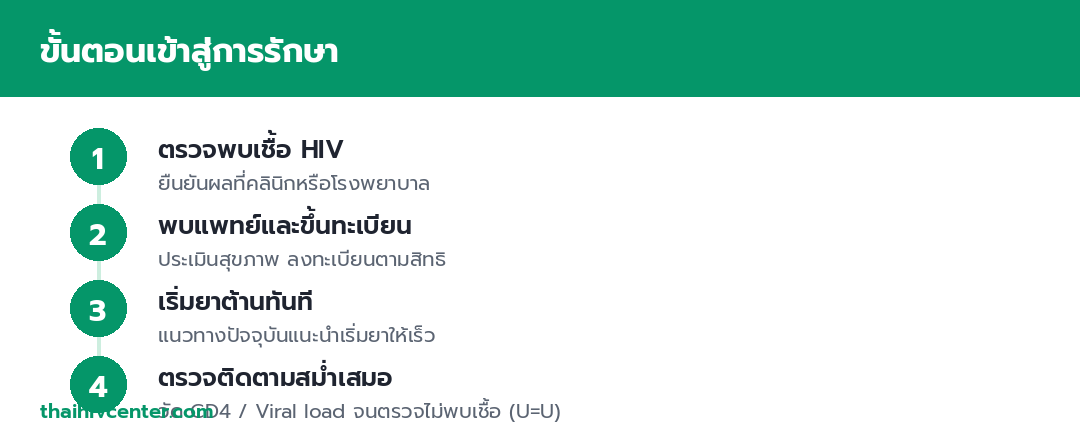
Start by getting tested and confirmed at a clinic or hospital. Then see a doctor to assess your health and register for treatment under your scheme. Next, the doctor starts ARVs — current guidance recommends starting soon after diagnosis, without waiting for the immune system to decline. Finally, monitor regularly, such as measuring viral load and immune level (CD4), to see that treatment is working well. To start, you can find a clinic near you to consult and enter care.
Why start ARV early
Current HIV treatment guidance emphasizes starting ARVs as early as possible after diagnosis, regardless of immune level. Early start has several benefits: it lowers the viral level quickly, protects the immune system from damage, reduces the risk of complications, and lowers the chance of transmitting to others. Starting early also helps people regain health and quality of life sooner. So there is no reason to wait — if diagnosed, enter treatment right away.
U=U: undetectable = untransmittable
A life-changing concept is U=U, which stands for Undetectable = Untransmittable. It means that when a person with HIV takes ARVs consistently until the viral level in the blood is undetectable, they cannot transmit HIV sexually. This finding is confirmed by extensive research and helps reduce stigma, letting people with HIV have relationships, families, and live confidently. ARV treatment is therefore not only about one's own health but also effective prevention. Read more in what U=U is.
Side effects and adjustment
Newer ARVs have far fewer side effects than in the past. Some people may have mild symptoms early on, such as nausea, headache, dizziness, or vivid dreams, which usually improve as the body adjusts within a few weeks. If side effects are bothersome, consult a doctor about adjusting the regimen — do not stop on your own, because stopping or missing doses can cause drug resistance and make control harder. Taking the medicine on time and consistently is the heart of treatment.
What are CD4 and Viral Load
To monitor treatment, doctors check two key values.
| Value | What it tells you |
|---|---|
| CD4 | Immune level — higher is better, showing the body's strength |
| Viral Load | Amount of virus in the blood — lower is better; the goal is undetectable |
When viral load drops to undetectable and CD4 rises, treatment is working well. So people with HIV should always attend follow-up monitoring.
What to do if you miss a dose
If you miss a dose, take it as soon as you remember — unless it is nearly time for the next dose, in which case skip the missed one and take the next as usual. Don't take two doses at once to make up. Occasional misses may not matter much, but frequent missed doses raise the risk of resistance. If you miss often, find reminders such as alarms or an app, and consult your doctor if you have trouble taking the medicine.
Frequently asked questions
Can all Thai people get free ARV
Thai nationals with HIV can get free ARV through the Gold Card, Social Security, or Civil Servant benefits, according to their scheme.
Do I take ARV for life
Yes, you must take it continuously for life to control the virus; stopping lets the virus rise again.
Can I have children while on ARV
Yes — with good viral control (U=U) and planning with your doctor, you can have children while greatly reducing transmission to the baby.
Do I wait for low CD4 before starting ARV
No, current guidance recommends starting as early as possible after diagnosis, regardless of CD4.
Summary
In Thailand, people with HIV can receive antiretrovirals free under the Gold Card, Social Security, and Civil Servant benefits. Entering care is straightforward, and starting early keeps you healthy and reduces transmission. With U=U, people on treatment who are undetectable do not transmit HIV sexually. HIV treatment today lets people live with quality of life. If you or someone close to you wants to start, find a clinic near you to consult and enter care.