Who Should Use PrEP? Check Whether PrEP Is Right for You
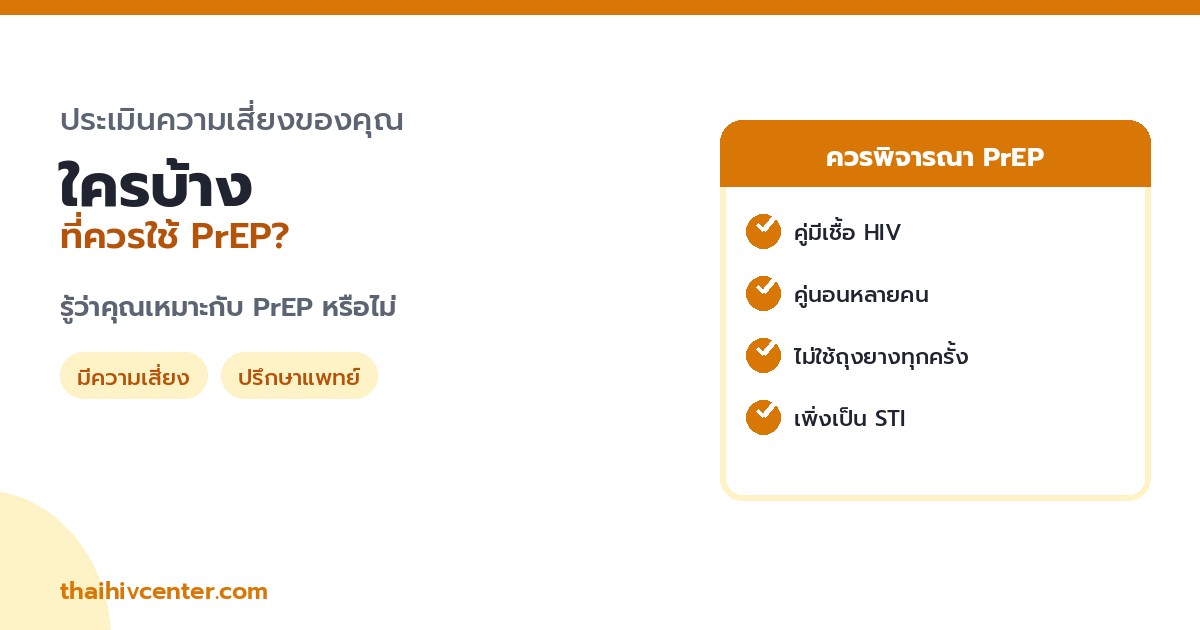
A common question after learning what PrEP is: who should take PrEP? PrEP is not necessary for everyone, but suits people at risk of HIV exposure. This article helps you assess whether you are in a group that should consider PrEP, explaining each situation, a summary table, and what to know before deciding, so you can care for your health in a way that fits you.
Who is PrEP for
In principle, PrEP suits people who are not yet infected with HIV but have a chance of exposure from their behavior or life situation. The higher and more ongoing the risk, the more beneficial PrEP is. However, the decision to use it should go through a risk assessment with a clinician or staff, because everyone's context differs. If you are unsure what PrEP is, read the basics in what PrEP is.
Groups who should consider PrEP
The following are situations worth considering PrEP for.
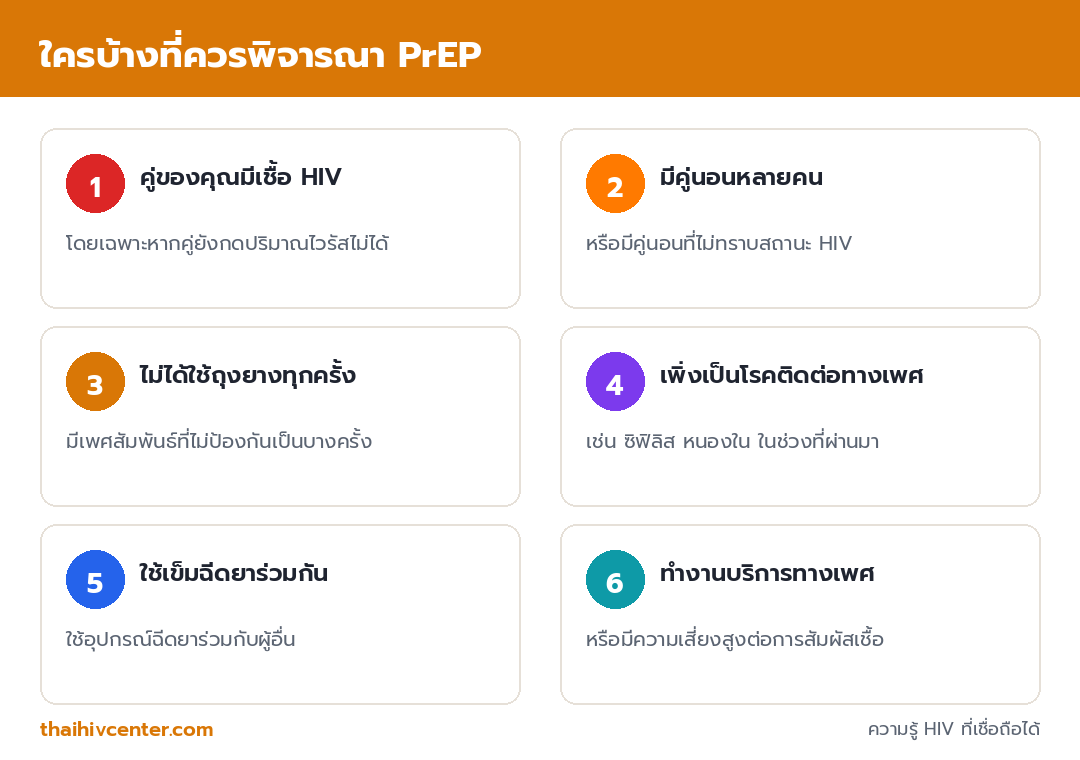
- Your partner has HIV, especially if they are not yet virally suppressed (still detectable).
- You have multiple partners or partners whose HIV status you do not know.
- You do not use condoms every time — occasionally have unprotected sex.
- You recently had an STI such as syphilis or gonorrhea, which indicates risk.
- You share needles or injecting equipment with others.
- You do sex work or have a high risk of frequent exposure.
A summary table of situations to consider PrEP
The table below summarizes various situations with initial advice to make assessment easier.
| Situation | Initial advice |
|---|---|
| Partner has HIV and is not yet suppressed | Consult to start PrEP |
| Multiple partners / unknown partner status | Consider it |
| Do not use condoms every time | Consider it |
| Recently had an STI | Consult |
| Share needles/injecting equipment | Consult |
| Have used emergency PEP often | Consider PrEP instead of relying on PEP |
Who may not need PrEP
Conversely, some people may not yet need PrEP if they have no risk of exposure at this time.
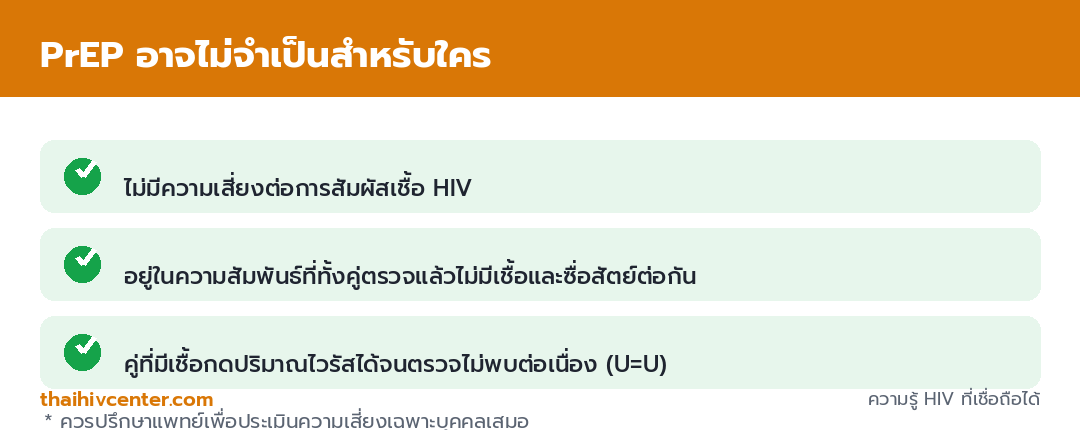
For example, people with no risk of exposure, those in a relationship where both tested negative and are faithful, or cases where a partner has HIV but is consistently virally suppressed (under U=U, which is not transmitted through sex). Read more in what U=U is. However, risk can change over the course of life, so review it periodically with a clinician.
How to know whether PrEP is right for you
The best way is to consult a clinician or health worker to assess your individual risk. Assessment usually considers your sexual behavior, the number and status of partners, condom use, STI history, and other factors. Before starting PrEP, you must test for HIV to confirm you are not infected, with periodic follow-up. This assessment ensures you get advice that fits your actual risk.
PrEP and specific groups
PrEP can be used in many groups, including young people at risk (under appropriate conditions and care) and serodifferent couples (one has HIV, the other does not) planning to have children, where PrEP reduces the risk of infection while trying to conceive. In all cases, care by a clinician helps you use PrEP safely and appropriately for your situation.
What to do if you think PrEP is right for you
If you assess that you have a risk and are interested in PrEP, the next step is to see a clinician or a clinic that provides it, for HIV testing, a health assessment, and advice on the dosing form that suits you. You can find a clinic that provides PrEP and testing near you, and see more prevention overview in PrEP.
Frequently asked questions
How much risk do I need to have to use PrEP
There is no fixed threshold. If you have a risk of HIV exposure even occasionally, consult a clinician for an assessment.
Do people who use condoms every time still need PrEP
Condoms already protect well, but some may choose PrEP as well for extra confidence, especially with high risk.
Can women use PrEP
Yes. Daily PrEP works for all genders; women at risk can use it for prevention.
Can under-18s use PrEP
Yes, in some cases with appropriate assessment and care. Consult a clinician about the conditions.
Summary
PrEP suits people at risk of getting HIV — such as those with an HIV-positive partner, multiple partners, inconsistent condom use, or a recent STI. Assessing your risk with a clinician helps you know whether PrEP is right for you. If you think you have a risk and are interested in PrEP, find a clinic near you to start assessing and caring for yourself with confidence.