
HIV testing: the complete guide
Everything you need to know about HIV testing — the types of test, accuracy, the window period, where to go, free and anonymous options, and how to read your results.
Why get tested for HIV
Testing is the only way to know your HIV status for sure, because early infection usually has no symptoms. Waiting for symptoms is not a safe option.
The benefits of testing
- A negative result brings peace of mind and lets you plan prevention, such as PrEP
- A positive result means treatment can start early, which supports good health and prevents onward transmission
The sooner the better
An early diagnosis opens the door to treatment that stops the disease from progressing and reduces transmission to others. Testing is the most important first step in both prevention and care.
Who should test and how often

HIV testing is for everyone who is sexually active, not just one particular group.
Test if you
- have had condomless sex or a new partner
- share needles or injecting equipment
- have another sexually transmitted infection
- have a partner who has HIV
- are pregnant or planning a pregnancy
How often to test
People with an ongoing risk should test regularly, for example every 3 to 6 months, while those at lower risk may test when something changes. See how to lower your risk at HIV prevention.
Testing is routine
Testing for HIV is a normal part of looking after your sexual health, not something to be ashamed of. Regular testing keeps you informed and lets you plan in good time.
The types of HIV test
There are several kinds of HIV test, differing in what they look for and how early they can detect infection.
The main types
- Antibody tests look for the antibodies the body makes
- Antigen/antibody tests (4th generation) look for both antigen and antibodies and detect HIV sooner
- Nucleic acid tests (NAT) look for the virus itself and detect it earliest
Rapid and blood-draw tests
A rapid test uses a fingertip sample and gives a result in about 20 minutes, while a venous blood test is usually sent to a laboratory. Read the detail and how to choose at types of HIV test.
Match the method to your situation
The right method depends on how recent your risk was and how much convenience you want. A test that detects HIV sooner suits a recent risk, while a self-test kit offers privacy and convenience.
The window period
One of the most important things about testing is the window period.
What the window period is
It is the time after exposure when a test may still miss an infection, because the body has not made enough antibodies or the viral load is not yet high. Testing too early can give a negative result even when a person has HIV.
When to test
The window period varies by method. A 4th-generation test usually detects HIV at around 2 to 4 weeks, but a repeat test at 90 days gives added certainty. If you are unsure, plan around the guidance at the window period.
Where you can get tested

Thailand has many places to test for HIV — public, private, and community services.
You can test at
- public and private hospitals
- specialist sexual-health clinics
- community organisations and friendly clinics
- at home with a self-test kit
Choose what suits you
Many services are free and anonymous, and some offer counselling before and after the test. See a list of places and how to choose at where to get tested, or find and book a clinic at Love2Test.
Free and anonymous testing
Many people worry about cost and privacy, and there are options for both.
Free testing
Thai nationals can test for HIV free of charge twice a year at public hospitals under the national health scheme, and community organisations also offer free testing.
Anonymous testing
Some services offer anonymous testing that does not require your real name, helping people who are concerned about privacy to get tested. See the detail at free and anonymous testing.
HIV self-testing
HIV self-test kits let you test privately at home.
How they work
A self-test uses a fingertip blood sample or oral fluid and gives you a result within a few minutes. They suit people who want privacy or find it hard to reach a service.
What to know
- follow the kit instructions carefully
- the window period applies just as it does to other tests
- a positive result must always be confirmed at a health service
Read how to use and choose a kit at HIV self-testing.
Preparing for a test and what happens
Testing for HIV is easier and quicker than many people expect.
Preparing
- no fasting or special preparation is needed
- bring ID if you are using free testing, or choose a service that tests anonymously
- have the details of your risk and your most recent exposure ready to discuss with staff
What usually happens
Many services offer counselling before the test, then take a blood or oral-fluid sample and give the result with advice. The whole process is usually quick.
There is nothing to fear
Many people feel anxious before testing, but the process itself is quick and staff are there to support you. Knowing your result, whatever it is, is always better than not knowing.
Understanding your results
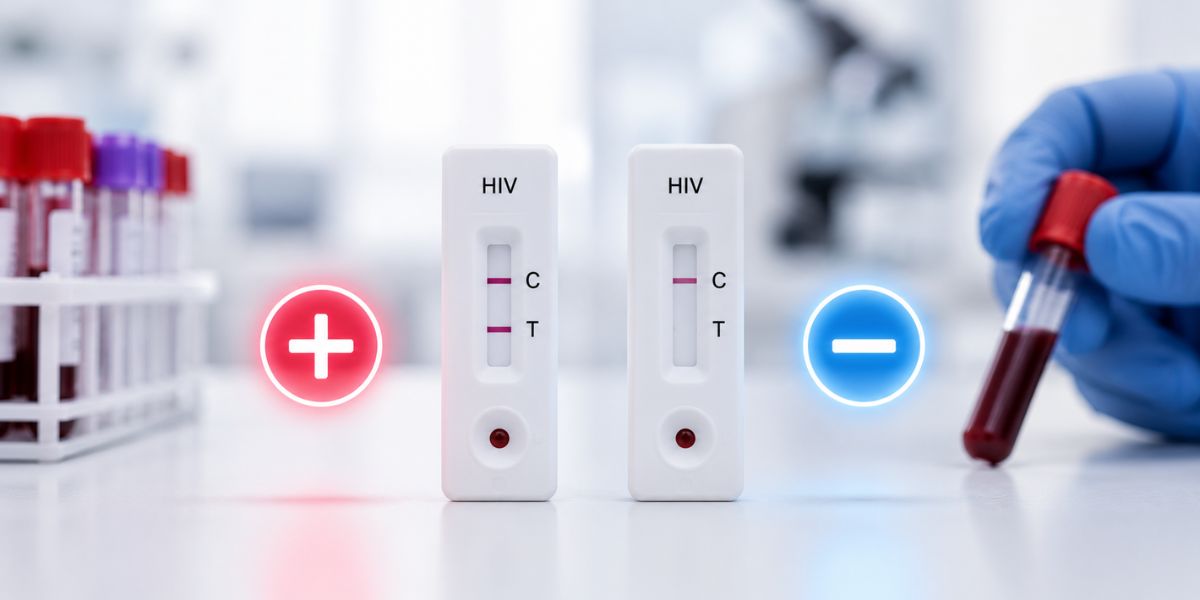
Understanding what a result means helps you know what to do next.
What the results mean
- A negative (non-reactive) result means no HIV was found, but the window period matters if your exposure was recent
- A positive (reactive) result means something suggesting infection was found, and it must be confirmed with a follow-up test
A positive result is not the end
A confirmed positive result means the start of care that keeps you healthy and living a normal life. Read the detail on results at understanding HIV test results.
If in doubt, test again
If your result is negative but your risk was recent and within the window period, test again as advised. A repeat test confirms your status with confidence.
After your results
Your result opens the way to the next step, whether that is prevention or care.
If your result is negative
Plan ongoing prevention, such as PrEP, condoms, and regular testing. If you had a risk within the last 72 hours, ask about PEP right away.
If your result is positive
Start antiretroviral treatment soon, which controls the virus, gives a life expectancy close to everyone else, and means no sexual transmission once undetectable. Read about treatment at antiretroviral therapy.
The cost of testing
The cost of an HIV test varies by service and by method.
The cost options
- Free for Thai nationals at public hospitals twice a year, and at some community organisations
- Paid at private clinics or for specialised tests, which are often faster and more convenient
Worth the peace of mind
Whichever you choose, testing is an investment in your own health. See price details at the cost of HIV testing.
Testing is a worthwhile investment
Set against the benefits — peace of mind, prevention, and early treatment — the cost of testing is well worth it, and free options are available for those who need them.
In summary
Testing is the only way to know your HIV status for sure. There are many options, from clinic tests to self-test kits, and many services are free and anonymous. The key is to choose a time that fits the window period.
Whatever the result, testing opens the way to the next step. A negative result leads to better prevention, while a positive one leads to treatment that keeps you healthy and prevents transmission.
Do not wait for symptoms. If you have had a risk or are unsure of your status, testing is the most important first step. Find and book a clinic at Love2Test.
References
Based on guidance from international and national health authorities.