
What is HIV?
Video: understanding HIV
A clear, stigma-free guide to HIV — transmission, symptoms, testing, treatment and prevention, all in one place.
What HIV is
HIV stands for Human Immunodeficiency Virus. It is a virus that directly attacks the immune system, and its main target is a type of white blood cell called the CD4 cell, which acts like a 'general' that directs the immune response against infection. When HIV enters the body, it gets inside CD4 cells and uses their machinery to make more copies of itself, steadily lowering the CD4 count and weakening immunity over time.
Why CD4 cells matter
A healthy person has a CD4 count of roughly 500–1,500 cells per cubic millimetre. When HIV lowers CD4 below 200, the body becomes vulnerable to opportunistic infections — infections that usually cause no harm in people with a strong immune system. Finding HIV and starting treatment early helps protect the CD4 count and prevent complications.
How HIV differs from ordinary viruses
The body clears most viruses, like a common cold, on its own. But HIV is a retrovirus that inserts its own genetic material into a cell's DNA, so the body cannot fully remove it. However, modern antiretroviral medicines control the virus very effectively, letting people with HIV stay healthy and live a near-normal lifespan. HIV is no longer the frightening illness it once was — it is a manageable long-term condition.
How it is diagnosed and monitored
HIV is diagnosed with a blood test — it cannot be told from how someone looks or feels. After a diagnosis, clinicians track viral load and the CD4 count over time to see how well treatment is working. The goal is to suppress the virus to undetectable levels and keep the immune system strong.
HIV vs AIDS
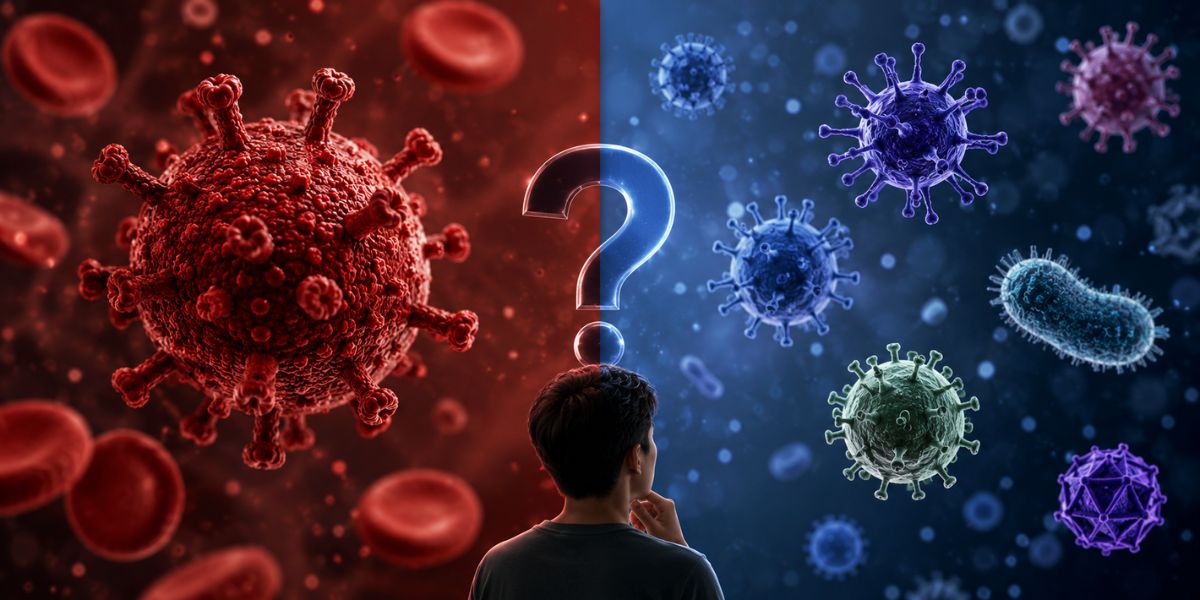
Many people use HIV and AIDS interchangeably, but they are not the same. HIV is the virus, while AIDS (Acquired Immunodeficiency Syndrome) is the late stage in which the immune system is severely damaged after going untreated. Having HIV does not mean you have AIDS, and most people who stay on treatment will never progress to AIDS at all.
When is it called AIDS
Clinicians diagnose AIDS when a person with HIV has either of the following:
- A CD4 count below 200 cells per cubic millimetre
- An opportunistic infection or certain cancers that signal severe immune damage
From the past to today
Before effective medicines existed, HIV often progressed to AIDS and death. But since effective antiretrovirals became available, HIV has become a manageable long-term condition. People who are diagnosed and treated early today can expect a near-normal lifespan and never reach the AIDS stage. Learn more at HIV vs AIDS and stages of HIV.
How HIV is transmitted
HIV is passed only through certain body fluids: blood, semen (including pre-ejaculate), vaginal and rectal fluids, and breast milk. For infection to occur, these fluids must enter the bloodstream or contact a mucous membrane — such as in the vagina, rectum, penis, or mouth.
The most common routes
- Condomless sex, both vaginal and anal, is the most common route
- Sharing needles or injecting equipment that may carry contaminated blood
- Mother to child during pregnancy, birth, or breastfeeding (almost entirely preventable when the mother is treated properly)
Factors that raise risk
Risk rises with another untreated STI, multiple partners, or no protection. Conversely, using condoms, taking PrEP, and a partner with HIV having an undetectable viral load (U=U) all greatly reduce risk.
Risk in specific situations
- Needlestick injuries among healthcare workers carry low risk, and PEP can prevent infection
- Blood transfusions today carry very low risk because blood is screened
- Tattoos, piercings, or sharing sharp tools that are not sterilised are rare routes but worth caution
See the how HIV is transmitted page for details.
How HIV is not transmitted
Misunderstandings about how HIV spreads are a major driver of stigma. In reality, HIV is not passed through everyday contact, so living, working, or spending time with someone who has HIV is completely safe.
Things that do NOT transmit HIV
- Hugging, shaking hands, or ordinary touch
- Kissing (saliva does not spread HIV)
- Sharing toilets, swimming pools, dishes, cutlery, or drinking glasses
- Coughing, sneezing, sweat, or tears
- Mosquito or insect bites
- Donating or receiving screened blood
Why myths persist
Myths about HIV often carry over from old information, from a time when the disease was poorly understood. Unfounded fear leads to prejudice and discrimination, which are major barriers that keep people from testing or seeking care. Sharing accurate information and treating people with HIV with understanding is part of ending the epidemic — and helps build a more accepting society.
Symptoms and stages
Untreated HIV moves through three stages. The key point to understand is that symptoms alone can neither confirm nor rule out infection — only a blood test can tell for sure.
Stage 1: Acute infection
About 2–4 weeks after exposure, some people develop flu-like symptoms such as fever, sore throat, body aches, swollen glands, or a rash. These usually pass within 1–2 weeks. At this stage the viral load is very high and HIV is easily transmitted — yet many people have no symptoms at all.
Stage 2: Clinical latency (no symptoms)
The virus then enters a quiet phase that can last for years. People often feel well and have no symptoms, but HIV keeps damaging the immune system slowly and can still be passed on. This is why regular testing matters so much — many people do not know they have HIV.
Stage 3: AIDS
Without treatment, the immune system is eventually damaged enough for opportunistic infections to appear. Starting antiretrovirals at any stage helps the immune system recover.
When you should test
Do not wait for symptoms. Test for HIV if you have had condomless sex, a new partner, shared needles, or another STI — and test routinely if your risk is ongoing. See HIV symptoms and stages of HIV.
Window period and testing
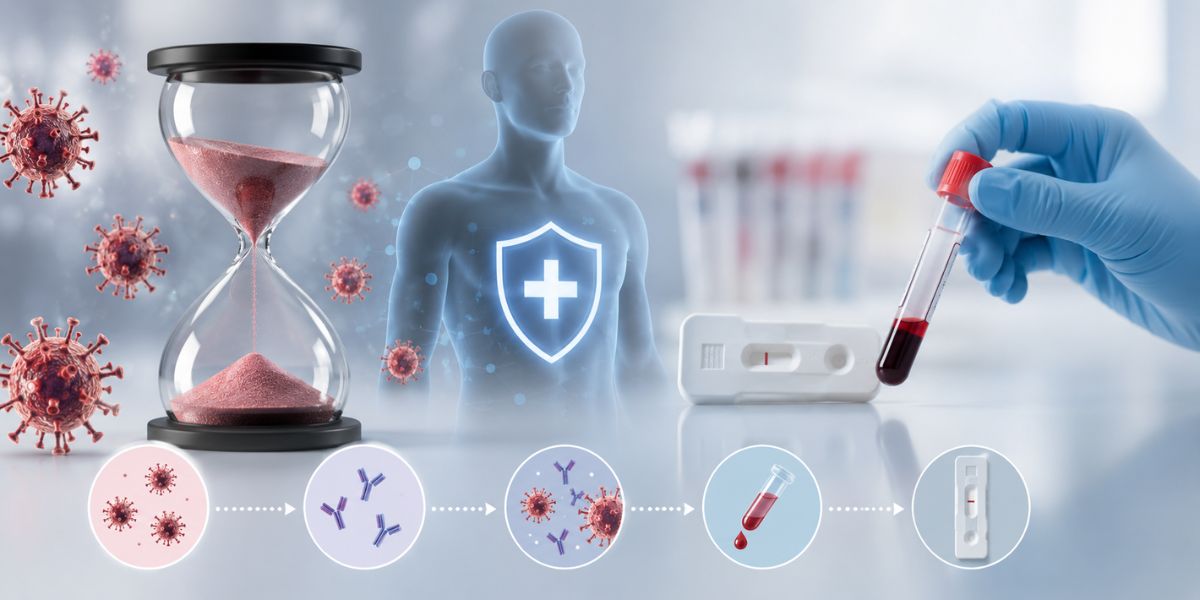
Testing is the only way to know your status for certain, but you need to understand the window period — the time after exposure when the body has not yet produced enough of what a test detects, so a result can be negative even though HIV is present. This period depends on the test type.
Test types and timing
- NAT (detects viral genetic material) — earliest, at about 10–14 days
- 4th-generation antigen/antibody test — about 2–4 weeks
- Rapid test / antibody self-test — may take up to about 3 months
Where to test, and is it free
You can test at public and private hospitals, specialist clinics, community organisations, or with a self-test kit. Thai nationals can test for HIV free twice a year under universal coverage, and many sites offer anonymous testing.
What your result means
- A negative (non-reactive) result means no HIV was detected — but make sure the window period has passed
- A positive (reactive) screening result must always be confirmed with a more specific test
- Self-test kits are convenient and private; if positive or after a recent risk, confirm at a health facility
A positive result is not the end — it is the start of treatment that lets you live normally. Learn more at HIV testing and window period.
Treatment with antiretrovirals
HIV treatment today is highly effective. Its foundation is antiretroviral therapy (ART) — medicine taken to keep the virus from multiplying.
How antiretrovirals work
ART blocks the steps the virus uses to replicate, lowering the amount of virus in the blood (viral load) to undetectable levels within a few months. Once the virus is suppressed, the immune system recovers and the CD4 count rises again.
Modern regimens are simple and safe
- Most are single combined pills taken once a day
- Side effects are far milder than with older medicines
- Any early side effects usually settle as the body adjusts
Staying on treatment is the key
Taking the medicine every day is the single most important thing. Stopping on your own lets the virus rebound and can cause drug resistance. Starting early gives the best long-term health.
Monitoring and access in Thailand
Clinicians check viral load regularly to confirm treatment is working. Helpful habits include taking the pill at the same time each day and setting reminders. In Thailand, HIV care including antiretrovirals is covered under the universal coverage, social security, and civil-servant schemes. Read HIV treatment and antiretrovirals (ART).
U=U and living well
One of the most important advances in HIV is the concept of U=U (Undetectable = Untransmittable).
What U=U means
When a person on treatment keeps their viral load undetectable consistently (generally for at least six months), they cannot pass HIV on sexually to a partner, even without condoms. This is backed by several large studies that recorded zero transmissions when the viral load was undetectable.
What about condoms
U=U covers preventing HIV transmission only. Condoms still help protect against other STIs and pregnancy, so many people choose to use both. The right choice depends on each person's situation.
Living life to the full
U=U is life-changing. People can have relationships, have sex, and have children with confidence. Those on consistent treatment can work, study, exercise, and live like anyone else. Looking after mental health and having support matters just as much as taking medicine. See what U=U means and living with HIV.
Prevention: PrEP, PEP and condoms

Today there are many effective ways to prevent HIV. Using several together — combination prevention — gives the best protection.
PrEP — protection before exposure
PrEP is medicine taken before a possible exposure to prevent HIV in advance. Taken consistently, it is up to 99% effective against sexual transmission. It comes as a daily option and an on-demand option, and suits people with ongoing risk.
PEP — emergency medicine after exposure
PEP is emergency medicine used after a possible exposure. It must start within 72 hours (the sooner the better) and continue for 28 days. If you have just had a risk, go to a health facility right away.
Who should consider PrEP
- People with an HIV-positive partner who is not yet undetectable
- People with multiple partners or partners of unknown status
- People who recently had an STI
- People who use condoms inconsistently, or who share injecting equipment
Condoms and testing
- Condoms protect against HIV and other STIs
- Regular testing and treatment to an undetectable viral load (U=U) also prevent transmission
- Not sharing injecting equipment reduces risk
See the full overview at HIV prevention.
HIV and other STIs
HIV is one of the sexually transmitted infections (STIs) and is often linked to others. Understanding this connection helps you look after your sexual health fully.
Why other STIs raise HIV risk
Having another STI, such as syphilis, gonorrhoea, or herpes, can cause sores or inflammation in mucous membranes, giving HIV an easier way into the body — for both acquiring and passing it on. So testing and treating STIs is part of HIV prevention.
Common STIs and warning signs
- Common ones include syphilis, gonorrhoea, chlamydia, herpes, and HPV
- Signs to watch for include unusual discharge, sores, bumps, itching, or pain when urinating
- But many STIs have no symptoms, so testing is the only way to be sure
Test for them together
When you test for HIV, it is wise to test for other STIs too, especially if you have had a risk. Many STIs are curable with medicine, and some are vaccine-preventable. Learn more at sexually transmitted infections.
Take the first step today
Whether you are worried about a risk, want to protect yourself in advance, or simply want to understand HIV better, it all starts with accurate information and a test to know your status.
Simple next steps
- Test for HIV — it takes only a few minutes and is free for Thai nationals
- If your risk is ongoing, consider PrEP
- If you had a risk within 72 hours, ask about PEP urgently
- If HIV is found, start treatment as early as possible
What to expect when you test
HIV testing is confidential, takes just a few minutes, and includes counselling before and after. You do not have to face this alone — community organisations and health helplines are there to support you if you feel anxious or need help.
When you are ready, you can book a test and find a clinic that suits you. Knowing your status is the first step toward prevention and long-term health — and whatever the result, we now have the full toolkit of prevention and treatment so everyone can live with confidence.
References
Based on guidance from international and national health authorities.