What Is PrEP? How It Prevents HIV — Everything to Know Before Starting
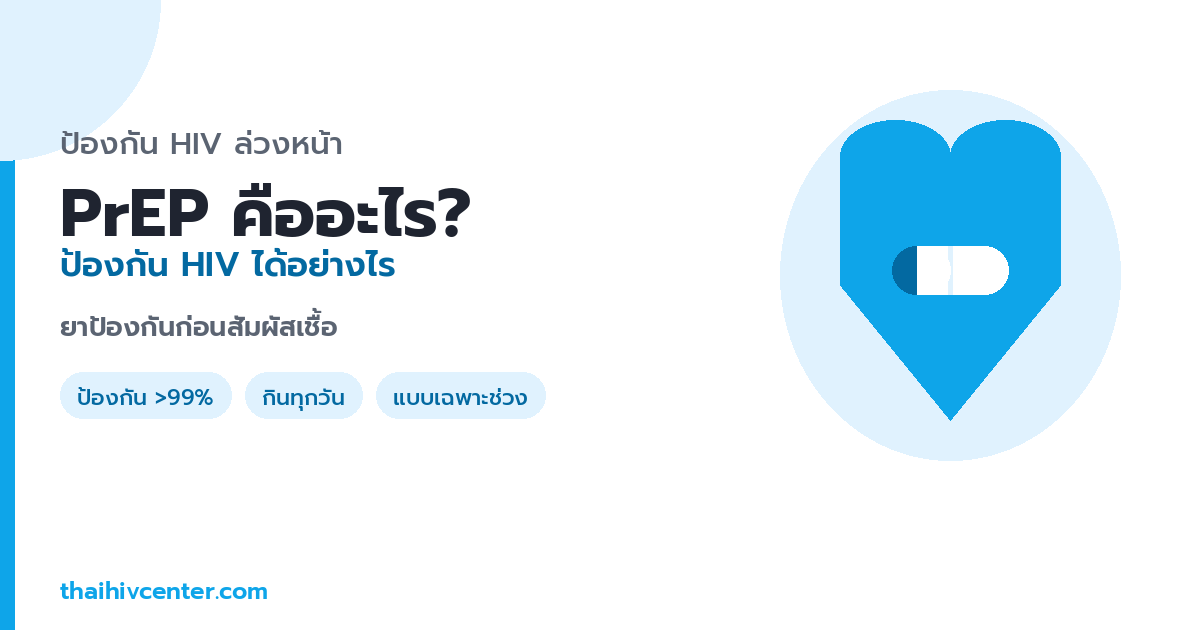
PrEP is one of the most effective and increasingly popular ways to prevent HIV. Many have heard the name but are unsure what PrEP is, how it prevents HIV, and who it suits. This article explains PrEP fully — from how it works and its effectiveness to dosing forms and what to know before starting — so you can decide how to protect yourself with confidence.
What is PrEP
PrEP stands for Pre-Exposure Prophylaxis. It is an antiretroviral medicine that people who are not yet infected with HIV take to prevent infection in advance. The idea is that when there is enough medicine in the body before a risk, it blocks HIV from establishing itself and multiplying. PrEP is therefore like a protective shield for people at risk of infection.
How PrEP prevents HIV
How PrEP works is easy to understand in three steps.
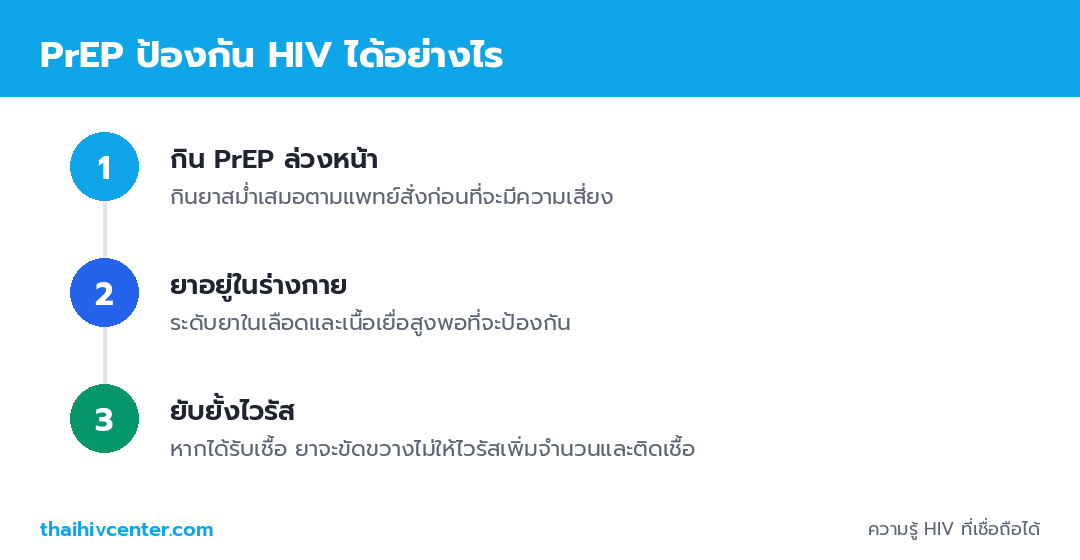
When you take PrEP consistently, the medicine level in your blood and tissues is high enough to protect you. If the virus enters, the medicine blocks the process it uses to multiply, so it cannot establish a permanent infection. Consistency is the key to effectiveness.
How effective is PrEP
When taken correctly and consistently, PrEP can reduce the risk of getting HIV from sex by more than 99%, which is very high. However, effectiveness drops if taken inconsistently or missed often, so taking it as advised matters. Also, PrEP protects only against HIV, not other STIs, so using condoms as well is still worthwhile.
How many forms of PrEP are there, and how do you take them
Currently oral PrEP has two main forms, suited to different behaviors.
| Form | How to take | Suited to |
|---|---|---|
| Daily | One tablet every day, continuously | People with ongoing risk, all genders |
| On-demand (2-1-1) | 2 tablets 2–24 hours before sex, then 1 at 24 hours and 1 at 48 hours | Men who have sex with men who have sex infrequently |
Which form to choose should be discussed with a clinician or staff to suit your behavior and risk. Read more about on-demand dosing in On-Demand PrEP.
What to know before starting PrEP
Before and during PrEP, there are important things to know for safety and maximum effectiveness.
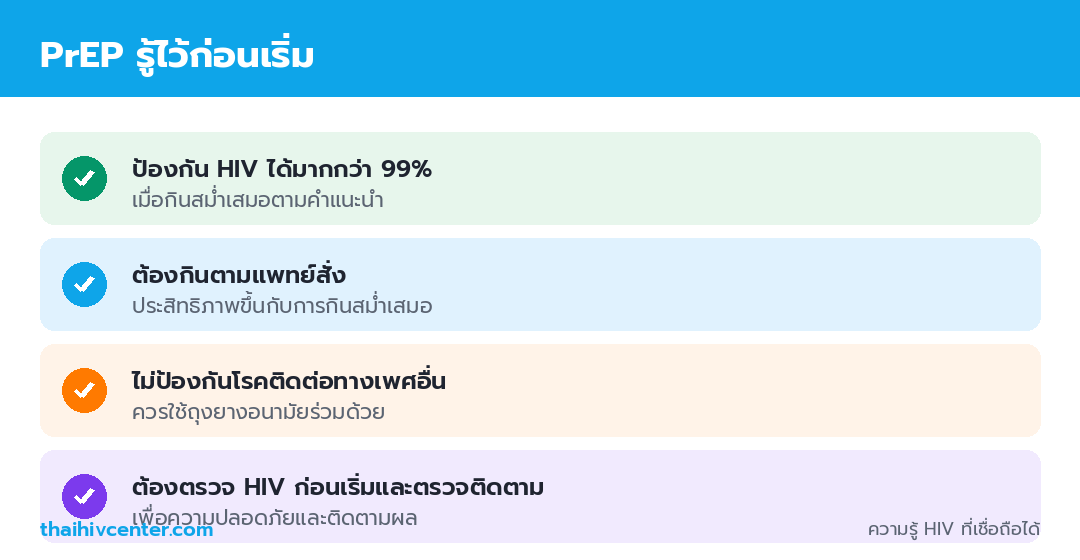
- Test for HIV first, because PrEP is only for people who are not yet infected.
- Have periodic follow-up, generally every 3 months, for HIV testing and health checks.
- Take it consistently — effectiveness depends on taking it as advised.
- It does not protect against other STIs, so use condoms as well.
- Side effects are usually mild — some have minor early symptoms that improve on their own.
Who should consider PrEP
PrEP suits people at risk of getting HIV — such as those with multiple partners, those whose partner has HIV, or those who do not use condoms every time. However, the decision to use it should go through a consultation with a clinician to assess individual risk. See an overview of prevention in PrEP.
Where can you start PrEP
You can start PrEP at hospitals, specialized clinics, and many community clinics across the country, with HIV testing and a health assessment before starting. To find a place that provides PrEP and testing, you can search for a clinic near you, and always test for HIV before starting. Read about testing in HIV testing.
How PrEP differs from other prevention methods
PrEP is just one of several ways to prevent HIV and works well alongside others. Unlike condoms, which protect against both HIV and other STIs, PrEP protects only against HIV — but has the advantage of not depending on use during sex. PEP is emergency medicine used after exposure, while PrEP is used continuously for prevention in advance. Using PrEP together with condoms therefore gives protection covering both HIV and other STIs.
Common myths about PrEP
There are several myths about PrEP worth correcting. Some believe PrEP is only for certain groups, but in fact anyone at risk can consider it. Some worry PrEP makes people neglect other protection, but in practice PrEP usually comes with regular health checks and counseling, which helps users care for their sexual health better. In addition, PrEP used under medical supervision is very safe for long-term use.
Frequently asked questions
How do PrEP and PEP differ
PrEP is taken before a risk to prevent in advance, while PEP is emergency medicine taken after exposure within 72 hours.
Can I skip condoms if I take PrEP
PrEP protects very well against HIV but not other STIs, so using condoms as well is still worthwhile.
Does PrEP have side effects
Most side effects are mild — some have minor early symptoms that improve on their own. Consult a clinician if you have symptoms.
Do I have to take PrEP for life
Not necessarily — take it during periods of risk, and you can stop when risk decreases, in consultation with a clinician.
Summary
PrEP is pre-exposure medicine that prevents HIV, over 99% effective when taken consistently. It comes in daily and on-demand forms and suits people at risk, requiring an HIV test before starting and periodic follow-up. If you are interested in starting PrEP or want advice, find a clinic near you for guidance and start protecting yourself with confidence.