
HIV prevention: all your options
Every way to prevent HIV — condoms, PrEP, PEP, and U=U — and how to choose and combine them to fit your risk and lifestyle.
What are the HIV prevention options
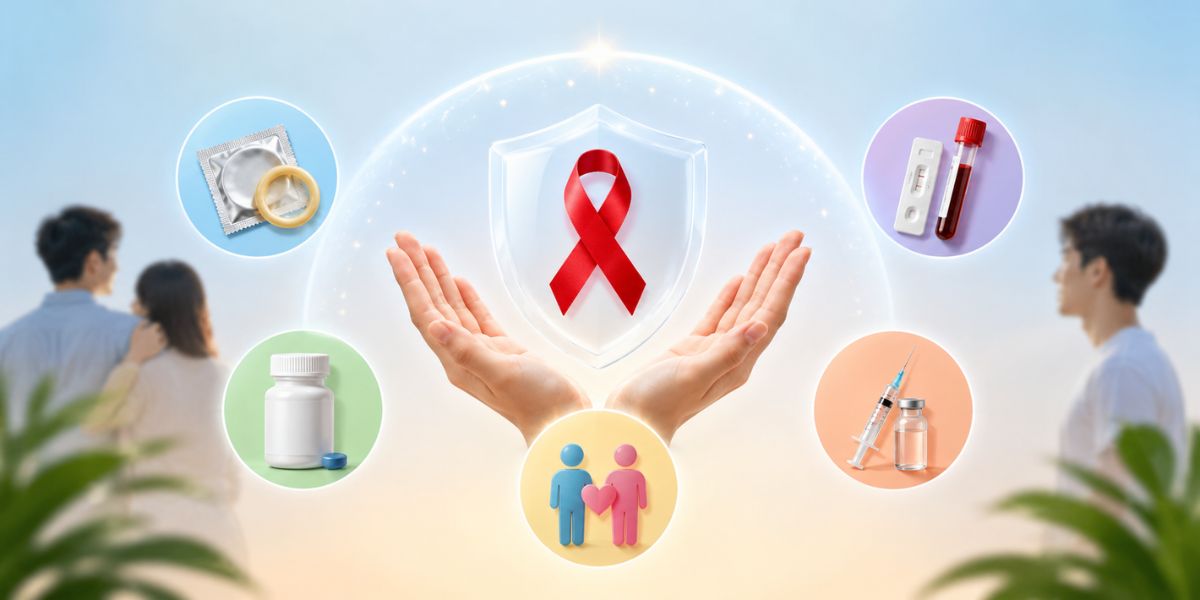
HIV prevention today offers a wide range of highly effective options — not just one method. Knowing all of them helps you choose what fits your life.
The main prevention tools
- Condoms protect against HIV and other sexually transmitted infections
- PrEP is medicine taken before exposure for people at risk
- PEP is emergency medicine within 72 hours of a risk
- U=U means a person on treatment with an undetectable viral load does not pass HIV on
- Regular testing to know your status and plan
They work together for the strongest protection
These methods are not either-or; many people combine several for the strongest protection. This page walks through each one in detail.
Condoms
Condoms are the most accessible HIV prevention method and an essential foundation — you can use them right away with no prescription.
Why condoms matter
- they are highly effective against HIV when used correctly and consistently
- they are the only HIV prevention method that also protects against other STIs and pregnancy at the same time
- they are easy to find and inexpensive
Using them effectively
- choose a size that fits and check the expiry date
- use water-based or silicone-based lubricant, not oil-based
- put one on from start to finish every time
There are external condoms and internal (female) condoms. Read how to use them and tips at condoms.
Condoms still matter even with PrEP
Even if you use PrEP, condoms are still useful, because PrEP only prevents HIV and does not protect against other STIs or pregnancy. Using condoms as well gives more complete protection.
PrEP: medicine before exposure
PrEP (pre-exposure prophylaxis) is taking antiretroviral medicine to prevent HIV before exposure, for people who do not have HIV but are at risk.
How well PrEP works
When taken consistently, PrEP is highly effective at preventing sexual HIV transmission — a powerful option for people with an ongoing risk.
Ways to take it
- Daily — one pill every day
- On-demand — for some groups, on advice; read about on-demand PrEP
What to know
See who PrEP suits at who should take PrEP, find services at where to get PrEP, and possible side effects at PrEP side effects, or read the full overview at what is PrEP.
PEP: emergency medicine
PEP (post-exposure prophylaxis) is emergency medicine used after a possible exposure to HIV.
It must start within 72 hours
PEP must start as soon as possible, within 72 hours of exposure, and continue for 28 days. The sooner it begins, the better it works; after that its effectiveness drops sharply.
When to use PEP
- a condom broke or slipped during sex
- condomless sex with someone who may have HIV
- sexual assault
- accidental contact with blood or sharing a needle
If you are in one of these situations, do not wait. Read the detail at what is PEP and see where to get it at where to get PEP.
PEP is not routine prevention
PEP is only for emergencies, not a method to rely on regularly. If you often have a risk, PrEP is a better and more practical choice in the long run.
PrEP versus PEP
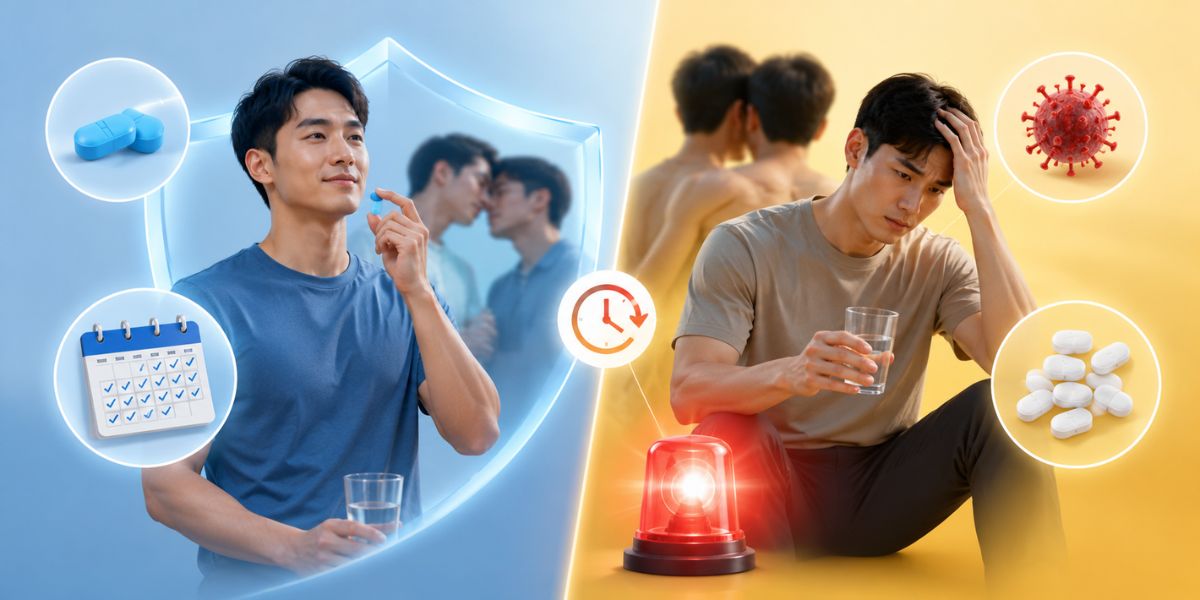
PrEP and PEP are both preventive medicines, but they are used at different times, which often causes confusion.
The difference is timing
- PrEP is taken before a risk, for people with an ongoing risk
- PEP is taken after a risk, as emergency prevention within 72 hours
Choose the right one for the situation
If you have a regular risk, PrEP fits better, but if you have just had an unexpected risk, PEP is the emergency option. Read a detailed comparison at PrEP versus PEP.
U=U: treatment as prevention
One of the most important advances in prevention is the principle of U=U (undetectable = untransmittable).
Treatment is prevention
A person with HIV who takes antiretroviral treatment until their viral load is undetectable does not pass HIV on sexually, which means treatment is itself a form of prevention.
Why it matters for everyone
U=U lets people with HIV have relationships and children safely, and it is a key reason why testing and early treatment are so valuable for prevention overall. Read the detail at U=U.
U=U reduces stigma
Beyond preventing transmission, U=U also reduces stigma, because it shows that people on treatment can live and have relationships safely.
Regular HIV testing
Regular HIV testing is a part of prevention that many people overlook.
Why testing is prevention
- it lets you know your own status and that of your partner
- if negative, it helps you plan prevention, such as starting PrEP
- if positive, it lets you start treatment early, which leads to U=U
How often to test
People with an ongoing risk should test regularly, for example every 3 to 6 months. Read all about testing at HIV testing: the complete guide.
Harm reduction for injecting
For people who inject drugs, harm reduction is an important way to prevent HIV.
The key principles
- do not share needles or injecting equipment
- use clean, new needles and equipment every time
- access needle and syringe programmes where they are available
Why it matters
Sharing needles lets infected blood enter the bloodstream directly, which carries a high risk. Harm reduction prevents infection and can connect people to other health services.
Reaching support services
Many areas have services that support people who inject drugs, providing clean equipment, testing, and referral to care. Reaching these services is an important step in looking after your health.
Treating other STIs
Looking after other sexually transmitted infections is also part of HIV prevention.
STIs raise the risk of HIV
Some STIs, especially those with sores such as syphilis or herpes, make it easier to acquire HIV, so testing for and treating STIs also lowers your HIV risk.
Test and treat early
Regular sexual-health check-ups and prompt treatment of STIs protect both you and your partner. Read about STIs at sexually transmitted infections.
Combination prevention
The most effective way to prevent HIV is often not a single method but combining several.
Combination prevention
- use condoms together with PrEP to cover both HIV and STIs
- use PEP in an emergency, even if you use other methods
- regular testing underpins all of them
Why combining is better
Each method has its own strengths, so using them together covers each other's gaps and adds confidence. You can adjust the mix to fit your own risk and lifestyle.
Adjust it over time
Your risk changes over time, and your prevention can change with it. You might use PrEP for one period and switch to another method later, as suits you.
Choosing what fits you
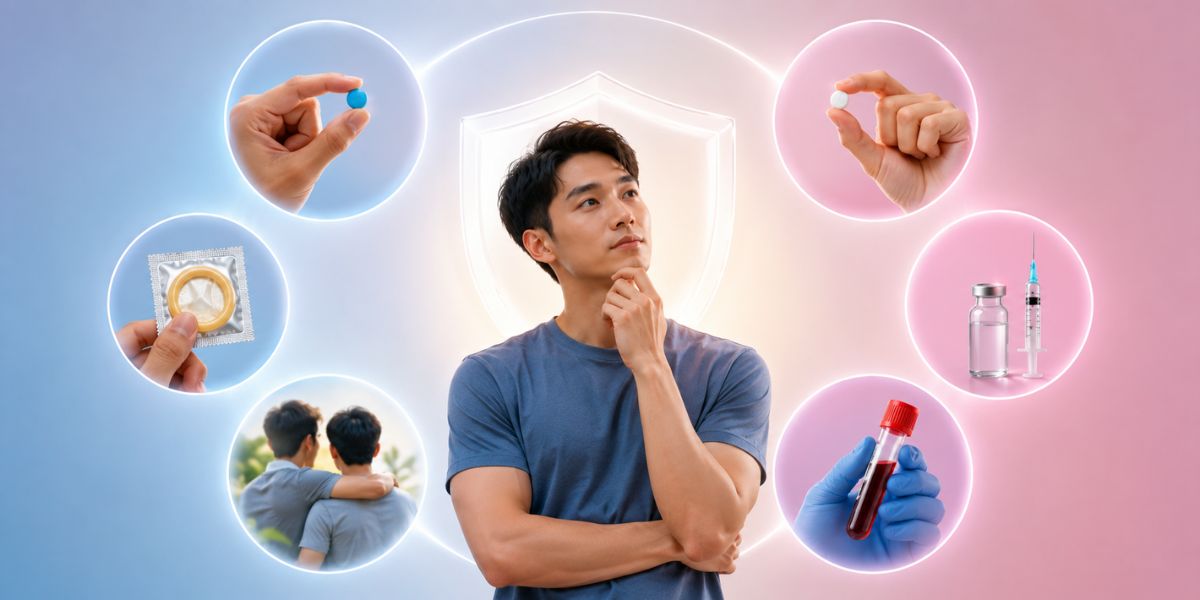
No single prevention method is best for everyone — what matters is choosing what fits you.
Questions that help you decide
- is your risk regular or occasional
- do you also want protection against STIs and pregnancy
- are you comfortable taking a daily pill
Ask for guidance
Health staff can suggest what suits you. See who PrEP suits at who should take PrEP, and start simply with condoms, which you can use right away.
In summary
HIV prevention today offers many effective options — from condoms, which are foundational and also protect against STIs, to PrEP for people with an ongoing risk, PEP for emergencies, the principle of U=U, regular testing, and harm reduction for injecting drug use.
The best approach is usually to combine several methods to fit your own risk and lifestyle. Whichever you choose, starting to protect yourself is looking after your own health and the people you care about.
If you want to start PrEP, test for HIV, or talk about prevention, find and book a clinic at Love2Test.
References
Based on guidance from international and national health authorities.