
The stages of HIV
The stages of HIV explained, from acute infection through the asymptomatic stage to AIDS, what CD4 and viral-load numbers mean, and how treatment stops the disease from progressing.
Overview of the stages

HIV infection is not a single fixed event — it moves through stages that reflect the ongoing struggle between the virus and the immune system. Understanding what each stage looks like shows why finding and treating HIV early can change the entire course of the disease.
The most widely used framework comes from the US Centers for Disease Control and Prevention (CDC), which describes three stages: acute infection, clinical latency (the asymptomatic stage), and AIDS. The World Health Organization uses a four-stage clinical system to help guide care. Both describe the same thing: how much the immune system has been damaged.
What determines the stage
- CD4 count — the number of the immune cells the virus destroys; the lower it is, the more the immune system has been harmed
- Viral load — the amount of virus in the blood; the higher it is, the easier HIV is to pass on and the faster it damages the immune system
- Treatment — staying on antiretroviral medicine stops the disease from progressing and keeps people out of the late stage
The key point to remember is that these stages describe what happens without treatment. On antiretroviral therapy, most people stay in a healthy stage and never progress to AIDS.
Knowing the stage still matters
Where care is available, most people are now diagnosed and treated long before the immune system is seriously harmed, so the later stages have become steadily less common. Knowing the stage still guides how urgently treatment and follow-up are needed and how closely health should be watched. Read the overview at what is HIV.
Stage 1: acute HIV infection
Acute infection is the first 2–4 weeks after exposure. During this window the virus multiplies rapidly and the amount of virus in the blood is very high, before the body has had time to build up antibodies.
Symptoms that may appear
Some people (not everyone) develop a group of symptoms called acute retroviral syndrome (ARS) that usually resemble the flu, such as:
- fever
- sore throat
- a rash
- swollen lymph nodes
- muscle aches and headache
- fatigue and night sweats
These symptoms usually settle within 1–2 weeks, which is why many people mistake them for a common cold and do not test. Read more at HIV symptoms.
Why this stage is the most infectious
Because the viral load is so high, acute infection is the stage when HIV is most easily passed on — often before the person even knows they have it.
Testing during this stage
In the earliest days an antibody-only test may still be negative because the body has not made enough antibodies yet. A NAT or a 4th-generation antigen/antibody test detects HIV sooner, so choose a method that fits the window period and see the types of test. If you had a risk within the last 72 hours, ask about PEP as soon as possible.
Stage 2: clinical latency (asymptomatic)
After the acute stage the body brings the virus partly under control. The viral load falls and stays at a lower level, and most people have no symptoms at all. This is why the stage is called clinical latency, or the asymptomatic stage.
How long this stage lasts
Without treatment it lasts about 10 years on average, but this varies a great deal — some people progress faster and others more slowly. Throughout this time the virus keeps damaging the immune system slowly, even without symptoms.
Is HIV still transmissible
Yes, without treatment HIV can still be passed on, even when the person feels completely well. Having no symptoms does not mean the virus has stopped working.
The role of treatment
If antiretroviral treatment starts during this stage, most people stay healthy for life and never progress to AIDS. Once the viral load is suppressed to undetectable, the person does not pass HIV on sexually — this is U=U.
Regular monitoring during this stage
Even without symptoms, people in this stage benefit from regular check-ups that track the CD4 count and viral load, so any change is caught early and treatment can be adjusted if needed. Read about the medicines at antiretroviral therapy.
Stage 3: AIDS
AIDS is the late stage of severe immune damage. It is not a different virus from HIV — it is the most advanced stage of the same infection. Today this stage is preventable with early diagnosis and treatment.
How AIDS is defined
Someone is considered to have reached AIDS when:
- their CD4 count falls below 200 cells per cubic millimetre, or
- they develop an AIDS-defining opportunistic infection or cancer, at any CD4 level
Opportunistic infections
When the immune system is very weak, the body becomes vulnerable to infections that do not usually cause illness in healthy people, such as:
- tuberculosis
- certain types of pneumonia
- fungal infections of the oesophagus or the lining of the brain
- some viral infections
Read the difference between the virus and the stage at HIV vs AIDS.
This stage is still treatable
Even when HIV is diagnosed at the AIDS stage, starting antiretroviral treatment can still let the immune system recover and bring the disease under control. Many people who begin treatment at this stage return to good health. See treatment options at HIV treatment.
What CD4 and viral load tell you
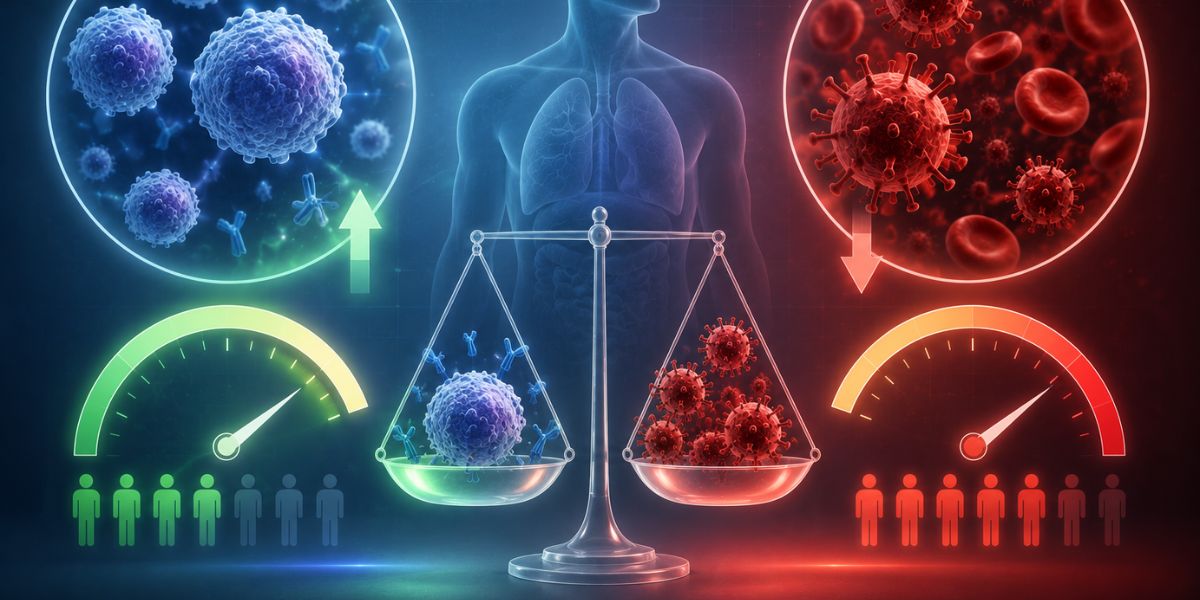
Two test results are used to track the stage and the response to treatment: the CD4 count and the viral load.
What the CD4 count is
CD4 cells are a type of white blood cell that HIV targets and that play a central role in the immune system. In a healthy person the CD4 count is usually somewhere between about 500 and 1,600. As HIV destroys these cells the count falls, and the lower it goes the higher the risk of opportunistic infections.
What viral load is
The viral load is the number of copies of the virus in the blood. It shows how actively the virus is multiplying. A high viral load means HIV is easier to pass on and is damaging the immune system faster.
What undetectable means
The goal of treatment is to suppress the viral load until it is undetectable, which not only improves health but also means HIV cannot be passed on sexually — this is U=U.
How often these are checked
After starting treatment, the viral load is usually checked within the first few months to confirm it is falling, and both the viral load and CD4 are then monitored at regular intervals to make sure treatment keeps working. Reading these results and follow-up numbers is explained at understanding test results and U=U.
The WHO clinical staging system
Alongside the CDC three-stage framework, the World Health Organization (WHO) uses a four-stage clinical system based on symptoms and conditions, to help clinicians guide care in settings where CD4 testing may not always be available.
- Clinical stage 1 — no symptoms
- Clinical stage 2 — mild symptoms, such as minor weight loss or repeated respiratory infections
- Clinical stage 3 — moderate symptoms, such as significant weight loss, chronic diarrhoea, or pulmonary tuberculosis
- Clinical stage 4 — severe, AIDS-defining conditions
Both the WHO and CDC systems describe the same thing — how much the immune system has been damaged — using different criteria. What they agree on is that starting treatment early gives the best outcome.
How HIV progresses without treatment
Without treatment, HIV slowly damages the immune system until it eventually reaches AIDS. The average time from infection to AIDS is around 10 years, but it varies widely.
Faster and slower progression
Some people progress faster than average, and others much more slowly. Factors that play a part include overall health, the strain of the virus, and other infections at the same time.
The key point
This timeline describes what happens only without treatment. In the era of effective antiretrovirals, most people who learn their status and start treatment never reach AIDS at all. That is why testing early matters so much. See how to test at HIV testing.
How treatment stops progression
Antiretroviral therapy (ART) has turned HIV from a disease that once progressed to death into a manageable long-term condition.
How the medicine works
Antiretrovirals stop the virus from multiplying, bringing the viral load down to undetectable and giving the CD4 count the chance to recover over time. The immune system grows stronger again.
What starting early achieves
- prevents progression to AIDS
- a life expectancy close to that of everyone else
- no sexual transmission once the viral load is undetectable
Starting early gives the best result, but starting at any stage is always worthwhile.
Staying on treatment matters
Today antiretrovirals are usually a single daily pill and are far easier to take than in the past. Taking them consistently is what keeps the viral load undetectable — missing doses can let the virus rebound, so support with staying on treatment is an important part of care. Read more at antiretroviral therapy and the overview at HIV treatment.
Stages versus symptoms
Many people try to guess which stage they are in from how they feel or what symptoms they have. But outward symptoms cannot tell you the stage of the disease.
Why symptoms are unreliable
- many people have no symptoms for years, even while the virus is still damaging the immune system
- acute-stage symptoms look like a common cold and have many possible causes
- feeling well does not mean you are free of the virus or in a safe stage
The only thing that shows the stage
The stage can only be assessed through a blood test with CD4 and viral-load results. If you are worried about a risk, do not wait for symptoms. Read about symptoms at HIV symptoms and get tested at HIV testing.
When and how often to test

Because the early stages often have no symptoms, testing is the only way to know your status and prevent progression to the late stage.
Test if you
- have had condomless sex or a new partner
- have shared needles or injecting equipment
- have another sexually transmitted infection
- have an ongoing risk — then test routinely
Choose a method and place
There are both clinic tests and self-test kits; choose a method that fits the window period. If you are not sure where to go, see where to get tested.
Testing early opens the door to treatment that stops the disease from progressing. You can find and book a testing clinic at Love2Test.
In summary
HIV moves through stages — from acute infection when the virus is high and easily passed on, through the asymptomatic stage that can last many years, to AIDS when the immune system is severely damaged. The CD4 count and viral load show how far the disease has progressed.
The most important point is that these stages describe what happens without treatment. With today's antiretrovirals, most people who know their status and start treatment never reach AIDS, stay healthy, and do not pass HIV on sexually once their viral load is undetectable.
If you have never tested or you have had a risk, testing is the most important first step. Find and book a clinic at Love2Test.
References
Based on guidance from international and national health authorities.