
How HIV is transmitted
The ways HIV actually spreads — the fluids and routes that carry it, the risk of different activities, and the everyday contact that never passes it on.
How HIV is transmitted — the basics
HIV can only be passed on when a body fluid carrying enough virus gets into another person's bloodstream or mucous membranes. It is not easily spread by everyday contact. Understanding this makes it clear what is a risk and what is not, and helps you decide with confidence when protection or testing is worthwhile.
What has to happen for transmission
For infection to occur, several things must line up:
- a fluid that can carry HIV must be involved — blood, semen, vaginal or rectal fluids, or breast milk
- that fluid must get into the body through a mucous membrane (rectum, vagina, penis, mouth), a break in the skin, or an injection
- there must be enough virus present, which is highest during acute infection and when a person is not on treatment
The most common routes
In practice the most common routes are condomless sex and sharing needles or injecting equipment. Other routes are far less common today. Read the basics at what is HIV.
Why understanding this matters
Understanding how HIV is and is not transmitted reduces unnecessary fear and the stigma faced by people living with HIV. It helps people feel able to test, to talk openly, and to reach prevention and treatment.
The body fluids that can carry HIV
Not every body fluid can pass on HIV. Only a few carry enough virus to matter, and it is the amount of virus in a fluid that makes one route a risk and another harmless.
Fluids that can carry HIV
- blood
- semen and pre-seminal fluid
- vaginal fluids
- rectal fluids
- breast milk
Fluids that do not transmit HIV
Saliva, sweat, tears, and urine do not pass on HIV — they do not carry enough virus to cause infection. This is why kissing, hugging, and everyday contact are safe. See the common myths at myths about HIV.
Why the fluid matters
What decides whether a fluid can transmit HIV is how much virus it contains. Blood and sexual fluids carry enough, while saliva or sweat carry far too little. Brief contact with a fluid on unbroken skin does not cause infection.
The main routes of transmission
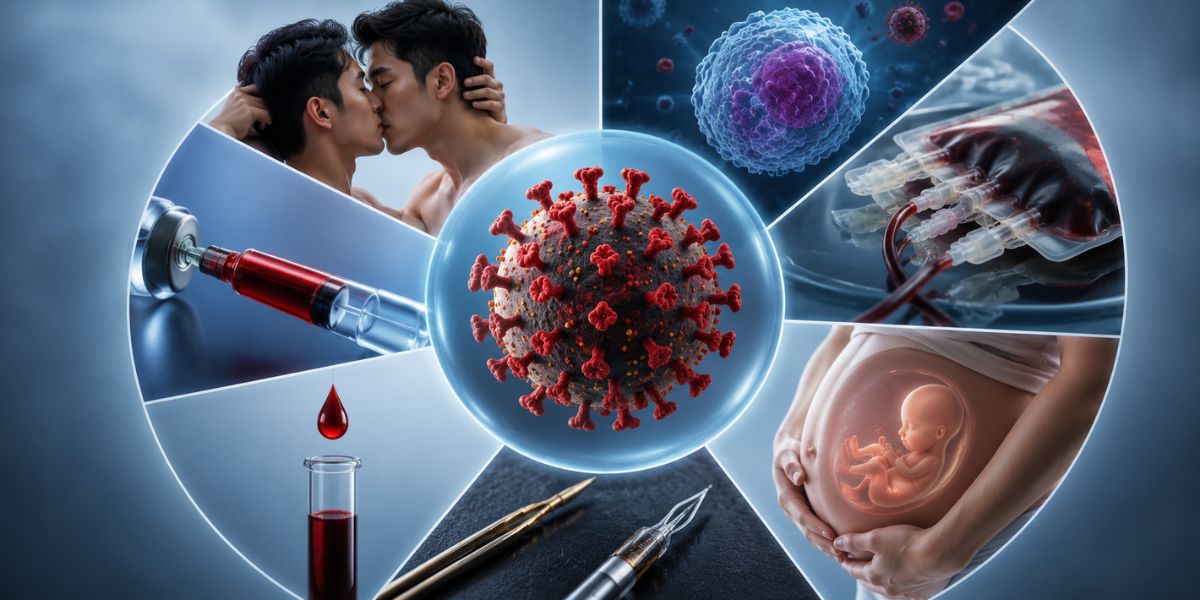
HIV spreads through only a few main routes.
Condomless sex
The most common route is anal or vaginal sex without a condom, where the virus passes through delicate mucous membranes. Risk by activity is covered below.
Sharing needles or injecting equipment
Sharing needles, syringes, or other injecting equipment lets infected blood enter the bloodstream directly, which carries a high risk.
Mother to child
A pregnant woman with HIV can pass it to her baby during pregnancy, birth, or breastfeeding, but this is almost entirely preventable with treatment. Read more at HIV and pregnancy.
Blood and blood products
Blood transfusions were once a route, but donated blood is now screened, so this risk is very low wherever blood is properly tested.
The routes in short
Overall, the routes that matter most today are condomless sex and sharing needles, and both can be prevented with the tools available. See the options at HIV prevention.
Risk by sexual activity
The risk of getting HIV depends on the type of sexual activity, on the role each partner takes, and on the condition of the tissue involved.
From higher to lower risk
- Receptive anal sex carries the highest risk, because the lining of the rectum is delicate and tears easily
- Insertive anal sex carries a lower but real risk
- Vaginal sex can transmit HIV to either partner
- Oral sex is very low risk, but not zero
What to keep in mind
Risk means the chance per act — it does not mean infection is certain or impossible. Using condoms and PrEP reduces these risks dramatically.
Per-act risk versus repeated exposure
Even when the risk from a single act looks low, repeated exposures raise the cumulative chance, and at the same time a single exposure can still transmit HIV. It is best not to rely on luck and to use prevention consistently.
What raises or lowers the risk
Several factors change the chance of transmission in any single instance.
What raises the risk
- Other sexually transmitted infections, especially those with sores such as syphilis or herpes, increase the chance of infection
- A high viral load, such as during acute infection or when someone is not on treatment
- Cuts or tears in a mucous membrane
What lowers the risk
- Condoms, used correctly
- PrEP, medicine taken before exposure
- U=U, when the person with HIV is on treatment and undetectable
- Not sharing needles
See all the prevention options at HIV prevention.
How HIV is not passed on
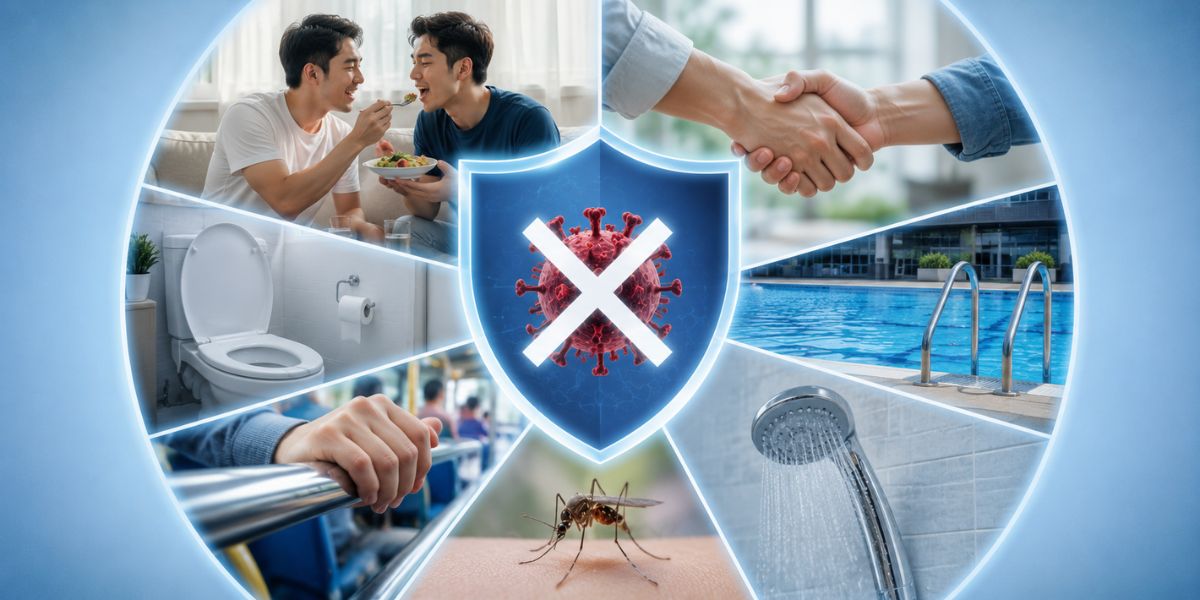
HIV is not passed on through everyday contact. Confusion about this is a major cause of stigma against people living with HIV.
Things that do not pass on HIV
- hugging, shaking hands, or touching skin
- kissing, because saliva does not carry HIV
- sharing toilets, seats, or swimming pools
- sharing plates, spoons, or cups
- coughing, sneezing, or breathing near someone
- sweat and tears
- mosquito or insect bites
Why it is safe
HIV does not survive long outside the body and does not spread through air, water, or casual contact. Living, working, or studying alongside someone with HIV is completely safe. Read more at myths about HIV.
Stigma is the real harm
The myth that HIV spreads through casual contact leads to people being excluded for no reason, even though sharing daily life with them is entirely safe. Accurate information is one of the strongest tools against stigma.
Mother-to-child transmission
A pregnant woman with HIV can pass the virus to her baby, but today this is almost entirely preventable.
When transmission can happen
- during pregnancy
- during birth
- during breastfeeding
Prevention works very well
When a pregnant woman takes antiretroviral treatment and her viral load is undetectable, the chance of the baby becoming infected drops to very low. Early antenatal care and HIV testing matter a great deal. Read more at HIV and pregnancy.
U=U — treatment as prevention
One of the most important advances is the principle of U=U (Undetectable = Untransmittable).
What U=U means
Someone who takes antiretroviral treatment consistently until the virus in their blood is undetectable does not pass HIV on sexually, even without a condom.
Why it matters
U=U means treatment is itself prevention. It lets people with HIV have relationships and children safely, and it helps reduce stigma. Read the detail at U=U and about the medicines at antiretroviral therapy.
The evidence behind U=U
U=U comes from several large studies that followed couples where one partner had HIV and was undetectable, and found no sexual transmission at all. This is why health organisations worldwide accept the principle.
How to prevent transmission
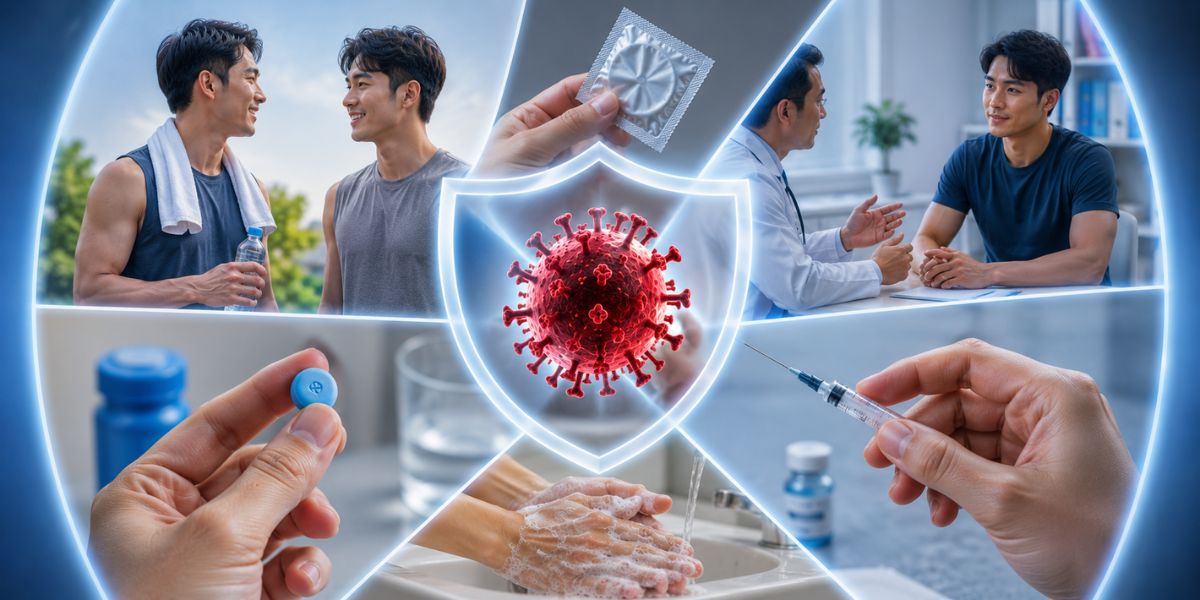
Several methods work well to prevent HIV transmission, and they can often be combined. Each has its own strengths, and choosing what fits your life makes protection sustainable over time.
Main prevention methods
- Condoms, which protect against HIV and other sexually transmitted infections
- PrEP, preventive medicine for people who do not have HIV but are at risk
- PEP, emergency medicine after an exposure, within 72 hours
- U=U, treating a person with HIV until they are undetectable
- Not sharing needles
- Testing regularly, so you and your partner know your status
Choose what fits you
Different methods suit different people. See all the options at HIV prevention, and the detail on PrEP and PEP.
Methods can be combined
These methods are not either-or. Many people combine condoms with PrEP, or pair them with regular testing. Layering protection adds confidence and lowers the risk further.
What to do after a possible exposure
If you think you have just had a risk of HIV, there are things you can do right away. Acting quickly makes a real difference, especially in the first hours after an exposure.
PEP within 72 hours
If the exposure was within the last 72 hours, starting PEP as soon as possible can lower the chance of infection — the sooner it begins, the better it works. Read the detail at PEP.
Test at the right time
Testing has to take the window period into account, because testing too early may miss an infection. If you are unsure, plan your test at HIV testing.
Do not wait for symptoms
Symptoms are not a reliable guide. Testing is the only way to know your status for certain.
In summary
HIV is only passed on when an infected fluid — blood, semen, vaginal or rectal fluids, or breast milk — gets into another person's body. The most common routes are condomless sex and sharing needles, while everyday contact does not pass it on.
The good news is that every route can be prevented, with condoms, PrEP, PEP, not sharing needles, and U=U, which means a person on treatment with an undetectable viral load does not pass HIV on sexually.
If you have had a risk or are unsure of your status, testing is the most important first step. Find and book a clinic at Love2Test.
References
Based on guidance from international and national health authorities.