
What is PEP? (emergency medicine)
PEP is emergency antiretroviral medicine used after a possible HIV exposure. It must start within 72 hours and is taken for 28 days — when to use it, the process, and where to get it.
What PEP is
PEP stands for post-exposure prophylaxis. It is emergency antiretroviral medicine taken after a possible exposure to HIV, to prevent an infection from taking hold.
Emergency medicine for urgent situations
PEP is like emergency medicine, used when something happens that could pass on HIV — such as a condom breaking or condomless sex. It is different from PrEP, which is taken before a risk.
The most important thing: timing
PEP only works if it is started quickly, within 72 hours of exposure, and the sooner the better. See the full prevention overview at HIV prevention: all your options.
It must start within 72 hours
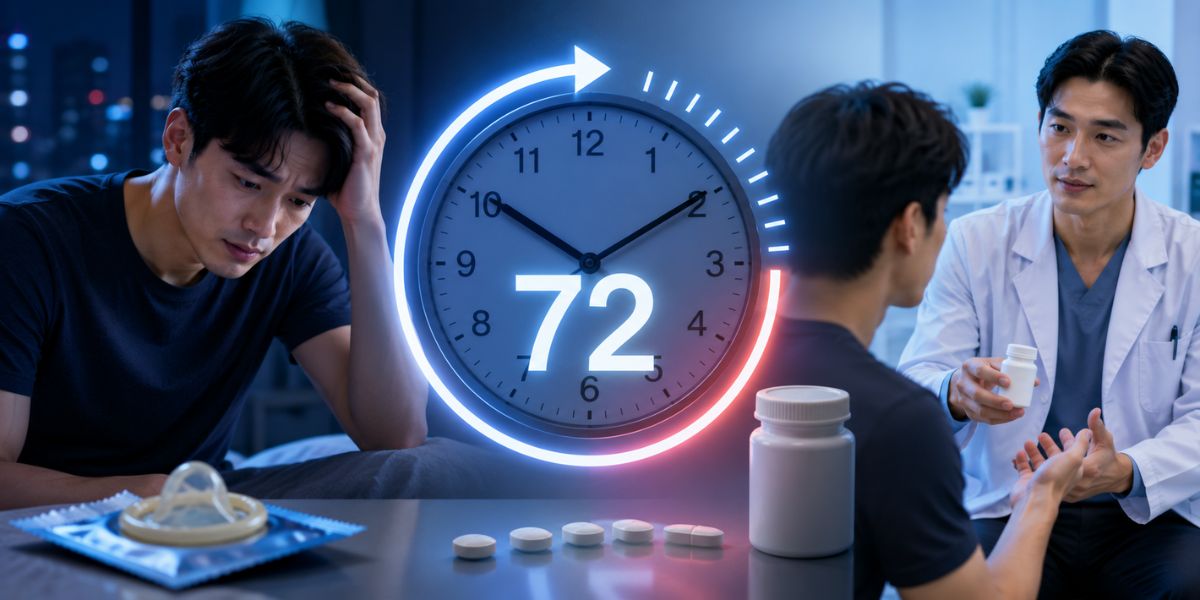
Timing is the single most important factor with PEP. If it is started too late, it will not work.
The 72-hour window
- PEP must start within 72 hours, or 3 days, of exposure
- the sooner the better — start as soon as possible, ideally within the first 24 hours
- every hour counts
If it has been more than 72 hours
After more than 72 hours, PEP is generally considered too late to work, because the virus may already have taken hold. In that case, talk to a provider about testing and future prevention. So if something happens, do not wait.
Why timing matters so much
Because PEP works by stopping the virus before it takes hold, the sooner it starts the higher the chance of success. After the window, the virus may spread beyond what the medicine can stop in time, so treating PEP as urgent is right.
How PEP works
PEP works by stopping the virus before it can take hold in the body.
The principle
When HIV enters the body, it takes some time to get into cells and multiply enough to spread. PEP uses antiretroviral medicines to block the virus during this window, so it cannot establish itself.
A short course of treatment
PEP is a combination of antiretroviral medicines taken for 28 days to clear any virus that may have entered the body. The specific medicines are chosen by a provider to suit each person.
When to use PEP
PEP is for emergency situations where there may have been an exposure to HIV.
Situations to consider PEP
- a condom broke or slipped during sex
- condomless sex with someone who may have HIV or whose status is unknown
- sexual assault
- sharing needles or injecting equipment
- a needlestick or contact with blood, such as at work
When you are not sure
If you are not sure whether your situation qualifies, contact a provider or go to an emergency room right away, so your risk can be assessed and PEP started in time.
It is better to act than to wait
If you are hesitating over whether to go, it is better to see a provider anyway. An expert assessment can decide whether PEP is needed, which is better than letting time pass until it is too late.
The PEP process
Using PEP involves some steps worth knowing for safety and effectiveness.
Before starting
- test for HIV to confirm you do not already have it, because PEP is for people who are not infected
- a provider assesses your risk and chooses a suitable medicine regimen
During the 28 days
- take the medicine every day exactly as directed, without missing doses
- if you have side effects, talk to your provider rather than stopping on your own
After finishing
Follow-up HIV testing is done as arranged, usually at around 4 to 6 weeks and again at 3 months, to confirm your status.
Completing the course is essential
PEP's effectiveness depends on taking all 28 days consistently. Missing doses or stopping partway can make it fail, so setting reminders and planning ahead makes finishing the course easier.
Side effects and safety
PEP is safe for most people, but some may have side effects.
Possible side effects
Common effects are usually mild, such as nausea, tiredness, or headache, and they often improve as the body adjusts. Newer antiretrovirals are generally better tolerated.
Finishing the course matters most
Even with mild side effects, completing the full 28 days is the most important thing for effectiveness. If the effects are troubling, talk to your provider for help rather than stopping on your own.
Ask before stopping
If side effects disturb your daily life, a provider may be able to adjust the regimen or give something to ease the symptoms. Stopping on your own can waste the effort so far, so always ask first.
PEP versus PrEP
PEP and PrEP are both HIV prevention medicines, but they are used at different times.
The difference is timing
- PEP is used after a risk, as emergency prevention within 72 hours
- PrEP is used before a risk, for people with an ongoing risk
Use the right one for the situation
If you have just had an emergency, PEP is the option, but if you have a regular risk, PrEP fits better and can be planned in advance. Read a detailed comparison at PrEP versus PEP.
After finishing PEP

Once you have finished the 28 days of PEP, there are still steps to take.
Follow-up testing
Test for HIV as arranged after finishing, usually at 4 to 6 weeks and at 3 months, to confirm you are not infected.
Consider PrEP if your risk continues
If you still have an ongoing risk afterwards, moving to PrEP is a better option than using PEP again and again, because it protects in advance and more consistently. Read about PrEP at what is PrEP.
PEP is not routine prevention
An important thing to understand is that PEP is only for emergencies.
Not a routine method
PEP is not designed for regular use. Using PEP again and again is inconvenient and is not the best way to protect yourself over the long term.
A better option for ongoing risk
If you find you need PEP often, it may mean you have an ongoing risk, and using PrEP or another method consistently would suit you better. Talk to a provider about a prevention plan that fits you.
PEP is a safety net
Think of PEP as a safety net for the unexpected, not a main prevention plan. Having a routine method such as condoms or PrEP lowers the chance of needing PEP in the first place.
Where to get PEP
Because PEP must start quickly, knowing where to go in advance helps a great deal.
Where to get PEP
PEP is available at hospitals, emergency rooms, specialist sexual-health clinics, and many community organisations in Thailand.
Do not wait when something happens
If something happens that may be a risk, go for care right away without waiting, because every hour counts. See services at where to get PEP, or find and book a clinic at Love2Test.
In summary
PEP is emergency antiretroviral medicine taken after a possible exposure to HIV, to prevent infection. The most important thing is to start within 72 hours, and the sooner the better, taking it for 28 days.
PEP suits emergencies such as a broken condom, condomless sex, or assault, but it is not a routine method. If your risk is ongoing, PrEP is a better option. You must test for HIV before starting and have follow-up tests after finishing.
If something happens that may be a risk, do not wait — find and book a clinic that provides PEP at Love2Test.
References
Based on guidance from international and national health authorities.