
Types of HIV test
Get to know the types of HIV test — NAT, 4th-generation, and antibody tests — how they differ in what they detect, how soon, and how to choose the right one.
The types of HIV test
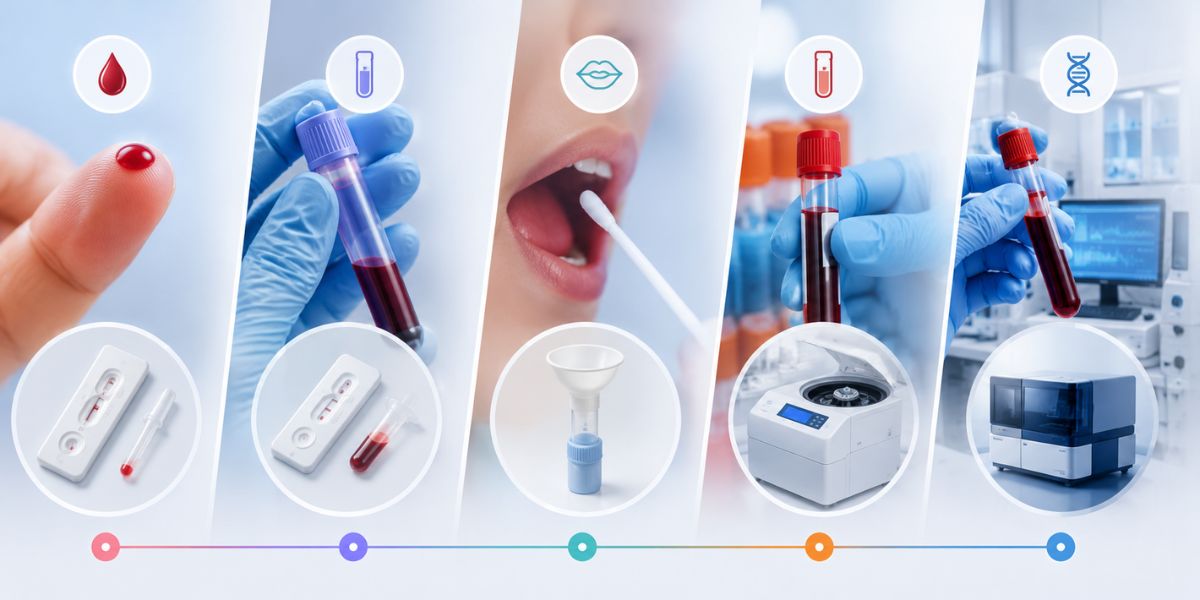
There are several HIV tests, but they all fall into three main types according to what they look for. Understanding the difference helps you choose what suits your situation.
The three main types
- Nucleic acid tests (NAT) look for the virus directly
- Antigen/antibody tests (4th generation) look for both a piece of the virus and antibodies
- Antibody tests (3rd generation) look for antibodies only
What sets them apart
Each type differs in what it looks for and how soon it can detect HIV. Tests that look for the virus directly detect it earliest, while antibody tests must wait for the body to make antibodies first. See the testing overview at HIV testing: the complete guide.
Nucleic acid test (NAT)
A nucleic acid test (NAT) looks for the HIV virus directly.
How it works
NAT looks for the genetic material of the virus in the blood, so it detects infection earliest, at around 10 to 33 days after exposure.
When it is used
- when a recent infection is suspected and an early result is needed
- to confirm a result from another test
- to measure the viral load in someone on treatment
NAT usually costs more and is not used as a general screening test, but it plays an important role in certain situations.
The limits of NAT
Although NAT detects HIV early, its higher cost and greater complexity mean it is usually reserved for specific cases rather than being the first test for everyone.
Antigen/antibody test (4th generation)
An antigen/antibody test (4th generation) is the recommended and widely used screening test.
What it looks for
This test looks for both the p24 antigen, a piece of the virus, and the antibodies the body makes. Looking for both means it detects HIV sooner than a test that looks for antibodies alone.
Formats and timing
- a venous blood test sent to a laboratory detects HIV at around 2 to 6 weeks
- there is also a rapid fingerstick version
Because it is accurate and detects HIV relatively early, the 4th-generation test is the main choice at many services.
Antibody test (3rd generation)
An antibody test (3rd generation) looks only for the antibodies the body makes against HIV.
What it looks for
This test does not look for the virus or antigen directly, but for antibodies, so it must wait for the body to make enough of them. Its window period is longer, at around 3 to 12 weeks.
Where you find it
This type includes most rapid tests and self-test kits, and can use either a fingerstick blood sample or oral fluid. It is convenient and easy to access, and suits screening once the window period has passed.
Who this suits
Antibody tests suit people who are past the window period and want convenience, such as a rapid test or a home kit. If your risk was very recent, a method that detects HIV sooner may be needed.
Rapid tests
A rapid test gives a result in a short time.
How it works
A rapid test uses a fingerstick blood sample or oral fluid and gives a result within about 20 minutes, so there is no wait for a laboratory.
Advantages and what to know
- convenient and fast, ideal for community services and outreach testing
- available as both 3rd-generation and 4th-generation tests
- a positive result must always be confirmed
Rapid tests make testing easier to access, especially for people who want a same-day result.
How accurate they are
Rapid tests are highly accurate when done at the right time. A negative past the window period is reliable, while a positive is a preliminary result that always needs confirmation.
Self-test kits
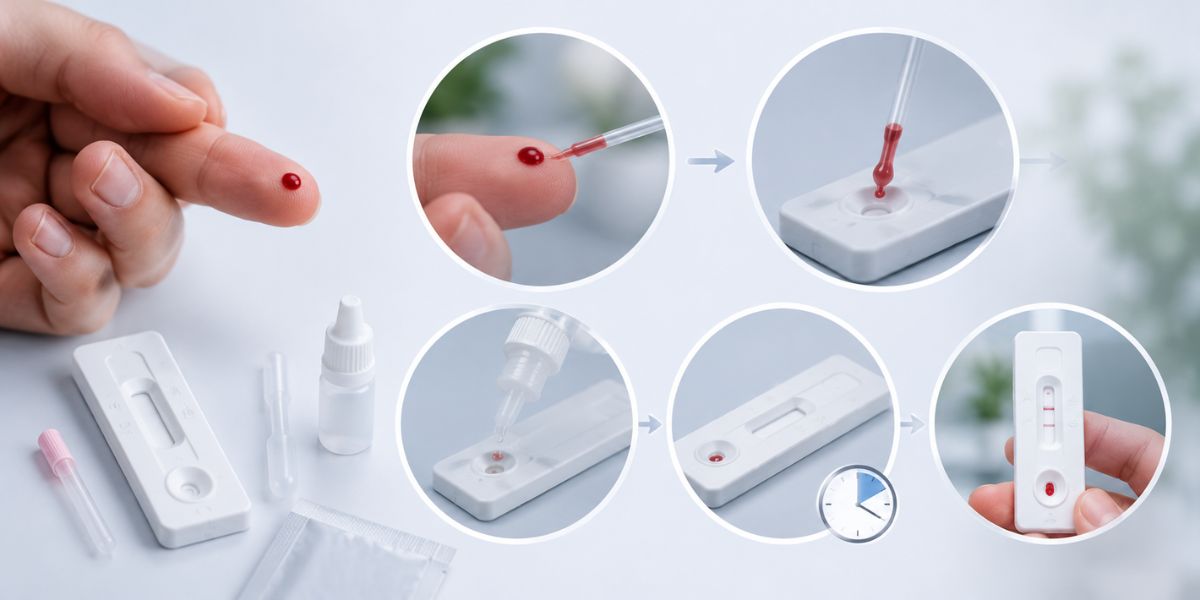
An HIV self-test kit is a kind of rapid test you can do yourself at home.
How it works
A kit uses a fingerstick blood sample or oral fluid, and you read the result yourself within a few minutes. It suits people who want privacy or find it hard to reach a service.
What to know
- follow the kit instructions carefully
- most are antibody tests, so the window period applies
- a positive result must always be confirmed at a health service
Read how to use and choose a kit at HIV self-testing.
Blood, fingerstick, and oral-fluid samples
HIV tests can use different samples from the body, which slightly affects how quickly they detect infection.
The options
- Venous blood, sent to a laboratory, usually detects HIV earliest among screening tests
- Fingerstick blood, used in rapid tests and self-test kits, is convenient and fast
- Oral fluid needs no blood draw and is the most convenient, but generally detects HIV a little later
How to choose
All of them are reliable when done at the right time, so the choice comes down to convenience and how long it has been since your risk.
All lead to the same answer
Whichever sample is used, the goal is the same — knowing your status. The small difference in detection time should not stand in the way of deciding to test.
How soon each test can detect HIV
How soon a test detects HIV is directly linked to its window period.
From earliest to latest
- NAT is earliest, at around 10 to 33 days
- 4th generation (antigen/antibody) at around 2 to 6 weeks
- 3rd generation (antibody) at around 3 to 12 weeks
Why they differ
The earlier the thing a test looks for appears in the body — the virus or the antigen — the sooner it can detect HIV. Choosing a time that fits the method matters. Read more at the window period.
Accuracy and confirmation
HIV tests today are highly accurate when done at the right time, but there is an important principle about confirmation.
Screening versus confirmatory tests
The tests used for general checking are screening tests. A negative once the window period has passed is reliable, but a positive is not yet a conclusion — it must be confirmed with an additional test first.
Why confirmation matters
Confirmation rules out the possibility of a false positive and makes the diagnosis accurate. It is a standard step used worldwide, and a confirmed positive then leads to the start of care. Read about results at understanding HIV test results.
A confirmed positive is a starting point
A confirmed positive is not the end but the start of care that keeps people healthy and living normal lives. Getting into treatment quickly gives the best outcome.
Which test to choose

No single test is best for everyone — the right choice depends on your situation.
A guide to choosing
- a recent risk — a test that detects HIV sooner, such as NAT or 4th generation, may fit better
- wanting a same-day result — choose a rapid test
- wanting privacy — a self-test kit is a good option
- past the window period — most tests will detect HIV
Ask for guidance
Staff at a service can suggest the method that fits your risk and timing. See where you can test at where to get an HIV test.
In summary
HIV tests fall into three main types by what they look for: tests that detect the virus directly (NAT), antigen/antibody tests (4th generation), and antibody tests (3rd generation). They differ in how soon they detect HIV and in convenience, and come as blood tests, rapid tests, and self-test kits.
All are reliable when done at the right time, and any positive screening result must always be confirmed. What matters is choosing the method that fits your risk and timing.
When you are ready to test, choose a method and find or book a clinic at Love2Test.
References
Based on guidance from international and national health authorities.