
HIV symptoms
What HIV can feel like at each stage, from acute symptoms to advanced signs, and why symptoms alone can never confirm an infection.
What HIV symptoms are like
HIV symptoms vary a great deal from person to person and from stage to stage. The most important thing to understand is that many people with HIV have no symptoms at all for years, and when symptoms do appear they often resemble common illnesses — so symptoms alone can never be used to diagnose HIV.
How severe symptoms are, and which ones appear, depends on each person's immune response and the stage of infection. Some people have clear symptoms; others barely notice anything. Having no symptoms does not mean the virus is inactive.
HIV moves through three stages
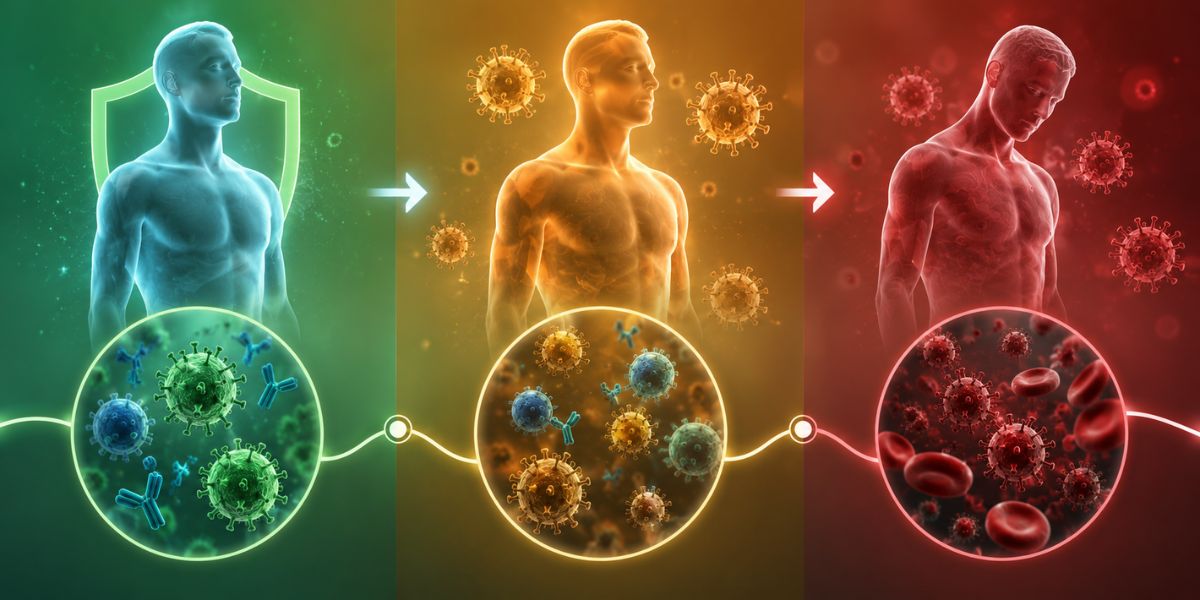
Without treatment, HIV infection passes through three stages: acute (early) infection, the clinical latency (asymptomatic) stage, and advanced infection (AIDS). Each stage looks different. Read the full overview at what is HIV and stages of HIV.
Only a test can confirm it
Because symptoms are non-specific and may be absent entirely, a blood test is the only way to know your status for sure. If you are worried you may have had a risk, do not wait for symptoms — get tested for peace of mind and appropriate care. Knowing your status early opens the door to prevention, treatment, and support.
Acute (early-stage) symptoms
About 2–4 weeks after infection, some people (not everyone) develop what is called acute retroviral syndrome (ARS), caused by the body reacting to the rapidly multiplying virus. The symptoms usually resemble the flu.
Common symptoms at this stage
- Fever
- Sore throat
- Rash on the body
- Swollen lymph nodes (neck, armpits, groin)
- Muscle and joint aches
- Headache and fatigue
- Night sweats
- Mouth ulcers
- Nausea, diarrhoea, or loss of appetite
How long do they last
Acute symptoms usually appear for a few days up to about two weeks and then pass on their own, so many people mistake them for an ordinary cold and never test. At this stage the viral load is very high and HIV is most easily transmitted.
Testing during this stage
In the very earliest days, an antibody test may still be negative because the body has not yet made enough antibodies. A NAT or 4th-generation antigen/antibody test detects HIV earlier. If you have symptoms after a risk, see a clinician and test, keeping the window period in mind.
The asymptomatic (latent) stage
After the acute phase passes, the virus enters clinical latency. During this stage HIV keeps multiplying and slowly damaging the immune system, but most people feel well and have no symptoms.
What is happening in the body
Even without symptoms, the CD4 count slowly declines and the virus remains in the blood. This is the phase where monitoring and starting antiretroviral treatment matter most, because they can stop the damage to the immune system before the advanced stage.
How long does this stage last
Without treatment, the asymptomatic stage can last for years — sometimes 10 years or more. Some people have only persistently swollen lymph nodes as their single sign. On antiretroviral treatment, this stage can continue indefinitely with a strong immune system.
Why 'feeling fine' cannot be trusted
Because so many people have no symptoms for a long time, feeling normal can never rule HIV out. This is why regular testing matters, especially for people with ongoing risk. See HIV testing.
Advanced HIV and AIDS symptoms
If infection continues untreated until the immune system is severely damaged (a very low CD4 count), the body becomes vulnerable to opportunistic infections and shows the symptoms of the AIDS stage.
Signs of advanced infection
- Rapid, unexplained weight loss
- Prolonged fever or night sweats
- Extreme, unusual fatigue
- Chronic diarrhoea
- Lymph nodes swollen for weeks
- Thrush in the mouth or throat
- Recurrent pneumonia or tuberculosis
- Persistent skin rashes or sores
- Memory problems, confusion, or neurological symptoms
Opportunistic infections
Most symptoms at this stage are not caused directly by HIV but by opportunistic infections — such as tuberculosis, certain types of pneumonia, and fungal infections — that take hold when immunity is weak. With today's treatment, these are far less common.
Preventable with treatment
These symptoms result from long-untreated infection. Today, starting antiretroviral treatment early prevents ever reaching this stage — and even people who have reached it can recover once treatment begins. See HIV treatment.
Symptoms in women and other considerations
Overall, HIV symptoms are similar in women and men, but there are a few things women may notice in addition.
What women may experience
- Recurrent vaginal yeast infections that are hard to treat
- Changes in menstruation
- Pelvic inflammatory disease (PID)
- HPV infection and a higher risk of cervical cancer
These signs, too, are not specific to HIV, and testing advice for women is the same as for everyone: test after a risk, and test regularly if your risk is ongoing.
Pregnant women
A pregnant woman with HIV who is treated to an undetectable viral load can reduce transmission to her baby to under 1%. HIV testing is therefore a routine part of antenatal care. Read more at how HIV is transmitted.
Why symptoms cannot confirm HIV
All of the symptoms above are non-specific to HIV and have many other causes — a cold, the flu, tonsillitis, stress, or other infections.
Symptoms that overlap with other illnesses
Fever, rash, sore throat, and swollen lymph nodes appear in many common conditions. So having these symptoms does not mean you have HIV, and having none does not mean you do not. Symptoms are only a prompt to test — not a diagnosis.
Even clinicians cannot diagnose by sight
No one can tell who has HIV from how they look or from their symptoms — not even healthcare professionals. Diagnosis always relies on a laboratory test result.
Only a test confirms it
The only way to be sure is a blood test, keeping the window period in mind — the time when a test may not yet detect HIV even though it is present. If you test too early, retest after the period has passed. See window period and HIV testing.
When to test or see a doctor

You should not wait for symptoms before testing, but there are situations where testing promptly is wise.
Test when you have
- Had condomless sex, or sex with a partner of unknown status
- Flu-like symptoms 2–4 weeks after a risk
- Shared injecting equipment
- Just been diagnosed with another STI
- Persistent symptoms with no clear cause
How often to test
People with ongoing risk should test regularly (for example, every 3–6 months). Testing takes only a few minutes, is confidential, and is available both free and anonymously.
If your risk was within 72 hours
If you had a risk within the last 72 hours, do not wait — seek PEP at an emergency department or clinic right away. And if your risk is ongoing, consider PrEP for long-term protection.
Symptoms improve with treatment
The good news is that most HIV symptoms improve and are prevented with treatment. Once antiretroviral therapy (ART) begins, the viral load falls to undetectable, the immune system recovers, and the body regains its strength.
Treatment changes the course of the disease
People on consistent treatment usually have no symptoms and are as healthy as anyone else. The viral load typically drops to undetectable within a few months of starting. And when the virus is undetectable, HIV is not passed on sexually to partners (U=U). Read what U=U means.
Care for body and mind
Beyond medicine, rest, good nutrition, and mental-health care all help you feel better. A diagnosis can take an emotional toll, so having support and staying in touch with a healthcare provider are an important part of long-term care. With the right care, most people with HIV feel well and stay well.
Myths about HIV symptoms

There are several misunderstandings about HIV symptoms that lead people to the wrong decisions.
Separating fact from myth
- 'No symptoms means no HIV' — false; many people have none for years
- 'A rash means it must be HIV' — false; rashes have many causes
- 'You can tell who has HIV by looking' — false; you cannot, only a test can
- 'Symptoms gone means cured' — false; the virus remains even after symptoms fade
- 'People with HIV always look thin and sick' — false; people on treatment look as healthy as anyone
Believing myths makes some people complacent and others needlessly anxious. Testing is the surest answer, and it gets you into care quickly if needed.
HIV symptoms in infants and children
Infants and children with HIV, most often from mother-to-child transmission, can have different symptoms from adults and may progress faster, because a child's immune system is not yet fully developed.
Signs seen in children
- Slow growth or failure to gain weight
- Swollen lymph nodes, or an enlarged liver and spleen
- Recurrent infections such as pneumonia or oral thrush
- Developmental delays
- Chronic diarrhoea
Why children progress faster
Because an infant's immune system is not as strong as an adult's, infection can show symptoms sooner and more severely. Diagnosing and starting treatment early is therefore vital for a child's health.
Preventable and testable
The good news is that testing pregnant women and providing appropriate treatment prevent almost all infant infections, and children who are infected and treated early can grow up healthy. See how HIV is transmitted.
Summary: symptoms cannot tell you, a test can
HIV symptoms can take many forms and change with each stage, but no symptom can confirm or rule out infection for certain. Whether or not you have symptoms, a test is the only thing that gives a clear answer.
Your next steps
- If you have had a risk or worrying symptoms, test for HIV
- If your risk was within 72 hours, ask about PEP
- If your risk is ongoing, consider PrEP
- If HIV is found, start treatment early for good health and U=U
When you are ready, you can book a test and find a clinic right away. Knowing your status is the first step toward taking care of yourself for the long term — and whatever the result, we now have both prevention and treatment so everyone can live with confidence.
References
Based on guidance from international and national health authorities.