
HIV self-testing
HIV self-tests let you test privately at home, using either a fingerstick blood or an oral-fluid kit. Learn how to use them, their accuracy, reading the result, and the next steps.
What HIV self-testing is
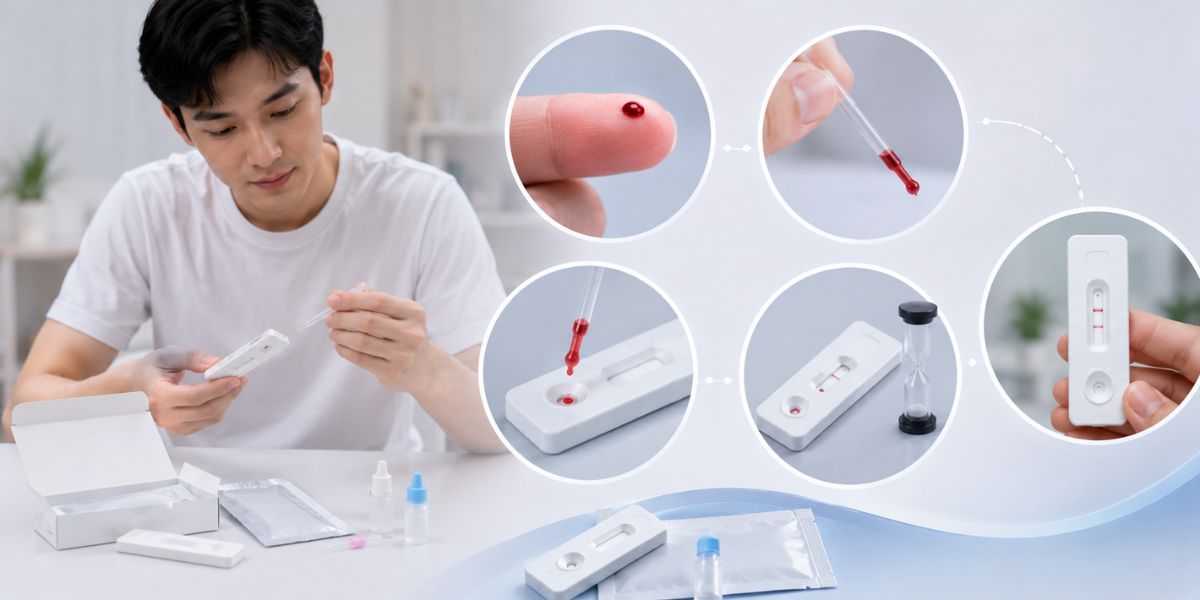
An HIV self-test is a kit that lets you collect a sample and read the result yourself at home, without going to a health service.
Why people like it
- Private — you can do it wherever you feel comfortable
- Convenient — no travel or waiting
- Fast — a result within a few minutes
Who it suits
Self-testing suits people who want privacy, who find it hard to reach a service, or who want an informal way to start finding out their status.
Why self-testing matters
Self-testing gives more people the chance to learn their status, especially those who may not find it easy or comfortable to visit a service. It is another step that makes HIV testing easier to reach.
The two types: fingerstick and oral fluid
HIV self-tests come in two main types depending on the sample used: a fingerstick blood test and an oral-fluid test.
Comparing the two
- The fingerstick blood test uses a small lancet to prick your fingertip for a tiny drop of blood
- The oral-fluid test uses a swab wiped along your gums, with no blood needed
How they differ
Both look for antibodies to HIV, not the virus itself. The fingerstick blood test usually detects HIV a little sooner, while the oral-fluid test is more convenient because it needs no blood. Both are easy to use and designed to be done yourself.
The oral-fluid self-test
The oral-fluid self-test is popular because it needs no blood.
What it looks for
An important point to understand is that this test detects antibodies in oral fluid — it does not find the virus in saliva. Saliva does not carry HIV, but the body makes antibodies that can be detected in oral fluid.
The usual steps
- wipe the swab along your upper and lower gums as instructed
- place the swab into the solution tube
- wait and read the result at the set time, usually around 20 to 40 minutes
Read the kit instructions carefully before you start, so the result is accurate.
The advantage of the oral test
The strength of the oral test is that it needs no blood, so it suits people who dislike needles or find a fingerprick awkward, and it helps many feel at ease about starting to test.
The fingerstick blood self-test
The fingerstick self-test uses a tiny drop of blood from your fingertip.
What it looks for
Like the oral-fluid test, this kit looks for antibodies to HIV, but in blood, which is why it usually detects HIV a little sooner.
The usual steps
- clean your fingertip and use the small lancet included in the kit to prick it
- place the drop of blood on the strip or well as instructed
- wait and read the result at the set time
The fingertip prick may feel a little uncomfortable for a moment, but it is easy when you follow the steps.
The advantage of the fingerstick test
The fingerstick test has the advantage of detecting infection a little sooner, so it suits people who want higher sensitivity, even though it involves a tiny drop of blood.
How accurate each type is
HIV self-tests are highly accurate when used correctly and taken at the right time.
What affects accuracy
- following the steps correctly is the most important thing
- the time since your risk — you must be past the window period
- reading the result at the set time — not too early or too late
Blood versus oral fluid
In general, the fingerstick blood test is slightly more sensitive and detects HIV sooner than the oral-fluid test, but both are reliable when used correctly. What to always remember is that a reactive self-test result must be confirmed.
Follow the guide for the best result
The factor you can control most is following the guide closely — collecting the sample, the waiting time, and reading the result. Doing the steps correctly greatly reduces the chance of error.
The window period and self-tests
Like other tests, self-tests have a window period to keep in mind.
Why it matters
Most self-tests are antibody tests, so they must wait for the body to make enough antibodies. Testing too early can give a negative result even when a person has HIV.
When to test
A negative self-test becomes more reliable once the window period has passed, and confirming at 90 days generally gives full certainty. If your risk was recent, plan a repeat test. Read more at the window period.
Reading your self-test result
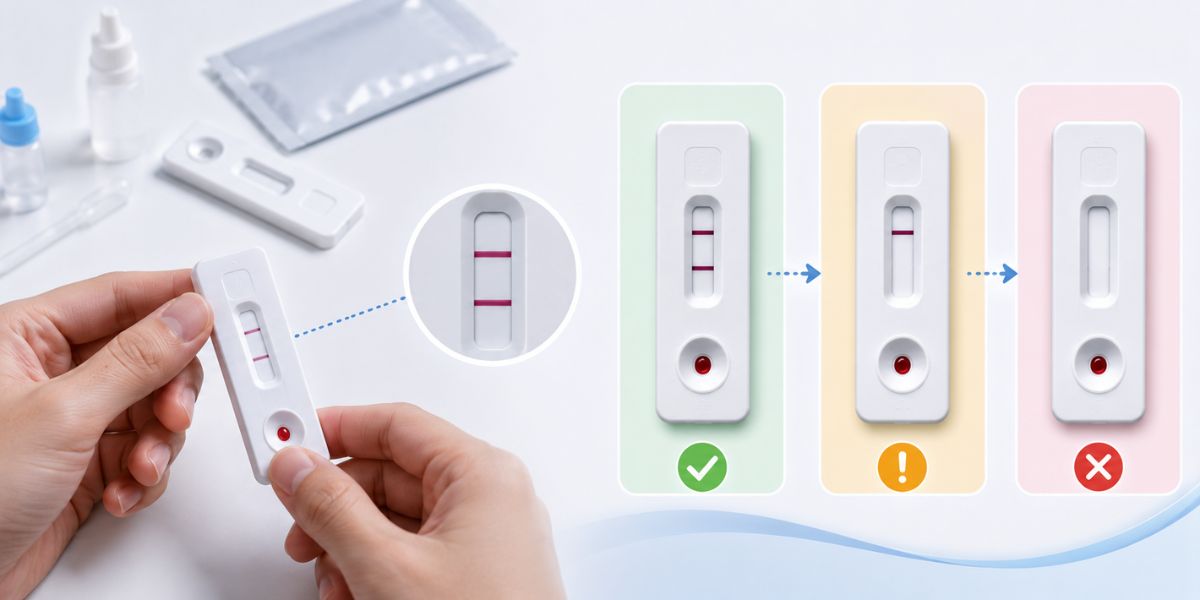
Reading your result correctly matters, and you should follow the guide that comes with the kit.
What the results mean
- Non-reactive generally means no antibodies were found, but the window period still applies
- Reactive means there may be an infection, and it must be confirmed every time
The control line
Most kits have a control line that shows the test worked properly. If no control line appears, the result is invalid and you should test again with a new kit.
If you are unsure of the result
If you read the result and are unsure, or it is unclear, test again with a new kit or go to a health service. Do not guess, because knowing the correct status is what matters most.
If your result is reactive
If your self-test is reactive, the important thing is to understand that this is not yet a conclusion.
A reactive self-test is not a diagnosis
Self-tests are screening tests, and a reactive result must be confirmed with a test at a health service before it counts as a diagnosis.
What to do next
- go to a health service for a confirmatory test
- if the infection is confirmed, treatment can start early, which keeps you healthy
See services at where to get an HIV test and reading results at understanding HIV test results.
If your result is negative
If your self-test is non-reactive, that is good news, but there are a few things to consider.
Allow for the window period
If your risk was recent and within the window period, a negative is not yet the final answer, so retest when due to confirm.
Plan ongoing prevention
A negative is a good moment to plan how to protect yourself going forward, such as PrEP, condoms, and regular testing. If your risk was within 72 hours, ask about PEP right away.
Advantages, limits, and where to get a kit
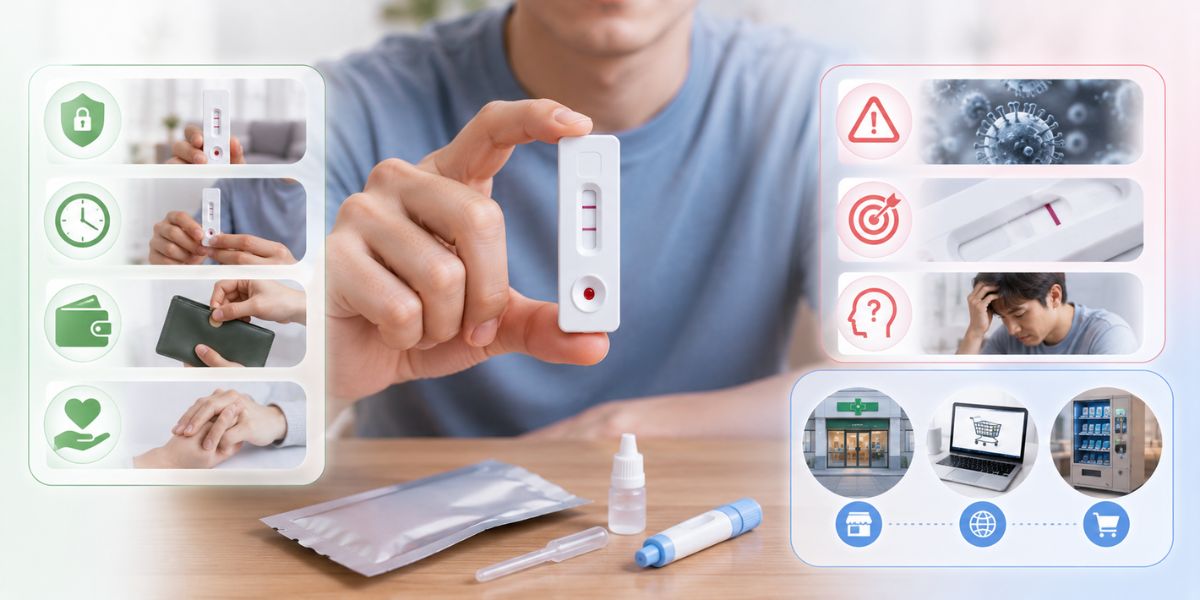
Self-tests have both advantages and limits worth knowing.
Advantages
- private and convenient
- a fast result wherever you feel comfortable
- helps people who are hesitant to visit a service to get tested
Limits
- they are screening tests, so a positive must always be confirmed
- there is no staff member to counsel you directly while you test
- you must follow the steps correctly for accuracy
Where to get a kit
Kits are available from pharmacies, online, and some community organisations that may give them out free. If you would rather test at a service, see the options at where to get an HIV test.
In summary
HIV self-tests let you test privately at home. There are two main types — a fingerstick blood test and an oral-fluid test — and both look for antibodies, not the virus in saliva. The blood test detects HIV a little sooner, while the oral-fluid test is more convenient.
Both are accurate when used correctly and past the window period. The key thing to remember is that a reactive result must always be confirmed at a health service, while a negative should allow for the window period and lead to ongoing prevention.
If you want help testing or confirming a result, find and book a clinic at Love2Test.
References
Based on guidance from international and national health authorities.