
The HIV window period: when can you test?
The window period is the time after exposure when a test may not yet detect HIV — when to test, how soon each test can detect it, and when a result is conclusive.
What the window period is
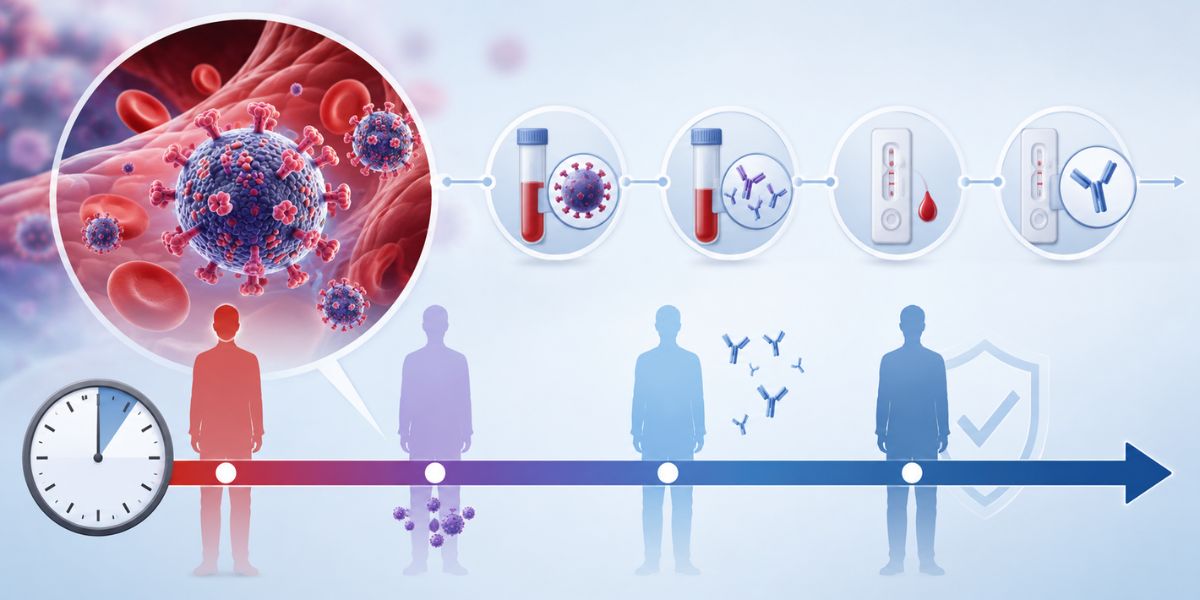
After a person is exposed to HIV, the body needs some time before a test can detect the infection. This period is called the window period.
What happens during this time
In the early days after exposure, the amount of virus and antibodies may be too low for a test to detect, even though HIV has entered the body. A test taken during this time can therefore give a negative result even when a person has HIV.
Why it differs between people
The window period depends on the type of test and on each person's response, so the recommended timing varies. Understanding this helps you choose the right time to test. See the testing overview at HIV testing: the complete guide.
Why this is worth understanding
Understanding the window period helps you neither panic over a negative taken too early nor become complacent about a recent risk. Knowing the right timing makes a result truly meaningful.
Why the window period matters
The window period matters because it directly affects how reliable a result is.
The risk of testing too early
Testing while HIV cannot yet be detected can give a false negative, making someone believe they do not have HIV when they actually do, which can lead to unintentional transmission.
False negatives, not false positives
What to watch for during the window period is a false negative, not a false positive. Testing too early causes a missed infection, not a wrong positive, so choosing the right time to test is important.
The window period for each type of test
Different HIV tests can detect infection at different times. Tests that look for the virus directly detect it sooner than those that look for antibodies.
Approximate timings
- Nucleic acid tests (NAT) detect HIV earliest, at around 10 to 33 days
- 4th-generation antigen/antibody tests at around 2 to 6 weeks
- Antibody tests, including most rapid and self-test kits at around 3 to 12 weeks
What these numbers mean
These are approximate ranges, not fixed values. A test that detects HIV sooner suits someone with a recent risk. Read the detail on each type at types of HIV test.
Which test suits a recent risk
If your risk was only a few days ago, a NAT or 4th-generation test may give an answer sooner, while after several weeks most tests will detect HIV. Staff can help suggest the right method.
When to test after exposure
Many people ask how long to wait before testing. The answer depends on which test will be used.
A rough timeline
- Right away — if your risk was within 72 hours, ask about emergency PEP first
- Around 2 to 4 weeks — a 4th-generation test often begins to detect HIV
- At 90 days — to confirm a result with confidence for any test type
Choose the right time
If you are not sure when to test, ask staff at the service, who can advise on timing and retesting based on your risk and the test used.
When a result is conclusive
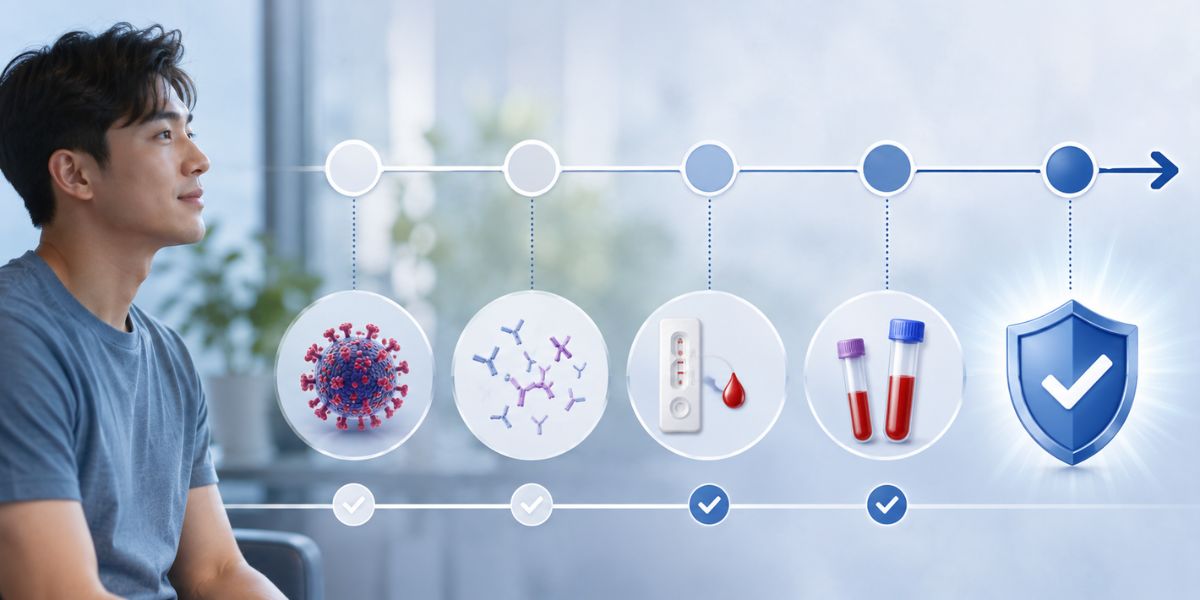
A common question is when a negative result can be fully trusted.
The 90-day mark
In general, a negative result from a test taken at 90 days, or 3 months, after the last exposure is considered reliable for any test type, because it is past the window period of most tests.
Before 90 days
An earlier negative still means something, especially from a 4th-generation test that detects HIV sooner, but if your risk was recent, retest at the right time for full certainty.
Retesting
Retesting is a part of HIV testing that many people overlook.
When to retest
- when a result is negative but your risk was recent and within the window period
- when staff advise confirming your result at 90 days
- when a new risk occurs after a previous test
Why it matters
Retesting confirms your status with confidence and makes sure an infection during the window period is not missed. If your risk is ongoing, regular testing is a good idea.
Regular testing helps
For people with an ongoing risk, testing regularly — for example every 3 to 6 months — helps catch an infection early and plan care in good time.
What a negative during the window means
If you test during the window period and get a negative result, it helps to understand what it means.
A negative is not yet the final answer
A negative during the window period means HIV was not detected at that moment, but it does not confirm you are HIV-negative. If your risk was recent, a repeat test is still needed to confirm.
What to do while you wait
While waiting to retest, use protection so you do not add new risk and do not pass HIV on if you are infected, such as using condoms. See prevention options at HIV prevention.
A confirmed negative is reliable
Once the window period has passed and you have retested, a negative result is reliable and there is no need to keep worrying, as long as no new risk has occurred.
If your exposure was within 72 hours

If you have had a recent risk of HIV, there is something you can do right away, without waiting for the window period.
PEP within 72 hours
Starting PEP within 72 hours of exposure can lower the chance of infection — the sooner the better. This is why you should not wait. Read the detail at PEP.
Plan testing afterwards
Once PEP has started, staff will advise an HIV testing plan based on the window period and the right timing. Testing and PEP work together.
Symptoms are not a guide
Some people try to use symptoms to tell whether they are infected while waiting to test, but symptoms are not reliable.
Why symptoms do not help
Early symptoms, if they appear, look like a common cold and have many causes, and many people with HIV have no symptoms at all. Having or not having symptoms cannot replace testing.
Testing is the only answer
Whatever you feel, the only way to know your status for sure is to test at the right time. Read more about symptoms at HIV symptoms.
Trust the test, not the feeling
Anxiety can make you feel as if you have symptoms, but a feeling is not evidence. Relying on a test at the right time is what gives real reassurance.
What to do
Once you understand the window period, here is what to do in practice.
Recommended steps
- if your risk was within 72 hours — ask about PEP right away
- choose a test method that fits the time since your risk
- test at the right time and retest when due
- use protection while waiting for a definite result
Ready to test
Choose a service at where to get an HIV test, or for privacy see HIV self-testing, and find or book a clinic at Love2Test.
In summary
The window period is the time after exposure when a test may not yet detect HIV, so testing too early can give a false negative. Different tests detect HIV at different times — NAT is earliest, then 4th-generation tests, then antibody tests — while a negative at 90 days is reliable for all of them.
If your risk was within 72 hours, do not wait — ask about PEP first, and do not rely on symptoms, because testing is the only way to know your status for sure.
When you are ready, choose the right time and find or book a testing clinic at Love2Test.
References
Based on guidance from international and national health authorities.