How to Prepare for an HIV Test: Do You Need to Fast, What Documents, and What Are the Steps?
When deciding to test for HIV, many may wonder how to prepare, whether to fast beforehand, what documents to bring, and what the steps are on test day. These uncertainties may make some hesitate or worry before testing. The good news is that an HIV test is easy to prepare for. Generally, fasting isn't required beforehand, and the steps aren't complicated. What matters more is timing it appropriately after a risk for result accuracy, and preparing emotionally. This article explains in detail how to prepare for an HIV test — from fasting, timing, documents you may need, choosing a place, the steps on test day, to pre- and post-test counseling and preparing emotionally — so you can get tested smoothly and comfortably, understanding that testing is an important step in health care.
How to prepare for an HIV test
Generally, an HIV test is easy and simple to prepare for, without much special preparation like some tests. There are only a few things to consider in preparing — timing it appropriately after a risk for accuracy, preparing information and questions, choosing a comfortable place, and preparing emotionally. Importantly, an HIV test generally doesn't require fasting beforehand, making it convenient. Understanding that preparation isn't complicated helps worry about the process not be a barrier to testing. An HIV test is an important step in sexual health care, and good preparation helps testing go smoothly. If you have specific questions about preparing for a particular test method, asking the place you'll test in advance helps you get clear information. Read more about test methods in HIV testing methods.
Preparing before an HIV test
Good preparation helps an HIV test go smoothly. What to prepare:
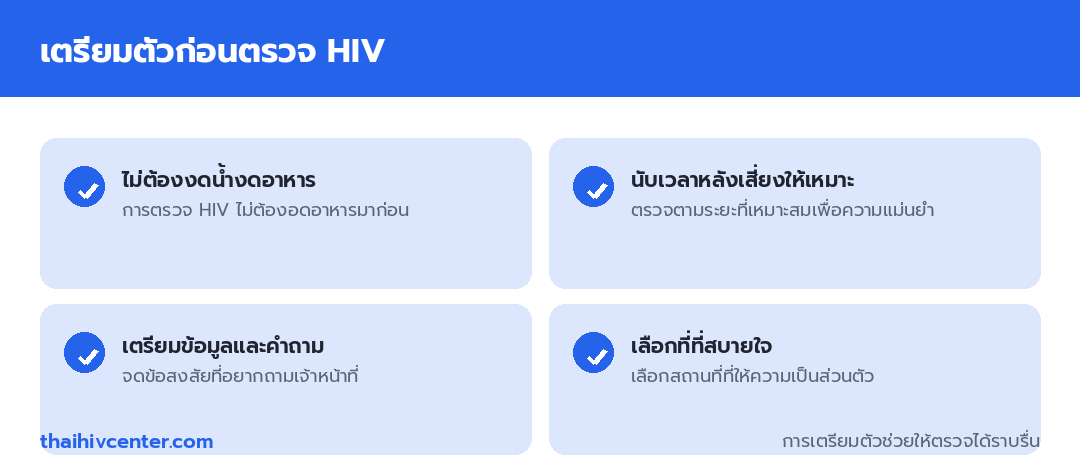
- No fasting needed — an HIV test generally doesn't require fasting; you can eat and drink normally.
- Time it appropriately after a risk — test at the appropriate time after a risk for accuracy, because of the window period.
- Prepare information and questions — note down doubts or questions to ask staff in advance.
- Choose a comfortable place — choose a place that offers privacy and makes you feel comfortable.
These preparations aren't complicated and help testing go smoothly. Understanding that preparing for an HIV test is easy reduces worry and makes deciding to test easier. Read about choosing a testing time in how many days after a risk to test.
Do you need to fast
The most common question about preparation is whether to fast before an HIV test. The answer is generally no. An HIV test isn't like some tests requiring fasting beforehand. You can eat and drink normally before testing, because eating doesn't affect HIV test results. Not needing to fast makes an HIV test convenient and doable any time convenient, without planning fasting in advance. This reduces barriers to testing, because you needn't worry about complicated preparation. However, if you have several health tests at once, some other tests may have fasting requirements. In that case, ask the testing place about each test's requirements. But for an HIV test specifically, eating and drinking normally doesn't affect the result. Understanding that no fasting is needed makes preparing to test easy and convenient.
Timing it appropriately after a risk
More important than fasting in preparing is timing it appropriately after a risk, because of the window period. The window period is the time after infection when testing may not yet detect the virus. Testing too early during this may give a negative despite infection. So choosing an appropriate testing time matters for result accuracy. Generally, testing at the appropriate time after a risk helps get a reliable result, and testing at 3 months is considered conclusive for all methods. If you recently had a risk and worry, understand that testing too early may not yet detect the virus and you may need to retest at the appropriate time. Also, if the risk was within 72 hours, consider consulting about PEP. Timing after a risk and planning testing appropriately helps get an accurate result and reduces the need for unnecessary retesting. Consulting a doctor or staff helps set a testing time suiting your situation. Read more about the window period in the HIV window period.
What documents you may need
Documents you may need for an HIV test vary by place and service type. Things to know:
- Testing under entitlements — if using entitlements for free testing, you may need to prepare necessary documents as the place requires.
- Anonymous testing — anonymous services usually don't require your real name, possibly using a code.
- Private clinics — document requirements may vary; ask in advance.
- Ask in advance — the best way is to ask the place you'll test what documents to prepare.
Because document requirements vary by place and service type, asking in advance is the best way to prepare. If privacy worries you, you can ask about anonymous services. Read more about privacy in is an HIV test confidential.
Prepare questions to ask
Preparing questions to ask in advance helps you get the information you want and use the chance to talk with staff fully. Examples of questions to prepare:
- What method is used, and when will results be ready
- How accurate is the result at this time, and do I need to retest
- If positive, what are the next steps
- Is there counseling or ongoing care
- What are the privacy and confidentiality policies
Having questions prepared helps you not forget to ask what you want to know while at the clinic. Good staff are usually glad to answer and give clear information. Asking these is your right to understand testing and your health care. Understanding that you can ask questions helps you feel involved in your health care and get information needed for decisions.
Choosing a testing place
Choosing an appropriate testing place is part of preparation. There are several options to consider:
- Public hospitals — usually have entitlements for free testing and counseling.
- Community clinics — usually offer friendly, accessible service, and many offer free or low-cost testing.
- Private clinics — suit those wanting convenience, speed, or privacy.
- Self-test kits — for those wanting to screen at home.
Choosing a place should consider convenience, budget, the privacy you want, and your comfort. Each option has different benefits. Choosing one suiting your needs makes testing a more comfortable experience. Read about choosing a testing place in where to test and how fast results are.
Steps on test day
Understanding the steps on test day helps you know what to expect and reduces worry.
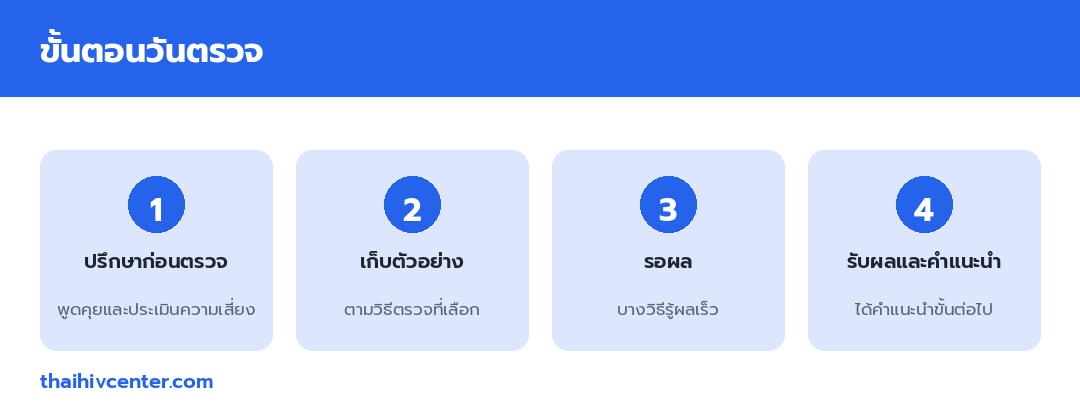
| Step | Details |
|---|---|
| Pre-test counseling | Talk about risk and testing with staff |
| Sample collection | Collect a sample per the chosen method |
| Waiting for results | Some methods are fast, some may take time |
| Receiving results and advice | Get results with advice on next steps |
The steps generally start with pre-test counseling, where staff talk about risk and explain testing, then sample collection per the chosen method, then waiting for results which some methods give fast, and finally receiving results with advice. Understanding these steps helps you feel prepared and not worry about the unknown. The actual steps may vary slightly by place and method.
Pre- and post-test counseling
Pre- and post-test counseling is an important part of a quality HIV test. Pre-test counseling helps you understand testing, assess risk, and prepare emotionally. Staff may talk about your risk, explain how testing works, and answer your questions. Post-test counseling helps you understand results and get appropriate advice. If negative, staff may advise on prevention and retesting if needed. If positive, staff give information about next steps and entering care, plus emotional support. This counseling is valuable because it helps you not face information or results alone and get appropriate care. Understanding that there's pre- and post-test counseling helps you feel reassured that someone will help explain and advise throughout. If you choose self-testing, knowing where to get counseling if needed is also important.
Preparing emotionally before testing
Besides practical preparation, preparing emotionally before testing matters. It's normal to feel worried or nervous before an HIV test, an understandable feeling. What helps is understanding that testing is an important, positive step in caring for your health. Whatever the result, knowing your status helps you plan health care appropriately. If negative, it reassures you and helps plan prevention; if positive, you can start effective treatment early. Viewing testing positively reduces worry. Also, having someone you trust to talk to or knowing there's counseling at the clinic helps you feel reassured. If pre-test worry is severe enough to affect your decision to test, talking to a health professional or counselor helps. Preparing emotionally and understanding that testing is good for you helps you overcome worry and get tested. Read more about managing worry in still worried after an HIV test.
What to do after getting results
After getting results, the next steps depend on the result. Things to know:
- If negative — staff may advise on future prevention, and if you had a risk recently, may advise retesting at the appropriate time.
- If positive — the result is confirmed and you get information about entering care, and treatment today is highly effective.
- Plan prevention — whatever the result, planning ongoing sexual health care is good.
- Ask for support if needed — counseling and support are ready to help.
Understanding what to do after results helps you be ready to handle any result. Importantly, whatever the result, testing is a good first step in health care, and there's care and support ready to help in every case.
Misconceptions about preparation
There are several misconceptions about preparing for an HIV test to correct:
- "You must fast before an HIV test" — false, an HIV test doesn't require fasting; you can eat and drink normally.
- "Preparation is very complicated" — false, preparing for an HIV test is easy.
- "Testing right after a risk is accurate" — false, because of the window period; test at the appropriate time.
- "You need many documents and must always identify yourself" — false, anonymous services exist, and requirements vary by place.
Knowing these facts reduces unnecessary worry about preparation and shows that an HIV test is accessible and uncomplicated. Correct understanding makes deciding to test easier.
Frequently asked questions
Do I need to fast before an HIV test
No, an HIV test generally doesn't require fasting; you can eat and drink normally, because it doesn't affect the result.
What documents do I need
It depends on the place and service type; some using entitlements need documents, some have anonymous services; ask in advance.
Can I test right after a risk
You can but may not yet detect the virus because of the window period; test at the appropriate time, and if within 72 hours consider PEP.
Does an HIV test take long
The steps are generally not long; some methods are fast, depending on the method and place; ask there for clarity.
How do I prepare emotionally before testing
Understand testing is a positive step in health care, there's counseling to help, and if very worried, talking to a professional helps.
Do I get results immediately
Some methods give results fast the same day, some may take time, depending on the method; staff will let you know.
Summary
An HIV test is easy to prepare for; generally, no fasting is needed and you can eat and drink normally. What matters more is timing it appropriately after a risk for accuracy, preparing information and questions, choosing a comfortable place, and preparing emotionally. Documents needed vary by place, so ask in advance. On test day, there's usually pre- and post-test counseling that helps you understand results and get advice. Whatever the result, testing is a good first step in health care, and there's support ready to help. If you're ready to test or want to consult, find a clinic near you.