Is an HIV Test Confidential? Who Finds Out, and Are There Anonymous Options?
For many, privacy worry is one of the main barriers making them hesitate to test for HIV. A common question is is an HIV test confidential, who finds out, whether work or family will know, and whether there are more private options. These worries are understandable, because sexual health is private that many want to keep confidential. The reassuring good news is that HIV results are generally treated as confidential medical information, and anonymous testing services exist that don't require identifying yourself, plus other options that add privacy. This article explains in detail about privacy in HIV testing, anonymous options, and what to know. However, because policies and practices may vary by place, this article recommends asking the specific place directly about its confidentiality policy for clarity, so you can decide to test comfortably.
Is an HIV test confidential
Generally, HIV results are personal health information treated as confidential medical information. Health staff and providers usually have a duty to keep clients' information confidential, meaning your results aren't disclosed to others arbitrarily. Also, anonymous testing services exist that don't require your real name, adding another layer of privacy. However, what's important to understand is that policies and practices about confidentiality may vary by place and context. So if privacy worries you, asking the place you'll test about its confidentiality policy — who can access results and how information is stored — is worth doing. Understanding that results are generally treated confidentially, and that private options exist, helps this worry not be a barrier to testing, an important step in health care.
Privacy in testing
There are several aspects of privacy that help make HIV testing more comfortable.
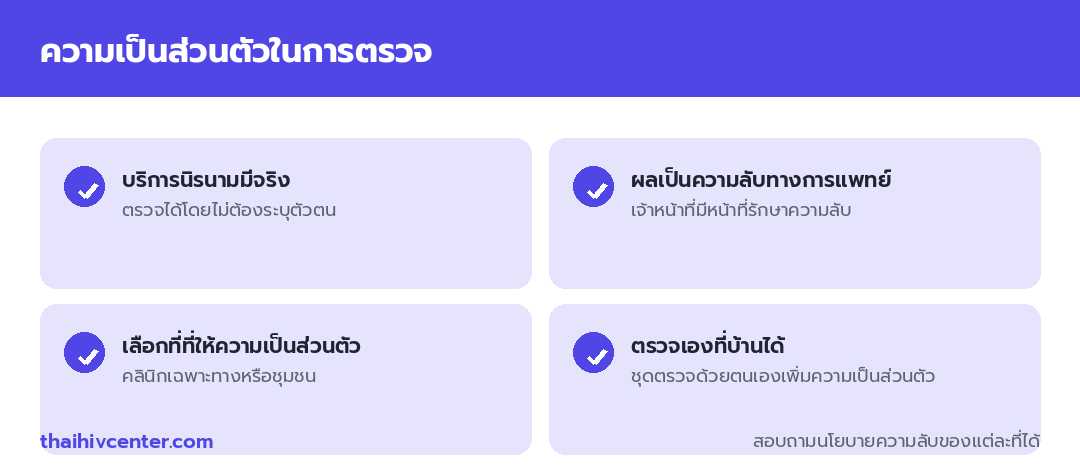
First, anonymous testing services exist, letting you test without your real name, adding privacy for those worried about disclosure. Second, results are generally confidential medical information, with staff having a duty to keep them confidential. Third, you can choose a place that offers privacy, such as specialized HIV clinics or community clinics that usually understand and provide privacy-conscious service. And fourth, there are self-testing options at home, adding privacy for those who want it. Understanding that diverse private options exist helps you choose a method that suits your comfort. If you have questions about the privacy of each option, asking in advance helps you get clear information.
Results are confidential medical information
HIV results are personal health information, generally treated as confidential like other health information. Health staff and providers usually have a duty and ethics to keep clients' information confidential, meaning your information shouldn't be disclosed to others without consent. This confidentiality is an important part of good health service, because it helps clients feel safe to get tested and cared for. However, details of how information is handled and who's involved in care may vary by place and system. So if you want to know details of who can access your information in a specific context, asking the place you test directly is best. Understanding that results are generally treated confidentially helps you feel more at ease, and asking about specific policies helps you have clear information for your decision.
What is anonymous testing
Anonymous testing is an option designed to add privacy for those worried about disclosure. In anonymous testing, clients usually don't need to give their real name or identifying information, possibly using a code or number instead, so they can get results without directly linking to the client's identity. Such services exist to reduce privacy-worry barriers and help those who may hesitate for fear of disclosure feel more able to test. Many community clinics and organizations working on HIV usually offer such services. However, availability and forms of anonymous services may vary by place. If interested in anonymous services, ask in advance which places offer it and the procedures. Understanding that anonymous testing exists helps those worried about privacy have an option that suits their needs and helps testing not be something to fear regarding disclosure.
Will work find out
One common worry is whether HIV testing will let work know. Generally, HIV testing you do yourself is private and not automatically linked to work. Results are personal health information treated as confidential, and deciding whom to disclose results to is your right. However, situations may differ in some contexts, such as if there's work-related health screening in some cases, where policies and practices may vary. If you have specific worries about your situation, such as work-related health screening, asking for clarity is worth doing. For testing you choose to do yourself for health care, you can choose to test at a place offering privacy or use anonymous services. Understanding that testing yourself is private helps you feel at ease, and knowing your rights in handling your health information helps you decide confidently.
Will family or others find out
Worry that family or others will know results is also common. Generally, HIV results are personal information treated as confidential, and deciding whom to disclose to is your own right. Staff don't disclose results to family or others arbitrarily. If you want maximum privacy, choosing to test at a place offering privacy, using anonymous services, or self-testing at home are options that help. For those still living with family and worried about testing, choosing a private channel helps you care for your health without worry. Deciding whom to tell about your results or health status is personal and your right to choose. Understanding that you have the right to protect your health information's privacy helps you decide to test comfortably, and having diverse options helps you choose a method that suits your situation.
Options for privacy
There are several options that add privacy in HIV testing.
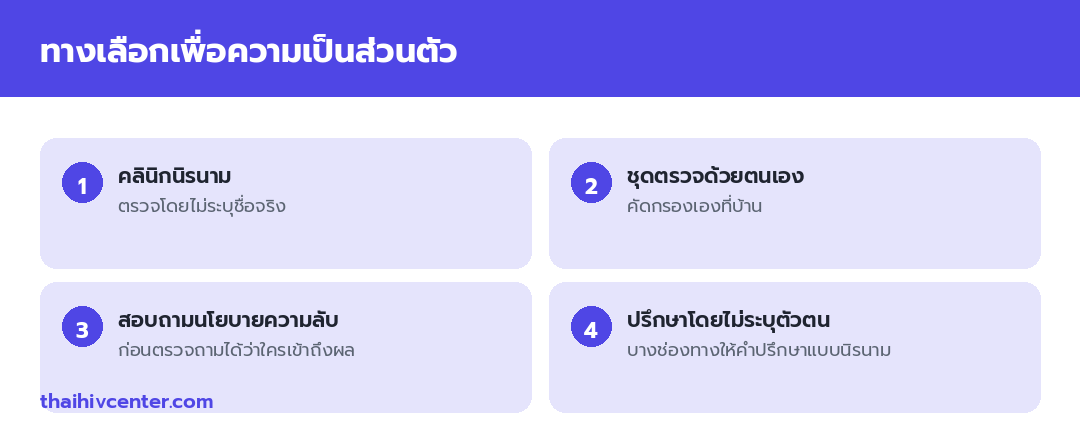
| Option | Characteristics |
|---|---|
| Anonymous clinics | Test without your real name |
| Self-test kits | Screen yourself at home, high privacy |
| Ask about confidentiality policy | Ask before testing who can access results |
| Anonymous consultation | Some channels counsel without identifying you |
The first option is anonymous clinics, offering testing without your real name. The second is self-test kits, letting you screen at home privately. The third is asking the place's confidentiality policy before testing, to know who can access results and how information is handled. And the fourth is anonymous consultation on some channels that counsel without identifying you. Having these diverse options helps you choose a method suiting the level of privacy you want. Read more about kits in HIV self-test kits.
Self-test kits and privacy
HIV self-test kits are a high-privacy option, because they let you screen at home without traveling to a facility or meeting staff. For those worried about disclosure or wanting privacy in starting testing, self-test kits are an attractive option. However, there are things to know about self-test kits. First, choose a certified kit for result reliability and read the manual carefully before use. Second, self-test kits are preliminary screening; if positive, always confirm at a facility. And third, self-testing may mean a person with a positive result faces the news without staff to counsel immediately, so knowing where to get counseling if needed is important. Understanding both the privacy benefit and things to know about self-test kits helps you use this option appropriately.
How anonymous and identified testing differ
HIV testing comes as anonymous and identified, differing in linking results to the client's identity. In anonymous testing, clients don't give their real name, possibly using a code, so results don't directly link to identity, while identified testing records the client's information, possibly part of a health record system. Each has different benefits. Anonymous testing offers high privacy and suits those worried about disclosure, while identified testing may make continuous care linked to health history more convenient in some cases. Which to choose depends on each person's needs and comfort. If privacy is most important to you, anonymous testing may suit better. Asking the place what services it offers and the procedures helps you choose by need. Understanding this difference helps you decide on a testing method suiting your comfort.
If positive, who can access the information
Many worry who can access this information if results are positive. Generally, a positive result is still personal health information treated as confidential like other results. This information is usually used for your care and treatment by the health team involved. Deciding whom to disclose your status to, such as a partner or family, is your personal right and decision. However, details about how information is handled and the care system may vary by place and context. If you want specific details of how your information is handled and who's involved, asking the place you receive care directly is best. Importantly, if positive, there's effective treatment and care ready to help, and that care comes with confidentiality. Understanding this helps privacy worry not be a barrier to testing and entering care.
Ask about confidentiality policy before testing
Because policies and practices about confidentiality may vary by place, asking about the confidentiality policy before testing is worth doing if privacy worries you. You can ask staff about things like who can access your results, how information is stored, whether there's anonymous testing, and the confidentiality policy. Asking these isn't strange or embarrassing but your right to understand how your health information will be handled. Good staff are usually glad to answer these and give clear information. Asking in advance helps you choose a place and method suiting the level of privacy you want, and helps you get tested comfortably. Understanding that you have the right to ask and understand confidentiality policies helps you control your health information's handling, an important part of deciding to test confidently.
Privacy helps people feel able to test
Privacy and confidentiality play an important role in encouraging people to get tested for HIV. When people are confident their information will be kept confidential and there are private options, disclosure worry decreases, making them more able to test. This is why anonymous testing and confidentiality matter, because they reduce barriers making people hesitate to test. Testing is an important first step in health care. Whatever the result, knowing your status helps you plan health care appropriately. If negative, it reassures you and helps plan prevention; if positive, you can start effective treatment. Having private options helps this worry not be a barrier to health care. If you worry about privacy, know there are options suiting your comfort, and testing is something you can do to care for yourself. You can find a clinic near you and ask about privacy.
Frequently asked questions
Is an HIV test confidential
Generally results are confidential medical information, and anonymous services exist, but policies may vary; ask the place directly.
Can I test without giving my name
Yes, anonymous testing exists that doesn't require your real name, possibly using a code; ask which places offer it.
Will work know my results
Testing you do yourself is private and not automatically linked to work; if you have specific worries, ask for clarity.
Will family know if I test
Results are personal information and disclosure is your right; for maximum privacy, anonymous testing or self-testing at home helps.
If positive, who can access the information
Information is still confidential and used for your care; disclosure is your right; ask the place you receive care for details.
What should I ask about confidentiality before testing
You can ask who can access results, how information is stored, and whether there's anonymous service; asking these is your right.
Summary
Privacy worries shouldn't be a barrier to testing for HIV, because results are generally treated as confidential medical information, and anonymous testing services exist that don't require identifying yourself, plus options like self-test kits that add privacy. Testing you do yourself is private, and deciding whom to disclose results to is your right. Because policies may vary, asking a place's confidentiality policy before testing helps you get clarity. Having private options helps you feel able to test, an important step in health care. If you want to test with privacy in mind, find a clinic near you and ask for information.