What Does a Reactive HIV Test Result (Two Lines) Mean? What to Do Next
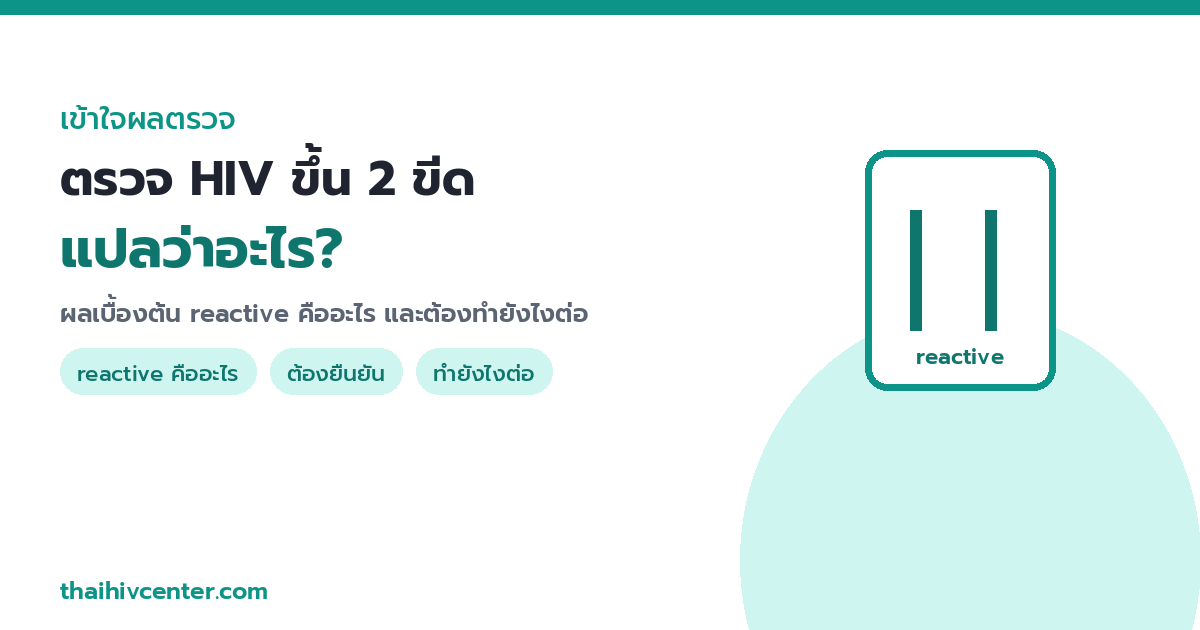
If you've just tested for HIV and got a two-line or reactive result and feel worried or shocked, please take a breath, because the most important thing to understand is that a two-line or reactive result on a screening test is a preliminary result, not a final conclusion. This kind of preliminary result always needs confirmation with additional testing before it can be concluded, because screening tests can have false positives, meaning the result may be reactive even without actual infection. For this reason, a reactive result shouldn't be interpreted as confirming infection but is a signal that confirmatory testing is needed. This article explains in detail what a reactive result means, why confirmation is needed, how false positives happen, and what to do next, with encouragement to get through this time, because whatever the final result, there's care and support ready to help you.
What does a two-line HIV result mean
An HIV test showing two lines or reactive on a screening test means a preliminary result needing further confirmation, not a final conclusion of infection.
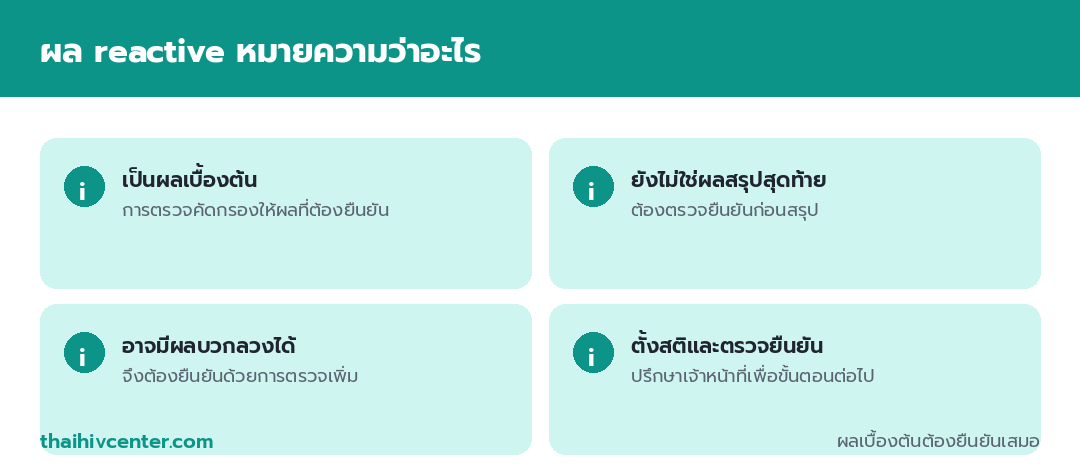
Screening HIV tests, such as rapid tests showing results as lines, are designed for preliminary screening. When the result is reactive, it means the test detected something needing further confirmation but hasn't confirmed infection. Screening tests are highly sensitive so as not to miss infection, but with this sensitivity, there may be false positives, meaning the result may be reactive in some cases without actual infection. For this reason, a reactive result is only a starting point indicating confirmation is needed, not a conclusion. Understanding that a two-line result is preliminary helps you not panic and know the next step is confirmatory testing, which gives a clear answer. Read about test differences in how rapid and lab tests differ.

What is a reactive preliminary result
A preliminary or reactive result is a result from a screening test indicating that further confirmation is needed. Things to understand about a preliminary result:
- It's from a screening test — screening tests are designed for preliminary screening, giving a result to confirm.
- Not a final conclusion — a reactive result doesn't confirm infection; confirmation is needed before concluding.
- May have false positives — screening tests are highly sensitive, which may cause false positives in some cases.
- Always needs confirmation — confirmatory testing with additional testing gives a clear answer.
Understanding what a preliminary result is helps you know a reactive result isn't the final answer and the next step is confirmation. Knowing this fact reduces panic and helps you proceed appropriately. Importantly, a reactive result is a signal to confirm, not a conclusion of infection.
Why confirmation is needed
Confirmation is an important, necessary step after a reactive result, because it gives a clear, accurate answer.
| Point | Details |
|---|---|
| Reactive screening result | A preliminary result needing confirmation, not concluded |
| Confirmatory testing | Additional testing to confirm whether there's actual infection |
| Result after confirmation | Gives a clear answer for the next steps |
Reasons confirmation is needed:
- For accuracy — confirmation helps distinguish actual infection from a false positive.
- For a clear answer — the result after confirmation gives a reliable answer for decisions.
- For appropriate care — if infection is confirmed, you can enter care; if not, you can ease your worry.
Understanding why confirmation is needed helps you see a reactive result is only the first step, and confirmation is necessary before concluding. Confirmation is part of the testing process designed to give an accurate result. Read about test methods in HIV testing methods.
False positives can happen
An important reassuring point is that screening tests can have false positives, meaning the result may be reactive in some cases without actual HIV infection. Screening tests are designed to be highly sensitive so as not to miss infection, but this high sensitivity may cause false positives in some cases. False positives may come from various factors, which is why screening tests must always be followed by confirmation. This is why a reactive result on a screening test shouldn't be interpreted as confirming infection, because it may be a false positive. Confirmation helps distinguish actual infection from a false positive and gives a clear answer. Understanding that false positives can happen reduces panic on getting a reactive result and helps you understand why confirmation matters. Some who get a reactive screening result may find the confirmatory result is negative, showing they're not infected. For this reason, waiting for the confirmatory result before concluding matters, and not jumping to conclusions helps you not worry excessively while waiting for confirmation.
Steps after a reactive result
When you get a reactive result, there are steps to take to get a clear answer and appropriate care.
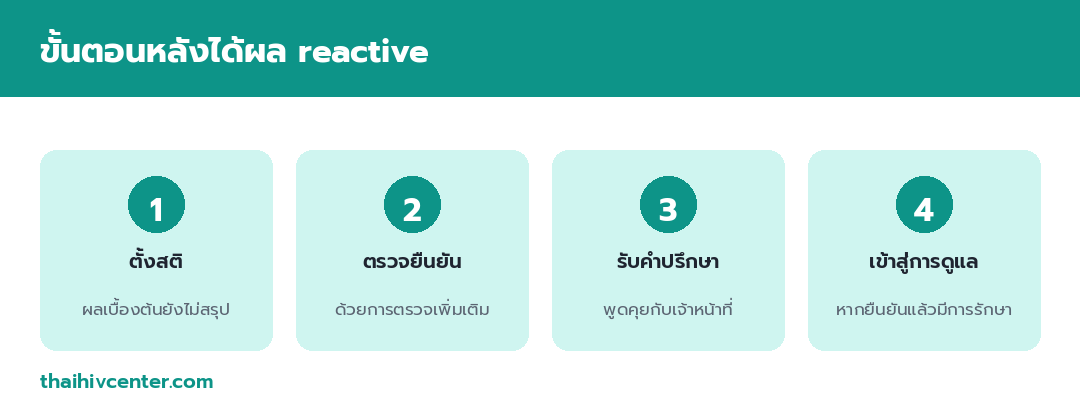
- Stay calm — understand a reactive result is preliminary and not concluded; don't panic.
- Confirm — get confirmatory testing with additional testing for a clear answer.
- Get counseling — talk with staff or a counselor to understand the steps and get support.
- Enter care — if the confirmatory result is positive, you can enter effective care.
Following these steps helps you get a clear answer and appropriate care, whatever the final result. Importantly, don't jump to conclusions from a preliminary result, and get confirmatory testing along with counseling when needed.
Stay calm, don't panic
When you get a reactive result, it's normal to feel worried, shocked, or afraid, understandable feelings. However, what helps is staying calm and remembering a reactive result is preliminary and not concluded, and needs confirmation first, which may find the confirmatory result is negative. Not jumping to conclusions from a preliminary result reduces worry while waiting for confirmation. If you feel very worried during this time, talking with staff, a counselor, or someone you trust helps you feel better. Asking for support during this time is doable and a form of self-care. What's important to remember is that whatever the final result, you're not alone, and there's care and support ready to help. If the confirmatory result is negative, you can ease your worry; if positive, treatment today is highly effective and helps people be healthy and live normally. Staying calm and understanding a reactive result isn't a conclusion helps you get through this time. Read more about managing worry in still worried after an HIV test.
How confirmatory testing works
Confirmatory testing is a step done to confirm the result after a reactive screening result. Generally, confirmatory testing is additional testing helping confirm whether there's actual infection, part of the testing process designed to give an accurate, reliable result. When you get a reactive screening result, staff advise on the appropriate confirmatory testing step, which may be done at a facility. Confirmation gives a clear answer by distinguishing actual infection from a false positive. Importantly, get confirmatory testing as advised, because it's a necessary step before concluding. Understanding that confirmation is part of the process helps you know what happens next and proceed confidently. If you have questions about confirmatory testing, such as the method or timing, asking staff helps you get clear information. Confirmatory testing is an important step in getting a certain answer about your status. Read more about the window period in the HIV window period.
If confirmed positive
If the confirmatory result is positive, meaning HIV infection, what's important to know is that this isn't the end, and there's effective care ready to help. Antiretroviral treatment today is highly effective, helping people be healthy with a life expectancy close to the general population, and once treated to viral control, there's no sexual transmission per U=U. Starting treatment early gives good results. When the confirmatory result is positive, staff give information about entering care and available support, plus emotional counseling. Knowing there's effective treatment and support ready to help helps you get through this time. Importantly, you're not alone, and entering care is a good step for your health. Living with HIV today is a manageable condition, and people can live with good quality of life. Read more about HIV testing in HIV testing methods, and consult a facility for more information.
If confirmed negative
In some cases, those who get a reactive screening result may find the confirmatory result is negative, meaning no HIV infection and the earlier reactive result was a false positive. This case shows why confirmation matters, because it distinguishes false positives from actual infection. If the confirmatory result is negative, you can ease your worry. However, staff may give further advice, such as if you had a risk recently, advising retesting at the appropriate time, because of the window period, plus advice on future prevention. Understanding that the confirmatory result may be negative helps you not jump to conclusions from a reactive result and see the importance of confirmation. Importantly, follow staff advice about retesting or ongoing care, to be certain of your status and care for your health appropriately.
Asking for counseling and support
While waiting for the confirmatory result or after knowing the result, asking for counseling and support is valuable and helps a lot. Available support sources:
- Staff and counselors — at a clinic or facility, ready to explain and advise.
- People you trust — such as friends or family, who encourage you and stand by you.
- Organizations working on HIV — that give information and support.
- Mental-health professionals — if worry disrupts daily life a lot.
Asking for support during this time is doable and a form of self-care. Whatever the final result, having someone to help and encourage you helps you get through this time better. Understanding that support is ready to help means you're not facing this alone.
Misconceptions about a reactive result
There are several misconceptions about a reactive result to correct:
- "Two lines means definitely infected" — false, a reactive result is preliminary and needs confirmation; it may be a false positive.
- "You can conclude without confirmation" — false, confirmation is necessary before concluding.
- "A reactive result means life is over" — false, even if infection is confirmed, treatment today is highly effective and you can live normally.
- "You have to face this alone" — false, there's care and support ready to help.
Knowing these facts reduces panic and misconceptions on getting a reactive result and helps you understand a reactive result is only the first step needing confirmation, not a conclusion, and whatever the final result, there's care and support ready to help.
Frequently asked questions
Does a two-line HIV result mean definitely infected
Not definitely; a two-line or reactive screening result is preliminary and needs confirmation; it may be a false positive.
What do I do next after a reactive result
Stay calm, get confirmatory testing with additional testing, get counseling, and if confirmed positive, enter care.
Do false positives really happen
Yes, screening tests are highly sensitive and may have false positives, so confirmation is always needed before concluding.
What is confirmatory testing
It's additional testing to confirm whether there's actual infection, helping distinguish actual infection from a false positive; staff advise on the steps.
What do I do if confirmed positive
Enter care, which today is highly effective, helping you be healthy and live normally, and there's support ready to help.
What should I do while waiting for confirmation
Stay calm, don't jump to conclusions from a preliminary result, and if very worried, asking for counseling from staff or someone you trust helps.
Summary
An HIV test showing two lines or reactive on a screening test is a preliminary result, not a final conclusion, and always needs confirmation with additional testing, because screening tests can have false positives. For this reason, a reactive result shouldn't be interpreted as confirming infection but is a signal to confirm. The steps to take are staying calm, getting confirmatory testing, getting counseling, and if confirmed positive, entering effective care. Whatever the final result, you're not alone, and there's care and support ready to help. If you want confirmatory testing or counseling, find a clinic near you.
Note: This article provides informational content. If you've just gotten a reactive result and feel worried, getting confirmatory testing and counseling from staff or a professional helps you get answers and appropriate care.