When Can You Test for HIV After a Risk? Get the Timing Right
After a risk, many people want to test immediately for peace of mind, but the question is how many days after a risk an HIV test gives a reliable result — because testing too early can be negative even when you are infected. This article helps you plan your testing with the right timing, from what to do immediately after a risk to the point at which a result is conclusive.
The first thing to do after a risk
The most important thing after a risk is not to panic but to quickly assess whether you are within the first 72 hours — because if you are, taking PEP (emergency post-exposure medicine) can greatly reduce the chance of infection, and the sooner you start, the better it works. After that, plan your testing for the appropriate time.
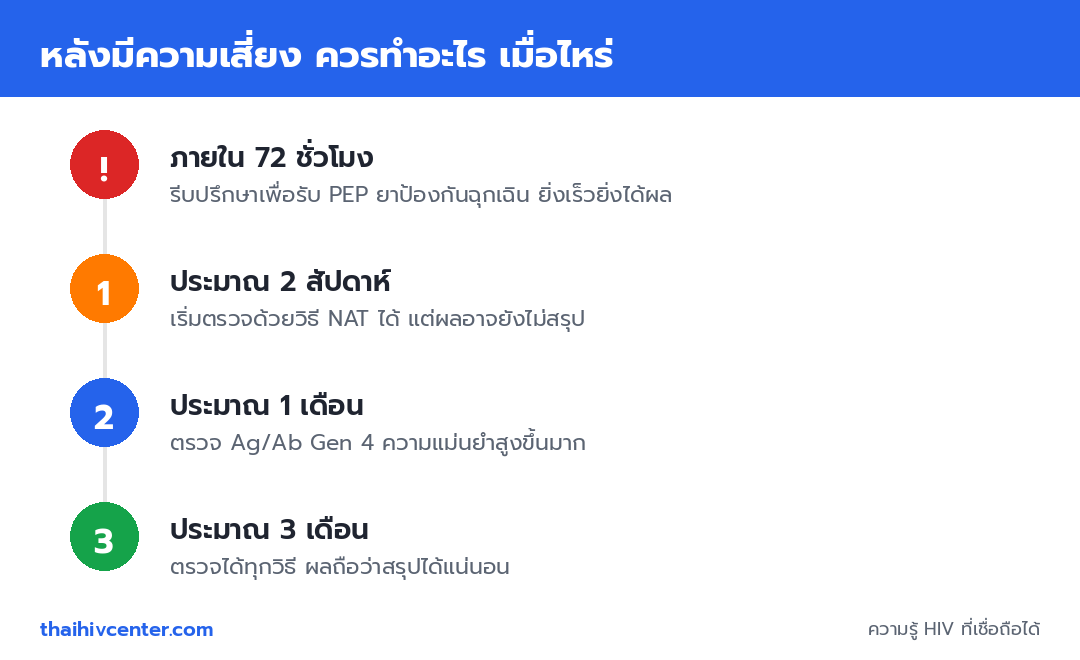
How many days after a risk, and which test
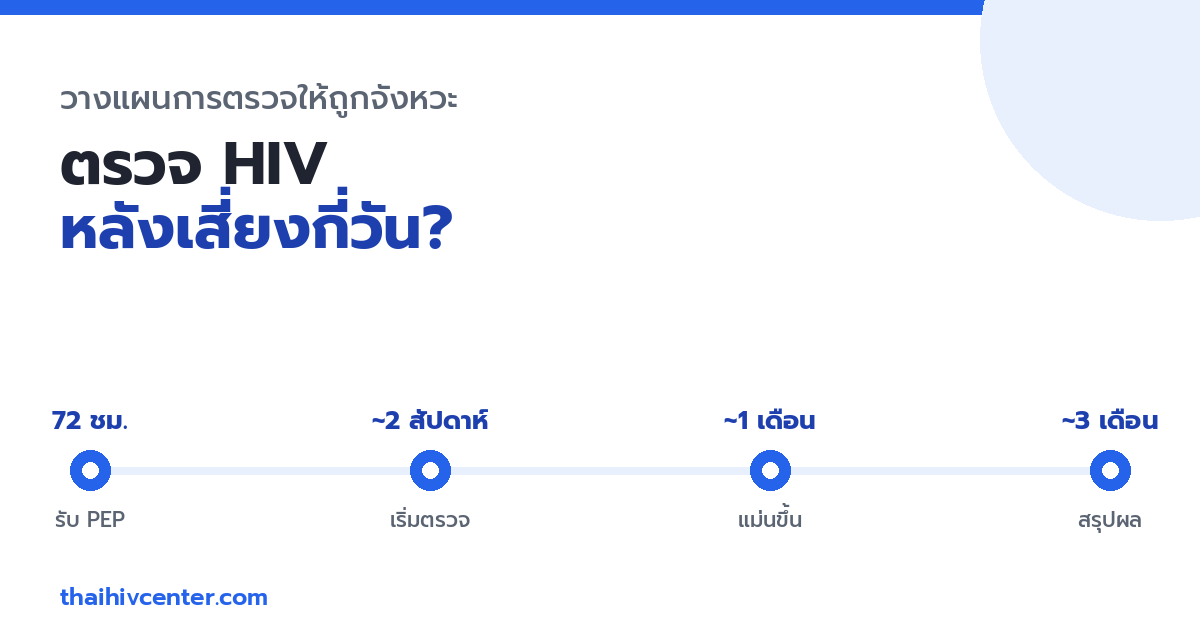
The right time to test depends on the method and its window period. The table below summarizes what to do at each stage after a risk.
| Time after risk | What to do |
|---|---|
| Within 72 hours | Consult promptly for PEP, emergency medicine — the sooner, the better. |
| About 2 weeks | You can start testing with NAT, but the result may not be conclusive; retest later. |
| About 1 month | Test with 4th-gen Antigen/Antibody, with much higher accuracy. |
| About 3 months | All methods can be used and the result is considered conclusive. |
To understand why each method has a different timing, read the HIV window period, and see an overview of methods in HIV testing.
How reliable is a result over time
The more time passes after infection, the more reliable a result becomes, because the body has produced enough of the substances used for testing.
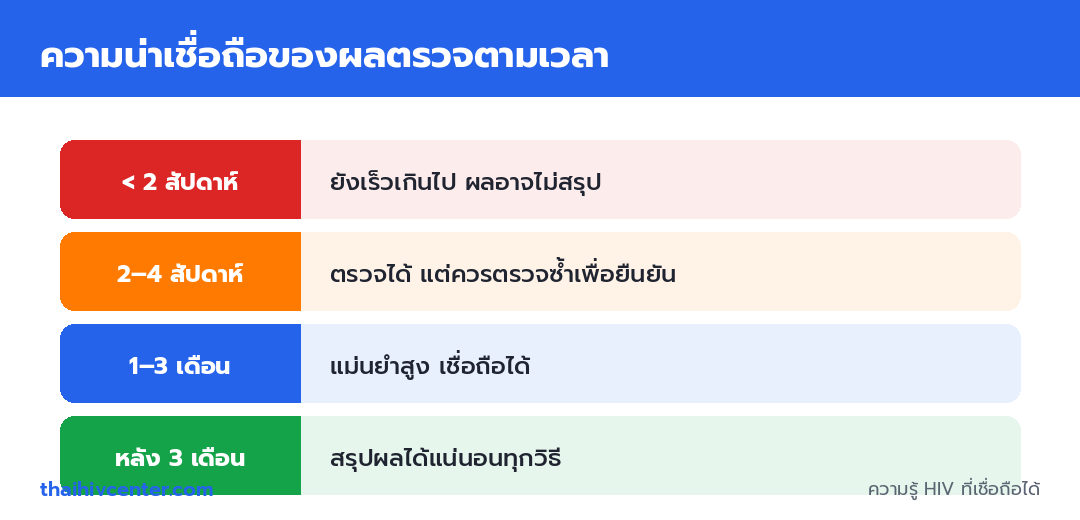
- Under 2 weeks — too early, the result may not be conclusive.
- 2–4 weeks — testable, but retest to confirm.
- 1–3 months — highly accurate and reliable.
- After 3 months — considered conclusive across all methods.
Why testing early helps
Even if an early result is not yet conclusive, testing early is useful, because if the virus is found you can start antiretroviral treatment early, which protects your health and reduces transmission. Early testing also lets you make timely prevention decisions. Whatever the result, there are always options to look after yourself.
What to do after testing
If the result is negative early and you are still in the window period, retest as advised to confirm. If it is positive, enter treatment promptly — today's treatment is highly effective and lets you live normally. For people with ongoing risk, using PrEP for prevention is worth considering, along with regular sexual-health check-ups.
Why not to rush to test right after a risk
Although worry may make you want to test immediately, testing the next day or a few days after a risk usually gives an inconclusive negative, because the body has not yet produced enough of the substances used for testing — which can create a false sense of safety while you are still in the window period. The only exception that requires urgency is consulting about PEP within 72 hours; testing to confirm your status should follow the appropriate timing. Understanding this reduces the stress of unnecessary early retesting and helps you plan sensibly.
Where can you test for HIV
Today, HIV testing is easy to access with several options. Thai nationals can test free twice a year under universal health coverage at public hospitals. There are also many community clinics offering free, friendly, and confidential services, as well as self-test kits for those who prefer to test privately at home. To find a convenient site, you can search for an HIV testing clinic near you and choose the method and timing that suit you.
How often to test with ongoing risk
For people with regular risk — such as multiple partners or not always using condoms — testing for HIV periodically every 3–6 months helps you know your status consistently and start care early if needed. People with ongoing risk should also consider using PrEP for prevention, alongside checking for other STIs such as syphilis and gonorrhea. Regular testing is not something to fear but a proactive way to look after your health and stay reassured.
Frequently asked questions
How many days after a risk is an HIV test accurate
You can start testing at about 2 weeks with NAT, but for confidence, testing at about 1 month (4th-gen Ag/Ab) and retesting at 3 months is considered comprehensive.
Can I test the day after a risk
Too early — the result will not be conclusive. But if you are within 72 hours, consult about PEP immediately.
If my 1-month result is negative, do I need to retest
It depends on the method and risk. A clinician may recommend retesting at 3 months to confirm across all methods.
How are PEP and HIV testing related
PEP is emergency medicine that must start within 72 hours after a risk, while testing confirms your status later at the appropriate time.
Summary
After a risk, first assess whether you are within 72 hours to get PEP, then start testing from about 2 weeks and retest to confirm once you reach the period — testing at 3 months is considered conclusive across all methods. Getting the timing right gives an accurate result and lets you look after yourself in time. To test or seek advice, find an HIV testing clinic near you.