How Many Days Until PrEP Protects You? How Far in Advance to Take It, and How to Stop
One of the most common questions for those about to start PrEP is how many days after starting it protects against HIV, and how far in advance to take it. This matters because PrEP doesn't protect immediately on starting but needs to be taken consistently for a period before it builds up in the body to a protective level. What's important to understand is that the exact time depends on the regimen and how it's taken, plus other factors. So rather than fixating on a set number, consulting a doctor for accurate information for the regimen and method you use is the best approach. This article explains in detail why PrEP takes time before it protects, what to do early on, how important consistency is, how daily and event-based dosing differ, and how to stop PrEP, so you use PrEP correctly and safely, following your doctor's advice.
How many days until PrEP protects you
The important answer is that PrEP needs to be taken consistently for a period before it builds up in the body to a level that protects against HIV; it doesn't protect immediately on taking the first pill.
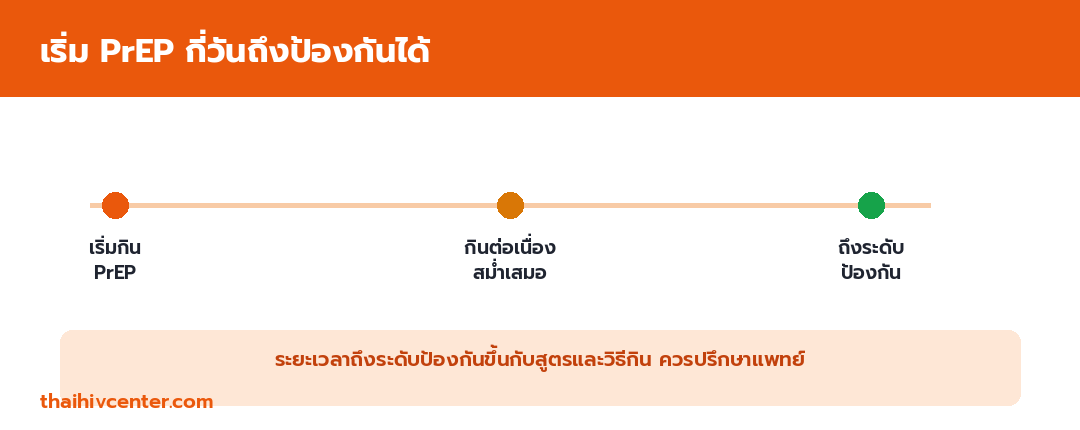
The time the medicine takes to build up to a protective level depends on many factors, especially the regimen used and how it's taken, plus the body area involved in the risk. For this reason, there's no single number for every case. What's certain is that PrEP must be taken consistently as a doctor advises before it gives effective protection, and early on when the medicine hasn't built up, you should use other protection too. Consulting a doctor about the regimen and method you use helps you know how far in advance to take it before there's sufficient protection. Understanding that PrEP takes time before it protects helps you use PrEP correctly and not be careless early on. Read PrEP basics in what PrEP is.
Why PrEP takes time before protecting
To understand why PrEP doesn't protect immediately, we should understand how PrEP works. PrEP works by building up in the body to a level sufficient to prevent HIV from establishing and multiplying if there's exposure. When you take the first pill, the medicine level isn't yet at a protective level immediately but gradually increases with consistent dosing until it reaches a level giving effective protection. The time the medicine takes to build up to this level depends on the regimen, the dosing method, and other factors. This is why PrEP must be taken in advance before a risk and taken consistently to maintain a sufficient level. Understanding this mechanism helps you see why starting PrEP and having a risk the same day may not yet be fully protected, and why planning to start in advance and dosing consistently matters. Consulting a doctor helps you understand how far in advance to start for the regimen and method you use, to ensure sufficient protection when you have a risk.
Consistency matters for protection
The most important factor in PrEP's effectiveness is consistency in dosing, because PrEP protects only when the medicine level is sufficient, which requires consistent dosing. Things to understand about consistency:
- Consistency protects — taking it consistently as a doctor advises keeps the level at a protective level.
- Missing doses reduces protection — inconsistent or missed dosing may drop the level below protective.
- Build a dosing habit — taking it at the same time each day, setting reminders, and tying it to a routine help consistency.
- Consult a doctor if you have problems — if you have obstacles to consistency, consult a doctor for an appropriate approach.
Understanding that consistency is the key to protection with PrEP helps you use PrEP effectively. Inconsistent dosing not only reduces protection but keeps the medicine from working as it should. Viewing consistent dosing as part of self-care helps you sustain it long term. Read about taking PrEP in how to take PrEP effectively.
Use other protection early on too
Because PrEP needs to be taken consistently before it builds up to a protective level, early on when the medicine hasn't built up, you should use other protection too, such as condoms, to have protection while PrEP doesn't yet fully protect. Using other protection early on is important, because starting PrEP and having a risk immediately may not yet be sufficiently protected. Besides early on, using condoms with PrEP also helps prevent other STIs PrEP doesn't prevent, and prevent pregnancy. So using condoms too is an approach giving comprehensive protection both early on and ongoing. Consulting a doctor helps you know how long to use other protection early on. Understanding that you should use other protection early on helps you not be careless while PrEP doesn't yet fully protect and helps protection be comprehensive. Read about using both in PrEP vs condoms, which to use.
Daily vs event-based PrEP
PrEP has different dosing methods, which may affect the timing and way of protection. Common dosing methods:
- Daily — taking the medicine every day consistently to maintain continuous protection, suiting those with regular risk.
- Event-based — taking the medicine in a set pattern around a risk period, which has a specific method to follow strictly.
| Aspect | Daily | Event-based |
|---|---|---|
| How to take | Every day consistently | In a set pattern around a risk period |
| Suits | Those with regular risk | Those with risk at certain times |
| Consult a doctor | Yes, for the correct method | Yes, because it has a specific method to follow strictly |
Each method has different details and suitability, including the time to take before and after a risk. Choosing an appropriate method should be done with a doctor, who considers your risk pattern and personal factors and advises on the correct dosing method. Importantly, whatever method, strictly following a doctor's advice is necessary for effective protection. Understanding that there are different dosing methods helps you see that the timing and way of protection may differ by method used and why consulting a doctor matters. Read more in daily vs event-based PrEP.
What to know about starting and stopping
There are several things to know about starting and stopping PrEP, to use it correctly and safely.
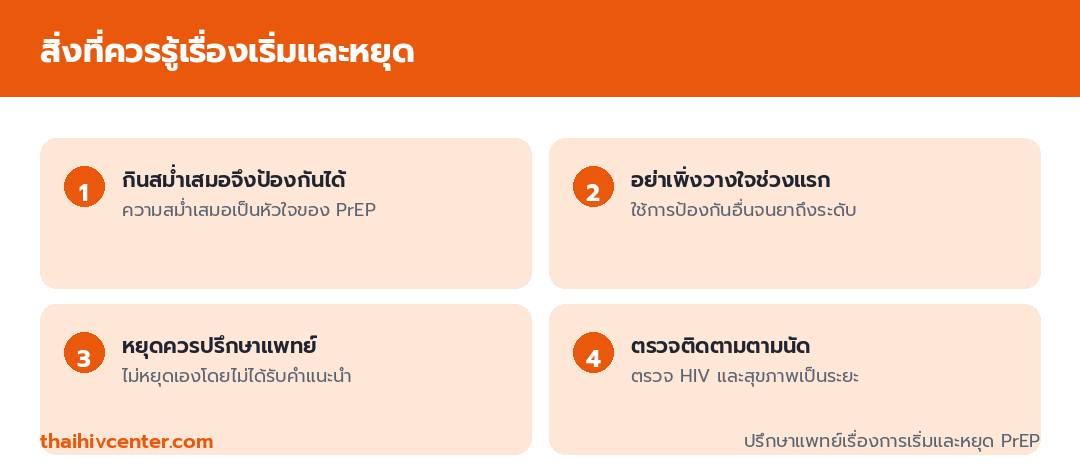
- Consistency protects — consistency is the key to PrEP's effectiveness.
- Don't be careless early on — use other protection until the medicine builds up to a protective level.
- Consult a doctor to stop — don't stop on your own without advice.
- Monitor on schedule — PrEP users must test for HIV and have health checks periodically.
Understanding these helps you use PrEP correctly and safely, early on, during use, and when you want to stop. Following a doctor's advice at every step helps PrEP give effective, safe protection.

How to stop PrEP
Stopping PrEP is something to do under a doctor's advice, not stopping immediately on your own. When you want to stop PrEP, whatever the reason — such as reduced risk or a change in life situation — consult a doctor first, because there are considerations about stopping appropriately. A doctor may advise on how long to keep taking it after the last risk before stopping, to ensure sufficient protection during a period when there may still be risk, plus HIV testing before stopping to confirm status. Also, if in the future you want to resume PrEP, you'll need to start taking it in advance again for the medicine to build up to a protective level. Stopping and restarting is therefore something to plan with a doctor. Understanding that stopping PrEP should be done under a doctor's advice helps stopping be safe and appropriate and helps you get correct care at every step. If you're considering stopping or changing your PrEP use, consulting a doctor is an important first step.
Monitoring while using PrEP
Using PrEP comes with periodic monitoring, an important part of using PrEP safely and effectively. Monitoring related to PrEP use includes:
- Periodic HIV testing — to confirm you're still not infected, since PrEP is for those not infected.
- Related health checks — to assess the safety and suitability of continued use.
- Testing for other STIs — since PrEP doesn't prevent these, testing helps care for sexual health thoroughly.
- Talking with a doctor — about dosing, side effects, or problems.
Attending follow-up appointments consistently is very important for PrEP users, because it ensures using PrEP is safe and appropriate and helps care for overall sexual health. Understanding that using PrEP comes with monitoring helps you see PrEP isn't just taking medicine but part of health care needing ongoing monitoring.
Who should consider using PrEP
PrEP suits those with ongoing HIV risk. Examples of those who may benefit from PrEP:
- Those with a partner who has HIV, especially if the partner isn't virally controlled yet
- Those with multiple partners or ongoing risk
- Those who can't use condoms consistently
- Those with a risk who want additional protection
Deciding to use PrEP should be done with a doctor, who assesses risk and suitability and advises on the dosing method, how far in advance to start, and monitoring. Understanding who should consider PrEP helps those with a risk consider this option appropriately. Read more in who should use PrEP.
Misconceptions about PrEP's protection timing
There are several misconceptions about PrEP's protection timing to correct:
- "The first PrEP pill protects immediately" — false, PrEP needs consistent dosing before it builds up to a protective level.
- "Inconsistent dosing still protects the same" — false, inconsistent dosing may drop the level below protective.
- "Using PrEP means no other protection early on" — false, early on you should use other protection until the medicine reaches a protective level.
- "You can stop PrEP immediately when you don't want it" — false, stopping should be under a doctor's advice for safety.
Knowing these facts helps you use PrEP correctly and safely and understand that PrEP needs time and consistency to give effective protection. Correct understanding helps you not be careless and use PrEP appropriately.
Frequently asked questions
How many days until PrEP protects you
PrEP needs consistent dosing for a period before it protects; the time depends on the regimen and method; consult a doctor for accurate information.
Can I have sex right after the first PrEP pill
You may not yet be fully protected, because the medicine hasn't built up; use other protection early on and consult a doctor.
Do I need condoms too when starting PrEP
You should, because early on the medicine doesn't yet fully protect, and condoms also prevent other STIs and pregnancy.
What if I take PrEP inconsistently
Inconsistent dosing may drop the level below protective, so consistency matters; if you have problems, consult a doctor.
How should I stop PrEP
Consult a doctor before stopping, because there are considerations about how long to keep taking it and testing; don't stop immediately on your own.
Do I restart if I resume PrEP
You need to start taking it in advance again for the medicine to build up to a protective level; plan with a doctor.
Summary
PrEP doesn't protect against HIV immediately on starting but needs consistent dosing for a period before it builds up to a protective level. The exact time depends on the regimen and dosing method, so consult a doctor for accurate information for your case. Early on when the medicine hasn't built up, use other protection too. Consistency in dosing is the key to protection, and using PrEP comes with periodic monitoring. Stopping PrEP should also be done under a doctor's advice. Understanding timing and consistency helps you use PrEP correctly and safely. If you're interested in starting PrEP or want to consult, find a clinic near you.