How to Take PrEP, When to Take It, and What to Do If You Miss a Dose: A Guide to Taking PrEP Effectively
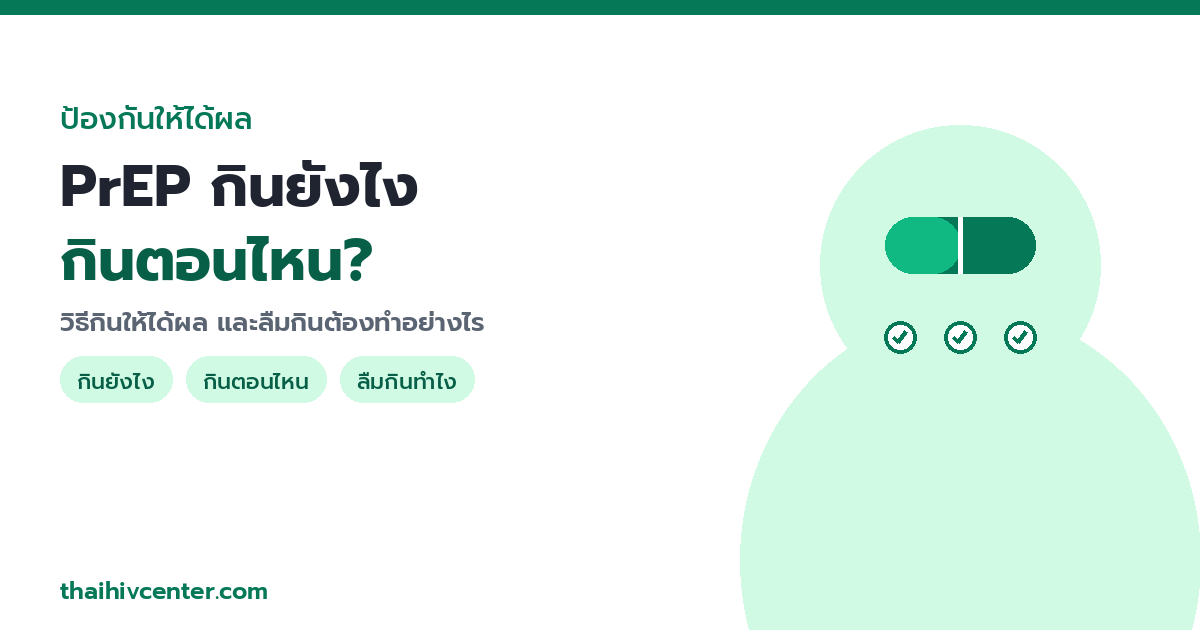
PrEP is a highly effective HIV prevention medicine, but its effectiveness depends heavily on taking it correctly and consistently. Many starting PrEP ask how to take PrEP and when, and what to do if they miss a dose. These questions matter, because taking it incorrectly or missing doses often can reduce protection. Conversely, understanding the correct way to take it lets PrEP work at full effectiveness and protect you confidently. This article is a guide explaining in detail how to take PrEP, when in the day, how many days before it starts protecting, different dosing forms, managing missed doses, plus monitoring and precautions, so you can use PrEP correctly and safely — always following your doctor's advice.
How to take PrEP
The most common dosing form is daily — one pill every day consistently. Taking it daily keeps the medicine level in the body steady at a level that can prevent infection. The key to effective PrEP is consistency, because the medicine must build up and maintain a level in the body to work. Taking it on and off makes the level insufficient and reduces protection. Besides daily dosing, there is an event-based form for some groups per a doctor's advice, explained in the next section. Choosing the right form should be done with a doctor, considering each person's behavior and convenience. Read more basics in what PrEP is.
When in the day to take it
For daily PrEP, you can choose the time by convenience, but it should be the same time each day to help keep the level steady and make it easier to remember. Many choose the morning with their routine; some choose bedtime. What matters is not a specific time but taking it consistently at about the same time each day. Tying it to a regular routine, like brushing teeth or a meal, helps you not forget. Setting a phone reminder or using an app also helps. Choosing a time that suits your lifestyle and making it a habit is the key to consistent dosing.
With or without food
Generally, daily PrEP can be taken before or after food, and with food or on an empty stomach. However, some may find taking it with food helps reduce nausea that can occur early on. If you feel stomach discomfort after taking it on an empty stomach, trying it with food may help. What matters is taking it consistently in a way you find convenient and can sustain. If you have questions about taking it with food or other medicines, consult a doctor or pharmacist, because some cases may have specific advice. Following professional advice helps you take it correctly and get maximum effectiveness.
Taking daily PrEP effectively
To let PrEP work at full effectiveness, there are key practices to follow.
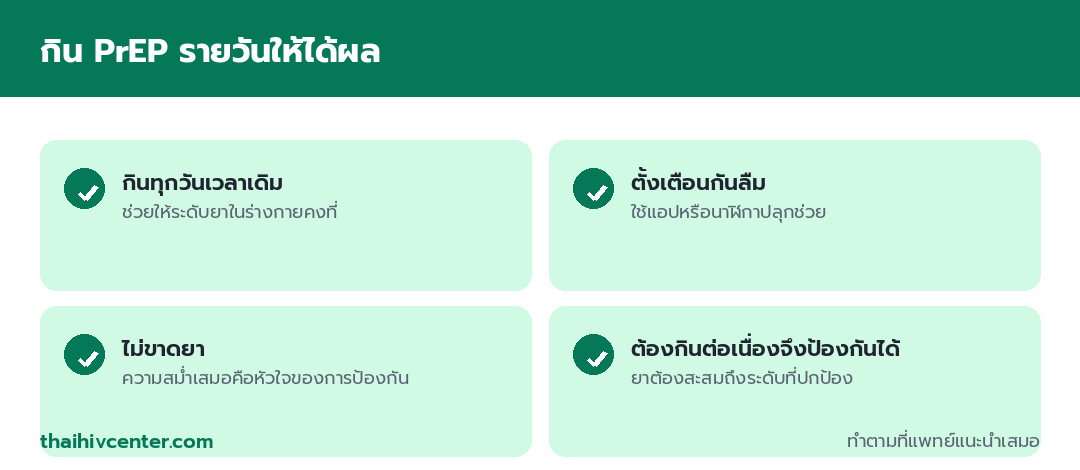
First, take it every day at the same time, to keep the level steady. Second, set reminders using a phone app, alarm, or by tying it to a routine. Third, try not to miss doses, because consistency is the key to protection; frequent misses reduce the level and protection. And fourth, understand that the medicine must be taken continuously to build up to a protective level — not one dose protecting immediately. Following these and making dosing a habit helps PrEP work as it should. If you have trouble taking it consistently, consult a doctor to find an approach that suits you.
How many days before it protects
A common misconception is thinking PrEP protects immediately. In truth, the medicine takes time to build up to a protective level. This time varies by exposure type. Generally, for anal sex, the medicine usually reaches a protective level within about a week, while protection for vaginal sex may take longer. For this reason, when first starting PrEP, you shouldn't rely on PrEP alone and should use other protection until the medicine reaches a protective level. The exact time should follow your doctor's advice, who gives information suited to your situation. Understanding this helps you protect yourself fully in the early period.
How to take event-based PrEP
Besides daily dosing, there is an event-based form, called the 2-1-1 regimen, an option for some groups per a doctor's advice, especially for men who have sex with men who have occasional sex and can plan ahead. The principle is taking the medicine before and after sex per a set pattern — two pills before sex in the recommended window, then one pill the next day, and another the following day. This requires correct timing, so it suits those who can anticipate sex. However, this form isn't suitable for everyone or every situation and should be used only under a doctor's advice.
| Aspect | Daily | Event-based (2-1-1) |
|---|---|---|
| How to take | One pill every day | 2 pills before + 1 pill next day + 1 pill the following day |
| Suits | People with regular risk | People with occasional risk who can plan (per a doctor's advice) |
| Pros | Continuous protection, no planning | Fewer pills when risk is infrequent |
| Caution | Must take daily consistently | Must time it correctly |
Read more in daily vs event-based PrEP.
What to do if you miss a dose
Missing a dose can happen, and there are appropriate ways to manage it.
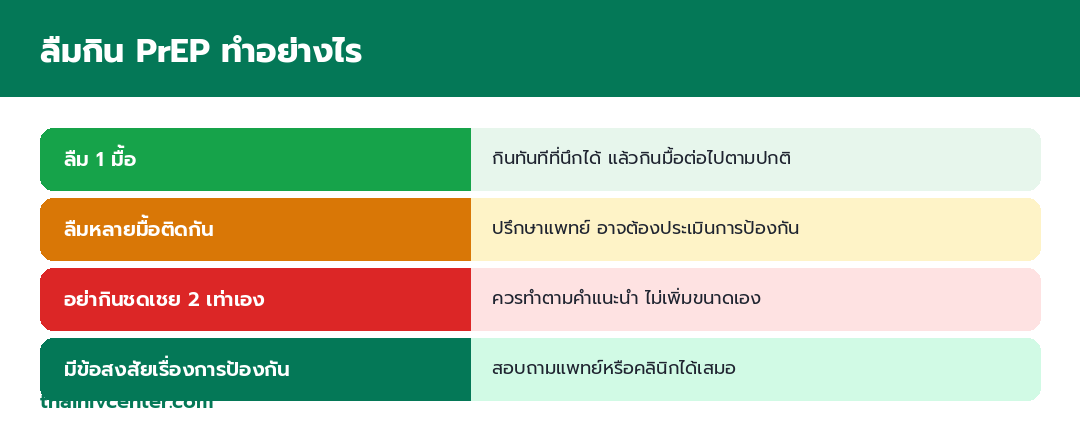
If you miss just one dose, generally take it as soon as you remember, then take the next dose at the usual time. Missing one dose occasionally usually doesn't affect protection much if you're consistent overall. But if you miss several doses in a row, the level may drop until protection is insufficient. In that case, consult a doctor to assess what to do next, and you may need other protection during that time. What you shouldn't do is double up on your own without consulting, because you should follow correct advice. If you have questions about a missed dose and its effect on protection, asking a doctor or clinic is the best option. Having a plan for missed doses helps you manage the situation appropriately and maintain protection.
Managing early side effects
Some may have mild side effects early on starting PrEP, such as nausea, headache, dizziness, or stomach pain, which are usually mild and improve as the body adjusts within a few days to two weeks. Taking it with food may help reduce nausea. Resting enough and drinking plenty of water also help. If side effects are very bothersome or don't improve, consult a doctor about the approach — don't stop on your own, as it reduces protection. What's important is that most side effects are only temporary and not a reason to quit PrEP. Understanding they are common and manageable helps you get through the adjustment period. Read more in PrEP side effects.
Monitoring while on PrEP
Taking PrEP isn't just taking medicine but comes with important monitoring. Generally, PrEP users have periodic appointments, about every three months, to retest for HIV and monitor health. HIV testing while on PrEP is important to ensure you aren't infected, because PrEP is only for those who are HIV-negative. There may also be other health tests, such as kidney function, and testing for other STIs. This monitoring keeps PrEP use safe and effective and helps detect and manage other health issues early. So attending appointments consistently is an important part of using PrEP correctly and shouldn't be overlooked.
How to stop PrEP
PrEP doesn't have to be taken forever. If risk decreases or ends — such as changes in behavior or life situation — you can stop PrEP, but stopping should be done appropriately under a doctor's advice, not abruptly right after the last risk, because it's generally recommended to continue for a period after the last risk to ensure you're still protected. How long to continue depends on the exposure type and doctor's advice. If risk returns in the future, you can restart PrEP, always testing for HIV before starting. Consulting a doctor about stopping and restarting helps keep protection continuous and safe.
Precautions and interactions
Although PrEP is very safe, there are some precautions. First, PrEP is only for those who are HIV-negative, so you must test for HIV before starting and while using it. Second, PrEP prevents HIV only, not other STIs or pregnancy, so use other protection as appropriate. Third, some medicines may interact with PrEP or affect the kidneys, so inform your doctor about medicines and supplements you take. And fourth, those with kidney issues or certain health conditions may need special care. Consulting a doctor and monitoring help manage these precautions. Read about the difference between PrEP and PEP in how PrEP and PEP differ.
Frequently asked questions
How many pills of PrEP per day
Daily is one pill every day; event-based has a specific pattern per a doctor's advice.
Does PrEP protect immediately
Not immediately — the medicine takes time to build to a protective level; use other protection early per a doctor's advice.
Is missing PrEP for one day dangerous
Missing one dose occasionally usually doesn't matter much if consistent overall; take it as soon as you remember, but if missing often, consult a doctor.
Do I take PrEP at the same time every day
Take it at about the same time each day to keep the level steady and remember easily; choose a convenient time you can make a habit.
Can I take PrEP with other medicines
Some medicines may interact; inform your doctor about medicines and supplements you take for safety.
Can I just stop PrEP if I'm no longer at risk
Consult a doctor before stopping, because it's generally recommended to continue for a period after the last risk.
Summary
Taking PrEP effectively depends mainly on consistency. Daily dosing is one pill at about the same time each day, taken before or after food, and the medicine takes time to build to a protective level, so use other protection early. If you miss one dose, take it as soon as you remember, but if you miss several, consult a doctor. There is also an event-based form for some groups per a doctor's advice. PrEP comes with monitoring every three months, and you should consult a doctor about stopping or restarting. With correct dosing and appropriate care, PrEP protects you confidently. To start or consult, find a clinic near you.