Early HIV Symptoms in Men and Women: Warning Signs Not to Ignore

People who have just had a risk often start watching their body for anything unusual. The truth is that early HIV infection can cause some symptoms — but they look very much like the flu, and many people have no symptoms at all. That makes “using symptoms to decide whether you’re infected” unreliable.
This article covers the common early symptoms in both men and women, how they differ from ordinary flu, and — most importantly — when to test for an accurate result. It draws on guidance from the WHO, the U.S. CDC, and Thailand’s Department of Disease Control.
When do early HIV symptoms appear?
Early symptoms occur during acute HIV infection, roughly the first 2–4 weeks after exposure, when the virus multiplies rapidly. This flu-like illness is called Acute Retroviral Syndrome (ARS), and it usually passes within 1–2 weeks — which is why many mistake it for a common cold. See the overview at HIV symptoms.
Common symptoms of acute infection
- Fever — the most common sign, often with chills
- Sore throat and difficulty swallowing
- Body aches and headache, unusual fatigue
- A rash, often on the trunk and not itchy
- Swollen lymph nodes in the neck, armpits, and groin
- Night sweats, diarrhoea, or weight loss in some people
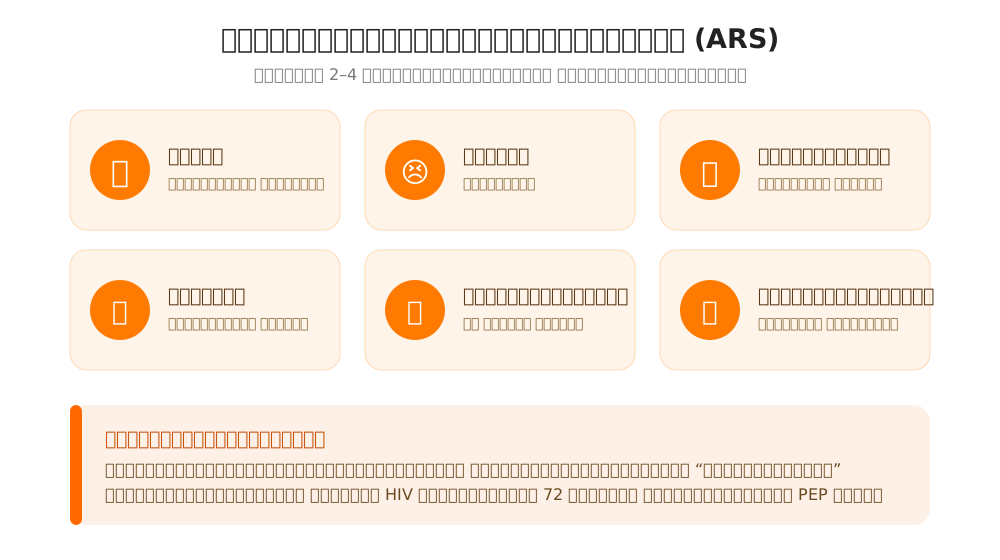
These symptoms are not specific to HIV — many viral infections cause the same picture. Having them doesn’t mean you have HIV, and not having them doesn’t mean you’re safe.

Do symptoms differ in men and women?
Overall, early HIV symptoms are very similar in men and women, since they reflect the immune response to the virus. Some differences:
- In women, recurrent vaginal yeast infections, changes in menstruation, or pelvic inflammatory disease may also occur.
- In men, the main picture is usually the flu-like syndrome above.
- Both may develop mouth or genital ulcers in some cases.
HIV vs the flu: how to tell them apart
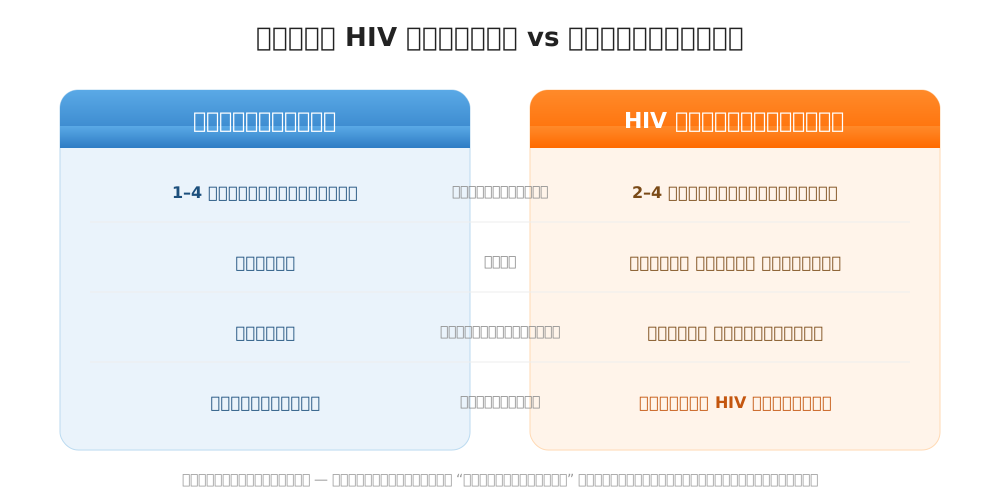
| Feature | Influenza | Acute HIV |
|---|---|---|
| Onset | 1–4 days after exposure | 2–4 weeks after a risk |
| Rash | Uncommon | Common, often non-itchy, on the trunk |
| Swollen nodes | Uncommon | Common, in several sites |
| Risk history | Non-specific | Often a risk 2–4 weeks earlier |
| Confirmed by | Symptoms / flu test | An HIV test only |
Why symptoms can’t tell you — and when to test
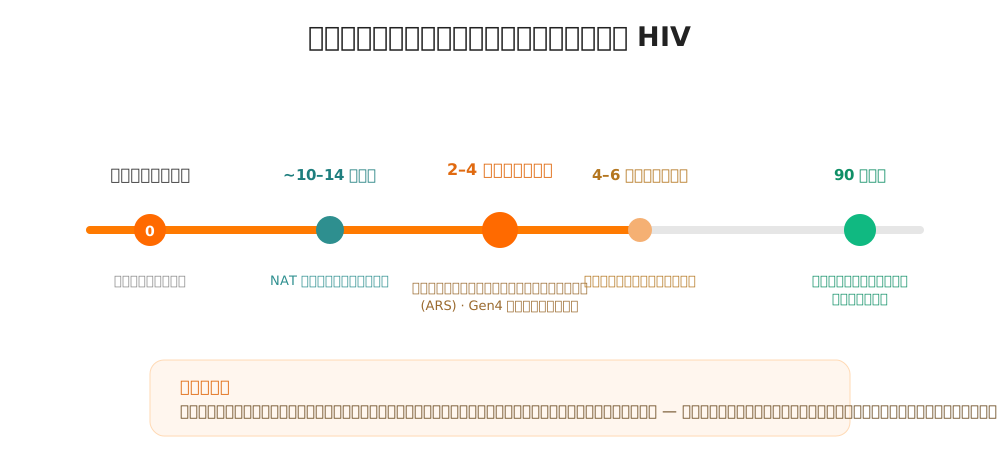
Symptoms are unreliable because they aren’t specific and because many people have none. Testing is the only way to know, but mind the window period:
- NAT/PCR — earliest, about 10–14 days after a risk
- 4th-generation antigen/antibody — fairly reliable at ~2–4 weeks
- Rapid antibody test — may take up to about 3 months
Try the HIV test date calculator and compare methods at types of HIV test. If you were exposed within 72 hours, seek PEP right away.
Conclusion
Early HIV symptoms usually appear 2–4 weeks after exposure and resemble the flu — fever, sore throat, rash, and swollen nodes — and are broadly similar in men and women. But with or without symptoms, symptoms alone can’t confirm or rule out infection. The only sure way to know is a well-timed test. See how and where at HIV testing and learn the stages at the stages of HIV.