HIV vs AIDS: What’s the Difference? A Clear, Up-to-Date Guide

The words “HIV” and “AIDS” are often used interchangeably, but medically they mean very different things. Understanding the difference isn’t just about vocabulary — it shapes how we think about testing, treatment, and living with HIV. The most important truth is this: having HIV today does not mean you will develop AIDS, and most people who are diagnosed and treated will never reach that stage.
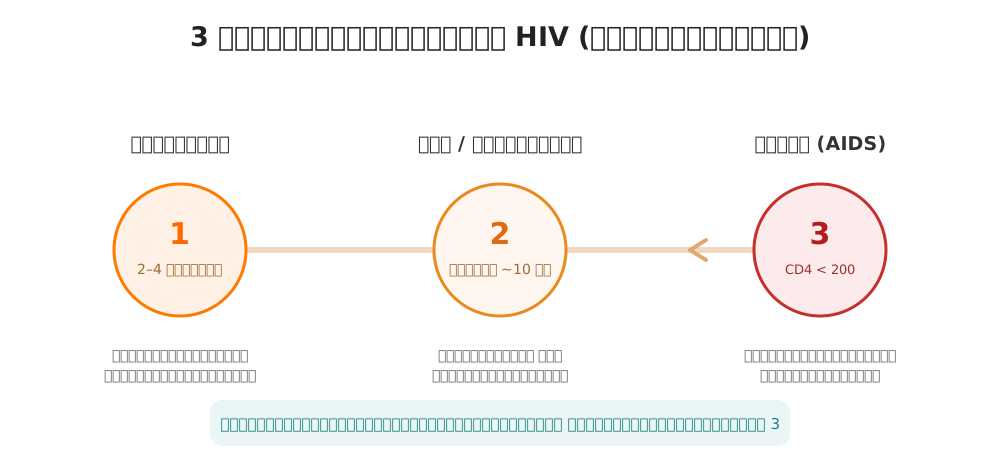
This article explains exactly how HIV and AIDS differ, the role of CD4 count and viral load, the three stages of infection, and what you can do to look after yourself. It is based on guidance from the World Health Organization (WHO), the U.S. CDC, and Thailand’s Department of Disease Control.
What is HIV?
HIV stands for Human Immunodeficiency Virus. It is a virus that directly attacks the immune system, and its main target is a white blood cell called the CD4 cell — a kind of “general” that directs the body’s defences. When HIV enters CD4 cells, it uses them to make more copies of itself, steadily lowering the CD4 count and weakening immunity over time.
Crucially, HIV is a virus, not a disease stage. Someone who acquires it is “living with HIV.” It is passed through blood or bodily fluids — for example condomless sex, sharing needles, or from mother to child. See the overview at HIV basics.
What is AIDS?
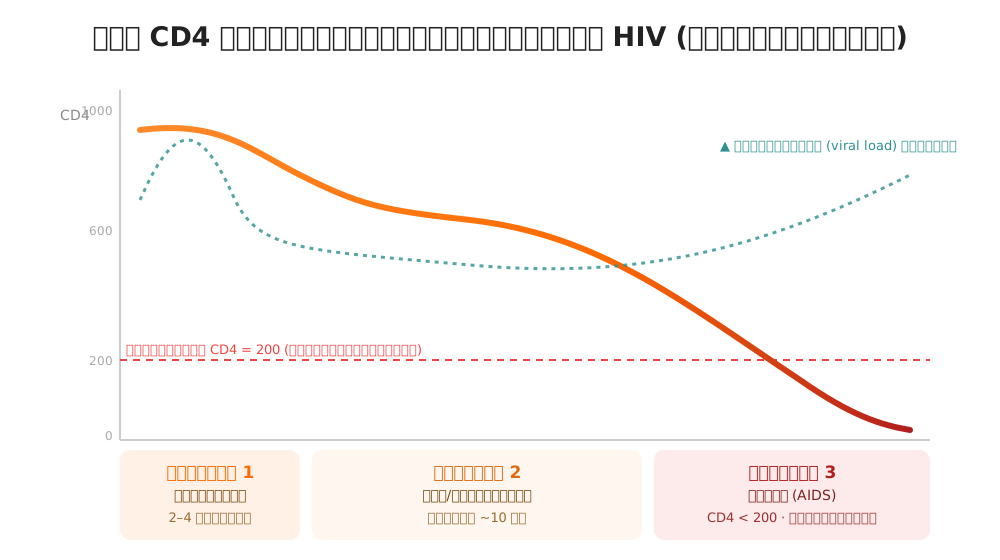
AIDS stands for Acquired Immunodeficiency Syndrome. Unlike HIV, it is not a different virus — it is the most advanced stage of the same infection, reached when HIV is left untreated and the immune system becomes severely damaged. A person is considered to have AIDS when:
- their CD4 count falls below 200 cells/mm³ (a healthy count is about 500–1,500), or
- they develop an AIDS-defining opportunistic infection or cancer at any CD4 level.
Before effective medicines existed, HIV often progressed to AIDS. Today, with effective antiretrovirals, AIDS is largely preventable.
HIV vs AIDS at a glance
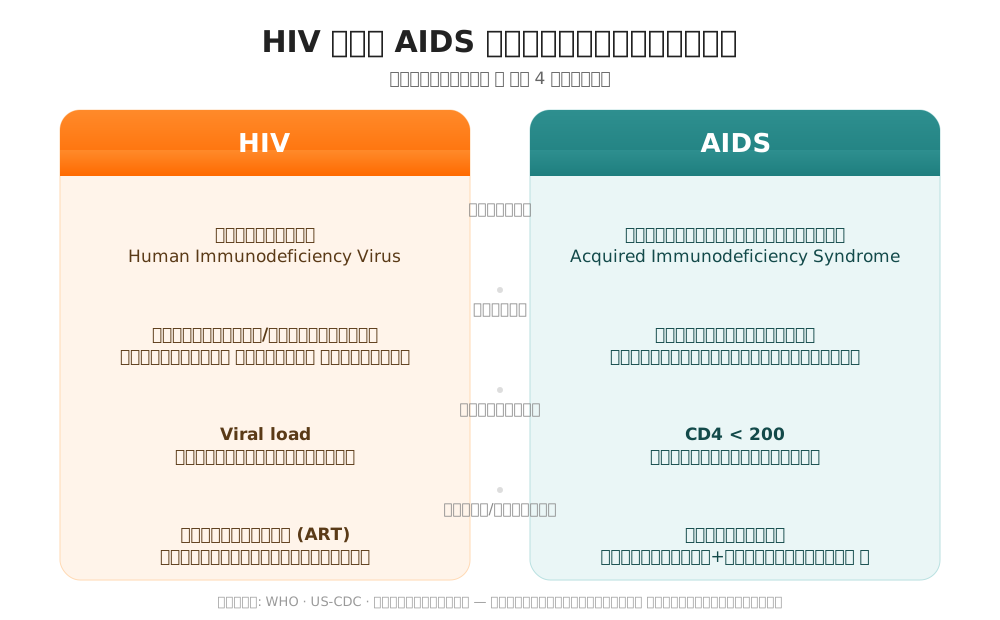
| Aspect | HIV | AIDS |
|---|---|---|
| What it is | A virus | The late stage of HIV infection |
| Virus or stage | A virus in the body | A disease stage, not a new virus |
| When it occurs | On acquiring the virus | When untreated and immunity is badly harmed |
| Marker | Detectable virus / viral load | CD4 < 200 or an opportunistic infection |
| Prevent / treat | Controlled with antiretrovirals | Prevented by early testing and treatment |
In short: everyone with AIDS has HIV, but most people with HIV do not have AIDS. Read more at HIV vs AIDS.
What CD4 and viral load mean
- CD4 count — the immune cells HIV destroys; the lower it is, the more damage. AIDS is defined below 200.
- Viral load — the amount of virus in the blood. Treatment aims to make it undetectable.
Once treatment starts, viral load drops to undetectable within months and CD4 recovers. See the stages at the stages of HIV.
HIV today: a manageable long-term condition
Antiretroviral therapy (ART) suppresses the virus so that people who stay on treatment can expect a near-normal lifespan and never progress to AIDS. In Thailand, ART is free under every health scheme. A landmark advance is U=U (Undetectable = Untransmittable): someone with a durably undetectable viral load does not pass HIV on sexually. Learn more at U=U.
Testing and prevention
- Test regularly. Thai nationals can test free twice a year — see HIV testing.
- Prevent in advance with PrEP if your risk is ongoing.
- If exposed within 72 hours, ask about emergency PEP right away.
Conclusion
HIV is a virus; AIDS is the late stage of that same infection — and with today’s medicine, people diagnosed and treated early stay healthy, live normally, and never reach the AIDS stage. Understanding the difference reduces fear and stigma and helps everyone feel able to test and care for themselves. If you have a risk or have never tested, the best first step is to learn your status at HIV testing.