Where Do Swollen Lymph Nodes Signal HIV Risk? Are They Tender, and When to Test
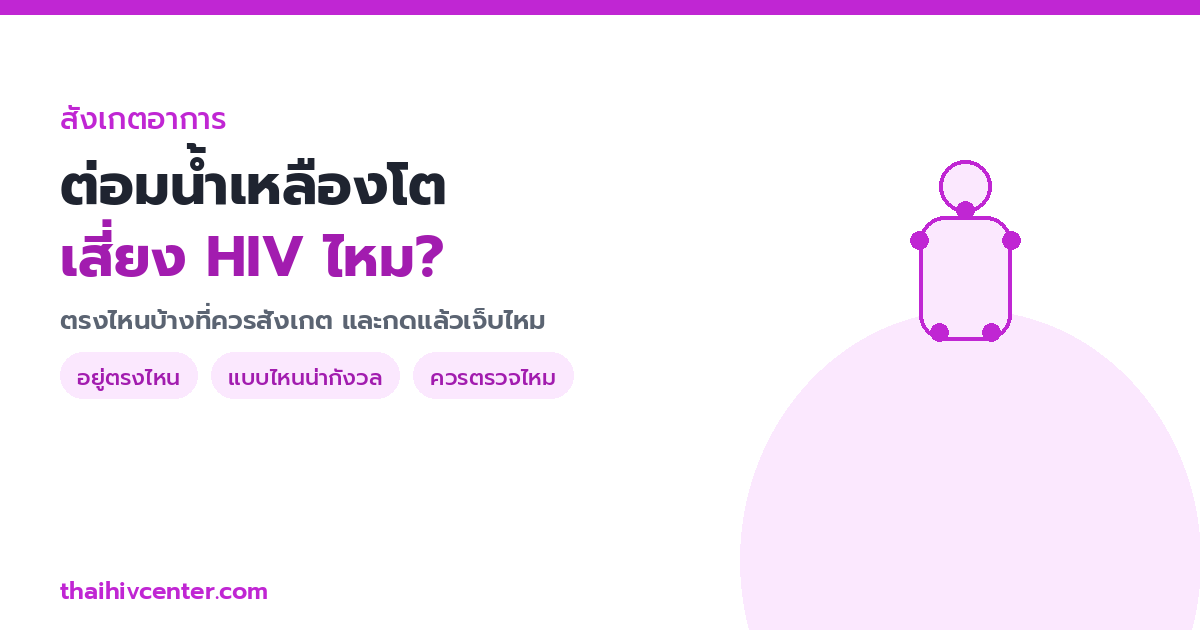
When you feel a lump or swollen lymph nodes on the body, many people who had a risk immediately worry it could be a sign of HIV. In truth, swollen lymph nodes can indeed be an early HIV symptom, but they also have many other causes — from common infections like a cold or a dental problem to local inflammation. So swollen nodes alone cannot tell you whether you have HIV. This article helps you understand which lymph nodes to watch, what HIV-related swelling looks like, what tenderness means, and which cases warrant testing, so you can assess reasonably.
What are lymph nodes and why they swell
Lymph nodes are part of the immune system, filtering and trapping germs or foreign material. When the body has an infection or inflammation, nearby lymph nodes usually work harder and swell in response. This is a normal mechanism, not always abnormal. For example, with a cold or sore throat, neck nodes may swell; or with a leg wound, groin nodes may swell. In acute HIV, the body responds strongly to the virus, so lymph nodes in several places can swell together. However, swelling is just one sign, not a confirmation of the cause.
Which lymph nodes to watch
Lymph nodes are in many places, but three main areas are easily felt and commonly noticed.
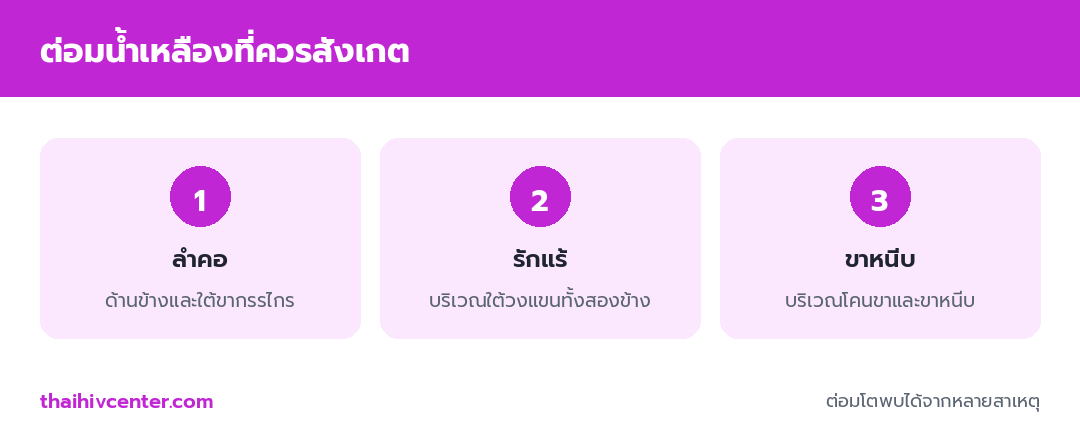
The first is the neck, both the sides and under the jaw, which usually swell with an infection in the mouth or respiratory tract. The second is the armpits, under both arms. And the third is the groin, at the top of the legs. In acute HIV, these may swell together in several places, unlike a local infection that usually swells only one spot near the problem area. Noticing how many places swell and whether other symptoms are present helps assessment, but confirming the true cause still requires testing.
What HIV-related swelling looks like
In acute HIV, usually around 2 to 4 weeks after exposure, lymph nodes often swell in several places together, usually with other symptoms of this stage such as fever, sore throat, rash, and fatigue. In some people, lymph nodes may remain swollen even after other symptoms fade, a condition seen in HIV. The key point is that HIV-related swelling usually doesn't come alone but with a symptom cluster and a history of sexual or blood exposure 2-4 weeks earlier. If you have all these, get tested. Read more in early HIV symptoms, and if you also have a rash or fever, see HIV rash and fever and sore throat after a risk.
Which swelling warrants testing
Not all swelling is concerning; distinguishing reduces unnecessary worry.
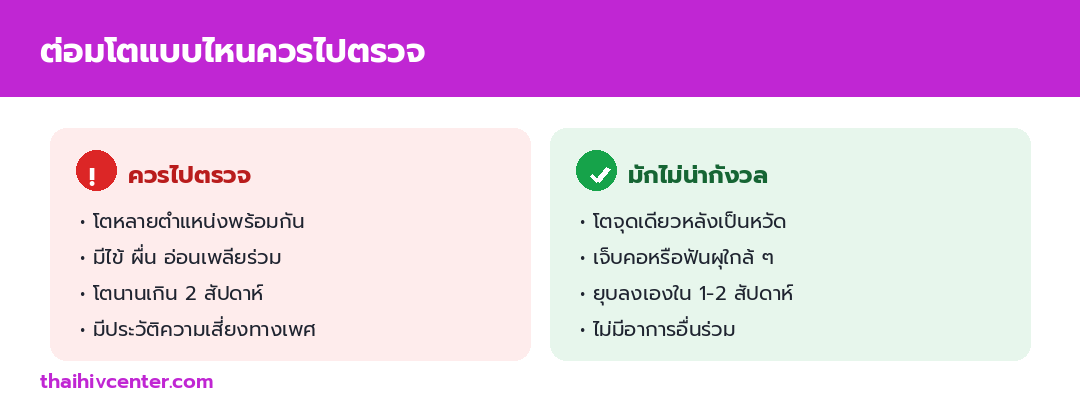
Swelling that warrants testing includes nodes swelling in several places together, with other symptoms like fever, rash, or fatigue, lasting more than 2 weeks without resolving, or with a sexual risk history. Conversely, swelling that is usually not concerning includes a single node after a cold, sore throat, or nearby dental problem, a node that resolves on its own within 1-2 weeks, and no other symptoms. However, if you are unsure or worried, seeing a doctor for assessment is always a good option.
What does tenderness mean
How a node feels when pressed can give some clues, but is not a definitive diagnosis.
| Node characteristics | Usually indicates |
|---|---|
| Tender, soft, movable | Usually inflammation from a common infection |
| Several places + systemic symptoms | Should test; may relate to HIV or other causes |
| Hard, fixed, non-tender, progressively enlarging | See a doctor to find the cause |
| One spot, resolves in 1-2 weeks | Usually not concerning |
Generally, a tender node is usually from ongoing inflammation, while a hard, non-tender, progressively enlarging node should be evaluated. However, these are only guides — the true diagnosis requires evaluation by a doctor.
Swelling doesn't always mean HIV
An important thing to understand is that swollen lymph nodes are very common and have diverse causes. Most are from non-serious common infections such as a cold, throat inflammation, dental problems, an infected wound, or local inflammation, which usually resolve when the cause is treated. So swollen nodes shouldn't cause immediate panic about HIV, because other causes are far more likely. However, if swelling comes with a risk history and other symptoms, an HIV test gives a clear answer, rather than guessing or worrying alone.
Swelling with a risk history — what to do
If you have swollen lymph nodes with a risk history, don't panic and don't jump to conclusions from internet searches. If the risk was within 72 hours, promptly consult about emergency PEP. If it has been longer, plan to test for HIV at the appropriate time. Because symptoms usually appear at 2-4 weeks, coinciding with the window period, timing your test matters. You can find a clinic near you to get tested and assessed.
Frequently asked questions
A swollen node on one side — is it HIV risk
One-sided swelling is usually from a local infection rather than HIV, which usually swells several places, but consult a doctor if worried.
A tender swollen node — is it dangerous
A tender node is usually inflammation from a common infection and not dangerous, but if it lasts or has other symptoms, get tested.
How long before I should see a doctor
If a node lasts more than 2 weeks without resolving, keeps enlarging, or has other symptoms, see a doctor for assessment.
The node went down — does that mean no HIV
Not necessarily — a node resolving doesn't indicate infection status; the only way to confirm is a blood test.
Summary
Swollen lymph nodes can be an early HIV symptom, often in several places with other symptoms like fever and rash, but they also have many other causes, especially common infections. So swollen nodes alone cannot tell you whether you have HIV. A single node that resolves on its own is usually not concerning, while nodes swelling in several places, lasting long, or with a risk history warrant testing. The only way to confirm is a blood test. If you are worried, find a clinic near you to test and consult.