Are Night Sweats a Symptom of HIV? A Non-Specific Symptom with Many Causes, and Testing Is the Only Way to Know
Night sweats are a symptom many worry may relate to HIV, especially after a risk or reading about HIV symptoms. A common question is whether night sweats are a symptom of HIV. The important answer is that night sweats are a non-specific symptom of HIV with many possible causes, from the sleep environment to other health conditions to stress and worry. Having night sweats therefore doesn't mean HIV and can't be used as a criterion to diagnose. Although night sweats may be one of the non-specific symptoms found in some conditions, having this symptom alone can't tell whether you're infected. The only way to know your status for certain is testing. This article explains in detail what night sweats are, why they're non-specific, what other causes there are, how they relate to HIV, and why testing matters, so you understand this correctly and don't worry excessively.
Are night sweats a symptom of HIV
The answer is that night sweats are a non-specific symptom of HIV with many possible causes. Having night sweats doesn't mean HIV.
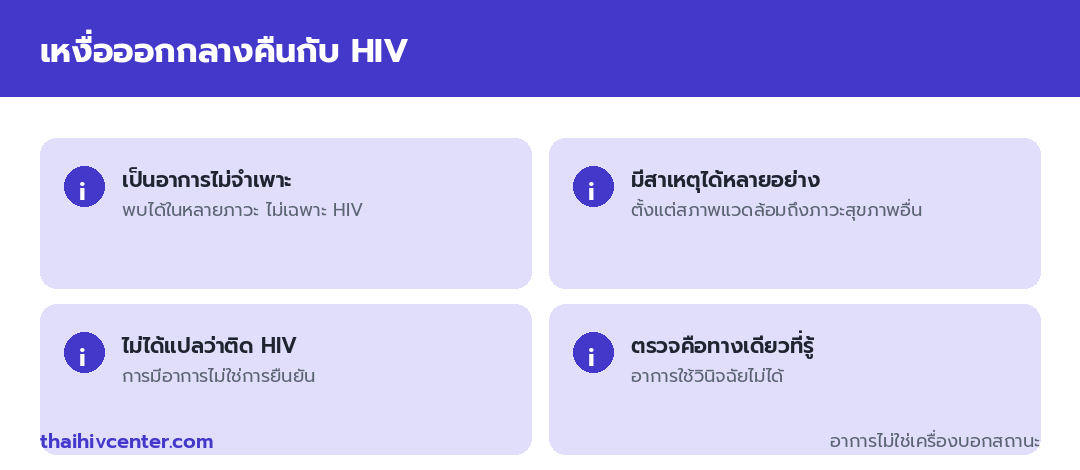
Night sweats are a symptom found in many conditions with diverse causes, not specific to HIV. Although night sweats may be one of the non-specific symptoms found in some health conditions, this symptom is also found from many general causes, such as a hot or stuffy sleep environment, other health conditions, or stress. Having night sweats alone therefore can't tell whether you have HIV and shouldn't be used as a criterion to self-diagnose. What's important to understand is that a non-specific symptom like night sweats can't be used to distinguish whether it's from HIV or another cause. Understanding that night sweats are non-specific with many causes helps you not panic when you have this symptom and see that testing is an accurate way to know your status. Read more about early symptoms in early HIV symptoms.
What are night sweats
Night sweats mean the body sweats a lot during sleep, which may make you wake up feeling damp or needing to change clothes or bedding. Night sweats are an experience many have had, with diverse causes, from environment-related causes, such as a hot bedroom or too-thick blankets, to health- or physical-condition-related causes. Night sweats from the environment usually go away when you adjust the environment appropriately, while night sweats occurring frequently or continuously without an environmental cause may relate to health factors, which you should consult a doctor about to find the cause. What's important to understand is that night sweats are a non-specific symptom, meaning they have many possible causes and don't indicate any particular condition. Understanding what night sweats are and that they have diverse causes helps you view this symptom neutrally and not jump to concluding it relates to HIV or any condition without appropriate assessment.
Why they're non-specific
Night sweats are a non-specific symptom for several reasons to understand:
- Found in many conditions — night sweats occur from many causes and conditions, not specific to HIV.
- Have environmental causes — such as a hot bedroom or thick blankets, common frequent causes.
- Relate to other health conditions — many health conditions may cause night sweats.
- May come from stress — stress or worry may affect sleep and sweating.
Because night sweats have diverse causes, having this symptom can't indicate any particular cause, including whether it relates to HIV. Understanding why night sweats are non-specific helps you see you shouldn't use this symptom to self-diagnose and should consider diverse causes. If you have worries or the symptom occurs frequently, consulting a doctor helps find the actual cause. Read more about non-specific symptoms in are fever and sore throat HIV.
Other causes of night sweats
Night sweats have diverse causes unrelated to HIV, which you should understand to view the symptom neutrally.
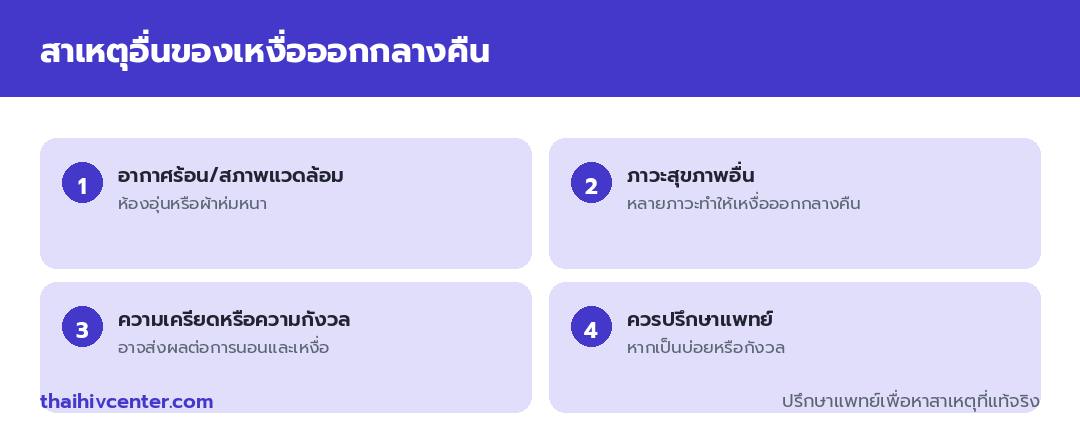
| Cause | Details |
|---|---|
| Environment | A hot, stuffy bedroom or too-thick blankets |
| Other health conditions | Many health conditions may cause night sweats |
| Stress | Stress or worry may affect sleep and sweating |
| Other factors | Many factors may cause night sweats |
Other causes of night sweats:
- Hot weather or environment — a hot or stuffy bedroom, thick blankets, or non-breathable clothes.
- Other health conditions — many health conditions unrelated to HIV may cause night sweats.
- Stress or worry — which may affect sleep quality and sweating.
- Other factors — diverse factors that may relate to night sweats.
Night sweats have diverse causes unrelated to HIV. Understanding that there are many other causes helps you not jump to concluding night sweats relate to HIV and view the symptom neutrally. If night sweats occur frequently or continuously and you worry, consulting a doctor helps find the actual cause and get appropriate care.

How night sweats relate to HIV
Although night sweats are non-specific, many wonder how they relate to HIV. Night sweats may be one of the non-specific symptoms found in some health conditions, including possibly in some stages related to HIV. However, what's important to understand is that having night sweats alone doesn't indicate HIV, because this symptom is found from many general causes unrelated to HIV. Most people with night sweats don't have HIV, and the symptom is from other causes, such as environment or general health conditions. For this reason, night sweats can't be used as a criterion to tell whether you have HIV. If you have a risk of HIV and worry, testing is an accurate way to know your status, not assessing from night sweats. Understanding that night sweats may be a non-specific symptom found in many conditions but can't be used to diagnose HIV helps you view the symptom correctly and see the importance of testing. Read more about having no symptoms in can you have HIV with no symptoms.
Non-specific symptoms can't tell
An important point to emphasize is that night sweats are a non-specific symptom, meaning they can't be used to tell any particular cause. Non-specific symptoms like night sweats, fever, or fatigue are all found in many other conditions unrelated to HIV. Having these symptoms doesn't mean HIV, and conversely, having no symptoms doesn't mean not infected. The non-specificity of symptoms makes trying to self-diagnose from symptoms inaccurate and may lead to unnecessary worry. Some may worry too much when they have a general symptom like night sweats and think they're infected, even though the symptom may be from a general cause. The best solution is not relying on symptoms to judge but using testing, an accurate method. Understanding that non-specific symptoms can't tell status helps you not panic over general symptoms and see that testing is a reliable way to know status. Viewing symptoms neutrally and testing when you have a risk is an appropriate approach to health care.
Testing is the only way to know
When a symptom like night sweats can't reliably tell infection status, the only way to know for certain is HIV testing. Testing is an accurate way to detect infection and gives a clear result, whether or not you have symptoms. For those with a risk worried about a symptom like night sweats, testing gives a clearer answer than trying to assess from symptoms. Testing has several methods and channels, from testing at a facility to self-testing. Knowing your status helps you plan health care appropriately. If negative, it eases your worry; if positive, you can start effective treatment early. Remember that if you recently had a risk, you may need to test at the appropriate time because of the window period. Understanding that testing is the only way to know your status for certain helps you see the importance of testing instead of worrying about a non-specific symptom. Read more about the window period in the HIV window period.
When to consult a doctor
Although night sweats usually have general causes, there are some situations where you should consult a doctor:
- When night sweats occur frequently or continuously — without a clear environmental cause.
- When you have other worrying symptoms too — consult a doctor for an overall assessment.
- When you have health worries — consulting a doctor helps find the cause and give reassurance.
- When you have a risk of HIV — consider testing without waiting for symptoms.
Consulting a doctor in these situations helps find the actual cause of night sweats and get appropriate care. A doctor can assess symptoms, consider possible causes, and give appropriate advice. Understanding when to consult a doctor helps you care for your health appropriately and not worry alone. If you have HIV worries specifically, testing is a way to get a clear answer.
Managing worry about symptoms
It's normal to worry when you have a symptom like night sweats and wonder if it relates to HIV, especially after a risk. What helps is understanding that night sweats are a non-specific symptom with many causes, and having this symptom doesn't indicate HIV. Trying to self-diagnose from symptoms usually increases worry without a certain answer. The best solution to ease worry is testing at the appropriate time if you have a risk, which gives a clear answer, and consulting a doctor if the symptom occurs frequently or you have health worries. Avoid repeatedly searching symptoms online or comparing your symptoms to symptom lists, because it usually causes excessive worry. If worry disrupts daily life a lot, talking to a health professional or counselor is a good option. Having accurate information and testing for a certain answer helps manage worry appropriately. Understanding that non-specific symptoms can't tell status reduces unnecessary anxiety and helps you care for your mental health appropriately. Read more about managing worry in what advanced HIV symptoms are like.
Misconceptions about night sweats and HIV
There are several misconceptions about night sweats and HIV to correct:
- "Night sweats mean HIV" — false, night sweats are a non-specific symptom with many causes.
- "Having night sweats means test for HIV immediately because you're definitely infected" — false, this symptom doesn't indicate infection; test when you have a risk.
- "No night sweats means no HIV" — false, many infected people have no symptoms; no symptoms doesn't mean not infected.
- "Symptoms can tell whether you're infected" — false, symptoms are non-specific and can't be used to diagnose; testing is the only way to know for certain.
Knowing these facts reduces misconceptions that may lead to excessive worry and helps you understand that night sweats are a non-specific symptom that can't tell HIV status. Testing is the only reliable way to know status, not assessing from symptoms.
Frequently asked questions
Are night sweats a symptom of HIV
They're a non-specific symptom with many causes; having night sweats doesn't mean HIV and can't be used to diagnose.
What causes night sweats
Many causes, such as a hot environment, other health conditions, or stress, most unrelated to HIV.
Should I test for HIV if I have night sweats
If you have a risk of HIV, test without waiting for symptoms, but having night sweats alone doesn't indicate infection.
Does no night sweats mean no HIV
No, many infected people have no symptoms; no symptoms doesn't mean not infected; the only way to know is testing.
When should I consult a doctor about night sweats
If they occur frequently or continuously without a clear cause, with other symptoms, or you have health worries, consult a doctor.
Can symptoms tell whether I have HIV
No, symptoms are non-specific and can't be used to diagnose; testing is the only way to know your status for certain.
Summary
Night sweats are a non-specific symptom of HIV with many possible causes, from the sleep environment to other health conditions to stress. Having night sweats doesn't mean HIV and can't be used as a criterion to diagnose. Although night sweats may be one of the non-specific symptoms found in some conditions, having this symptom alone can't tell your status. The only way to know your status for certain is testing, which should be done when you have a risk. If night sweats occur frequently or you have health worries, consult a doctor to find the cause. Understanding this helps you not worry excessively and care for your health appropriately. If you have a risk or want to test, find a clinic near you.
Note: This article provides informational content. If you have worrying symptoms or want specific advice, consulting a doctor and testing helps you get answers and appropriate care.