Can You Get HIV from a Public Toilet or Shared Toilet? HIV Isn't Spread Through Toilets, and What the Actual Routes Are

One common worry that makes many uneasy is fear of getting HIV from using a public toilet — such as sitting on a toilet others have used, or sharing a toilet with others. A common question is can you get HIV from a public toilet or shared toilet. The reassuring good news is that using or sharing a public toilet doesn't transmit HIV. The reason is that HIV isn't spread through toilets or surfaces, and the virus is fragile and can't survive outside the body. For this reason, everyday contact, such as using a public toilet, sitting on a toilet, or sharing spaces, doesn't transmit HIV. HIV infection requires the virus to enter the bloodstream directly through specific routes, not through using a toilet. This article explains in detail why toilets don't transmit HIV, how the virus is fragile outside the body, and what the actual transmission routes are, so you understand risk realistically and don't worry excessively.
Can you get HIV from a public toilet
The reassuring answer is that using or sharing a public toilet doesn't transmit HIV, because the virus isn't spread through toilets and is fragile outside the body.
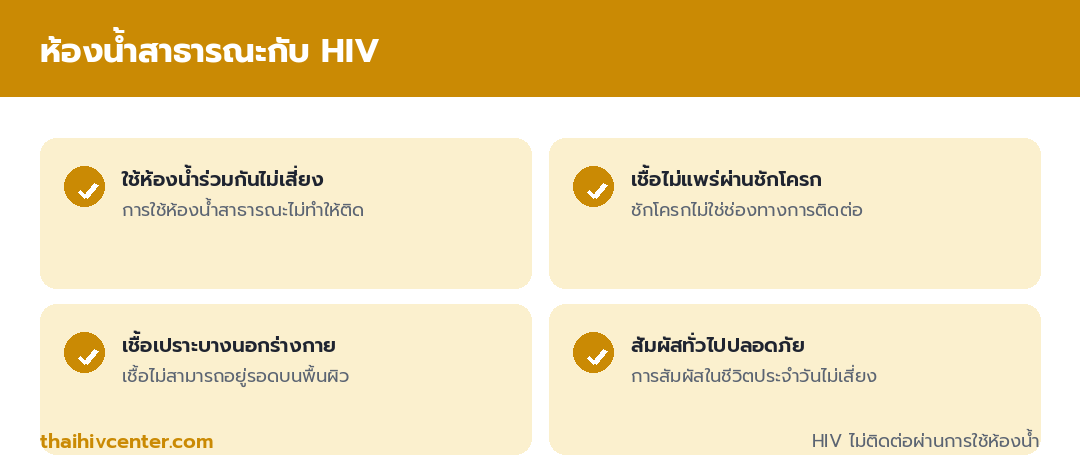
Using a public toilet is an everyday activity many worry may transmit HIV, but in reality using a public toilet doesn't transmit HIV for several important reasons. First, HIV isn't spread through toilets or surfaces, because toilets and surfaces aren't transmission routes. Second, HIV is fragile and can't survive outside the body, so it can't spread through contacted surfaces. For this reason, sitting on a toilet others have used, sharing a toilet with others, or touching surfaces in a toilet doesn't transmit HIV. HIV infection comes from a sufficient amount of virus entering the bloodstream directly through specific routes, not through using a toilet or touching surfaces. Understanding that toilets don't transmit HIV reduces unnecessary worry about everyday activities and helps you understand what's actually risky or not. Read more in how HIV is not transmitted.

Why toilets don't transmit HIV
There are several important reasons using a public toilet doesn't transmit HIV. The main reason is that HIV isn't spread through toilets or surfaces, because HIV infection requires the virus to enter the bloodstream directly through specific routes, such as delicate mucous membranes or open wounds. Sitting on a toilet or touching surfaces in a toilet doesn't make the virus enter the body this way. Also, HIV is fragile and can't survive outside the body, so it can't spread through contacted surfaces. Even if there are fluids on a surface, the virus can't survive and spread through touching the surface. For these reasons, using a public toilet isn't an HIV transmission route. Understanding why toilets don't transmit HIV helps explain why everyday activities involving sharing spaces are safe from an HIV standpoint. This is the scientific reason why worry about infection from toilets has no basis. Having accurate knowledge about why toilets don't transmit the virus reduces unnecessary anxiety and helps you understand risk realistically.
Is sharing a toilet risky
Sharing a toilet with others, such as sitting on a toilet someone just used, is a situation some worry about, but in reality sharing a toilet doesn't transmit HIV. The reasons:
- Toilets aren't a transmission route — HIV isn't spread through toilets or surfaces.
- The virus is fragile outside the body — HIV can't survive on surfaces.
- Intact skin is a barrier — sitting on a toilet with intact skin doesn't make the virus enter the body.
- Must enter the bloodstream directly — infection requires the virus entering the bloodstream, which doesn't happen from sitting on a toilet.
So sharing a toilet with others in a public toilet doesn't transmit HIV. Understanding that sharing a toilet isn't risky reduces unnecessary worry in these situations. Worry about infection from toilets is a common misconception with no scientific basis and a misconception leading to unnecessary stigma of people with HIV.
HIV is fragile outside the body
An important factor in why HIV isn't spread through toilets or surfaces is that HIV is fragile and can't survive well outside the body. HIV is a virus that needs the environment inside the body to survive. Outside the body, the virus degrades and can't cause infection. For this reason, even if there are fluids with the virus on a surface, such as on a toilet or bathroom floor, the virus can't survive and spread through touching the surface. The fragility of the virus outside the body is an important reason transmission through surfaces or objects doesn't occur. Understanding that HIV is fragile outside the body helps explain why activities involving touching surfaces or sharing objects don't transmit infection. This is the scientific reason why worry about infection from surfaces in a toilet or objects has no basis. Having accurate knowledge about the fragility of the virus outside the body reduces unnecessary worry about touching surfaces in everyday life. Read more about the virus's survival in how long HIV survives outside the body.
What are the actual transmission routes
To understand why toilets aren't risky, we should understand what the actual HIV transmission routes are.
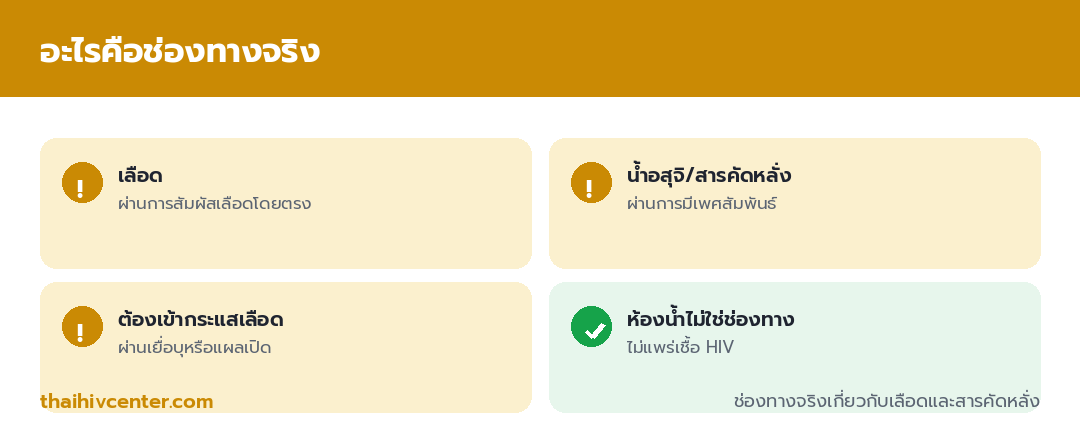
| Point | Details |
|---|---|
| Fluids involved | Blood, semen, vaginal fluids, and breast milk |
| Must enter the bloodstream | Through delicate mucous membranes or open wounds |
| Toilets aren't a route | The virus isn't spread through toilets or surfaces |
The actual HIV transmission routes are:
- Unprotected sex — letting the virus in semen or fluids contact mucous membranes.
- Sharing needles or injecting equipment — letting blood contact directly.
- Mother-to-child transmission — during pregnancy, birth, or breastfeeding, if not cared for.
All transmission routes involve a sufficient amount of virus entering the bloodstream directly, not through using a toilet or touching surfaces. Understanding the actual transmission routes helps distinguish risky from non-risky situations accurately. Read more in how HIV is transmitted.

Everyday contact
Using a public toilet is one of the everyday contact activities that doesn't transmit HIV, like other safe general contact activities. HIV isn't transmitted through everyday contact, such as sharing spaces, touching surfaces, shaking hands, hugging, sharing objects, or being near each other, because HIV infection requires specific routes that make the virus enter the bloodstream, not general contact. Sharing a toilet, sitting on a chair others have used, using public equipment, or other everyday contact activities are therefore safe from an HIV standpoint. Understanding that everyday contact, including using a toilet, doesn't transmit HIV helps people live with others normally, including living with people with HIV in everyday life, and reduces stigma from misunderstanding about transmission. Correct understanding about everyday contact helps build a society that understands and doesn't stigmatize people with HIV. Read more about general contact in can mosquitoes or casual contact transmit HIV.
- Sharing spaces and toilets doesn't transmit HIV.
- Shaking hands, hugging, or being near each other is safe contact.
- Sharing objects or public equipment isn't a transmission route.
- Living with people with HIV in everyday life is safe from an HIV standpoint.
What if there's blood in the toilet
Some may worry that if there's blood on a surface in a toilet, such as on the toilet or floor, it may transmit HIV. What to understand is that even in a situation with blood on a surface, getting HIV from touching a surface doesn't occur in normal toilet use. The reason is that HIV is fragile and can't survive well outside the body, so the virus in blood on a surface degrades and can't cause infection. Also, intact skin is an effective barrier. Blood contacting intact skin without a wound doesn't make the virus enter the body, because the virus can't pass through intact skin. For this reason, normal toilet use, even with surface worries, doesn't transmit HIV. If you have worries about blood contact in any situation, washing the contacted area with soap and water is good general hygiene, and if you have specific worries, consulting a doctor or professional helps you get a clear answer. Understanding that even with blood on a surface, normal toilet use doesn't transmit HIV reduces unnecessary worry and helps you understand that actual risk involves the virus entering the bloodstream directly, not touching surfaces. Read more about fluids on skin in are fluids on skin risky.
When to pay attention
Although toilets don't transmit HIV, understanding when there's actual risk helps you care for yourself appropriately. Situations that are actual risks for HIV don't involve using a toilet or touching surfaces but involve the virus in blood, semen, or vaginal fluids entering the bloodstream directly through specific routes, such as unprotected sex or sharing needles. If you have an actual risk of these kinds, consider HIV testing, and if the risk was within 72 hours, consult a doctor about PEP. For situations involving using a toilet, touching surfaces, or everyday contact, there's no need to worry or test, because it isn't a risk. Understanding the difference between actual risk situations and non-risky toilet-related situations helps you know when to pay attention and when not to worry. If unsure about your specific situation, consulting a doctor or professional helps you get a clear, appropriate answer.
Misconceptions about toilets and HIV
There are several misconceptions about toilets and HIV to correct:
- "Sitting on a public toilet can give you HIV" — false, toilets aren't a transmission route, and the virus is fragile outside the body.
- "Sharing a toilet with an infected person is risky" — false, sharing a toilet doesn't transmit HIV.
- "HIV can survive on toilet surfaces for a long time" — false, HIV is fragile and can't survive well outside the body.
- "Touching surfaces in a toilet can infect you" — false, touching surfaces doesn't transmit HIV because it must enter the bloodstream directly.
Knowing these facts reduces misconceptions leading to excessive worry and stigma of people with HIV and helps you understand that everyday activities involving using a toilet are safe. Actual risk involves the virus in blood or certain fluids entering the bloodstream directly through specific routes, not through using a toilet.
Managing worry about toilets
It's normal for some to worry about infection from using a public toilet, even though in reality there's no risk. What helps is anchoring to the fact that HIV isn't spread through toilets or surfaces, and the virus is fragile and can't survive outside the body. Having accurate knowledge about actual transmission routes reduces unnecessary worry. Avoid searching for alarming information or repeatedly ruminating about non-risky situations, because it may increase worry unnecessarily. If worry about infection in non-risky situations disrupts daily life a lot, or you have chronic worry about this, talking to a health professional or counselor is a good option. Having accurate information and caring for your mental health helps manage worry appropriately. Understanding risk realistically is an important tool in reducing unnecessary anxiety and helps you live and use public spaces comfortably.
Frequently asked questions
Can you get HIV from a public toilet or shared toilet
No, using or sharing a public toilet doesn't transmit HIV, because the virus isn't spread through toilets and is fragile outside the body.
Is sitting on a toilet others have used risky
Not risky, toilets aren't a transmission route, and intact skin is a barrier; sitting on a toilet doesn't transmit HIV.
Can HIV survive on toilet surfaces for a long time
No, HIV is fragile and can't survive well outside the body, so it can't spread through surfaces.
What if there's blood in the toilet
Normal toilet use doesn't transmit it, because the virus is fragile outside the body and intact skin is a barrier.
What are the actual transmission routes
Blood, semen, or vaginal fluids entering the bloodstream directly through mucous membranes or open wounds, not through toilets.
When should I test for HIV
When you have an actual risk, such as unprotected sex or sharing needles, not from using a toilet; consult a doctor.
Summary
Using or sharing a public toilet doesn't transmit HIV, because HIV isn't spread through toilets or surfaces, and the virus is fragile and can't survive outside the body. For this reason, sitting on a toilet others have used, sharing a toilet, or touching surfaces in a toilet doesn't transmit HIV. Even in a situation with blood on a surface, normal toilet use doesn't transmit it, because the virus is fragile and intact skin is a barrier. The actual HIV transmission routes involve blood, semen, or vaginal fluids entering the bloodstream directly through specific routes, such as unprotected sex or sharing needles. Understanding risk realistically reduces unnecessary worry and reduces stigma of people with HIV. If you have an actual risk unrelated to toilets, or want to consult, find a clinic near you.