Needlestick Injury or Blood Splashed in the Eye — Is There HIV Risk, and How to Get PEP
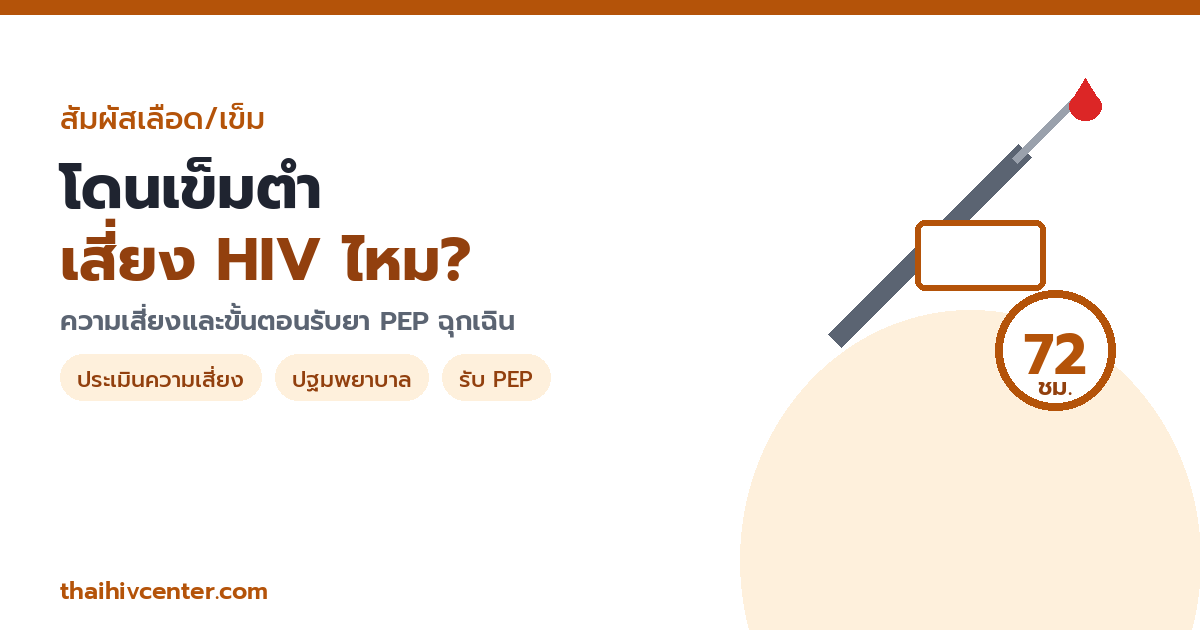
Accidents involving contact with another person's blood — such as a needlestick injury or blood splashed into the eye, mouth, or a wound — can be alarming and cause worry about HIV, especially for healthcare workers, cleaners, or anyone who accidentally contacts a needle or blood. The good news is that the risk of getting HIV from these exposures is usually lower than many think, and if assessed as a real risk, PEP can help prevent it if started within 72 hours. This article explains how risky different situations are, how to give first aid, and what steps to take, so you can respond correctly without panicking.
How risky is a needlestick or blood splash for HIV
The risk of getting HIV from blood contact depends on several factors: the type of contact, the amount of blood, the depth of the wound, and crucially the infection status of the blood source. If the blood is from someone without HIV, there is no HIV risk; and if from someone with HIV who is treated to undetectable, the risk is very low. Generally, blood contact with intact skin (no wound) has almost no risk, while a deep needlestick with fresh blood, or blood splashed into the eye or mouth, carries more risk — but still considered low compared with many people's worry. Importantly, a doctor should assess the precise risk.
Risky situations from blood and needles
Let's look at which situations are considered a risk and worth getting assessed.
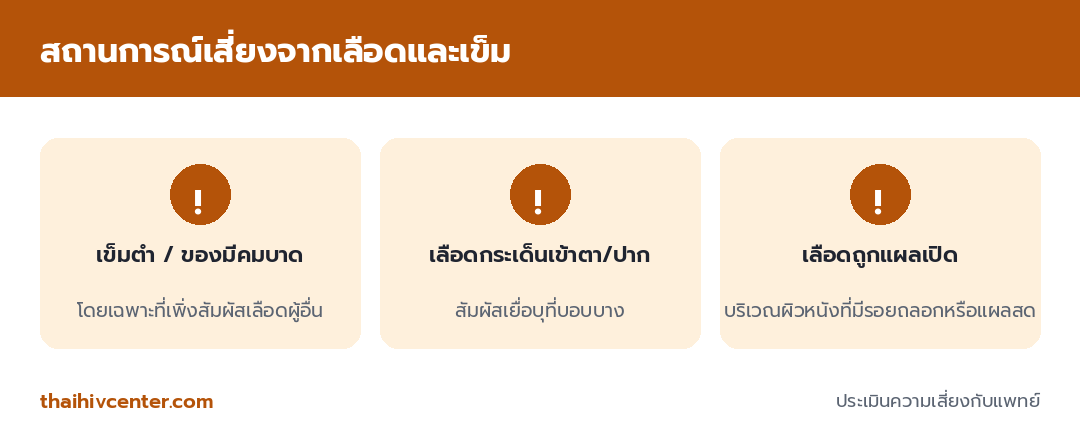
Situations to pay attention to include being pricked by a needle or sharp, especially when it just contacted someone's blood; blood splashed into the eyes, mouth, or nose, which are delicate mucous membranes; and blood contacting an open wound or abraded skin. Conversely, if blood only contacts intact skin with no wound, the risk is very low. Assessing how risky an event is should be done with a doctor, who considers various factors including information about the blood source if known.
What to do immediately after blood contact
When it happens, give correct first aid and see a doctor promptly.
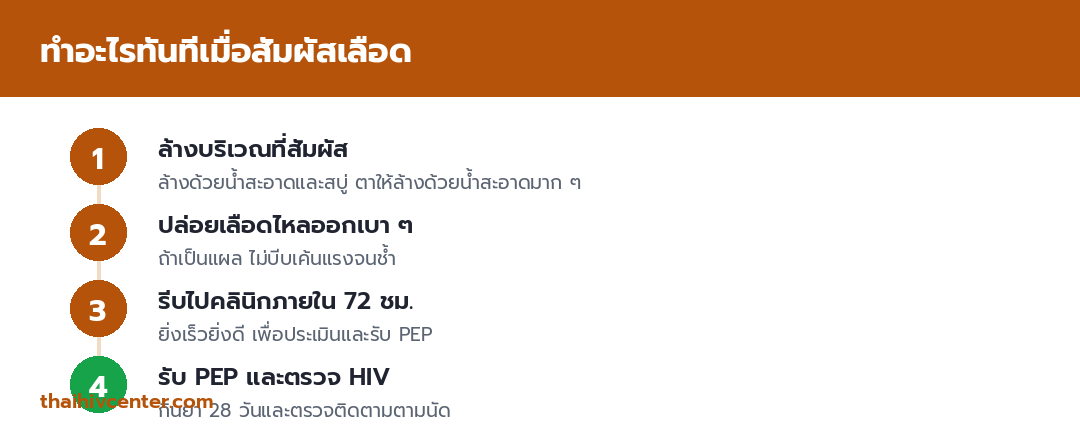
First, immediately wash the exposed area with clean water and soap. For a splash into the eye, rinse the eye with plenty of clean water. Second, for a wound, let it bleed gently, but do not squeeze aggressively to the point of bruising, as it may not help and could cause more injury. Third, get to a clinic or hospital as fast as possible, because if there is a risk, PEP must start within 72 hours. Finally, get assessed, have a baseline HIV test, and receive PEP if the doctor advises — the same principle as getting emergency PEP after a sexual risk.
PEP and blood exposure
PEP is not only for sexual risks but also for risky blood contact, such as a needlestick from a possibly infected source. The principle is the same: start as soon as possible and within 72 hours, to stop any virus that entered from establishing, taking it for 28 days. A doctor assesses whether the exposure meets the criteria for PEP, considering the type of contact, amount of blood, and source information. If you are unsure whether the event qualifies, the best thing is to promptly consult to be in time. You can find a clinic near you and estimate the timing with our PEP time calculator.
Risk by type of contact
The table below gives a rough picture of the risk level of different contacts.
| Type of contact | General risk level |
|---|---|
| Blood on intact skin (no wound) | Almost no risk |
| Blood splashed into eye/mouth | Low, but should be assessed |
| Superficial needlestick / scratch | Low to moderate, assess |
| Deep needlestick with fresh blood from a positive source | Higher than others; get PEP promptly |
The real risk depends on many factors and should be assessed by a doctor. This table is only a guide to understand which events warrant more attention.
Are needles on the ground or old needles risky
Many worry about being pricked by a needle on the ground or an old needle, which is understandable. However, HIV cannot survive long outside the body, especially once blood has dried. So the risk from an old needle with dried blood is very low, unlike a needle just used on someone with HIV that still has fresh blood. Although the risk is low, if pricked by a needle of unknown origin, you should clean the wound and consult a doctor for assessment, including considering tetanus and hepatitis. Consulting gives you appropriate advice and eases worry.
Follow-up testing after contact
After being assessed and receiving PEP (if needed), a doctor will schedule HIV testing for follow-up. Because testing involves the window period, testing on schedule is important to confirm your status clearly. Read more in how many days after a risk to test, and to learn how HIV is transmitted, read how HIV is transmitted. Following advice and completing scheduled tests helps you be confident in the outcome.
Frequently asked questions
Pricked by an old needle on the ground — do I need PEP
The risk from an old needle with dried blood is very low, but clean the wound and consult a doctor for a case-by-case assessment.
Blood on my hand with no wound — is it risky
Almost no risk, because intact skin is a barrier; washing with soap and water is enough.
Blood got in my eye — what do I do
Rinse the eye with plenty of clean water immediately, then see a doctor to assess whether to take PEP.
Is PEP for blood contact different from sexual exposure
The principle is the same — start within 72 hours and complete 28 days; a doctor assesses by the type of contact.
Summary
A needlestick or blood splashed into the eye or mouth can cause worry about HIV, but the real risk is usually low and depends on many factors, especially the blood source's status and the type of contact. The key is correct first aid, washing the exposed area, and promptly seeing a doctor within 72 hours to assess and receive PEP if needed. An old needle with dried blood carries very low risk, but still consult a doctor. Scheduled follow-up testing confirms the result clearly. If it happens, don't delay — find a clinic near you to get assessed right away.