What Are the Early Symptoms of HIV? Catch Them in Time
Many people wonder what the early symptoms of HIV are and how many days after a risk they appear. The truth is that early symptoms of HIV infection are often non-specific and resemble an ordinary flu, so many people do not notice them or mistake them for another illness. This article explains the common early symptoms, when they occur, how long they last, and why watching for symptoms alone is not enough to tell whether someone is infected.
When do early HIV symptoms appear
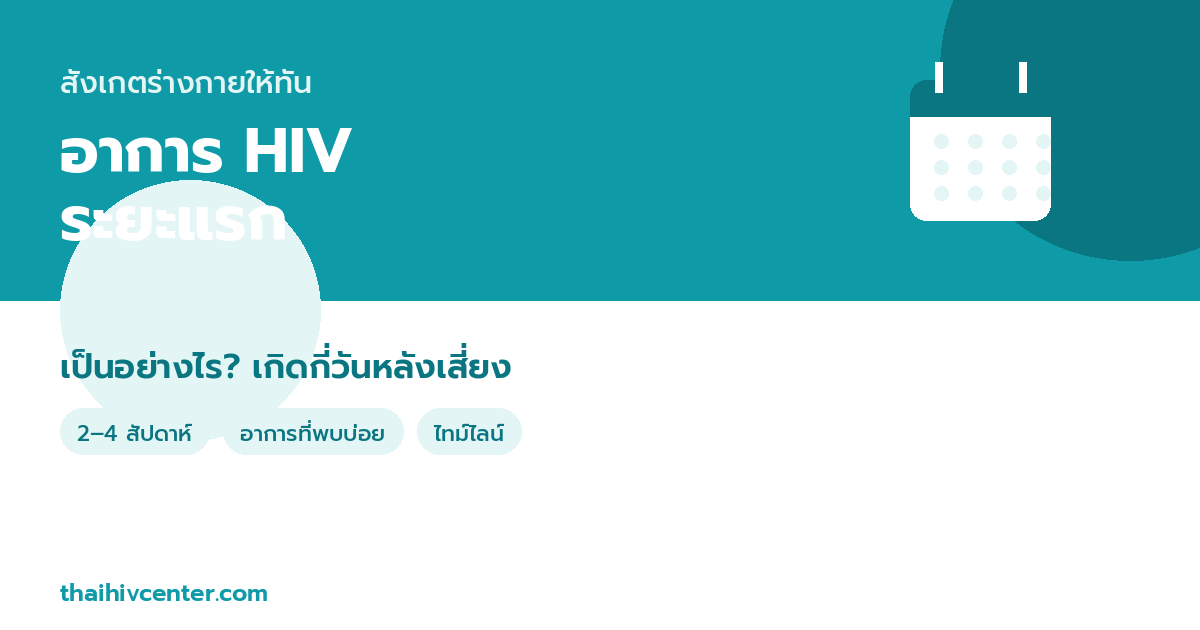
After being infected with HIV, the body enters the "acute stage," when the virus multiplies rapidly. Early symptoms (if any) generally appear 2–4 weeks after infection. However, not everyone has symptoms — some have clear symptoms, some only mild ones, and some none at all — so early infection is often overlooked.
Common early symptoms
Acute HIV symptoms often resemble the flu, because they are the immune system's response to the virus. The most common symptoms are:
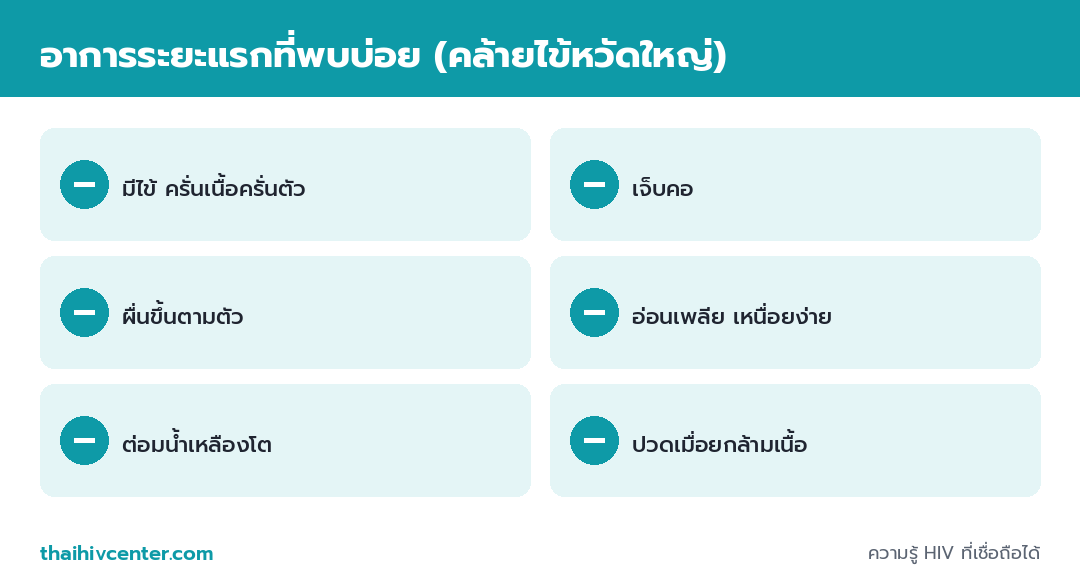
- Fever and feeling unwell — the most common symptom.
- Sore throat — similar to a cold or pharyngitis.
- Body rash — often a red, non-itchy rash on the trunk.
- Fatigue and tiring easily — feeling low on energy.
- Swollen lymph nodes — especially in the neck, armpits, or groin.
- Muscle and joint aches, along with headache.
Other possible symptoms include mouth pain, mouth ulcers, nausea, diarrhea, or night sweats. Because these appear in many common illnesses, having symptoms does not always mean infection, and having no symptoms does not mean you are not infected.
The timeline of early HIV symptoms
To see it clearly, look at the sequence from infection to the latent stage.
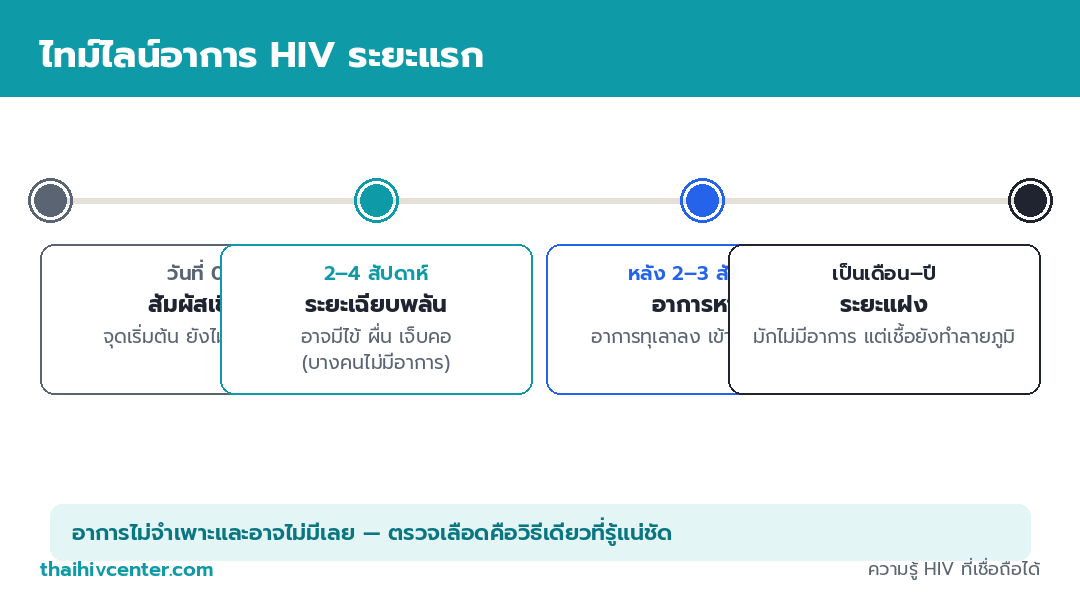
- Day 0 – exposure — no symptoms yet.
- 2–4 weeks – acute stage — possible fever, rash, sore throat (or no symptoms).
- After 2–3 weeks – symptoms ease — the body enters the latent stage.
- Latent stage (months to years) — usually no symptoms, but the virus keeps damaging immunity silently.
Why symptoms differ from person to person
Early HIV symptoms vary greatly between people. Some have symptoms clear enough to see a doctor, some have only mild cold-like symptoms, and many have none at all. This variation depends on several factors, such as each person's immune response, the amount of virus received, and overall health. For this reason, judging whether someone is infected by the severity or presence of symptoms is not reliable, and you should not wait for symptoms before getting tested.
What happens after the early stage
When acute symptoms ease, the person enters the "latent stage," which usually has no symptoms and can last for years. During this time, however, the virus keeps multiplying and silently damaging immunity. This is why many people are unaware they are infected until immunity is badly weakened. Testing during the symptom-free period is therefore very important, because it allows treatment to start early, before the disease progresses to a more serious stage. Read more about the stages in what HIV is, and about care in HIV treatment.
Why watching for symptoms is not enough
Because early HIV symptoms are the same as many common illnesses, and many people have no symptoms at all, diagnosing by symptoms is not reliable. The only way to know your status for sure is a blood test. Importantly, after a risk you need to wait a period before testing, called the "window period," for the result to be reliable. Read the details in the HIV window period, and see an overview of testing methods in HIV testing.
What to do if you have symptoms or a risk
If you have suspicious symptoms along with a history of risk, or have just had a risk, the thing to do is get an HIV test at the appropriate time, and within the first 72 hours after a risk, taking PEP may help reduce the chance of infection. People with ongoing risk might also consider PrEP for prevention. To test or seek advice, you can find an HIV testing clinic that suits you.
Read the basics about the virus and its stages in what HIV is, and the routes of transmission in how HIV is transmitted.
Frequently asked questions
How many days after a risk do early HIV symptoms appear
They usually appear 2–4 weeks after infection, but some people have none.
Does having no symptoms mean I am not infected
No. Many people have no symptoms in the early stage. No symptoms does not mean no infection — you need a blood test to know for sure.
How do a common cold and early HIV symptoms differ
They are so similar you cannot tell by sight — they must be considered together with risk history and a blood test.
Does having a rash mean I have HIV
Rashes have many causes. A rash alone cannot tell you whether you have HIV — you need a confirmatory test.
Summary
Early HIV symptoms usually appear 2–4 weeks after infection and resemble the flu — fever, sore throat, rash, fatigue, and swollen lymph nodes — but some people have none. So watching for symptoms alone is not enough; a blood test is the only way to know your status for sure. If you have a risk or suspicious symptoms, find an HIV testing clinic near you and get certain today.