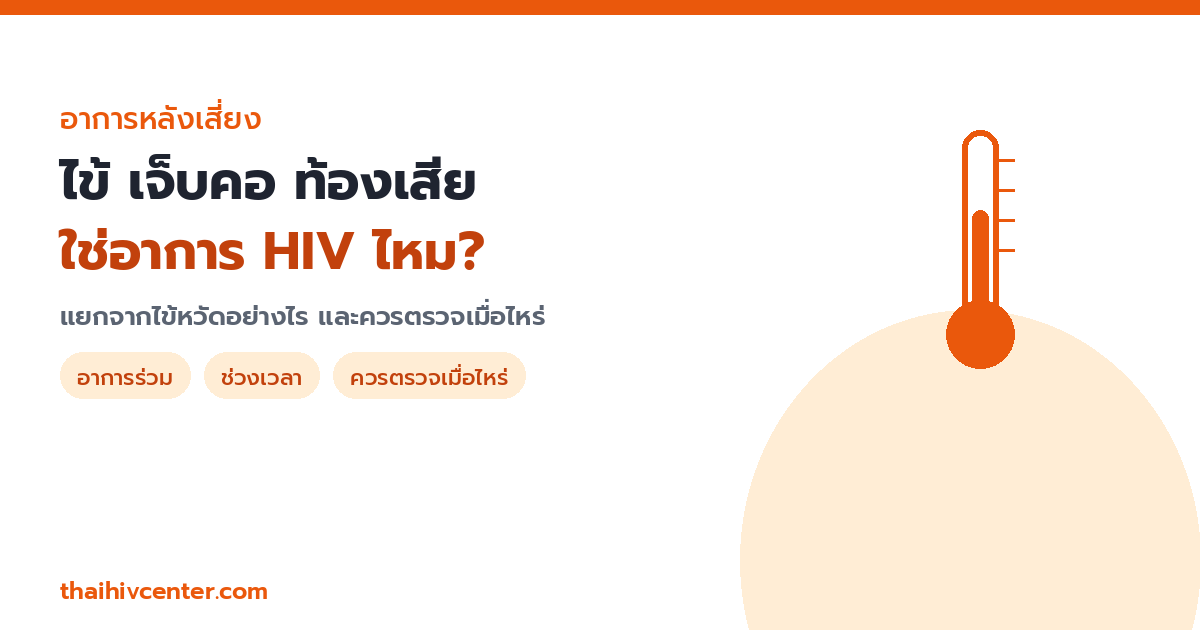
Fever, Sore Throat, or Diarrhea After a Risk — Is It HIV?
When you have a sexual risk and then develop fever, sore throat, or diarrhea, it's natural to worry this could be HIV. In truth, these symptoms can occur in the acute stage of HIV, but they also appear in many other common viral infections like the flu or a cold — so symptoms alone cannot determine it. This article helps you understand what early HIV symptoms are, when they occur, how they differ from a cold, and what to do next, so you can handle your worry reasonably and correctly.
What causes fever and sore throat after a risk
Fever and sore throat after a sexual risk can have many causes — a common viral infection, stress and anxiety, or in some cases the acute stage of HIV (Acute HIV Infection), when the body has just been infected and the immune system responds strongly. This response causes flu-like symptoms. However, having these symptoms does not always mean infection, and having none does not mean safety, because many infected people have no symptoms at all early on. So symptoms are just one clue, not the answer.
Acute HIV symptoms that occur together
In the acute stage, symptoms usually don't come alone but as a flu-like cluster.
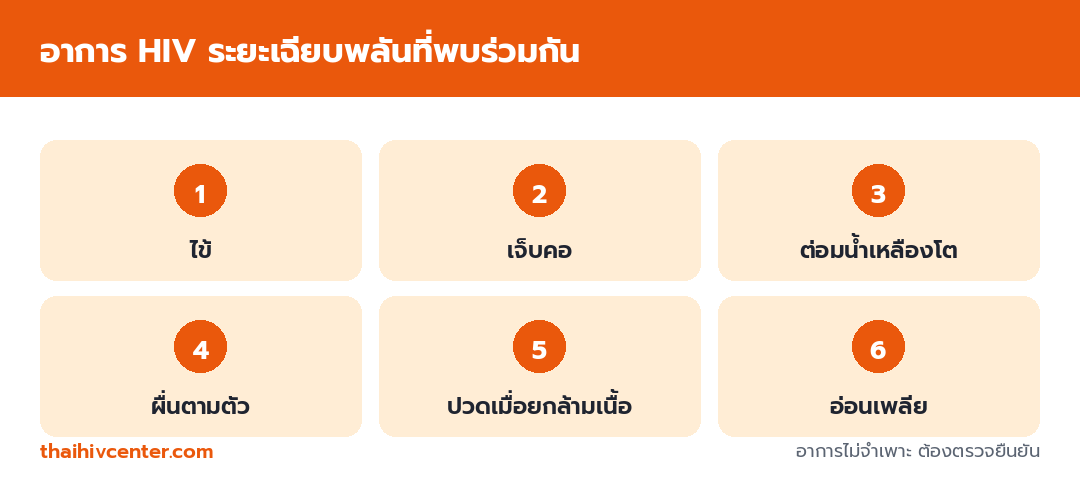
Common symptoms in this stage include fever, sore throat, swollen lymph nodes (especially neck, armpits, groin), a rash on the trunk, muscle and joint aches, and fatigue. Some also have gastrointestinal symptoms such as nausea, diarrhea, or loss of appetite, plus small mouth ulcers. Importantly, these are not specific to HIV and usually fade within a few days to two weeks, so many mistake them for a cold and don't get tested. If you also have a rash, read more in where HIV bumps and rash appear.
When do symptoms appear
The timing of symptoms is an important clue for distinguishing them.
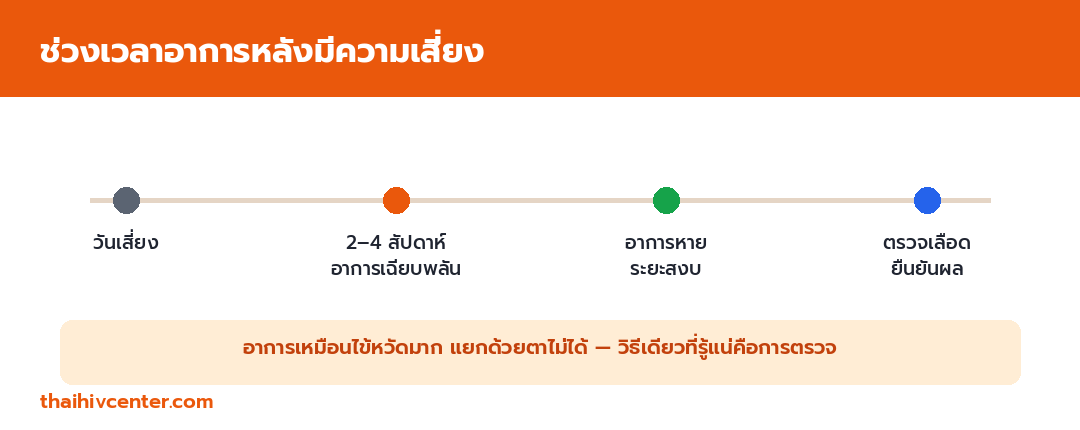
Acute HIV symptoms usually appear around 2 to 4 weeks after exposure, not immediately after a risk. So if you have a fever the next day — just hours or a day after sex — it's usually not directly from HIV. But if symptoms appear at 2-4 weeks after a risk with several occurring together, that's a time to pay attention. These symptoms usually fade on their own and the body enters a latent stage that may have no symptoms for years, which does not mean the virus is gone. This period also coincides with the HIV window period, which affects when to test.
How HIV differs from a cold
Because the symptoms are so similar, telling them apart requires looking at several factors together. The table below helps compare.
| Aspect | Acute HIV | Common cold |
|---|---|---|
| Risk history | Usually a sexual risk 2-4 weeks earlier | Usually unrelated to a sexual risk |
| Lymph nodes | Often swollen in several places | May be slightly swollen at the neck |
| Rash | Common on the trunk | Usually no rash |
| Confirmation | Only a blood test | Diagnosed from symptoms |
Although the table shows differences, in practice the two are very hard to tell apart by sight. The real decider is risk history and a blood test, not guessing from symptoms.
What to do if you have these symptoms
If you have these symptoms with a risk history, here's what to do. First, don't panic and don't jump to conclusions from internet symptom searches, because symptoms are non-specific. Second, if the risk was within 72 hours, promptly consult about emergency PEP, because prevention is still possible. Third, if it has been longer, plan to test for HIV at the appropriate time. You can use our test date calculator to see when to test, and find a clinic near you.
When is an HIV test accurate
Because acute symptoms appear at 2-4 weeks — a time when some tests may not yet be accurate — the choice of test and timing matters. NAT testing detects the virus earliest, around 10 days after exposure; 4th-gen testing is usually accurate at about 1 month; and results are conclusive at 3 months. If you test early and it is negative, a clinician may recommend retesting. Read more in how many days after a risk to test and see early HIV symptoms for the full picture.
If I have no symptoms, am I safe
No. A common misconception is thinking no symptoms means no infection. In truth, many people with HIV have no symptoms at all early on, and the virus is still present and transmissible. Conversely, people with symptoms may just have a common cold. So both having and not having symptoms are not proof. The only way to know your status for sure is a blood test. Testing regularly when you have a risk is a healthy habit.
Frequently asked questions
I have a fever the day after sex — is it HIV
Usually not, because acute HIV symptoms appear at 2-4 weeks, not immediately. A fever the next day usually has another cause.
My symptoms went away — does that mean I'm not infected
No. Acute symptoms usually fade on their own but the virus remains in the body; symptoms resolving does not indicate infection status.
Just a persistent sore throat — is it HIV risk
A sore throat alone has many causes. With a risk history and other symptoms, get tested for certainty.
Do I wait for symptoms before testing
No, test at the appropriate time after a risk, whether or not you have symptoms.
Summary
Fever, sore throat, and diarrhea after a risk can be signs of acute HIV, which usually appears at 2-4 weeks, but they look so much like a common cold they can't be told apart by sight — and many infected people have no symptoms at all. So don't guess from symptoms; the only way to confirm is a blood test. If the risk was within 72 hours, consult about PEP immediately, and in any case, testing at a clinic near you is the clearest answer.