Rapid Test vs Lab Test: What's the Difference and Which to Choose
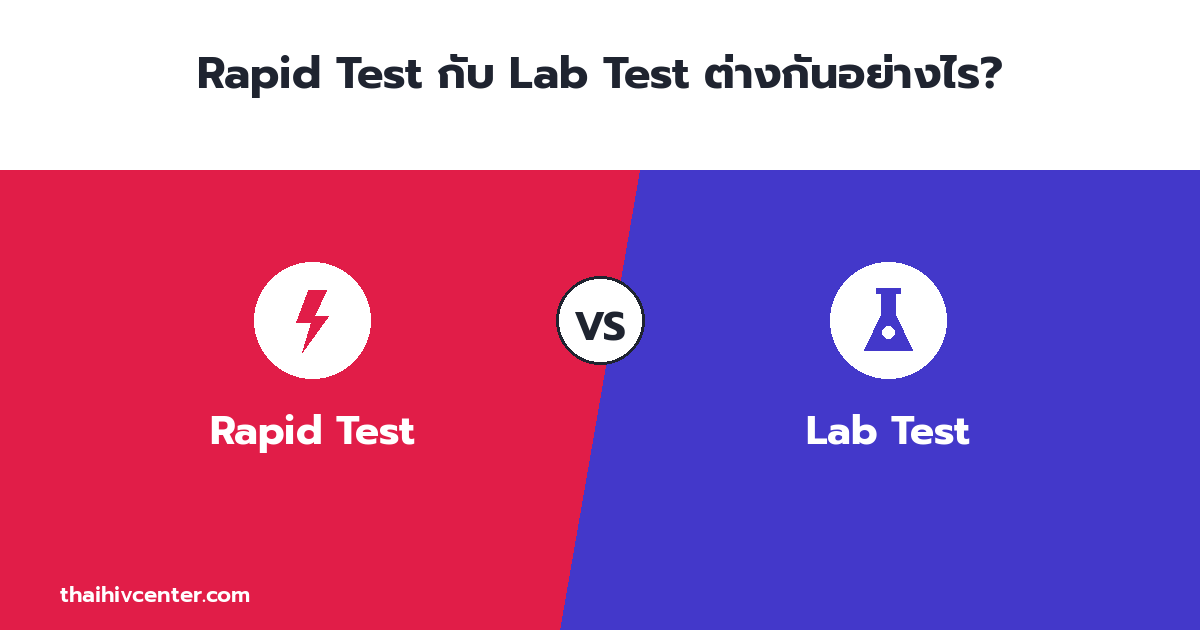
When getting an HIV test, a common question is whether to choose a fast Rapid HIV Test or a Lab Test done in a laboratory. Both have different advantages and suit different situations. This article compares Rapid Test and Lab Test in detail — accuracy, speed, the sample used, and detection window — to help you decide with confidence.
What are Rapid Test and Lab Test
A Rapid Test uses a finger-prick blood sample or oral fluid and gives results within about 20 minutes. It is popular in community clinics, mobile units, and initial screening. A Lab Test uses venous blood analyzed with standard equipment, such as 4th-generation Antigen/Antibody or NAT, which detects the virus sooner and gives highly accurate results.
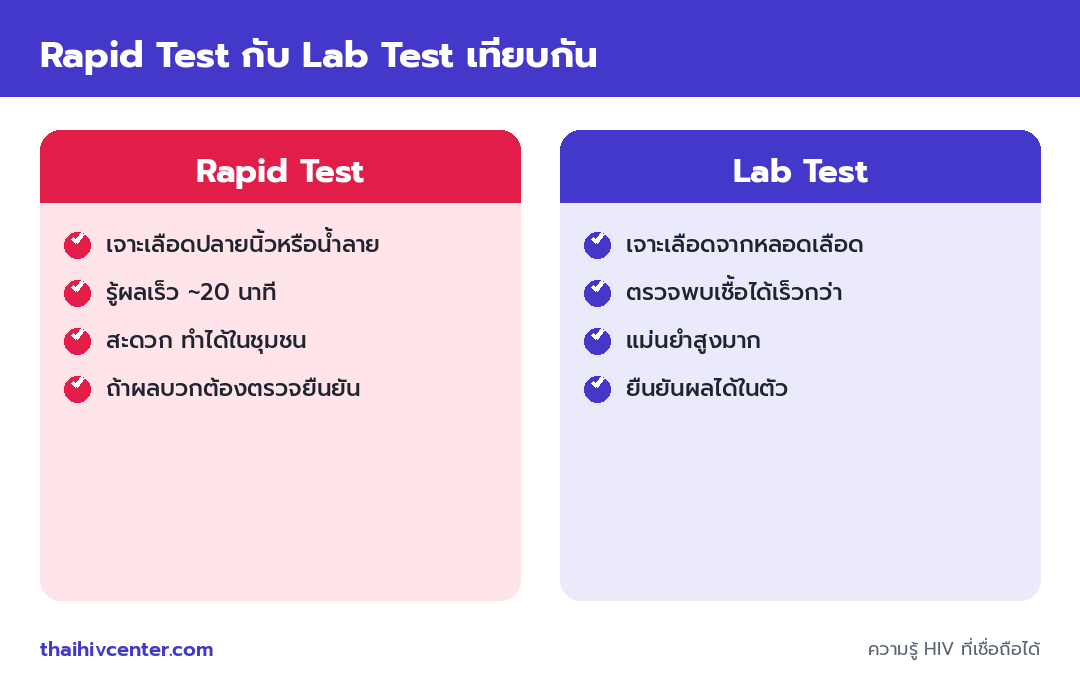
Rapid Test vs Lab Test compared
The table below summarizes the differences on key points.
| Aspect | Rapid Test | Lab Test |
|---|---|---|
| Sample used | Finger prick or oral fluid | Venous blood |
| Time to result | ~20 minutes | Hours–2-3 days |
| Detection window | ~23–90 days (antibodies) | Sooner (4th gen ~18–45 days, NAT ~10–33 days) |
| Accuracy | High (confirm if positive) | Very high, self-confirming |
| Location | Community clinics, mobile units | Hospitals, laboratories |
To learn about all testing methods in detail, read how many HIV testing methods there are.
Is the Rapid Test accurate
A common worry is whether the Rapid Test is accurate. The answer is that standard Rapid Tests used correctly are highly accurate for screening. However, because they mainly detect antibodies, they have a longer window period than some lab methods, and if the result is positive, it must always be confirmed with a standard laboratory method before entering care.
Which should you choose
The choice depends on your needs and situation.
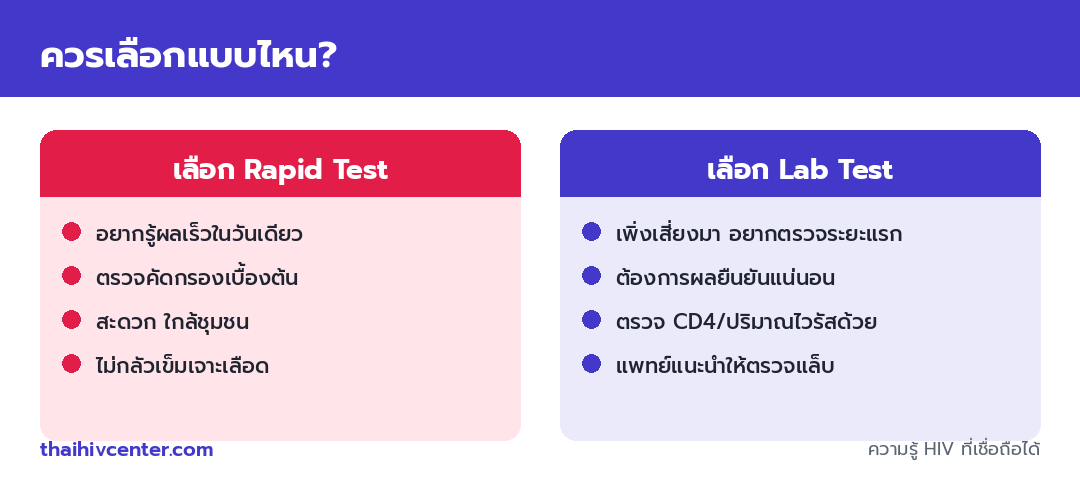
Choose a Rapid Test if you want same-day results, convenience, testing near your community, or initial screening. Choose a Lab Test if you have just had a risk and want early testing, want a definite confirmatory result, or need additional tests such as CD4 and viral load. In many cases both are used together — a Rapid Test screens first, then a Lab Test confirms. To learn when to test after a risk, read when to test for HIV after a risk.
Where to test
Both Rapid Test and Lab Test are available in many places — public hospitals (where Thai nationals can test free twice a year), private clinics, and friendly, confidential community clinics. To find a convenient site, you can search for an HIV testing clinic near you.
Why a positive Rapid Test needs confirmation
The Rapid Test is designed for "screening," not final diagnosis. Although it is highly accurate, false positives can occur in some cases — for example, from certain health conditions or errors in reading the result. For this reason, when a Rapid Test is positive, it must be confirmed with a standard laboratory method such as Antigen/Antibody testing or NAT before concluding infection and entering care. This confirmation step ensures confidence in the result and prevents misunderstanding.
Can you do a Rapid Test at home
Yes. There are now HIV self-test kits that work similarly to a Rapid Test — a finger-prick blood or oral fluid sample read yourself within minutes. They suit those who want privacy or cannot easily reach a health facility. However, the confirmation principle is the same: if the result is positive or uncertain, confirm it at a clinic or hospital, and choose a standard kit and read the instructions carefully.
Frequently asked questions
Which is more accurate, Rapid or Lab Test
Both are highly accurate when used correctly, but the Lab Test detects the virus sooner and is self-confirming, while a positive Rapid Test must be confirmed by a lab.
Does a positive Rapid Test mean I definitely have HIV
Not yet certain — it must be confirmed with a standard laboratory method before concluding.
Does the Rapid Test hurt
It uses only a finger prick or oral fluid, so it hurts very little or not at all.
Can I get a Rapid Test for free
Yes, at many community clinics and under universal health coverage. Ask the testing site in advance.
Summary
Rapid Test and Lab Test differ in speed, the sample used, and detection window. Rapid Test emphasizes speed and convenience, while Lab Test emphasizes accuracy and earlier detection. Choosing the right one for your situation and confirming when needed gives a reliable result. If you are ready to test, find an HIV testing clinic near you.