Is an Oral Fluid HIV Test Accurate? How Does It Differ from a Blood Test?
Today, HIV testing has diverse and more convenient options. One is the oral fluid test, which draws interest because it needs no blood draw and can be done easily. A common question is is an oral fluid HIV test accurate, and how does it differ from a blood test. An important thing to understand first is that oral fluid testing does not test whether saliva carries HIV, because saliva is not a route of transmission. Instead, it detects antibodies to HIV in fluid at the gums, which is the body's response to infection. This article explains in detail how oral fluid testing works, how accurate it is, how it differs from blood testing, and its steps, benefits, and limitations, so you can choose the right method for you with understanding.
What is an oral fluid HIV test
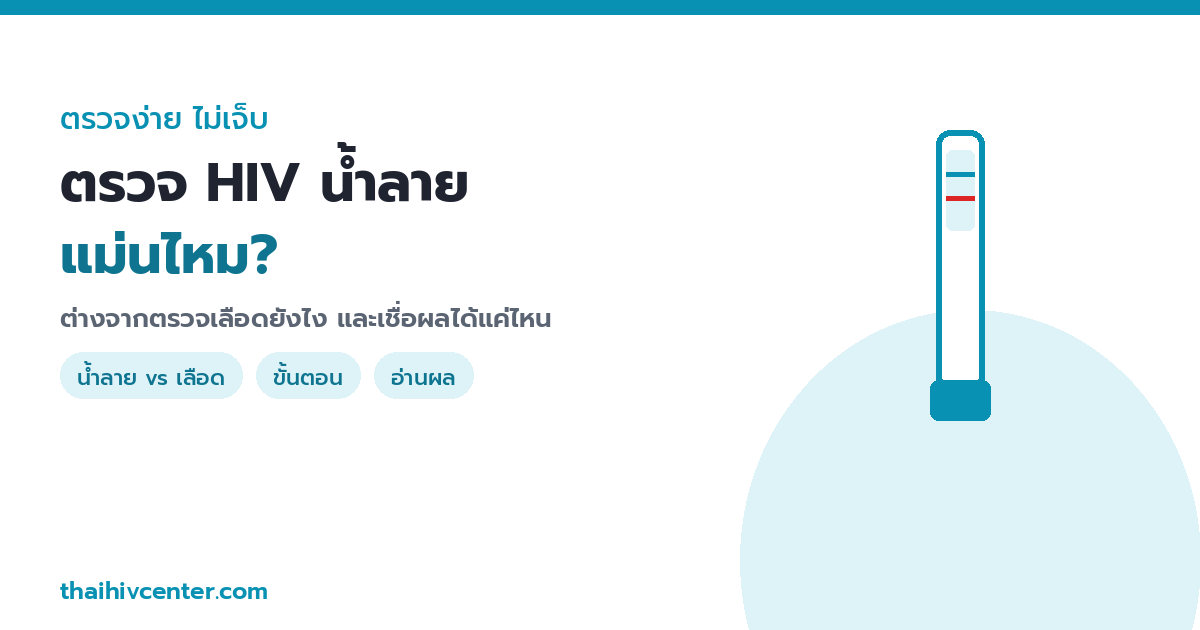
An oral fluid HIV test is a screening method using fluid in the mouth, specifically at the gums, instead of a blood draw. The test device has a pad to collect a sample by swabbing the upper and lower gum edges to gather fluid containing antibodies, then reacts with a designated solution and awaits a result. It is popular because it is convenient, painless, and self-administered in some cases. What must be emphasized is that this test does not mean saliva can spread the virus, because what it detects is antibodies — proteins the body makes in response to the virus — not the transmissible virus itself. This understanding is important to avoid confusion with the fact that kissing or contact with saliva does not transmit HIV.
How oral fluid testing works
The principle of oral fluid testing is detecting antibodies to HIV. When the body is infected, the immune system gradually produces antibodies to fight the virus. These antibodies appear in several body fluids, including fluid at the gums. Oral fluid testing collects a sample from this area to check for HIV antibodies. If antibodies are present at a detectable level, the result is positive, meaning confirmation is needed. If no antibodies are found, the result is negative. However, because the body takes time to produce antibodies, testing early after infection may not yet detect them — a matter of the window period explained later. Understanding that this test detects antibodies, not the virus, helps you understand both its accuracy and limitations.
Is an oral fluid HIV test accurate
Oral fluid testing is highly accurate when done correctly and at an appropriate time, especially after the window period. However, accuracy of oral fluid testing early after infection may be slightly lower than blood testing, because antibody levels in gum fluid may appear later than in blood. This means if you recently had a risk, oral fluid testing may not yet detect it, while after the window period the result is more reliable. What's important to understand is that oral fluid testing is a screening test; if positive, it must always be followed by confirmation with a standard blood test before concluding infection. So accuracy depends on both following the steps correctly and choosing an appropriate testing time.
How oral fluid and blood testing differ
Both methods have distinct strengths and limitations, helping you choose by need.
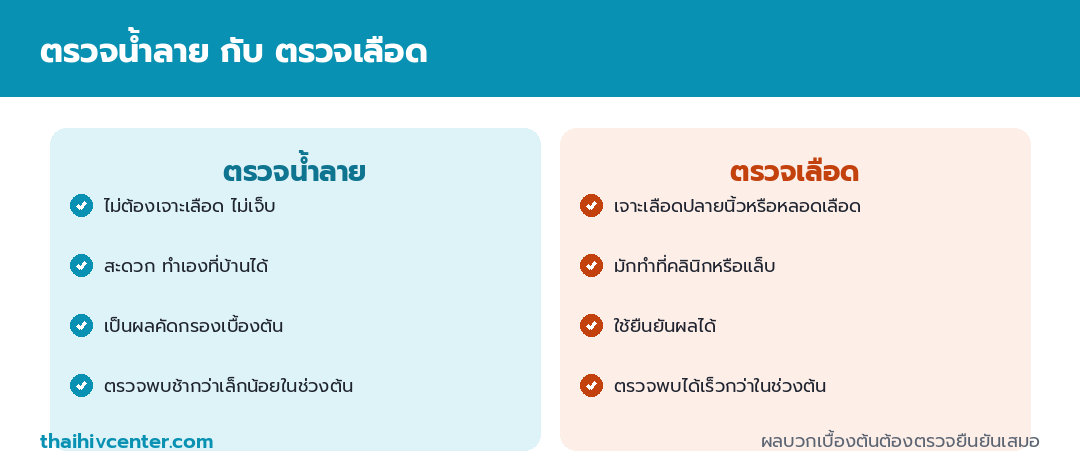
| Aspect | Oral fluid test | Blood test |
|---|---|---|
| Sample method | Swab fluid at the gums | Fingerstick or venous blood |
| Pain | Painless | A small prick |
| Convenience | Self-administered in some cases | Usually at a clinic or lab |
| Early after infection | Detects slightly later | Detects earlier |
| Role | Preliminary screening | Can confirm results |
Oral fluid testing stands out for convenience and being painless, suiting preliminary screening, while blood testing has the advantage of detecting earlier in the early period and confirming results. Compare testing methods more in HIV testing methods and rapid vs lab testing.
Steps for oral fluid testing
The steps for oral fluid testing are straightforward and can follow the manual.
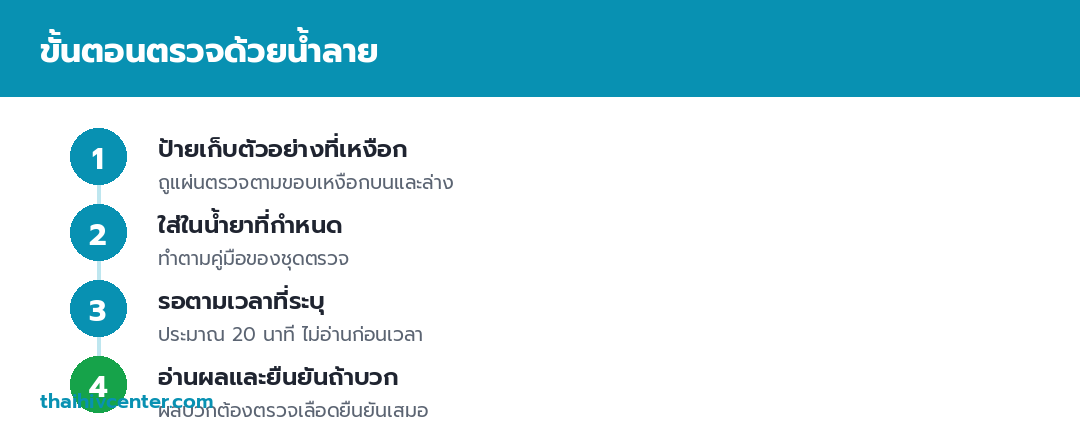
First, collect a sample by swabbing the pad along the upper and lower gum edges as the manual specifies, to gather fluid with antibodies. Second, place the pad in the designated solution provided in the kit. Third, wait the specified time, usually about 20 minutes, and don't read early or leave it too long, as it may skew the result. Finally, read the result per the instructions. If positive, always go for confirmation with a blood test. Following the steps strictly is important for accuracy. If unsure about doing or reading it, testing at a facility with staff reduces errors.
Benefits of oral fluid testing
Oral fluid testing has several benefits making it an attractive option. First, convenience and being painless, because there's no blood draw, suiting those who fear needles or find blood draws inconvenient. Second, privacy, because in some cases it can be done at home, reducing worry about disclosure for those wanting privacy. Third, quick preliminary results, usually about 20 minutes. And fourth, improving access to testing, giving those who may not find a clinic convenient an option for preliminary screening. These benefits make oral fluid testing a tool that encourages more people to test for HIV — an important first step in health care.
Limitations to know
Despite the benefits, oral fluid testing has limitations to understand. First, it is a preliminary screening, not a final diagnosis; if positive, always confirm with a blood test. Second, early after infection, oral fluid testing may detect later than blood testing, risking a false negative if tested too early. Third, accuracy depends on following the steps correctly; incorrect sample collection or reading at the wrong time may skew results. And fourth, self-testing may mean a person with a positive result faces the news without staff to counsel immediately. Understanding these limitations helps you use oral fluid testing appropriately and know when to confirm or consult a professional.
The window period and oral fluid testing
Like all HIV testing methods, oral fluid testing involves the window period. The window period is the time after infection when the body hasn't produced enough antibodies to detect. Testing during this time may give a negative despite infection. For antibody-based testing, the result is more reliable after the window period. Generally, testing at about 3 months after a risk is considered conclusive. If you test with oral fluid early and get a negative but recently had a risk, retest at the appropriate time, or consider a blood test which may detect earlier. Understanding this helps you choose an appropriate testing time and interpret correctly. Read more in the HIV window period.
What positive or negative means
Understanding what results mean helps you know what to do next. If negative and tested at an appropriate time after the window period, you likely aren't infected, but if you recently had a risk, retest as scheduled. If positive, it doesn't mean definitely infected right away, because oral fluid testing is a screen; a positive screen must be confirmed with a standard blood test first. If confirmation is positive, then infection is concluded, in which case there is effective treatment available free under coverage. So whatever the result, the next step is confirmation or consulting a professional — don't panic or jump to conclusions from a screen alone.
Who it suits
Oral fluid testing suits many groups, especially those wanting convenience and disliking blood draws, those who fear needles, those wanting privacy for preliminary screening, and those who may find travel to a clinic inconvenient. It gives these groups an option to start testing. However, for those who recently had a risk and want fast, accurate early results, a blood test may be more suitable, and for those wanting confirmation or staff counseling, testing at a facility is a good option. Choosing a method should consider the situation, convenience, and time since a risk. Read about testing options in where to test and how fast results are.
Where to find oral fluid testing
Oral fluid testing may be available at some facilities, specialized HIV clinics, and as self-test kits in some cases. Availability and access may vary by location and time. If interested, ask a facility or clinic whether they offer it, and if a self-test kit, choose a certified product and read the manual carefully before use. Whatever the method, importantly a positive result must be confirmed at a facility, and professional counseling helps you understand the result and plan next steps. Read more about kits in HIV self-test kits. You can find a clinic near you to ask about services.
Frequently asked questions
Does oral fluid testing mean saliva can spread HIV
No, oral fluid testing detects antibodies in gum fluid, not the virus. Saliva is not a route of HIV transmission.
Is oral fluid testing as accurate as blood testing
After the window period and done correctly, it is highly accurate, but early after infection it may detect later than blood testing, and a positive must always be confirmed.
Does oral fluid testing hurt
No, it's a swab of gum fluid with no blood draw.
Does a positive oral fluid result mean definitely infected
Not necessarily, because it's a screen; it must be confirmed with a standard blood test before concluding.
I recently had a risk — can I test with oral fluid now
You can, but it may not detect early; test per the window period, and if within 72 hours of a risk, also consult about PEP.
What do I do if a self oral fluid test is positive
Go for confirmation at a facility and consult a professional; don't conclude or panic from a screen alone.
Summary
An oral fluid HIV test is a convenient, painless screening method detecting antibodies in gum fluid — not testing whether saliva carries the virus. Done correctly and after the window period, it is highly accurate, but early after infection it may detect later than blood testing, and a positive screen must always be confirmed with a blood test. Oral fluid testing suits those wanting convenience, privacy, or who fear needles, but understand its limitations and choose an appropriate testing time. To test or confirm, find a clinic near you for service and counseling.