HIV Self-Test Kits: Where to Buy, How to Use Them, and How to Read the Result
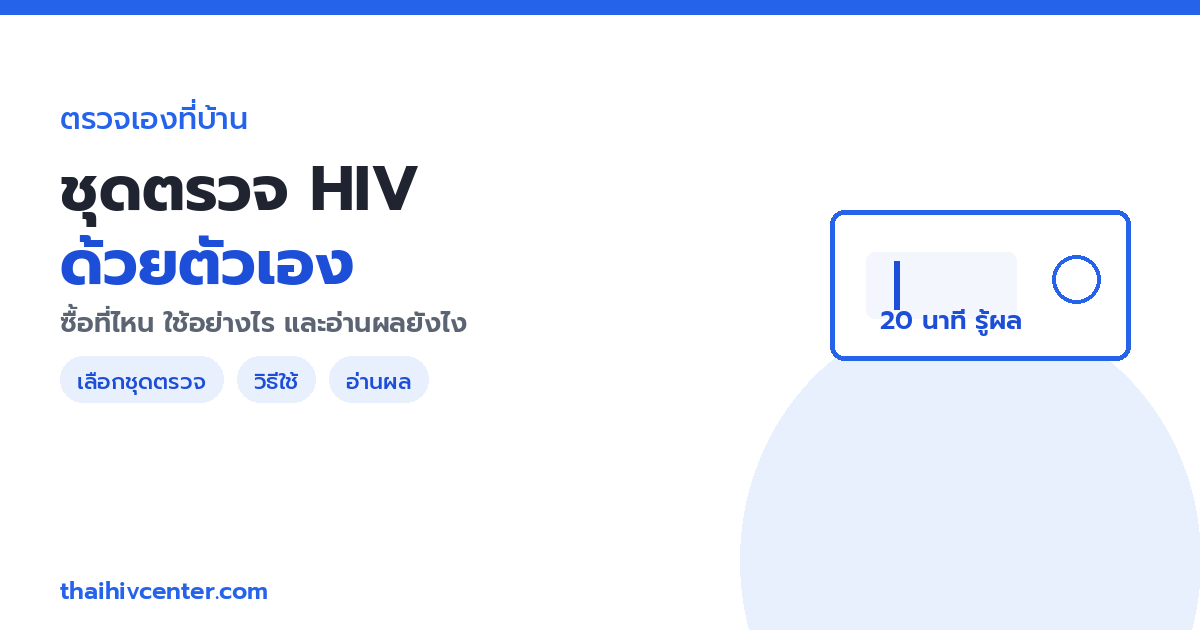
Testing for HIV is an important step in sexual-health care, but some people feel uncomfortable going to a clinic. A convenient option is an HIV self-test kit, which lets you test privately at home with a preliminary result in about 20 minutes. Thailand now legally allows the sale of kits approved by the FDA. This article covers where to buy them, how to choose, use, and read them, and the important step to take if the result is positive — so you can test confidently and correctly.
What is an HIV self-test kit
An HIV self-test kit is a device designed for anyone to collect a sample and read the result themselves, without a healthcare worker. Most kits detect antibodies to HIV from a fingerstick blood sample or oral fluid. The result is a preliminary screening — meaning a negative result offers some reassurance, but a positive result must always be confirmed at a clinic or hospital before any conclusion. The kit is a tool to increase access to testing, not a final diagnosis.
Where to buy an HIV self-test kit and how to choose
In Thailand, you can buy HIV self-test kits from pharmacies with a pharmacist, some clinics and health organizations, and trusted online channels. The most important thing when choosing is that the kit is approved by the Food and Drug Administration (FDA), which confirms it has passed standards and safety review. Check the FDA registration number on the packaging, look at the expiry date, and avoid unclear sources or unusually cheap prices, which may be counterfeit and inaccurate. If unsure, ask a pharmacist for advice.
Types of HIV self-test kits
There are two main types. The first uses fingerstick blood — a small lancet to collect a drop of blood placed on the test cassette. The second uses oral fluid — a swab along the gums instead of a blood draw. The oral type is convenient and painless, ideal for those afraid of needles, while the blood type may detect slightly earlier. Both give a preliminary screening result and must be read within the time specified in the manual.
How to use an HIV self-test kit
Although brands differ slightly, the main steps are similar. Always read the manual of the kit you bought carefully first.
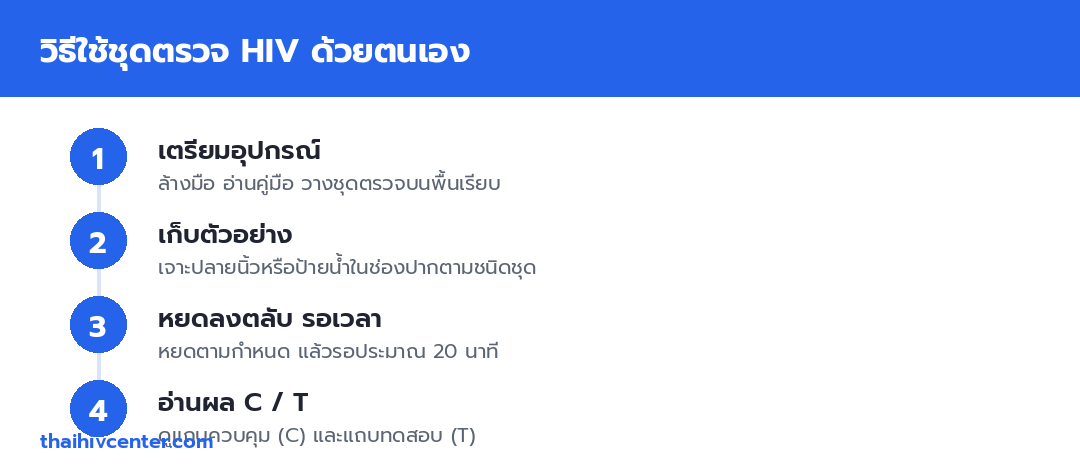
Start by washing your hands and placing the kit on a flat surface. Then collect the sample by type — for blood, gently prick a fingertip; for oral, swab the gums as directed. Apply the sample to the cassette or tube as specified, and wait about 20 minutes (per the manual) without reading too early or too late, which can cause misinterpretation. Finally, read the result from the bands that appear.
How to read the result
Reading relies on the bands on the cassette — a control band (C) and a test band (T).
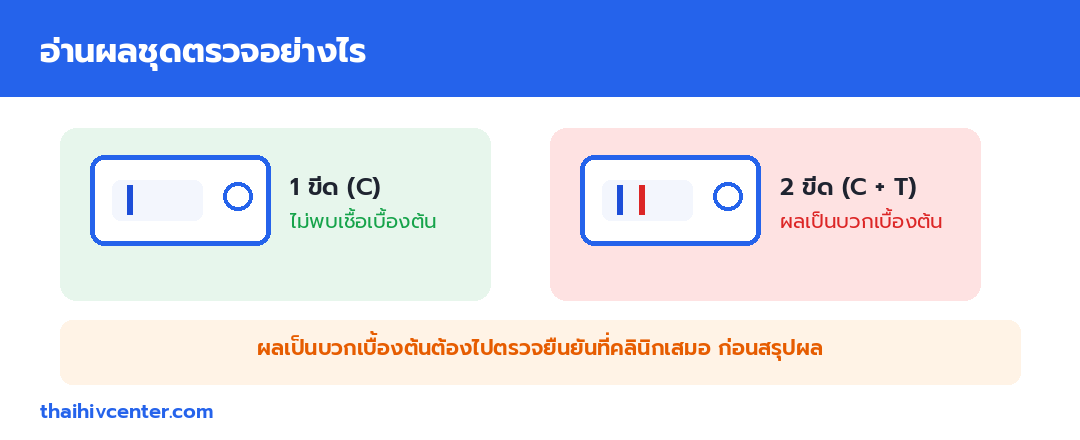
A single band at C means a preliminary negative (no virus detected). Two bands at both C and T mean a preliminary positive (reactive), which must always be confirmed. If no band appears at C, the kit may have malfunctioned — retest with a new one. Remember: a preliminary positive from a self-test is not a diagnosis of infection and must be confirmed at a healthcare facility first.
Pros and limits of self-testing
| Pros | Limits |
|---|---|
| Test privately at home | Screening only — confirm if positive |
| Fast preliminary result ~20 min | May give a false negative if too early |
| No queue or travel | You must collect the sample correctly |
| Eases privacy concerns | No immediate counselor on hand |
What to do if the result is preliminary positive
If the kit shows a preliminary positive, don't panic or jump to conclusions, because it still needs confirmation by a standard method at a clinic or hospital. Confirmatory testing gives an accurate result and helps you enter care correctly. If confirmed positive, the good news is that antiretrovirals are available free under coverage, and starting early keeps you healthy and non-transmitting (U=U). You can find a clinic near you to confirm, or see the full clinic list.
How accurate are they, and the window period
FDA-approved kits are highly accurate when used correctly and at the right time. However, because most kits detect antibodies — which the body takes time to produce after infection — testing too early during the window period can give a false negative. So if you recently had a risk, test at the appropriate time, and if negative but still worried, retest. Read more in how many days after a risk to test, compare methods in HIV testing methods, and see rapid vs lab testing.
Frequently asked questions
Are HIV self-tests accurate
FDA-approved kits used correctly are highly accurate for screening, but a positive must always be confirmed at a facility.
A negative self-test — am I definitely safe
Testing during the window period can give a false negative; test at the right time and retest if still worried.
Where can I buy a genuine kit
Buy from pharmacies with a pharmacist or trusted channels; check the FDA number and expiry date on the packaging.
Do I still need a clinic after self-testing
If negative and tested at the right time, maybe not — but a positive must always be confirmed at a clinic.
Summary
HIV self-test kits are a convenient, private option that increases access to testing. The key is choosing an FDA-approved kit, using it correctly, and understanding the result is preliminary screening. A positive must always be confirmed at a facility, and if you recently had a risk, consider the window period when timing your test. Whatever the result, testing is the first step in caring for yourself. To confirm or consult, find a clinic near you.