Living with HIV — How to Care for Yourself and Stay Healthy: Body, Mind, and Living Normally
Living with HIV today is very different from the past. With highly effective treatment, people with HIV who are treated can be healthy, live normally, and have a life expectancy close to the general population. HIV is therefore not the end of a good life but a manageable health condition when you care for yourself appropriately. Many wonder how to care for yourself and stay healthy living with HIV. This article explains in detail holistic self-care — body, mind, and living — from taking ARV consistently as the foundation, monitoring, caring for nutrition and exercise, mental health, having support, U=U and relationships, to living normally in every aspect, so you or someone you love can live with HIV with quality and happiness.
Can you live normally with HIV
The answer is yes. People with HIV who are appropriately treated can live normally in almost every aspect — work, study, relationships, and family. With effective ARV treatment today, HIV can be controlled so it doesn't harm the body, keeping people healthy with a life expectancy close to the general population. Living with HIV today is like managing other chronic health conditions needing ongoing care but not a barrier to a good life. What matters is appropriate self-care, including consistent medicine, monitoring, and caring for both body and mind. Understanding that living normally with HIV is real helps change the view from fear to hope and motivates people to care for themselves. Read more about life expectancy in life expectancy with HIV.
Caring for physical health with HIV
Caring for physical health is a key foundation of living with HIV with quality.
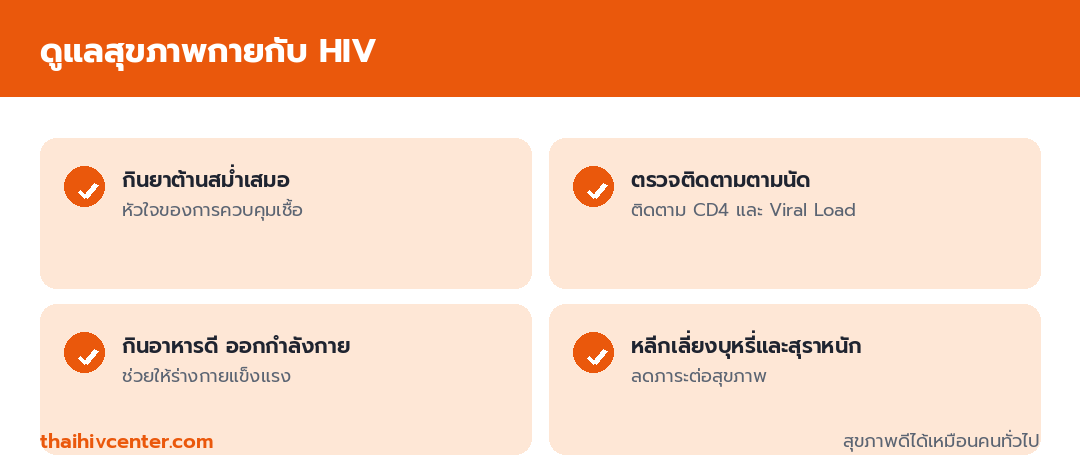
Caring for physical health with HIV involves several aspects working together. First and most important is taking ARV consistently, the key to controlling the virus and maintaining health. Second is monitoring on schedule, to track values like CD4 and viral load and see whether treatment works. Third is eating well and exercising, helping the body be strong and supporting the immune system. And fourth is avoiding things that harm health, like smoking and heavy drinking, reducing the burden on the body. Caring for these together helps people be physically healthy and live fully. Understanding that physical health care is feasible and multifaceted helps you plan comprehensive self-care, a foundation of living with HIV with quality.
Consistent medicine is the foundation
Taking ARV consistently is the most important foundation of self-care with HIV. ARVs control the virus to a very low level so it doesn't harm, and when taken consistently until the viral level is undetectable, there's no sexual transmission per U=U. Consistency is therefore very important, because inconsistent dosing or missing doses may let the virus multiply again and risk resistance. Methods to help consistency include taking it at the same time each day, tying dosing to a routine, setting reminders, and preparing medicine for travel. If you have obstacles to dosing, like side effects or memory issues, consult a doctor for help, not stop on your own. Viewing dosing as part of a healthy routine helps you sustain it long term. Consistent dosing is the key that makes treatment work and helps you be healthy. Read more about starting treatment in starting HIV treatment for the first time.
Monitoring on schedule
Monitoring on schedule is an important part of health care with HIV. A doctor schedules periodic tests to track whether treatment works, especially viral load testing to see whether it's undetectable, and CD4 testing to track immune recovery and strength. Monitoring also assesses overall health and detects other problems early. If values aren't as expected, a doctor can adjust care promptly. Attending follow-up appointments consistently is very important, because it ensures treatment works and health is fine. Also, monitoring is a chance to talk with a doctor about health issues, side effects, or questions, getting appropriate ongoing care. Understanding that monitoring matters helps you see the value of appointments and view them as part of self-care that keeps you healthy long term. Read more about these values in what CD4 and viral load are.
Nutrition and exercise
Caring for nutrition and exercise plays an important role in strengthening the health of people with HIV. Eating nutritious, varied food — protein, vegetables, fruit, and grains — helps the body get necessary nutrients and supports the immune system. Drinking enough water and maintaining an appropriate weight are also part of good health care. For exercise, regular physical activity strengthens fitness, heart health, and mental health. Exercise needn't be intense but should be regular activity suited to each person's condition, such as walking, running, swimming, or an activity you enjoy. Caring for nutrition and exercise is general health care beneficial to everyone and equally important for people with HIV. If you have specific questions about nutrition or exercise suited to you, consulting a doctor or health professional helps you get appropriate advice. This care helps the body be strong and supports treatment working well.
Avoiding things that harm health
Besides positive health care, avoiding things that harm health is equally important. Smoking is something to avoid, because it increases the risk of many health problems and burdens the body. Heavy drinking is also something to avoid, because it may affect health and dosing consistency. Reducing or quitting these reduces the burden on the body and supports overall health. For those wanting to reduce or quit smoking or drinking, there's support and resources that help. Consulting a doctor about this is a good option. Caring for health by avoiding things that harm the body is part of holistic self-care, helping people with HIV be healthy long term. Understanding that avoiding these is beneficial helps you decide to care for your health appropriately and is an investment in a good quality of life. This care is no different from general health advice beneficial to everyone.
Caring for mind and living
Caring for mental health and living is another aspect as important as physical care.
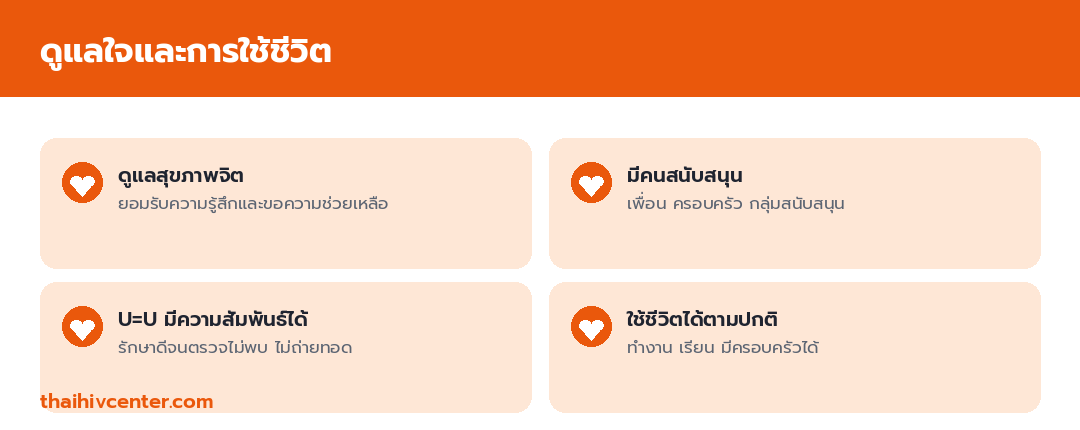
| Care aspect | Approach |
|---|---|
| Mental health | Accept feelings and ask for help when needed |
| Support | Have friends, family, or a support group |
| Relationships | U=U helps you have relationships confidently |
| Living | Work, study, and have a family normally |
Caring for mind and living involves several aspects. Mental health care matters, because living with HIV may come with various feelings; accepting feelings and asking for help when needed helps. Having support, whether friends, family, or a support group, helps you not feel alone. U=U helps people treated to undetectable have relationships confidently, and living in various aspects — work, study, and family — can be done normally. Caring for these helps people have good quality of life all around. Understanding that caring for mind and living is as important as physical care helps you view self-care holistically.
Caring for mental health
Caring for mental health is an important part of living with HIV with quality. Learning you have HIV and living with it may come with various feelings — worry, stress, or others — which are normal and understandable. Accepting these feelings without blaming yourself is an important first step. Mental health care may include doing activities you enjoy, resting enough, having time for yourself, and having someone you trust to talk to. If negative feelings disrupt daily life a lot, talking to a mental-health professional or counselor is a good, feasible option. Asking for mental-health help isn't embarrassing but a form of self-care. Clinic staff and counselors are usually ready to help with both information and emotions. Caring for mental health alongside physical health helps people truly be well. Understanding that mental health matters and support is ready to help means people don't have to face this alone and can care for their minds appropriately.
Having support
Having support is very valuable for those living with HIV. Having friends, family, or someone you trust to talk to and encourage you helps you not feel alone and get through difficult times better. Besides close people, support groups of those with similar experiences are a valuable source of support, because they help you share experiences, get understanding, and see you're not alone. Having a support network strengthens both mental health and motivation for self-care. For those without support yet or not ready to disclose to close people, clinic staff and organizations working on HIV are a source of support ready to help. Deciding whom to disclose to and ask support from is personal and your right to decide. Understanding that support is valuable and there are diverse sources helps people know there are people ready to stand by them and they don't have to face this alone.
U=U and relationships
U=U — Undetectable = Untransmittable — is information that greatly changes the view of relationships for people with HIV. When a person takes ARVs consistently until the viral level is undetectable, they don't transmit HIV sexually. This has great meaning, because it lets people have relationships, partners, and love lives confidently, without worrying about transmitting to a partner. U=U reduces fear and stigma related to relationships and restores confidence. Communicating with a partner about status and U=U is part of a good relationship, and having accurate information helps both understand and plan together. Also, using other protection as appropriate is still beneficial for preventing other STIs. Understanding that U=U helps you have relationships confidently changes the view of living with HIV and helps people have a happy love life. Read more in what U=U is.
Having a family and children
People with HIV who are treated can plan to have a family and children safely, another aspect of living normally. With effective treatment and appropriate planning under a doctor's care, people can have children safe from infection. Controlling the virus until the viral level is undetectable plays an important role in this. For couples wanting children, consulting a doctor to plan in advance helps get an appropriate, safe approach. In pregnancy, appropriate care greatly reduces the risk of mother-to-child transmission. Having a family and children is therefore possible for people with HIV who are appropriately cared for. Understanding that having a family and children is a feasible option changes the view of living with HIV and helps people have hope in planning life. If you're planning a family, consulting a doctor is an important first step. Read more in can you have children with HIV.
Dealing with stigma
Stigma and prejudice related to HIV remain a challenge some people with HIV may face, usually from misunderstanding and lack of accurate information. Coping with stigma starts with having accurate knowledge about HIV, such as understanding that HIV doesn't transmit through general contact and people treated to undetectable don't transmit sexually per U=U. This knowledge helps people be confident and reduces the impact of stigma. Having support and understanding groups also strengthens motivation to face this challenge. Importantly, recognizing that stigma usually comes from others' misunderstanding, not the person's fault, and caring for your own mental health in facing this matters. If stigma greatly affects mental health, talking to a professional or counselor helps. Understanding that there are ways to cope with stigma and support ready to help means people can live confidently and with dignity.
Living normally — work, study
People with HIV who are treated can work, study, and do various life activities normally. HIV isn't a barrier to a career, learning, or pursuing dreams and goals. With good health from effective treatment, people can live daily life fully like anyone. Working and studying aren't only feasible but part of a meaningful, valuable life. Consistent treatment and health care give people the energy and health to do what they want. What matters is appropriate self-care alongside living, such as attending appointments and taking medicine consistently, which can be done without affecting work or study. Understanding that living normally is real for people with HIV who are treated helps change the view from fear to hope and helps people see they can have a good life and pursue goals. Living with HIV isn't limiting life but caring for yourself to keep having a good life.
Frequently asked questions
Can I still live normally with HIV
Yes, treated people can work, study, have relationships, and have a family normally, with good health and a life expectancy close to the general population.
How do I care for myself
Care holistically — take medicine consistently, monitor on schedule, eat well, exercise, care for mental health, and have support.
Do I need a special diet with HIV
Eat nutritious, varied food like general health advice; if you have specific questions, consult a doctor or health professional.
Can I have a partner or marry with HIV
Yes, U=U helps those treated to undetectable have relationships confidently without sexual transmission.
Can I have children with HIV
Yes, with treatment and appropriate planning under a doctor's care, you can have children safe from infection.
What should I do if I feel stressed or worried
Accepting feelings and asking for help is normal; if it disrupts life a lot, talking to a mental-health professional helps.
Summary
People with HIV who are treated can be healthy, live normally, and have a life expectancy close to the general population. Holistic self-care is key — taking ARV consistently as the foundation, monitoring on schedule, caring for nutrition and exercise, and avoiding things that harm health. Besides the physical, caring for mental health, having support, and understanding U=U that helps you have relationships and a family are equally important. People can work, study, and live normally. Living with HIV isn't limiting life but caring for yourself for a good life. If you want to start treatment or consult about self-care, find a clinic near you.