Can People with HIV Have Children? How to Have a Baby Without HIV Transmission
A worrying question for people with HIV who want a family is can people with HIV have children, and will the baby be infected too. The good news is that with today's medical advances, people with HIV can have children, and with proper care the chance the baby is HIV-free is very high. Mother-to-child transmission can be effectively prevented with planning and following medical advice. This article explains how people with HIV can have a baby safely and what to prepare and manage, so the dream of a family can come true with confidence.
Can people with HIV have children
The answer is yes. Both men and women with HIV can have children, and with appropriate care most babies born are HIV-free. In the past, an HIV diagnosis made many think having children was impossible or too risky, but today, with antiretrovirals and prevention-of-mother-to-child-transmission approaches, the chance of infant infection can drop to very low. The key is entering care early and planning with a doctor. Whether the mother, the father, or both are positive, there are approaches that allow having children safely.
Three things that help keep the baby HIV-free
Preventing mother-to-child transmission relies on three main components working together.
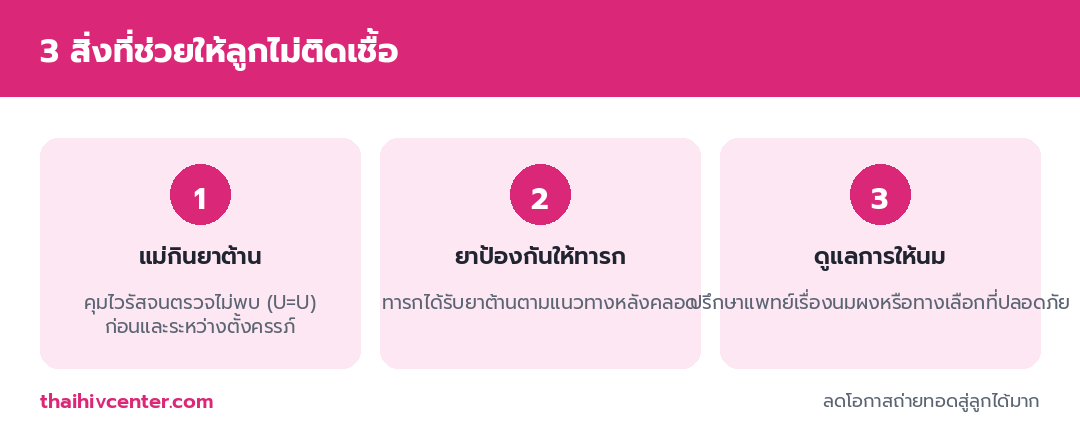
First, the mother takes antiretrovirals to control the virus — consistent ARV use until the viral level is undetectable, both before and during pregnancy, is the single most important factor in reducing risk. Second, prophylaxis for the infant — babies born to mothers with HIV receive antiretrovirals per guidelines after birth for extra protection. Third, feeding care — consult a doctor to choose the safest method for each family. Together, these three greatly reduce the chance of transmission.
Planning a safe pregnancy
A safe pregnancy starts with good planning — it shouldn't happen unprepared.
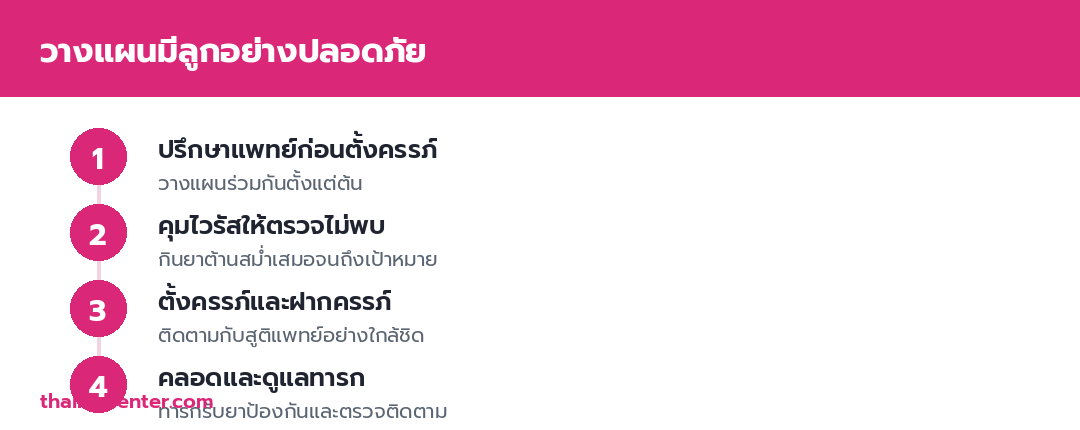
First, consult a doctor before pregnancy to plan together and assess readiness. Second, control the virus to undetectable with consistent ARV use, the foundation of safety. Third, once pregnant, get antenatal care and follow up closely with a doctor. Finally, care during and after delivery, including infant prophylaxis and follow-up. You can find a clinic near you to start consulting and planning.
If the mother or the father is positive
The approach may differ slightly depending on who is positive. If the mother is positive, controlling the virus to undetectable before and during pregnancy is key, along with infant prophylaxis. If the father is positive but the mother is not, once the father takes ARVs and is undetectable (U=U), there is effectively no risk of transmitting to the mother through sex, making natural conception safer. There are also other options, such as PrEP for the negative partner or assisted reproduction. Consult a doctor to choose what fits each couple. Read more about PrEP.
Infant feeding
Infant feeding is a matter to discuss individually with a doctor, because HIV can pass through breast milk. In many cases a doctor may recommend formula to reduce risk, while some contexts may have different guidance under good care and viral control. The important thing is not to decide alone but to consult your care team to choose the safest, most appropriate method for both mother and baby.
How much can the baby's risk be reduced
When the mother receives complete care — ARVs to control the virus, infant prophylaxis, and appropriate delivery and feeding care — the chance of infant infection can drop to very low, unlike cases with no care where the risk is much higher. This is why entering care early and following medical advice is so important. Good planning clearly changes the outcome.
The role of U=U
The U=U concept (Undetectable = Untransmittable) plays an important role in having a baby safely. When a person with HIV takes ARVs until the viral level is undetectable, they do not transmit HIV sexually. For couples where one is positive and the other is not, controlling the virus to undetectable helps plan for a baby with more confidence. U=U not only helps with having children but also reduces stigma and lets people with HIV live normally. Read more about what U=U is and getting free ARV under coverage.
Frequently asked questions
If the mother has HIV, will the baby definitely be infected
Not definitely — with proper care, the chance of infant infection is very low. Care before and during pregnancy is key.
The father is positive, the mother is not — can they have children
Yes — when the father is undetectable (U=U), the risk of transmitting to the mother is effectively none. Plan with a doctor.
Should I stop ARV during pregnancy
Don't stop on your own — continuing ARV during pregnancy is important to protect both mother and baby. Always consult a doctor.
Can I breastfeed
Consult a doctor individually, because the virus can pass through breast milk; formula is often recommended for safety.
Summary
People with HIV can have children, and with proper care the chance the baby is HIV-free is very high. The keys are ARVs to control the virus, infant prophylaxis, antenatal care and close follow-up, and consulting about feeding. U=U also helps couples where one is positive plan for a baby with confidence. Most importantly, plan with a doctor early. If you are planning a family, find a clinic near you to consult and start.