What Is HIV Drug Resistance? What Causes It, and How Can You Prevent It?
HIV treatment with antiretrovirals today is highly effective, but there's one thing those in treatment or about to start should understand — drug resistance. A common question is what HIV drug resistance is, what causes it, and how to prevent it. Understanding this matters, because resistance may make controlling the virus harder, but the good news is that most resistance can be prevented with consistent dosing and monitoring. HIV drug resistance occurs when the virus mutates so some medicines control it less well, usually caused by inconsistent dosing, frequent missed doses, or stopping medicine on your own. This article explains in detail what resistance is, what causes it, how to prevent it, the important consistency, monitoring, and what to do if resistance occurs, so you understand and manage your treatment appropriately — always following your doctor's advice.
What is HIV drug resistance
HIV drug resistance is a condition where HIV changes or mutates so some antiretrovirals can't control the virus as effectively as before. Normally, antiretrovirals work by suppressing the virus's multiplication, but when resistance occurs, the mutated virus can multiply even with medicine present, making control with that medicine less effective. Resistance relates to the nature of the virus that can mutate, especially when the medicine level in the body isn't enough to suppress the virus continuously. What's important to understand is that resistance doesn't occur without cause but usually relates to inconsistent dosing, a controllable factor. Understanding what resistance is helps you see the importance of consistent dosing to prevent resistance and realize that good treatment depends on managing dosing appropriately. Read HIV basics in what HIV is.
What causes resistance
The main cause of HIV drug resistance usually relates to inappropriate dosing, a controllable and preventable factor.
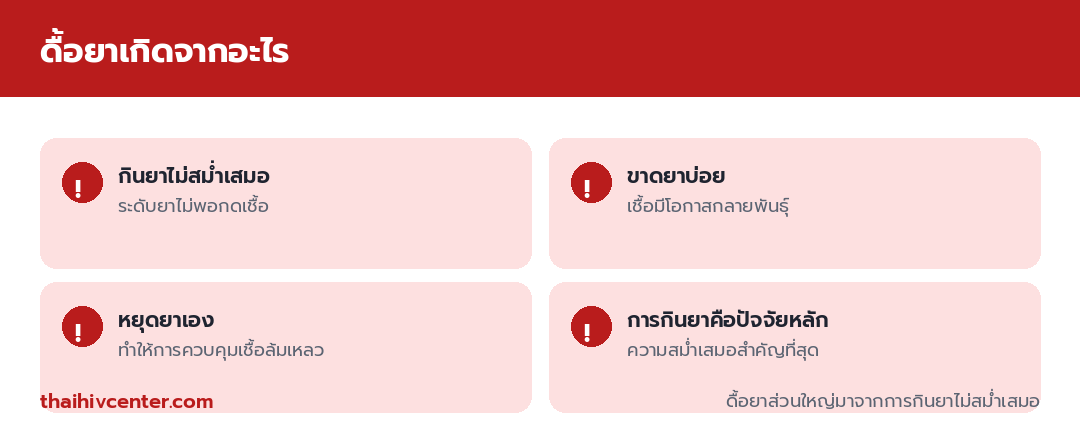
- Inconsistent dosing — when the medicine level isn't steady, it may be insufficient to suppress the virus, letting it multiply and mutate.
- Frequent missed doses — forgetting or missing doses several times lowers the medicine level, opening a chance for resistance to develop.
- Stopping on your own — stopping without consulting a doctor makes control fail and risks resistance.
- Dosing is the main factor — overall, consistency in dosing is the most important factor in preventing resistance.
Most causes of resistance relate to inconsistent dosing, preventable by managing dosing appropriately. Understanding these causes helps you see that preventing resistance is largely in our hands, through consistent dosing and following a doctor's advice.
Why inconsistent dosing causes resistance
To understand why inconsistent dosing leads to resistance, we should understand how antiretrovirals work. They work by keeping the medicine level in the body enough to suppress the virus and continuously prevent multiplication. Taken consistently every day, the level stays steady and controls the virus effectively. But with inconsistent dosing, missed doses, or stopping, the medicine level falls at times, and during periods when the level is insufficient, HIV has a chance to multiply, and during multiplication, the virus may mutate to become resistant. When resistant virus multiplies, control with that medicine becomes less effective. This is why consistency matters greatly, because keeping the level steady prevents the virus from having a chance to multiply and mutate. Understanding this mechanism helps you see why taking medicine on time and consistently is the key to preventing resistance and motivates you to manage dosing appropriately.
Signs that may indicate resistance
Resistance is usually detected through monitoring, not from symptoms you notice yourself. However, there are some indicators a doctor uses to assess.
| Indicator | Meaning |
|---|---|
| Rising viral load | A previously undetectable viral level rises, possibly indicating the medicine controls it less |
| Control not as expected | Treatment isn't working as it should |
| History of inconsistent dosing | A risk factor a doctor considers |
The most important indicator of resistance is a rising viral load in someone who previously controlled the virus, detected through viral load testing on schedule. Things to understand:
- Resistance usually has no symptoms you notice yourself, so it requires monitoring
- Periodic viral load testing helps detect changes early
- If the viral load rises, a doctor assesses the cause and considers the next approach
Understanding that resistance is detected through monitoring helps you see the importance of attending appointments. Read more about these values in what CD4 and viral load are.
How to prevent resistance
The good news is that most resistance can be prevented with appropriate dosing management and monitoring.
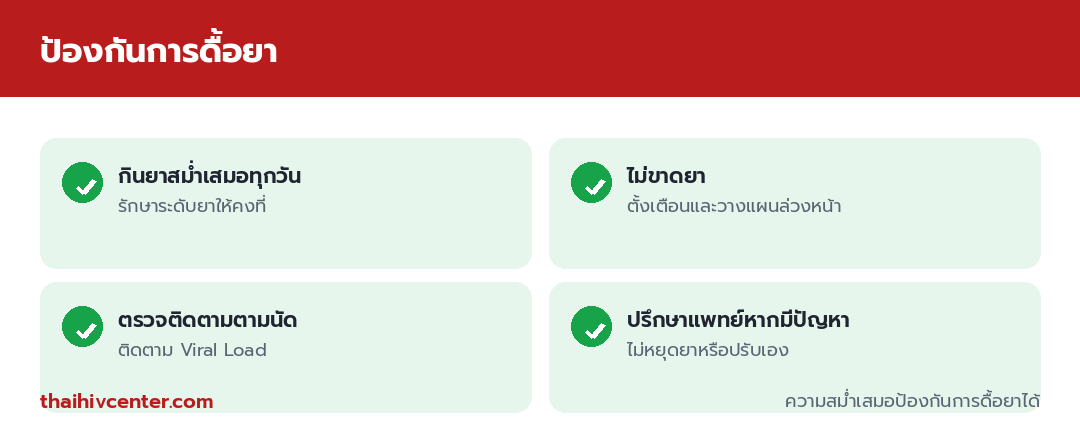
- Take medicine consistently every day — taking it at the same time each day keeps the level steady and suppresses the virus continuously.
- Don't miss doses — setting reminders, tying dosing to a routine, and preparing medicine in advance reduce missing.
- Monitor on schedule — periodic viral load testing helps track whether treatment works and detect problems early.
- Consult a doctor if you have problems — if you have obstacles to dosing, such as side effects, consult a doctor, don't stop or adjust the dose on your own.
Preventing resistance is largely in our hands, through consistent dosing and following a doctor's advice. Understanding that resistance is preventable motivates you to manage dosing and view consistent dosing as an investment in treatment working long term. Read about starting treatment in starting HIV treatment for the first time.
Consistency is the key
The most important factor in preventing resistance is consistency in dosing. Taking medicine on time every day keeps the level steady, which prevents the virus from having a chance to multiply and mutate. Building a consistent dosing habit is therefore important. Helpful methods include taking it at the same time each day, tying dosing to a regular routine like meals or brushing teeth, setting phone reminders or using an app, and preparing medicine for travel or going out. For those with obstacles to consistency, such as busy schedules or memory issues, finding a system that suits you and consulting a doctor for advice helps. Viewing consistent dosing as part of a healthy routine helps you sustain it long term. Consistency not only prevents resistance but also helps treatment work well and leads to controlling the virus to undetectable, the treatment goal. Understanding that consistency is the key helps you realize the value of taking medicine on time every day.
Don't stop or adjust the dose on your own
One important thing in preventing resistance is not stopping or adjusting the dose on your own without consulting a doctor. Even for various reasons — feeling well, having side effects, or thinking it's unnecessary — stopping or adjusting on your own may make the medicine level inappropriate, opening a chance for the virus to multiply and develop resistance. If you face a problem making you want to stop or change dosing, such as bothersome side effects, consult a doctor, not decide yourself. A doctor may have ways to manage side effects, or in some cases consider adjusting the regimen appropriately under proper care. Communicating honestly with your doctor about problems helps you get appropriate care and continue dosing without risking resistance. Understanding that stopping or adjusting on your own risks resistance helps you realize the importance of following a doctor's advice and consulting when you have problems instead of deciding yourself.
Monitoring helps detect resistance
Monitoring on schedule is an important tool for detecting resistance early. Since resistance usually has no symptoms you notice yourself, periodic viral load testing is the main way to track whether treatment still works. If a previously undetectable viral level rises, it may signal a problem, such as inconsistent dosing or resistance, which a doctor assesses and considers an appropriate approach. Monitoring lets a doctor detect and manage problems early before they progress. Attending follow-up appointments consistently is therefore very important and shouldn't be overlooked, because it ensures treatment works and helps detect resistance or other problems early. Besides viral load testing, monitoring is a chance to talk with a doctor about dosing, side effects, or other problems, getting appropriate ongoing care. Understanding that monitoring helps detect resistance early helps you see the value of appointments and view them as an important part of managing treatment.
What to do if resistance occurs
If resistance is detected, what matters is not to panic, because there are approaches to manage it under a doctor's care. Steps that may occur when resistance is found:
- Assess the cause — a doctor considers what caused resistance, such as inconsistent dosing.
- Resistance testing — in some cases, testing may be done to see which medicines the virus is resistant to.
- Consider adjusting the regimen — a doctor may switch to another regimen that still controls the virus.
- Support consistent dosing — to prevent resistance to the new regimen.
Importantly, even if resistance to some medicines occurs, there are usually other treatment options that still work. Working closely with a doctor and taking the new regimen consistently helps you regain viral control. Understanding that there are approaches to manage resistance helps you not panic and see the importance of consulting a doctor instead of managing it yourself.
Resistance testing
In managing resistance, a doctor may use resistance testing to help decide on treatment. Resistance testing helps a doctor understand which medicines the virus may be resistant to, and this information helps choose a regimen still effective at controlling the virus. This testing is part of care that helps treatment suit each person's specific situation. However, deciding on testing and treatment is something a doctor considers as appropriate. Those in treatment needn't worry about these technical details but should understand there are tools helping a doctor manage resistance appropriately. What those in treatment can do most importantly is take medicine consistently to prevent resistance in the first place and attend appointments so a doctor can track and manage promptly. Understanding that there's testing and approaches to manage resistance gives confidence that treatment has options and appropriate care, even if resistance occurs. Read about free treatment under entitlements in free ARV under entitlements.
Misconceptions about resistance
There are several misconceptions about HIV drug resistance to correct:
- "Resistance occurs no matter what you do" — false, most resistance relates to inconsistent dosing, which is preventable.
- "If resistance occurs, you can't be treated anymore" — false, there are usually other regimens that still control the virus under a doctor's care.
- "Feeling well means no resistance" — false, resistance usually has no symptoms; viral load testing is needed to track.
- "Stopping briefly is fine" — false, stopping or missing even briefly increases resistance risk.
Knowing these facts helps you understand resistance correctly and see that preventing resistance is largely in our hands through consistent dosing. Understanding that there are treatment options even if resistance occurs reduces fear and helps you focus on managing dosing appropriately.
Frequently asked questions
What is HIV drug resistance
It's a condition where the virus mutates so some medicines control it less, letting it multiply even with medicine; usually caused by inconsistent dosing.
What causes resistance
The main causes are inconsistent dosing, frequent missed doses, or stopping on your own, making the medicine level insufficient and opening a chance for the virus to mutate.
Can resistance be prevented
Yes, the main prevention is taking medicine consistently every day, not missing doses, monitoring on schedule, and consulting a doctor if you have problems instead of stopping on your own.
How do I know if I have resistance
Resistance usually has no symptoms; it's detected through viral load testing showing a rising viral level, so attending appointments matters.
If resistance occurs, can I still be treated
Yes, there are usually other regimens that still control the virus; a doctor assesses and considers adjusting treatment appropriately.
Does stopping briefly risk resistance
Yes, stopping or missing even briefly lowers the medicine level and increases resistance risk; don't stop on your own.
Summary
HIV drug resistance occurs when the virus mutates so some medicines control it less. The main cause is usually inconsistent dosing, frequent missed doses, or stopping on your own, making the medicine level insufficient to suppress the virus. The good news is that most resistance can be prevented by taking medicine consistently every day, not missing doses, monitoring on schedule, and consulting a doctor if you have problems instead of stopping on your own. Consistency in dosing is the key, and monitoring helps detect resistance early. If resistance occurs, there are usually other treatment options under a doctor's care, so don't panic. Understanding this helps you manage your treatment appropriately. If you want to consult about treatment or self-care, find a clinic near you.