Does Undetectable Mean Cured? Understanding U=U (Undetectable = Untransmittable) Correctly
U=U, or Undetectable = Untransmittable, is an important concept that has changed understanding about living with HIV and helps reduce stigma. A common question is whether undetectable means cured. The important answer is that U=U means that when a person with HIV is treated with antiretrovirals to control the virus to an undetectable level, they don't transmit HIV sexually, which is good news showing treatment is effective. However, what's important to understand is that undetectable doesn't mean cured, because HIV is still in the body, just controlled by medicine to an undetectable level. For this reason, those who are undetectable must continue treatment to maintain this control. If they stop, the virus may multiply again. This article explains U=U in detail — what undetectable means, why there's no sexual transmission, the difference between undetectable and cured, and why treatment must continue — so you understand U=U correctly and see both the positive side and what needs care.
What is U=U
U=U stands for Undetectable = Untransmittable, meaning undetectable equals no sexual transmission.
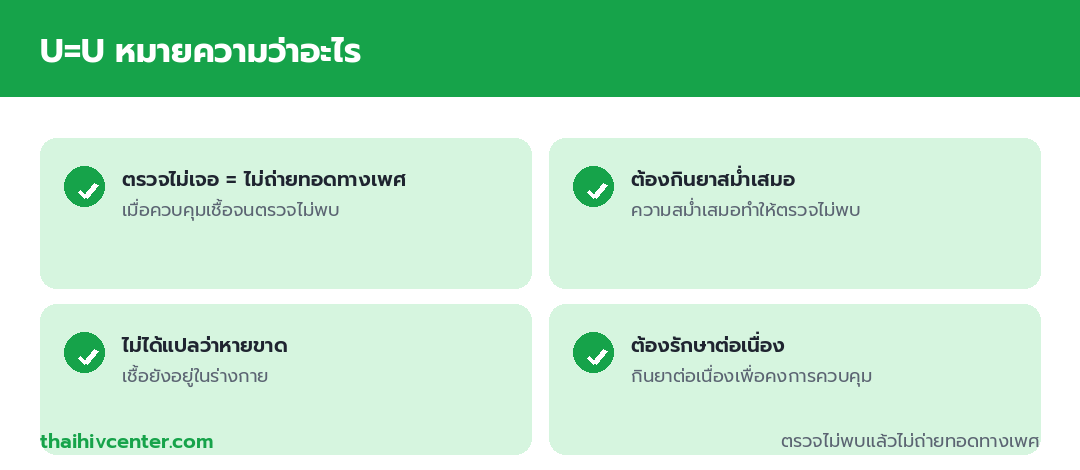
U=U is a concept explaining that when a person with HIV is treated with antiretrovirals consistently to control the amount of virus in the blood to an undetectable level, they don't transmit HIV sexually. This is accepted information that has greatly changed understanding about living with HIV, because it shows effective treatment not only helps people be healthy but also helps prevent sexual transmission. U=U is good news that helps reduce fear and stigma and helps people with HIV have relationships and live more confidently. However, being undetectable comes from control by medicine, not a cure, an important difference to understand. Understanding what U=U is helps you see both the positive side of effective treatment and the importance of continued treatment to maintain undetectable status. Read more about viral values in what CD4 and viral load are.

What does undetectable mean
Being undetectable is a status resulting from effective treatment. Things to understand about undetectable:
- The virus is controlled to undetectable — antiretroviral treatment reduces the amount of virus in the blood to an undetectable level.
- No sexual transmission — when undetectable consistently, there's no sexual transmission of HIV.
- Must take medicine consistently — maintaining undetectable status requires consistent dosing.
- The virus is still in the body — undetectable doesn't mean the virus is gone but controlled to a low level.
Understanding that undetectable means the virus is controlled by medicine to an undetectable level helps you see that this status results from effective treatment and maintaining it requires continued dosing. Undetectable is an important treatment goal, because it not only helps people be healthy but also means no sexual transmission. Read more about starting treatment in starting HIV treatment for the first time.
Why undetectable means no sexual transmission
To understand why undetectable means no sexual transmission, we should understand the relationship between the amount of virus and transmission. HIV transmission relates to the amount of virus in fluids. When a person with HIV is treated with antiretrovirals consistently, the medicine helps control and reduce the amount of virus in the body to an undetectable level. When the amount of virus is undetectable consistently, there's no sexual transmission. This is accepted information and the basis of the U=U concept, showing effective treatment helps prevent sexual transmission. Importantly, this no sexual transmission occurs when undetectable consistently, which requires consistent dosing. If viral control isn't continuous, such as from missing doses, the amount of virus may increase again. Understanding why undetectable means no sexual transmission helps you see the importance of effective treatment and continued dosing and helps reduce fear and stigma about transmission. Read more about U=U in what U=U is.
Undetectable vs cured are different
An important point to understand clearly is the difference between being undetectable and being cured, which are different things.
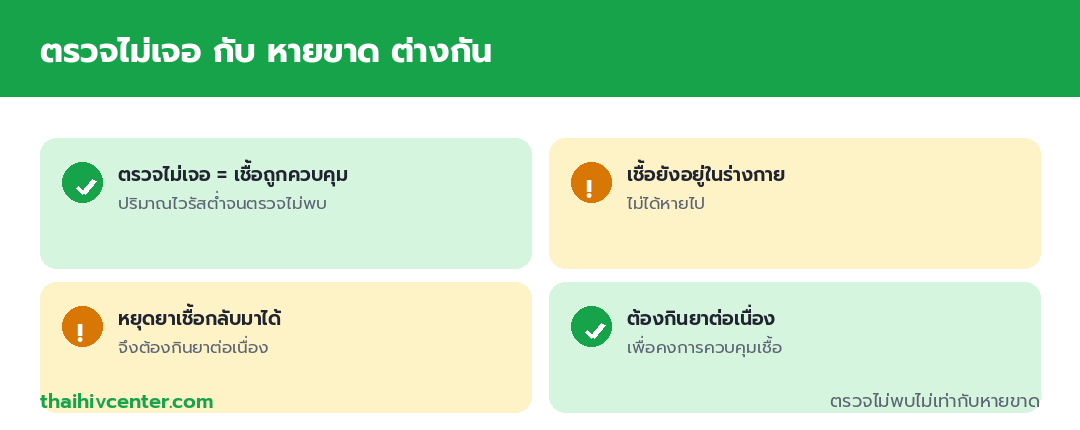
| Undetectable | Cured |
|---|---|
| The virus is controlled by medicine to undetectable | The virus is gone from the body |
| The virus is still in the body | No virus in the body |
| Must continue treatment | No treatment needed |
| Stopping medicine the virus may return | The virus doesn't return |
The important differences:
- Undetectable = virus controlled — the amount of virus is low enough to be undetectable, but doesn't mean the virus is gone.
- The virus is still in the body — being undetectable comes from control by medicine; the virus remains.
- Stopping medicine the virus can return — if you stop, the amount of virus may increase.
- Must continue treatment — to maintain undetectable status, you must take medicine continuously.
Understanding this difference matters greatly, because being undetectable is a status controlled by medicine, not a cure. Understanding that undetectable doesn't equal cured helps people with HIV realize the importance of continued dosing and not stop treatment mistakenly thinking they're cured. Read more about drug resistance in what HIV drug resistance is.

Why U=U doesn't mean cured
Although U=U is good news showing treatment is effective, what's important to understand is that U=U doesn't mean cured. The reason is that being undetectable comes from antiretrovirals controlling and reducing the amount of virus to an undetectable level, but HIV is still in the body, just controlled to a low level, not gone. Being cured means the virus is completely gone from the body, different from being undetectable which is control by medicine. For this reason, those who are undetectable are still people with HIV who control the virus well, not people cured of infection. This understanding matters because it affects self-care. Those who are undetectable must continue treatment to maintain this control. If they mistakenly think they're cured and stop treatment, the virus may multiply again. Understanding why U=U doesn't mean cured helps people with HIV care for themselves appropriately, by continuing treatment and not stopping mistakenly, and helps you understand U=U correctly, both the positive side and what needs care.
Treatment must continue
Because being undetectable comes from control by medicine, not a cure, continuing treatment is necessary to maintain undetectable status and no sexual transmission. Antiretrovirals work by controlling and reducing the amount of virus in the body. When taken consistently, the virus is controlled to an undetectable level, but if you stop or dose inconsistently, this control may be lost, and the amount of virus may increase, meaning it may become detectable and transmittable again. For this reason, those who are undetectable must continue treatment as a doctor advises, not stopping on their own even when undetectable. Continuing treatment not only maintains undetectable status but also helps people be healthy long term. If you have problems with dosing, such as side effects, consult a doctor instead of stopping on your own. Understanding that treatment must continue helps people with HIV realize the importance of ongoing treatment and not stop mistakenly thinking they're cured. Viewing continued dosing as part of health care helps you sustain it long term.
Consistency makes you undetectable
A key factor in achieving and maintaining undetectable status is consistency in dosing, the key to effective treatment. Things to understand about consistency:
- Consistency makes you undetectable — taking medicine consistently as a doctor advises helps control the virus to undetectable.
- Maintain the status with continuity — maintaining undetectable status requires continuous dosing without missing.
- Missing doses affects control — inconsistent dosing may reduce viral control.
- Monitor on schedule — periodic viral load testing helps track that you're still undetectable.
Understanding that consistency in dosing is what achieves and maintains undetectable status helps people with HIV see the importance of consistent dosing and attending appointments. Consistent dosing not only makes you undetectable but is also the basis of U=U and being healthy. Viewing consistent dosing as an investment in health and viral control helps you follow through long term. Read more about living healthily with HIV in living healthily with HIV.
U=U and reducing stigma
U=U isn't only medical information but also matters for reducing stigma and changing understanding about living with HIV. In the past, fear of transmission was one cause of stigma toward people with HIV, but U=U shows that those treated to undetectable don't transmit HIV sexually, helping reduce fear and misunderstanding. U=U is good news helping people with HIV have relationships, partners, and live more confidently, without worrying about sexual transmission when treated to undetectable. Also, U=U helps promote understanding that HIV treatment is effective and living with HIV today is a manageable condition. Spreading understanding about U=U helps build a society that understands and doesn't stigmatize people with HIV and helps people with HIV feel encouraged to care for themselves and continue treatment. Understanding that U=U helps reduce stigma helps you see the value of this concept, both medically and socially, and helps promote a positive attitude about living with HIV.
Does U=U prevent other conditions
What to understand about U=U is that U=U relates to no sexual transmission of HIV when undetectable but doesn't cover prevention of other STIs. Those who are undetectable for HIV can still get or transmit other STIs, such as gonorrhea, syphilis, or chlamydia. For this reason, using other prevention, such as condoms, is still beneficial for preventing other STIs, and periodic sexual health checks are still important. Understanding that U=U relates to HIV specifically, not preventing all other conditions, helps you care for sexual health thoroughly. U=U is important information about no sexual transmission of HIV when undetectable, but overall sexual health care still includes preventing and testing for other STIs. Understanding the scope of U=U helps people with HIV and partners care for sexual health thoroughly, understanding both the benefit of U=U and the importance of other care. Read more in what CD4 and viral load are.
Misconceptions about U=U
There are several misconceptions about U=U to correct:
- "Undetectable means cured" — false, undetectable comes from control by medicine; the virus is still in the body; you must continue treatment.
- "You can stop medicine once undetectable" — false, stopping may make the virus increase again; you must continue to maintain the status.
- "U=U prevents other STIs too" — false, U=U relates to HIV specifically, not covering other conditions.
- "Undetectable once means no transmission forever" — false, no transmission requires being undetectable consistently from consistent dosing.
Knowing these facts helps you understand U=U correctly, both the positive side showing treatment is effective and helps reduce stigma, and what needs care — continuing treatment to maintain undetectable status. Understanding U=U correctly helps people with HIV care for themselves appropriately and live confidently.
Frequently asked questions
Does undetectable mean cured
No, undetectable comes from control by medicine; the virus is still in the body, not gone, so treatment must continue.
What does U=U mean
Undetectable = Untransmittable means when treated to undetectable consistently, you don't transmit HIV sexually.
Can I stop medicine once undetectable
No, stopping may make the virus increase and become detectable again; you must continue to maintain undetectable status.
Is it true there's no sexual transmission when undetectable
Yes, when undetectable consistently from consistent dosing, there's no sexual transmission of HIV, per U=U.
Does U=U prevent other STIs
No, U=U relates to HIV specifically; use other prevention and have sexual health checks to prevent other conditions.
How do I become undetectable
Take antiretrovirals consistently as a doctor advises and attend appointments; consistency is the key.
Summary
U=U, or Undetectable = Untransmittable, means that when a person with HIV is treated with antiretrovirals to control the virus to an undetectable level consistently, they don't transmit HIV sexually, which is good news showing treatment is effective and helps reduce stigma. However, undetectable doesn't mean cured, because the virus is still in the body and controlled by medicine. For this reason, those who are undetectable must continue treatment to maintain this status; if they stop, the virus may return. Consistency in dosing is the key to achieving and maintaining undetectable status. Also, U=U relates to HIV specifically, not covering other STIs. Understanding U=U correctly helps people with HIV care for themselves appropriately and live confidently. If you want to consult about treatment, find a clinic near you.