How Long Can You Live with HIV? Life Expectancy and Quality of Life Today
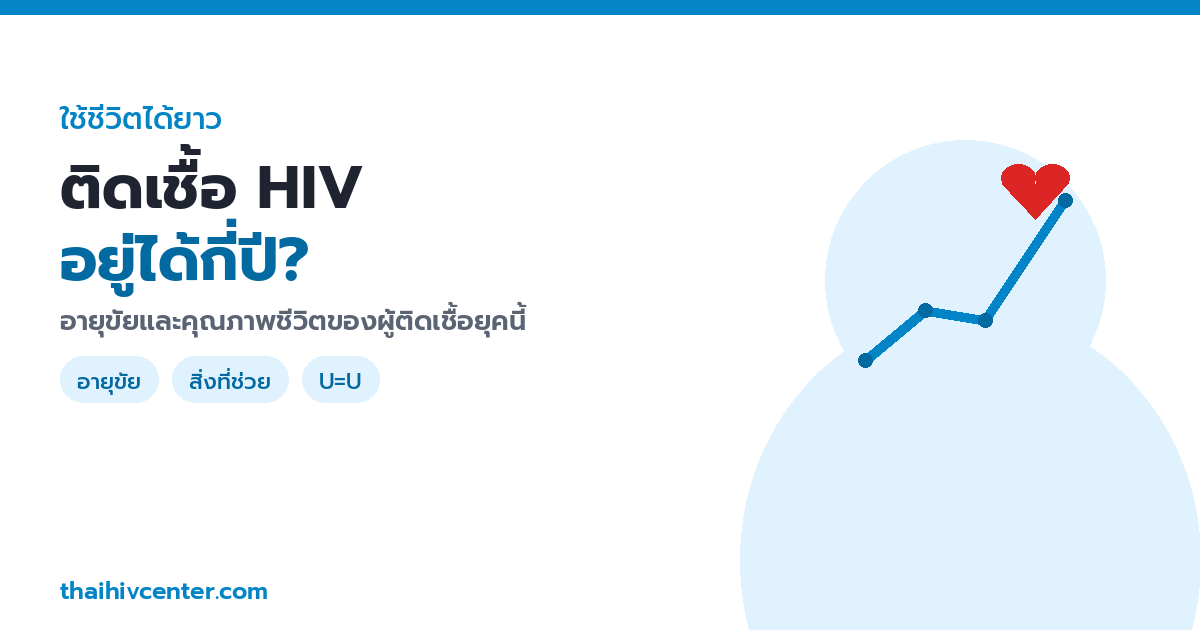
One of the biggest worries for people with HIV and those around them is how long can you live with HIV. In the past, HIV was seen as a serious disease that greatly shortened life, but today, with advances in antiretrovirals, this picture has completely changed. People diagnosed and treated appropriately can have a life expectancy close to the general population and live with quality. HIV has become a manageable chronic condition, not a death sentence as once thought. This article explains how long people with HIV live, what helps them live long and healthy, and why starting treatment early matters, so you or someone close to you can look to the future with hope.
How long can you live with HIV
The encouraging answer is that people with HIV treated consistently with antiretrovirals from early on can have a life expectancy close to the general population. Many studies in the era of effective antiretrovirals agree that with good viral control, the difference in life expectancy between people with HIV and the general population narrows greatly. What determines life expectancy is not the infection alone but how early treatment starts, how consistently the medicine is taken, and how overall health is managed. Many people with HIV today live, work, have families, and grow alongside those around them normally. This is a reality very different from the past.
Why life expectancy has changed from the past
Early in the epidemic, there was no medicine to control the virus, so it progressed and destroyed the immune system, leading to serious complications. But with the development of effective antiretrovirals (ARV), the situation changed completely. Modern ARVs can suppress the viral level to undetectable, letting the immune system recover and function normally. Newer medicines are also easier to take — often a single combination pill once a day — with fewer side effects, so people can take them long term. Better access to care and earlier detection also play a big role. All this has made HIV a manageable chronic condition like other chronic diseases. Read the basics in what HIV is.
What helps you live long and well
Life expectancy and quality of life for people with HIV depend on several factors working together.
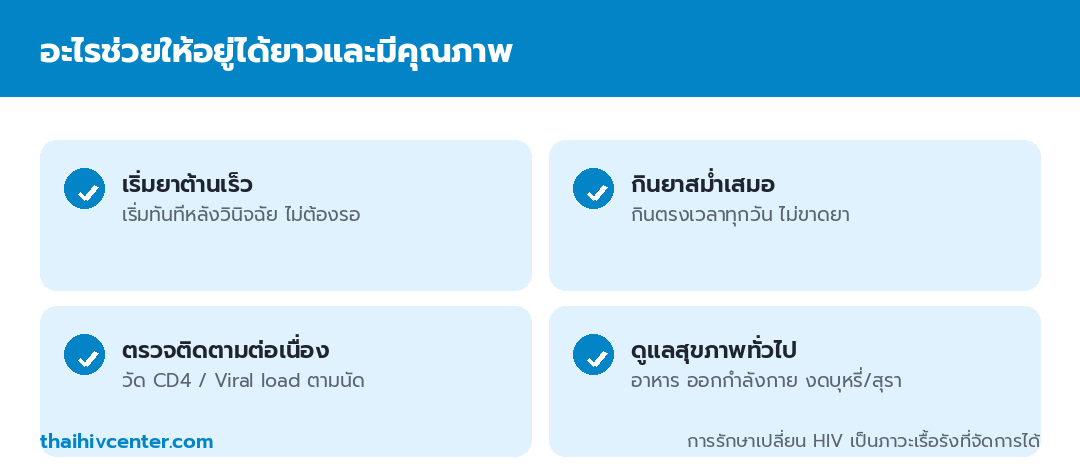
First, starting ARVs as early as possible after diagnosis, which protects the immune system from damage. Second, taking the medicine consistently and on time every day, because inconsistency can cause resistance and make control harder. Third, ongoing monitoring, such as measuring viral load and immune level, to ensure treatment is working. Fourth, overall health care — eating well, exercising, resting enough, and avoiding smoking and heavy drinking. These factors are no different from general health care and greatly affect long-term life expectancy.
Treated vs untreated
The difference between being treated and untreated is very clear.
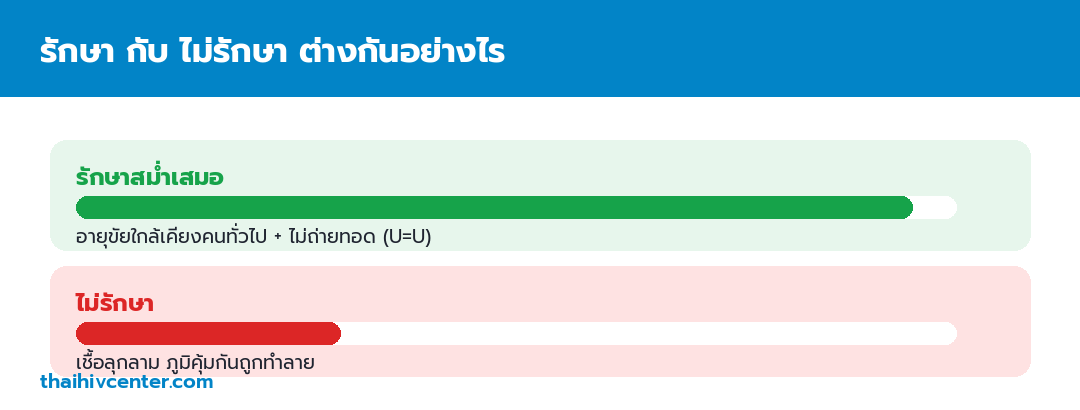
| Aspect | Treated consistently | Untreated |
|---|---|---|
| Life expectancy | Close to the general population | Reduced, risk of complications |
| Immune system | Recovers and stays strong | Progressively destroyed |
| Transmission | Doesn't transmit sexually (U=U) | Can still transmit |
| Quality of life | Live normally | Declines with progression |
Treatment not only extends life but also preserves quality of life and prevents transmission. This is why entering treatment promptly matters so much — the earlier, the better the outcome. Read about getting free ARV under coverage.
U=U and living life
The U=U concept — Undetectable = Untransmittable — has important meaning for the lives of people with HIV. When ARVs suppress the viral level to undetectable, a person with HIV does not transmit HIV sexually. This means they can have relationships, partners, and families with confidence, including having children who are HIV-free with planning alongside a doctor. U=U is not just a medical number but something that restores confidence and dignity to people with HIV, reduces stigma, and makes life normal. Read more in what U=U is.
Factors affecting life expectancy
Although treatment helps life expectancy approach the general population, other factors also affect long-term health. Starting treatment late or letting the immune system decline too much before starting may mean the body doesn't fully recover. Inconsistent medicine raises the risk of resistance. Also, other conditions like diabetes, high blood pressure, or heart disease, plus behaviors like smoking and heavy drinking, affect life expectancy just as for anyone. So holistic health care, not just HIV, matters. Regular check-ups and consistent consultation with a doctor help manage these factors well.
Long-term health care
Living with HIV long term is ongoing health care like managing any chronic condition. Besides ARVs and monitoring, mental-health care is equally important. Having someone you trust to talk to, joining support groups, and consulting professionals when stressed or worried all help you live happily. Maintaining a good relationship with your care team and not missing follow-up are key. When you care for body and mind together, people with HIV can have long and meaningful lives. To start treatment or consult, you can find a clinic near you.
Frequently asked questions
Will HIV shorten my life
Not necessarily — people treated consistently from early on can have a life expectancy close to the general population.
Do I really take ARVs for life
Yes, you take them continuously to control the virus, but newer medicines are easy to take with few side effects, making it feasible long term.
Can people with HIV work and have families
Yes — people who are well treated can work, have partners, families, and children who are HIV-free.
If I start treatment late, is life expectancy still good
Starting early is best, but even starting late still benefits from treatment. Start as soon as you know.
Summary
Today, people with HIV treated consistently with antiretrovirals can have a life expectancy close to the general population and live with quality. HIV has become a manageable chronic condition, not the hopeless disease of the past. What determines life expectancy is starting early, taking medicine consistently, monitoring, and overall health care. With U=U, people with HIV can also live, have relationships, and have families with confidence. If you or someone close to you wants to start treatment, don't wait — find a clinic near you to start caring for your health.