What Is an HIV NAT Test? Why It Detects HIV the Earliest

When people talk about the HIV test that gives the earliest answer, the name that comes up is NAT (Nucleic Acid Test), sometimes called NAAT or PCR testing. Many wonder how it differs from ordinary tests, why it can detect infection just a couple of weeks after a risk, and whether they should choose it.
This article covers NAT in detail — how it works, why it detects early, how it differs from antibody testing, who benefits, and the cost and limits to know before deciding. It draws on WHO, U.S. CDC, and Thai Department of Disease Control guidance. See the overview at HIV testing.
What is NAT?
NAT looks for the genetic material (RNA) of HIV directly in blood, rather than waiting to detect the body’s response such as antibodies. In short, NAT “looks for the virus itself,” not the traces the body makes to fight it. Because it detects the virus directly, NAT can tell whether virus is present and, in some contexts, measure viral load — key for monitoring treatment. See the stages of HIV.
How does NAT work?
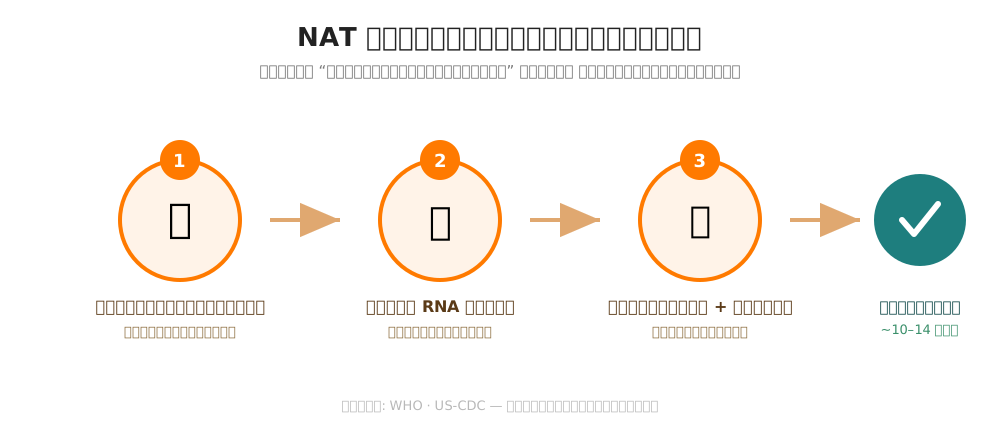
- Collect a blood sample — a small amount goes to the lab.
- Search for viral genetic material — the technique specifically targets HIV RNA.
- Amplify and read — even a tiny amount is amplified until detectable, catching early infection.
Why NAT detects HIV earliest
It comes down to timing. After infection, the virus multiplies first; antibodies develop later. NAT detects the virus directly, so it catches infection from about 10–14 days, while antibody tests must wait weeks to months. So NAT suits those who’ve had a recent risk and want an early answer — but “early” still means 10–14 days, not day one.

NAT vs antibody testing
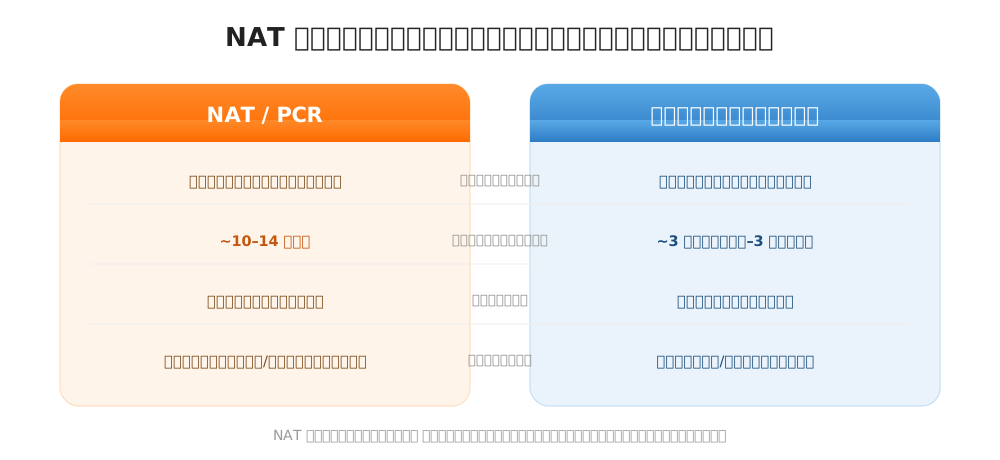
| Feature | NAT / PCR | Antibody test |
|---|---|---|
| Detects | Viral genetic material | Antibodies the body makes |
| Earliest detection | ~10–14 days | ~3 weeks–3 months |
| Principle | Finds virus directly | Waits for immune response |
| Convenience | Needs a specialist lab | Rapid/home options exist |
| Best for | Recent risk / need answer fast | Screening / general testing |
See each method at types of HIV test.
Who NAT suits, and when
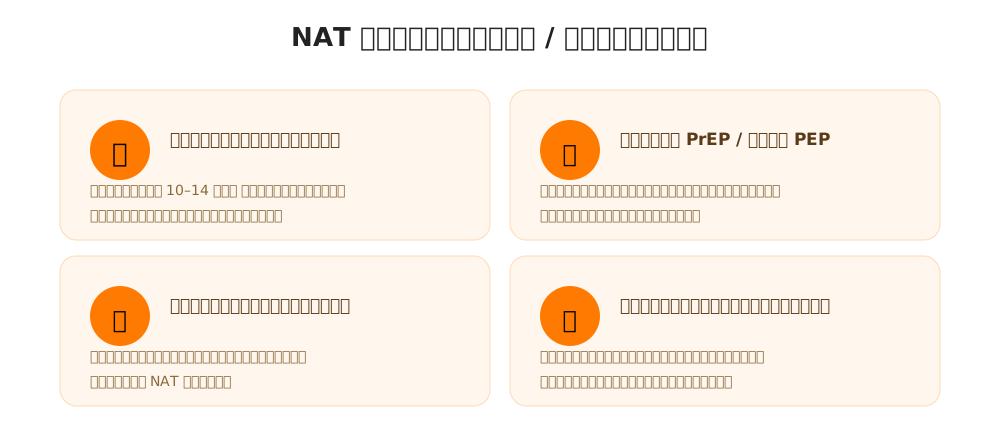
- Recent risk (~10–14 days) wanting an early answer.
- PrEP users or those recently on PEP, where antibody results can be complex — test under medical guidance; see PEP.
- Infants born to mothers with HIV, since maternal antibodies interfere with results.
- Blood-donation screening, to reduce window-period risk.
NAT also monitors treatment
Beyond early diagnosis, NAT as a viral load measure plays a key role in caring for people on antiretroviral treatment, showing how far the virus in blood has fallen. With consistent medication, viral load drops until undetectable; someone with a sustained undetectable level does not transmit HIV sexually (U=U). Clinicians use viral load to judge whether treatment is working and adjust as needed. So NAT isn’t only useful at first testing — it stays with a person throughout long-term care.
Pros and limits of NAT
- Pros: earliest detection, good for early infection, and can track viral load.
- Limits: usually costs more, needs a specialist lab, isn’t available everywhere, and testing before ~10 days can still miss.
Cost and access in Thailand
In Thailand, NAT typically costs from about 1,500 THB, more than standard screening. Thai nationals can test free twice a year under NHSO policy, but the free test is usually standard screening (e.g. 4th-gen); NAT is generally for specific indications or an added service. Ask hospitals, anonymous clinics, or specialist clinics about availability.
NAT doesn’t mean day-one detection
A common myth is that NAT detects immediately after a risk. In reality, even the most sensitive test must wait for the virus to reach detectable levels — about 10–14 days. Testing earlier can still give a negative despite infection.

Whatever the method, plan your timing — use the test date calculator, and if within 72 hours, ask about PEP first.
Conclusion
NAT looks for HIV’s genetic material directly, detecting it earliest (~10–14 days) — sooner than antibody tests. It especially suits recent risk, PrEP/PEP users, infants of mothers with HIV, and blood screening. It’s fast but costs more and needs a specialist lab, doesn’t detect on day one, and should be confirmed at 90 days. Start at the calculator and see options at HIV testing.