What Is the HIV Testing Window Period? Why Retest at 90 Days?
Many who test for HIV hear advice like “if you tested early, retest” or “confirm again at 90 days.” This relates to the window period — a key idea for understanding why the right timing matters.
This article explains what the window period is, why it happens, when each method can detect the virus, and why 90 days is a confident confirmation point. It draws on WHO, U.S. CDC, and Thai Department of Disease Control guidance. To calculate your own test date, use the test date calculator.
What is the window period?
The window period is the time from HIV exposure until a test can detect the infection. During it, even if infected, the body may not yet produce enough of what the test looks for (antibodies or antigen) to be detectable — so testing in this period can give a negative despite infection. That’s why timing matters. See the overview at HIV testing.
Why does the window period happen?
- The virus needs time to increase — it gradually multiplies after exposure.
- The body must respond — producing antibodies takes weeks.
- Methods detect different things — some find the virus’s genetic material (early), others antibodies (later).
So as time passes after exposure, the chance a test detects infection (if present) rises, until almost every method can detect it.
When can each method detect the virus?
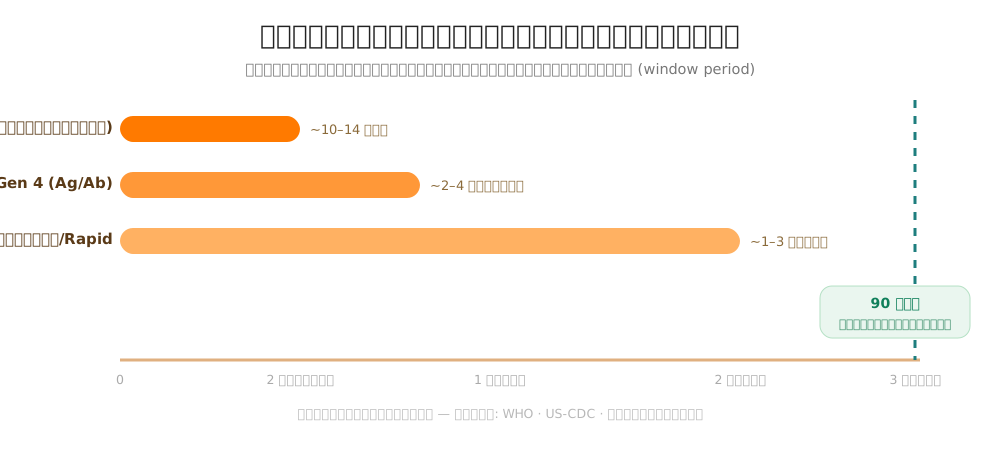
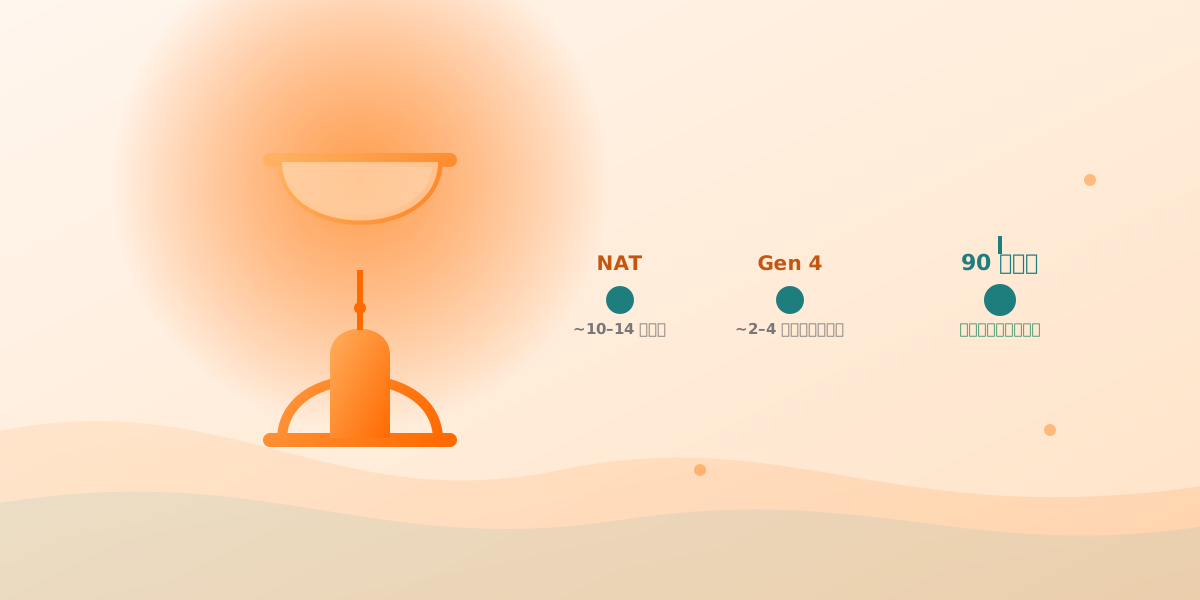
| Method | Detectable from | Conclusive at |
|---|---|---|
| NAT (viral genetic material) | ~10–14 days | 90 days |
| Gen 4 (p24 antigen + antibody) | ~2–4 weeks | 90 days |
| Antibody / rapid test | ~1–3 months | 90 days |
NAT detects earliest, then Gen 4, while antibody tests take longer. But whatever the method, by 90 days after exposure almost all can detect the virus. To compare methods in detail, see types of HIV test.
Why retest at 90 days?
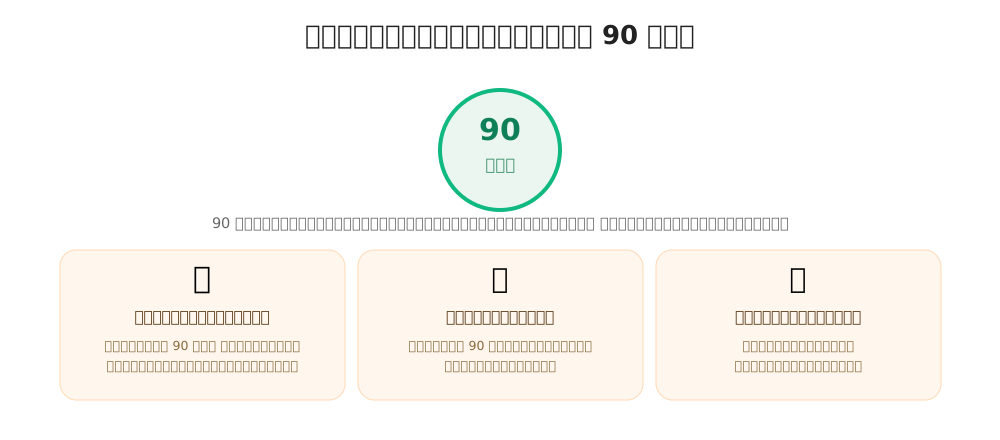
- Covers every method — by 90 days even slower antibody tests show a result.
- Highly reliable — a negative at 90 days post-exposure is very trustworthy.
- Doesn’t miss slow cases — reduces false negatives from early testing.
So if you tested early and got a negative, retesting to confirm at 90 days gives the most confidence — especially if you’re still worried or had a clear risk.
Tested early and negative — what now?
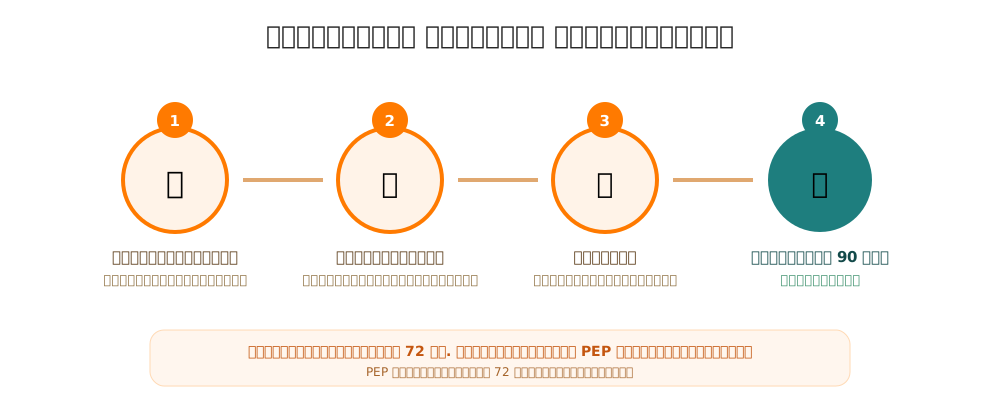
- Don’t be 100% reassured — an early negative may be uncertain.
- Calculate your retest date — see when to test again for your method.
- Retest past the window — for a more reliable result.
- Confirm again at 90 days — for maximum confidence.
Retesting doesn’t mean the first result was wrong — it ensures you didn’t test while the virus was undetectable, a normal approach for an accurate result.
Window period and false negatives
The window period is the main cause of a false negative — reading “not infected” when infected, because testing happened before enough detectable markers formed. To reduce this, test past your method’s window; if you tested early and negative, retest and confirm at 90 days; and if a new risk occurs, start counting again from the most recent one. Understanding this helps you plan and not read an early negative as certain safety.
Common misconceptions about the window period
The window period is often misunderstood in ways that skew how people read results. To clarify: “one negative = definitely safe” isn’t always true — a negative in the window may be uncertain, so check whether you tested long enough after the risk; “the earlier the better” — early testing helps you start planning, but too early may mean retesting, so test at the time suited to your method; “all methods have the same window” is false — they detect at different times (NAT earlier than antibody tests); and “no symptoms means no infection” is false — many with early infection have no clear symptoms, so testing matters more than watching for symptoms. Understanding these helps you read results correctly and neither be careless nor over-worried — the key is testing at the right time and confirming when needed.
Use the test date calculator
The easiest way to know when to test for a reliable result is to calculate from your most recent risk date. Use the test date calculator, which estimates whether you’re past each method’s window and when to retest — making planning easier and more confident.
What to do while waiting for 90 days
The wait between the first test and confirmation at 90 days can be worrying, but there are things you can do to care for yourself and others meanwhile. Protect yourself and your partner — while the result is uncertain, protection reduces the risk of passing on or acquiring more infection; avoid new risks — a new risk restarts the clock and lengthens the wait; look after your mental health — try to live normally and not dwell on worry, and seek counselling if very stressed; and plan your retest date — note it in advance so you don’t forget. A clear plan makes the wait easier and assures you you’re doing the right thing — waiting doesn’t mean constant worry; it’s part of a process that yields a reliable result.
If exposed within 72 hours
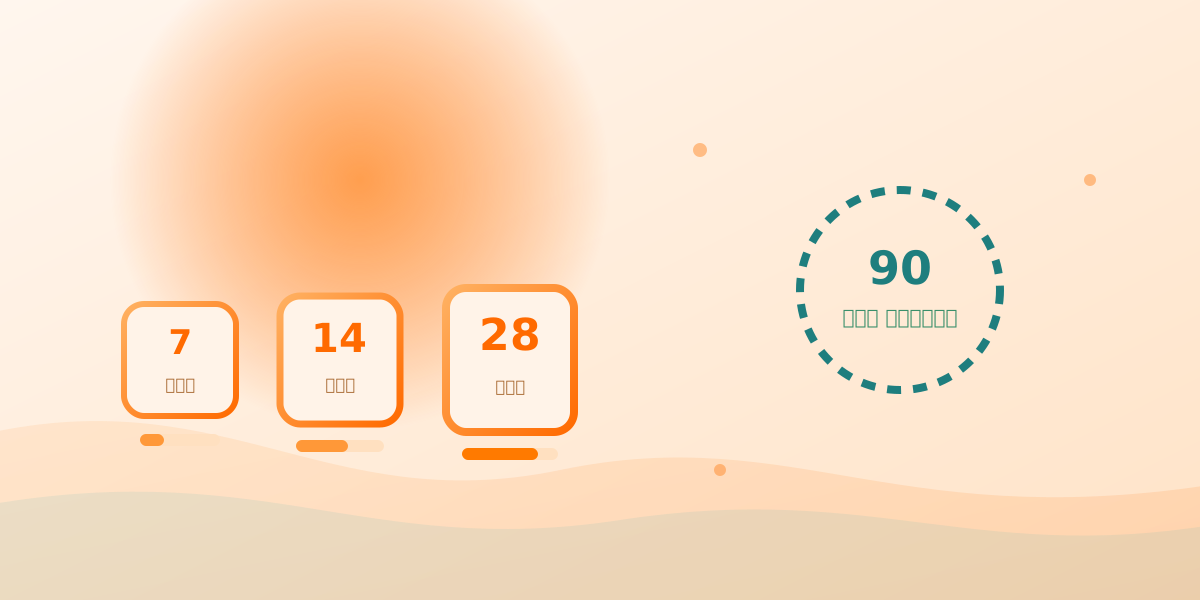
If you’ve had a high risk within 72 hours, waiting for the window isn’t enough. First, seek PEP, an emergency medication that lowers the chance of infection, started within 72 hours for 28 days, then plan testing.
Conclusion
The window period is the time after exposure when a test can’t yet detect infection despite infection. Methods detect at different times — NAT earliest (~10–14 days), then Gen 4 (~2–4 weeks) and antibody (~1–3 months) — but by 90 days almost all can detect it, making it a confident confirmation point. If you tested early and negative, retest and confirm at 90 days; and if within 72 hours, ask about PEP first. Start at the test date calculator and see options at HIV testing.