Answered: How Reliable Is an HIV Test at 7, 14, or 28 Days After Exposure?
After a possible HIV exposure, it’s natural to worry and want to test as soon as possible for peace of mind. Common questions: “Can I test at 7 days?” “Is 14 days reliable?” “How trustworthy is 28 days?” These relate to the window period, which determines how reliable testing is at each point in time.
This article answers how reliable an HIV test is at 7, 14, and 28 days after exposure, which method suits which stage, and when to retest for confidence. It draws on WHO, U.S. CDC, and Thai Department of Disease Control guidance. To calculate your own test date, use the test date calculator.
How early can a test work?
First, after exposure the body needs time before a test can detect infection. Early on, even if infected, a test may be negative because the body hasn’t yet produced enough of what the test looks for (antigen or antibody). So the earlier you test after a risk, the less reliable a negative is, and as time passes the chance of detection (if infected) rises until almost every method can detect it. See the overview at HIV testing.
How reliable at 7, 14, 28 days?
| Tested after exposure | A negative means | What to do |
|---|---|---|
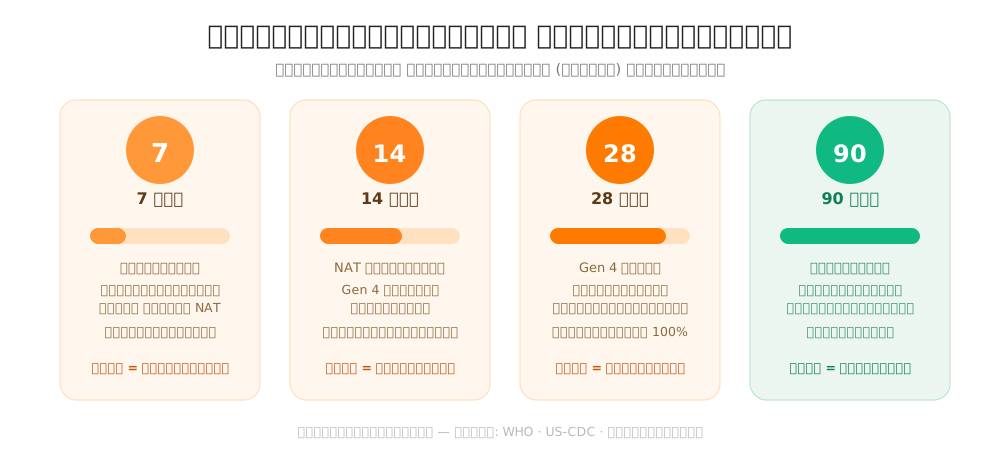
| 7 days | Not reliable (too early) | Retest later, past the window |
| 14 days | Uncertain, though NAT starts to detect | Retest and plan to confirm |
| 28 days | Fairly reliable (especially Gen 4) | Confirm again at 90 days |
| 90 days | Very reliable | Use to confirm |
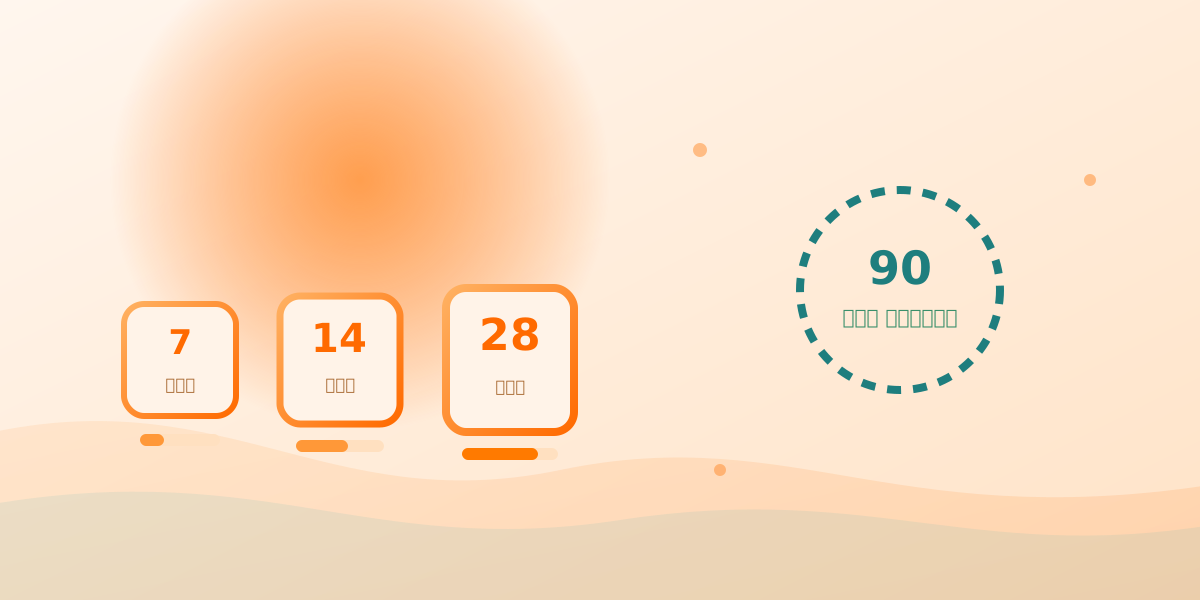
- 7 days — too early; mostly undetectable, even NAT may be unclear; a negative isn’t reliable.
- 14 days — NAT starts to detect and Gen 4 partly, but not for everyone; retest a negative.
- 28 days — Gen 4 detects in most cases; much more confident but not 100%; a negative is fairly good.
- 90 days — almost all methods detect; a negative is very reliable; used to confirm.
In short, the earlier you test, the more carefully you must read a negative, and always retest past the window.
Which method suits which stage?
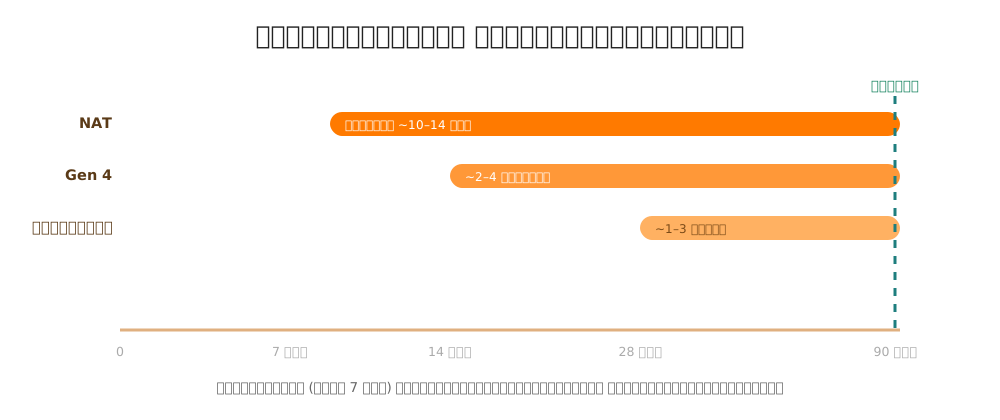
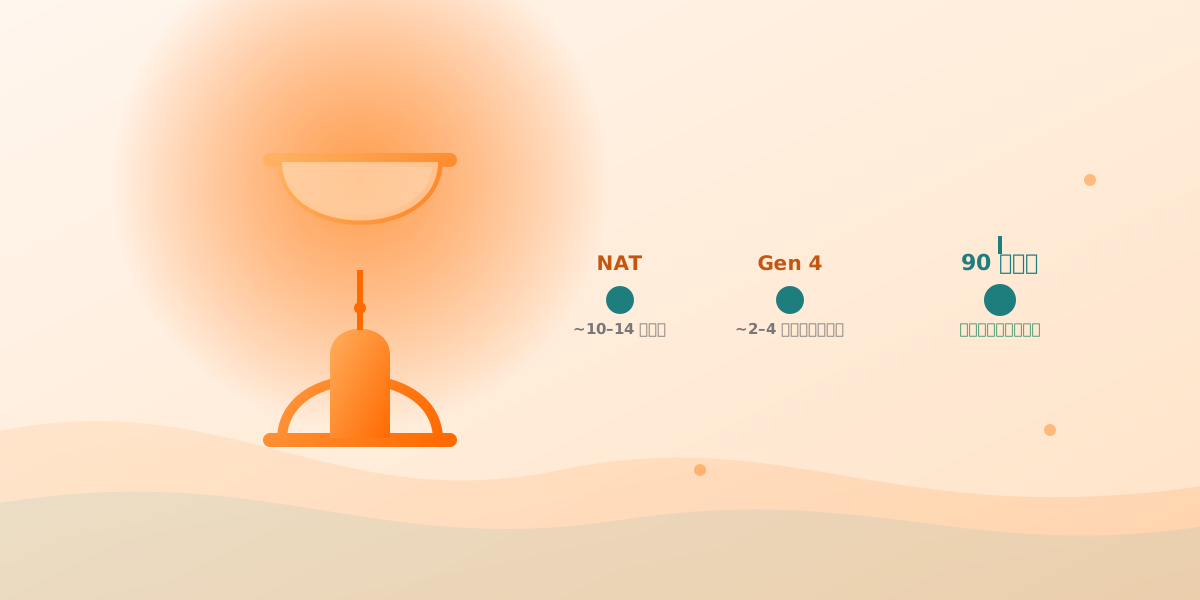
- NAT (genetic material) — detects earliest, ~10–14 days.
- Gen 4 (antigen + antibody) — detects ~2–4 weeks; the common standard.
- Antibody / rapid test — detects ~1–3 months; slower than others.
So testing very early (e.g. 7 days) usually can’t be confirmed by any method; you must wait past your method’s window. To compare methods, see types of HIV test.
What to do at each stage
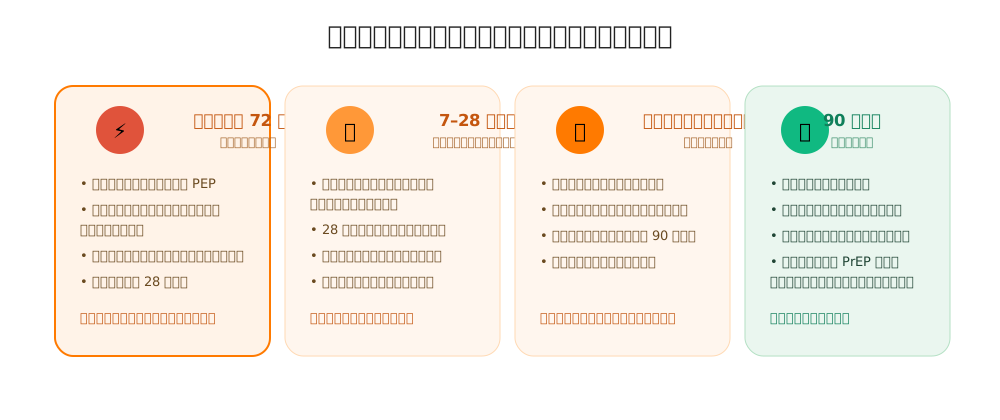
- Within 72 hours — urgent; consider PEP first; no rush to test yet.
- 7–28 days — you can test, but a negative isn’t sure; calculate your retest date and don’t be reassured yet.
- Past the window — retest for your method; results become more reliable; prepare to confirm at 90 days.
- 90 days — confirm; a negative is very reliable; plan ongoing prevention, e.g. consider PrEP if at continued risk.
Why an early negative isn’t sure
An early negative isn’t sure because testing happened before enough detectable markers formed, which can cause a false negative — reading “not infected” when possibly infected. So an early negative doesn’t mean certain safety; test past your method’s window before reading a negative confidently; and if a new risk occurs, start counting again from the latest one. Understanding this prevents reading an early negative as safe and helps you plan retesting.
When does a retest give confidence?
The wait between the first test and a confirming retest can be worrying, but there are things you can do meanwhile: protect yourself and your partner while the result is uncertain; avoid new risks, since a new one restarts the clock and lengthens the wait; look after your mental health by living normally and seeking counselling if very stressed; and note your retest date so you don’t forget. A clear plan makes the wait easier and assures you you’re doing the right thing — waiting doesn’t mean constant worry; it’s part of a process that yields a reliable result.
Confidence and the 90-day mark
Generally the confident confirmation point is 90 days after exposure, since by then almost all methods can detect the virus. So if you tested early and negative, retest past your method’s window and confirm at 90 days — especially if still worried or with a clear risk. Retesting doesn’t mean the first was wrong; it ensures you didn’t test while the virus was undetectable.
If exposed within 72 hours
If you’ve had a high risk within 72 hours, the first step isn’t rushing to test but seeking PEP, an emergency medication that lowers the chance of infection, started within 72 hours for 28 days, then plan testing. If you’re at ongoing long-term risk, ask a doctor about PrEP for prevention in advance.
Misconceptions about early testing
Testing after a risk is often misunderstood in ways that skew results or cause needless worry. To clarify: “an early negative = definitely safe” is false — a negative in the window is uncertain, so retest past it; “the earlier the better” — early testing helps you plan, but an early negative may need retesting, so test at the time suited to your method; “having symptoms means infection” is false — symptoms aren’t specific to HIV and may have other causes, so a timed test tells you more; and “one test is enough” depends on when you tested — if early, retest and confirm at 90 days. Understanding these keeps you from being careless with an early negative or over-worried about possibly unrelated symptoms — the key is testing at the right time and confirming when needed.
Use the test date calculator
The easiest way to know when to test for a reliable result is to calculate from your most recent risk date. Use the test date calculator, which estimates whether you’re past each method’s window and when to retest — making planning easier and more confident, without guessing.
Conclusion
The earlier you test after a risk, the less reliable a negative. At 7 days it’s too early; at 14 days still uncertain though NAT starts to detect; at 28 days fairly reliable especially with Gen 4; and at 90 days almost all methods detect, so it’s used to confirm. Crucially, an early negative doesn’t mean certain safety — retest past the window and confirm at 90 days. If within 72 hours, ask about PEP first, and if at ongoing risk, consider PrEP. Start at the test date calculator and see options at HIV testing.