Weight Loss, Chronic Diarrhea, Night Sweats — Are These Advanced-Stage HIV Symptoms?
Symptoms like unusual significant weight loss, chronic diarrhea, and heavy night sweats may make some people worry about advanced-stage HIV. In truth, these symptoms can occur in the late stage of HIV that has gone untreated for a long time. But at the same time, they are not specific to HIV and can have many other causes. An important thing to understand is that early HIV usually has no symptoms, and progressing to the late stage usually takes years when untreated. The best news is that today, antiretroviral treatment can prevent progression to this stage. This article explains clearly what advanced-stage symptoms are, when they occur, and what to do.
When do advanced-stage symptoms occur
First, understand that HIV has several stages, and advanced-stage symptoms don't occur immediately after infection. After infection, the body usually passes through an acute stage that may have flu-like symptoms at 2-4 weeks, then enters a latent stage usually with no symptoms, which may last years. During this time, the virus slowly destroys the immune system if untreated. When the immune system weakens enough, the body starts showing advanced-stage symptoms. So these symptoms result from infection left untreated for a long time, not something that happens to those who recently had a risk. Read more in early HIV symptoms to understand the differences between stages.
What are advanced-stage symptoms
When the immune system is severely damaged, the body becomes prone to more serious symptoms and infections.
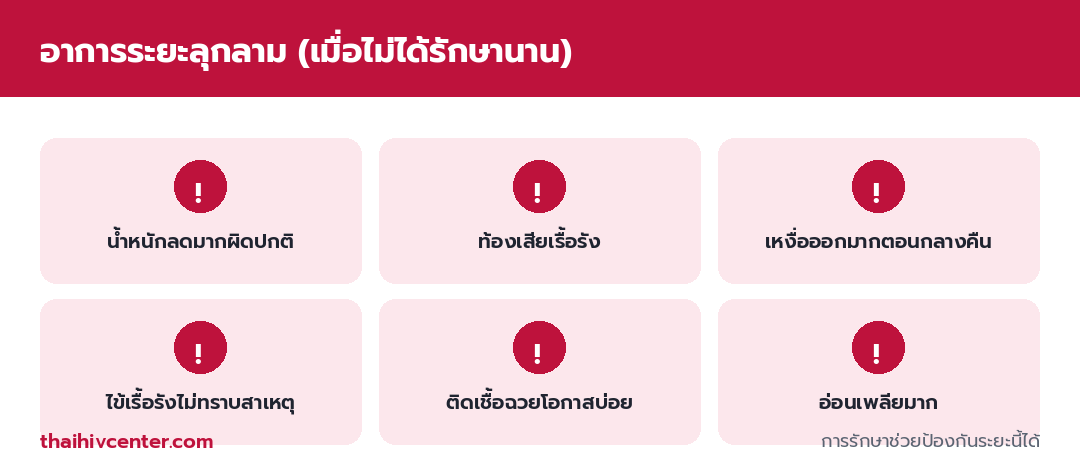
Symptoms in the advanced stage include unusual unintentional weight loss, chronic diarrhea lasting several weeks, heavy night sweats soaking clothes or bedding, chronic fever with no clear cause, severe fatigue, and more frequent opportunistic infections — infections that are usually mild in people with normal immunity but become problems when it is weakened. These symptoms indicate the immune system is significantly affected. However, having these symptoms does not always mean HIV, because there are many other causes. Testing is the only way to a clear answer.
Stages of HIV
Understanding the stages of HIV helps show where advanced symptoms are on the path and how treatment helps.
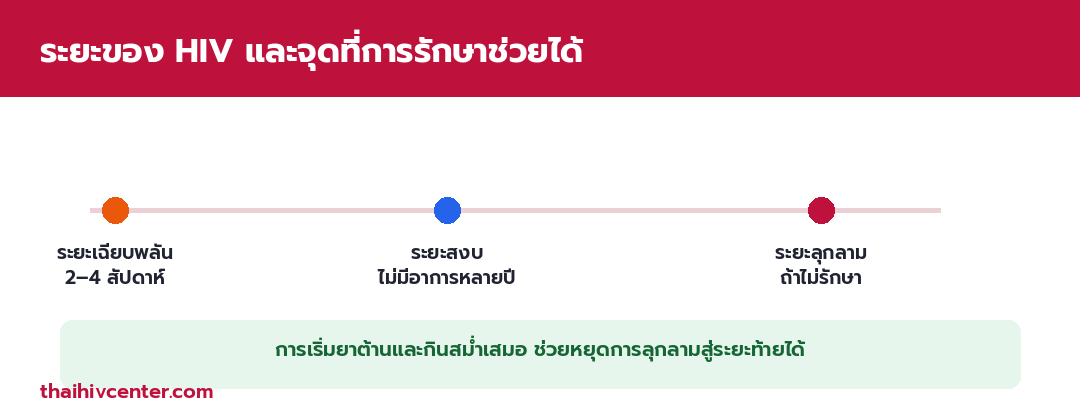
The first stage is acute, at 2-4 weeks after infection, which may have flu-like symptoms. The second is latent, usually with no symptoms and possibly lasting years; during this, a person may not know they are infected without testing. The third is advanced, occurring when the immune system is severely damaged from long-term lack of treatment. The most important point is that starting antiretrovirals at any stage helps stop progression, and starting early prevents reaching the late stage at all. This is why testing and starting treatment early matter so much. Read about getting free ARV under coverage.
These symptoms don't always mean HIV
An important thing that reduces worry is that symptoms like weight loss, chronic diarrhea, night sweats, or chronic fever are non-specific and can have many other causes. The table below gives some examples.
| Symptom | Other possible causes |
|---|---|
| Weight loss | Stress, thyroid, diabetes, digestive diseases |
| Chronic diarrhea | Intestinal infection, irritable bowel, indigestion |
| Night sweats | Other infections, hormonal changes, stress |
| Chronic fever | Tuberculosis, other chronic infections |
The same symptom can have many causes, so having these symptoms shouldn't lead to jumping to a conclusion of HIV, but shouldn't be ignored either — especially if ongoing. See a doctor to find the true cause, which may include HIV testing and other tests as appropriate.
Good news: treatment stops progression
Although advanced-stage symptoms sound worrying, the good news is that antiretroviral treatment can change the situation greatly. Starting ARVs suppresses the viral level and lets the immune system recover. Even in those who come to a doctor when the immune system is already weak, treatment still helps symptoms improve and health return in many cases. Many opportunistic infections can be treated and prevented under a doctor's care. So whatever the stage, entering treatment is always the best path. Effective, accessible treatment makes the advanced stage preventable and manageable, not an ending.
What to do if you have these symptoms
If you have these symptoms ongoing, especially with a past risk history or never having tested for HIV, see a doctor to assess and find the cause. Don't jump to conclusions or self-diagnose from internet searches, because these symptoms are non-specific. An HIV test gives a clear status, and if infected, treatment can start immediately — the earlier the better. If you also have swollen lymph nodes, read more in swollen lymph nodes and HIV. You can find a clinic near you to test and consult.
Preventing progression to the advanced stage
The best way to prevent the advanced stage is to test for HIV periodically when you have a risk, and if infected, start treatment promptly, because treating from the symptom-free latent stage prevents the disease from progressing to the late stage. Many who progress to this stage do so because they didn't know they were infected and hadn't tested for a long time. Regular testing is therefore an important tool, not only for your own health but also to enter treatment in time. Read about testing timing in how many days after a risk to test. Knowing your status early is the key to long-term health.
Frequently asked questions
Weight loss and night sweats — does that definitely mean HIV
Not definitely — these symptoms are non-specific with many other causes. See a doctor to find the cause and test for HIV if appropriate.
I recently had a risk — will I have advanced-stage symptoms right away
No, advanced-stage symptoms occur after years without treatment, not soon after a risk. The early period usually has no symptoms.
If it has progressed, can it still be treated
Yes — starting ARVs helps the immune system recover and symptoms improve in many cases. Even if you come late, you should start treatment.
How can I prevent reaching this stage
Test for HIV when you have a risk, and if infected, start treatment early. Treating before symptoms prevents progression.
Summary
Symptoms like significant weight loss, chronic diarrhea, and night sweats can occur in advanced-stage HIV, which usually develops after years without treatment, not soon after a risk. But these symptoms are non-specific with many other causes, so don't jump to conclusions but don't ignore them either. The important good news is that antiretroviral treatment helps stop progression and restore health, even in those who come late. Regular testing and starting treatment early are the best ways to prevent this stage. If you have ongoing symptoms or worry, find a clinic near you to test and consult.