AIDS Symptoms at Each Stage: How to Recognise Them
AIDS symptoms are those that appear when HIV infection has reached its late stage, where the immune system is severely damaged. Key symptoms include significant weight loss, persistent fever and opportunistic infections. However, these symptoms are not proof of infection, and many resemble common illnesses. This article explains AIDS symptoms at each stage in detail, from early signs and skin symptoms to differences in women and men, and why a blood test is the only certain confirmation. Understanding this correctly helps you neither panic unnecessarily nor become careless about your health.
AIDS vs HIV: the difference before understanding symptoms
Before discussing symptoms, it helps to understand that HIV is the virus, while AIDS is the late stage of untreated HIV infection. So "AIDS symptoms" refers to symptoms at the stage where immunity is already very weak, different from early HIV infection symptoms, which often resemble flu. If you're interested in early-stage symptoms, read HIV symptoms from early to later stages, and understand what AIDS is at What is AIDS and what causes it.
Early AIDS-stage signs to watch for
When infection progresses to the stage where immunity clearly begins to weaken, the body shows certain signs worth paying attention to.
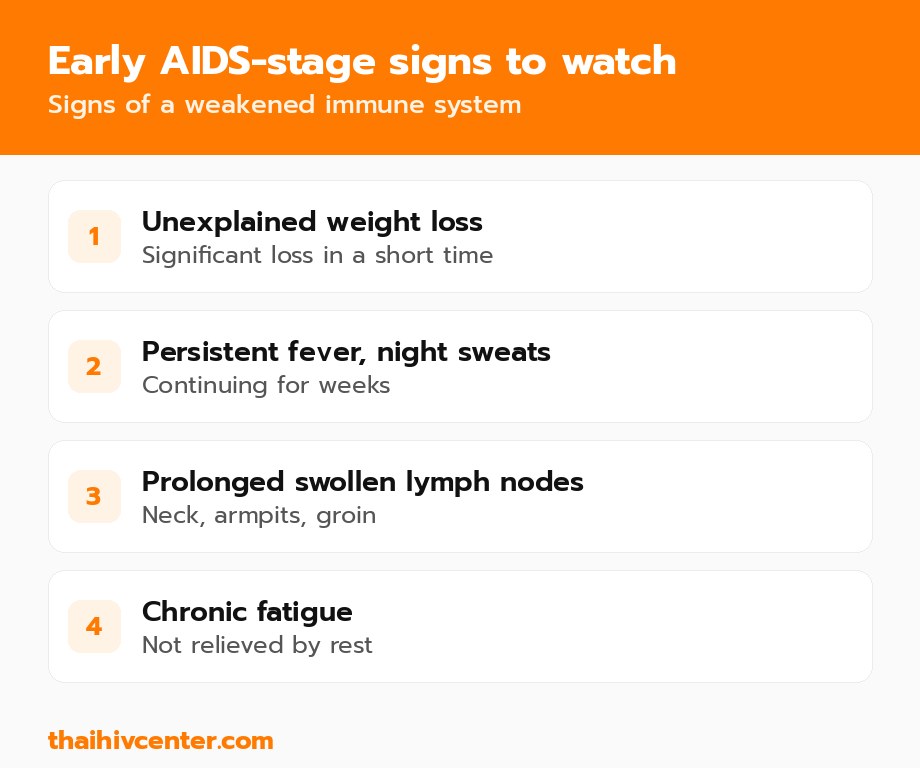
Unexplained weight loss
Significant weight loss in a short time without intending to diet or changing eating habits is one of the common signs at the stage where immunity weakens.
Persistent fever and night sweats
A low-grade fever continuing for weeks, along with heavy night sweats that require changing clothes, is a symptom worth noting and discussing with a doctor.
Swollen lymph nodes and chronic fatigue
Lymph nodes in the neck, armpits or groin that stay swollen for a long time, along with fatigue that doesn't resolve despite adequate rest, may signal the body fighting an infection over a prolonged period. When these signs persist and appear together rather than in isolation, they warrant medical attention.
Spots, rash and skin symptoms at the AIDS stage
Skin symptoms are something many people search for because they're easy to notice, but it's important to understand these can have many causes.
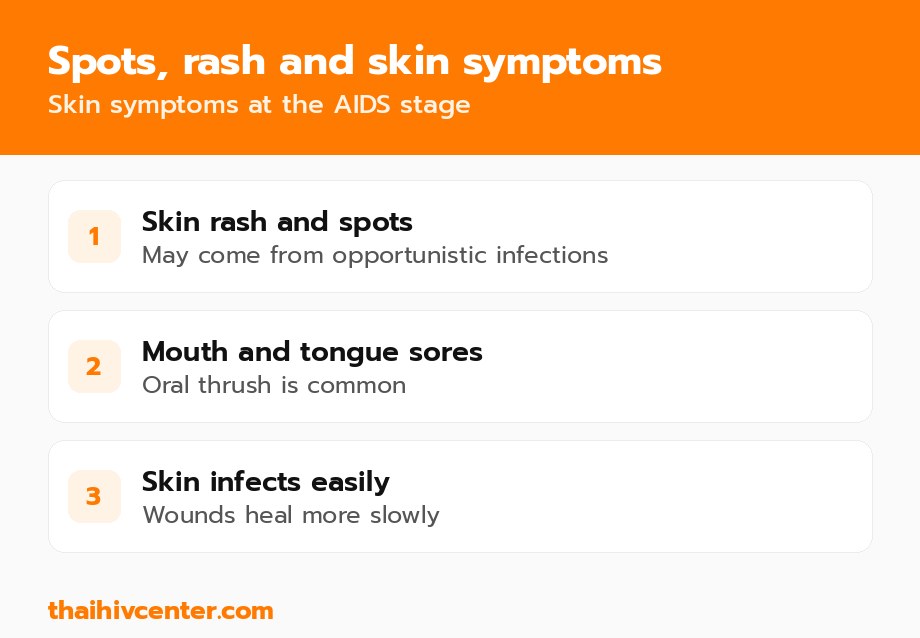
Rash and spots on the skin
At the stage where immunity is weak, rashes or spots may appear from opportunistic infections such as certain viruses or fungi, which may look different from ordinary rashes and heal more slowly. Because such skin changes can also arise from many unrelated conditions, they are a prompt to seek assessment rather than a diagnosis in themselves.
Mouth sores and oral thrush
Mouth sores, a white-coated tongue, or recurrent oral thrush are common when immunity is low, because the body finds it harder to control organisms that normally don't cause disease.
Full-blown AIDS-stage symptoms
At the full AIDS stage, immunity is so low the body becomes vulnerable to serious opportunistic infections such as tuberculosis, certain pneumonias, and nervous system infections. Symptoms may include chronic diarrhoea, difficulty breathing, and other complications. These result from the damaged immune system, not the virus directly, and are why treatment to restore immunity is so important. Recognising that the danger at this stage comes from a weakened defence, rather than the virus attacking organs itself, explains why restoring immunity can turn the situation around.
Summary table of AIDS symptoms by stage
| Stage | Possible symptoms |
|---|---|
| Early symptomatic | Weight loss, chronic fever, night sweats, fatigue |
| Skin symptoms | Rash, spots, mouth sores, oral thrush |
| Full AIDS stage | Opportunistic infections such as TB, pneumonia, chronic diarrhoea |
Do AIDS symptoms differ in women and men?
A common question is whether AIDS symptoms differ in women and men.
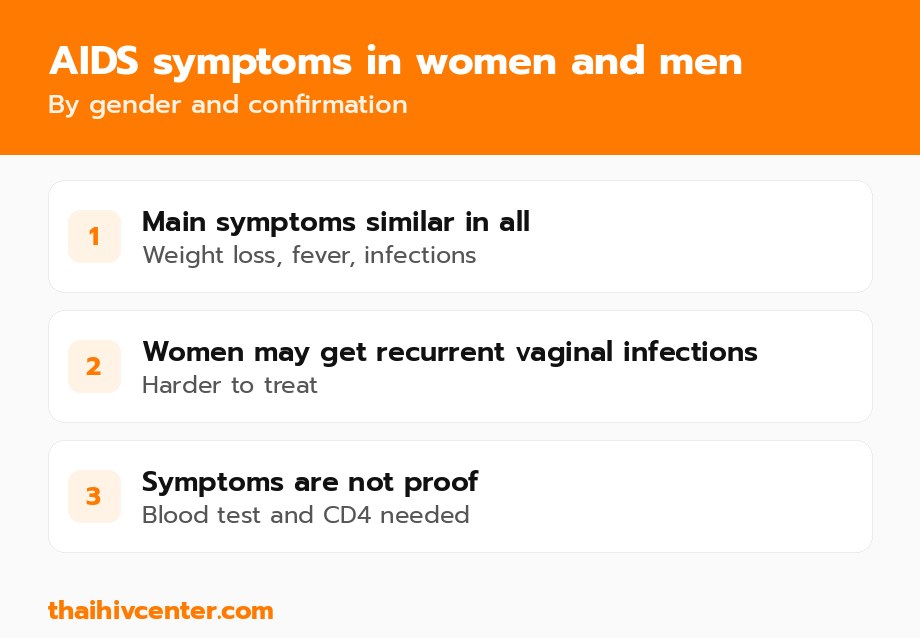
Main symptoms are similar in all genders
Main AIDS-stage symptoms such as weight loss, chronic fever and opportunistic infections are similar across genders, because they arise from the same weakened immunity.
Symptoms women may notice additionally
Some women may have recurrent, hard-to-treat vaginal infections or menstrual irregularities, while men usually have general signs of weakened immunity. Whatever the gender, these symptoms are not a definite indicator.
What people at the AIDS stage look like
Searches like "what someone with AIDS looks like" reflect curiosity about the outward appearance of people at the AIDS stage. In reality, people on antiretroviral treatment look exactly like anyone else, with no outward signs. Those at the full AIDS stage who are untreated may show signs related to their health, such as being very thin from weight loss, fatigue, or marks from skin infections. However, these are not specific and should not be used to judge others, because many health conditions cause similar appearances. What matters is not judging by outward appearance.
How AIDS symptoms differ from common illnesses
What makes observing symptoms difficult is that many AIDS symptoms overlap with common conditions, weight loss and fatigue also occur with stress, thyroid disease or diabetes, and chronic fever occurs in many other infections. What makes AIDS-stage symptoms different is that they often occur together, persist for a long time, and involve unusual or recurrent infections. Even so, this difference isn't clear enough to self-diagnose. A blood test remains the only certain confirmation.
Common opportunistic infections at the AIDS stage
Many symptoms at the AIDS stage don't come from HIV directly but from "opportunistic infections", organisms the body normally controls but that cause disease easily once immunity weakens. Common examples include tuberculosis, which may cause a chronic cough and weight loss; certain pneumonias that make breathing difficult; fungal infections of the mouth and oesophagus that make swallowing hard; and nervous system infections that may cause headache or confusion. These opportunistic infections are important signs of the AIDS stage and a reason to seek treatment promptly.
Symptoms across the body's systems
Because weakened immunity affects the whole body, AIDS-stage symptoms can appear in several systems.
Respiratory system
There may be a chronic cough, difficulty breathing, or chest pain, often linked to lung infections such as tuberculosis or pneumonia.
Digestive system
Chronic diarrhoea lasting weeks, difficulty swallowing, or loss of appetite are common and contribute to weight loss.
Nervous system
In some cases there may be chronic headaches, memory changes, or confusion, from infections or effects on the nervous system.
When to see a doctor
If you have these symptoms continuously, especially significant weight loss, chronic fever, or recurrent infections, see a doctor for assessment. Testing is even more important if you've had a prior risk of HIV. Seeing a doctor early allows treatment to begin in time, which in many cases can restore immunity and return you to good health. Don't wait until symptoms are severe, because early treatment is always better.
Care and recovery at the AIDS stage
Even at the AIDS stage, it is not the end. A doctor starts antiretrovirals to control HIV while treating any opportunistic infections. With continuous treatment, the immune count (CD4) usually recovers gradually, and many people return to good health and normal life. Care at this stage requires medical treatment, good nutrition, and emotional support from those around, so the person has the encouragement to continue treatment. Read more about the medicine at What is HIV antiretroviral medicine.
Why symptoms alone can't diagnose
The most important thing to understand is that AIDS symptoms resemble many common illnesses, weight loss and chronic fever occur in many other conditions. Having these symptoms doesn't mean AIDS. Conversely, people with HIV who receive treatment never reach the AIDS stage and have none of these symptoms. The only certain way to know is an HIV blood test and CD4 assessment by a doctor. So if you're worried or had a risk, don't guess from symptoms, get an HIV test for clarity.
Good news: reaching the AIDS stage can be prevented
It's worth stressing that today there is almost no need for a person with HIV to reach the AIDS stage. If HIV is detected early and antiretrovirals begin, immunity is protected, the person stays healthy and shows no AIDS symptoms. Moreover, even those who have reached the AIDS stage can, in many cases, recover their CD4 count and return to good health with treatment. Early detection is the key, because it lets treatment begin before immunity is seriously harmed, and it is the single most powerful step anyone worried about AIDS can take.
Turning fear into self-care
Searching for AIDS symptoms out of worry is understandable, but more useful than watching for symptoms is taking action to care for yourself. If you've had a risk, getting an HIV test is the real answer, because you learn your status for certain instead of guessing. And if you're not infected, prevention with condoms and asking about PrEP gives you long-term peace of mind. Importantly, with today's treatment, the severe AIDS symptoms many people fear can be almost entirely prevented, simply by testing early and starting treatment. This understanding helps turn fear into the motivation to look after your health. Rather than trying to match your symptoms to a list online, the most reassuring and reliable step is to know your status and, if needed, begin care that keeps the AIDS stage from ever arriving.
Frequently asked questions
How can early AIDS symptoms be recognised?
Common signs are unexplained weight loss, chronic fever, night sweats and swollen lymph nodes, but these also occur in other illnesses, so testing is needed to confirm.
What kind of spots or rash relate to AIDS?
Rashes and spots at the AIDS stage often come from opportunistic infections and heal slowly, but a rash alone can't indicate AIDS, testing is required.
What is "AIDS stage 1"?
HIV infection is generally divided into acute, latent and AIDS stages. "Stage 1" usually refers to the early stage of infection, where symptoms may resemble flu or be absent.
If I have these symptoms, what should I do?
If you have symptoms and had a risk, get an HIV test and consult a doctor. Don't self-diagnose from symptoms alone.
How long does the AIDS stage last without treatment?
It varies from person to person, but without treatment immunity keeps weakening, raising the risk of complications. Treatment can greatly change this outlook.
Can someone at the AIDS stage recover?
In many cases yes. Once antiretrovirals begin, the CD4 count usually recovers and immunity strengthens, and many people return to normal life.
Conclusion
AIDS symptoms occur at the late stage of HIV infection when immunity is very weak, including weight loss, chronic fever, skin symptoms and opportunistic infections. The main symptoms are similar across genders and resemble common illnesses, so they can't be used to self-diagnose. The only certain way is a blood test, and the good news is that with today's treatment, most people with HIV never need to reach the AIDS stage. Early detection and treatment are the key to staying healthy.
References
- World Health Organization (WHO) — HIV/AIDS
- HIVinfo (NIH) — The Stages of HIV Infection
- aidsmap — AIDS-defining conditions
- CDC — About HIV/AIDS
- What is AIDS — Thai HIV Center
This article is for educational purposes and is not a medical diagnosis. If you have concerns, consult a doctor and get tested.