HIV Symptoms From the Early Stage to Later Stages: How to Recognise Them
Many people worried they might have HIV start by searching "HIV symptoms" to compare with what they're experiencing. Understanding the symptoms at each stage is useful, but the key thing to know from the outset is that symptoms alone cannot confirm whether someone has HIV, because HIV symptoms resemble many common illnesses, and some people have none at all. This article explains how HIV progresses from the early stage to AIDS, and points out when to test for certainty. Understanding this correctly helps you handle worry better and make health decisions based on facts, not fear or inaccurate information.
How many stages does HIV have?
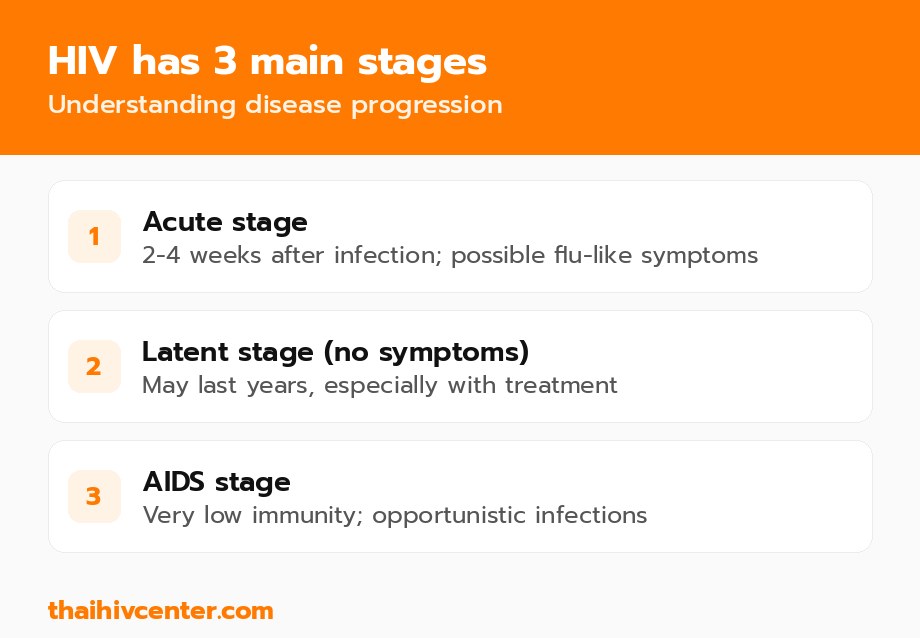
HIV infection is divided into three main stages, each with different features and symptoms. Understanding this overview shows how the virus progresses if untreated.
Acute HIV
The first stage occurs about 2-4 weeks after infection. During this time the body is responding to the rapidly multiplying virus. Some people have flu-like symptoms, while others have none. This stage has a high viral load in the blood and transmits easily.
Clinical latency
After the acute stage, the virus enters a latent stage that usually has no clear symptoms. This can last many years, especially in people on antiretroviral treatment. The virus remains in the body and slowly works, even though a person may look perfectly well.
AIDS
Without treatment, HIV gradually destroys the immune system until it reaches AIDS, the stage where immunity is so low the body becomes vulnerable to opportunistic infections and complications.
Common acute-stage symptoms
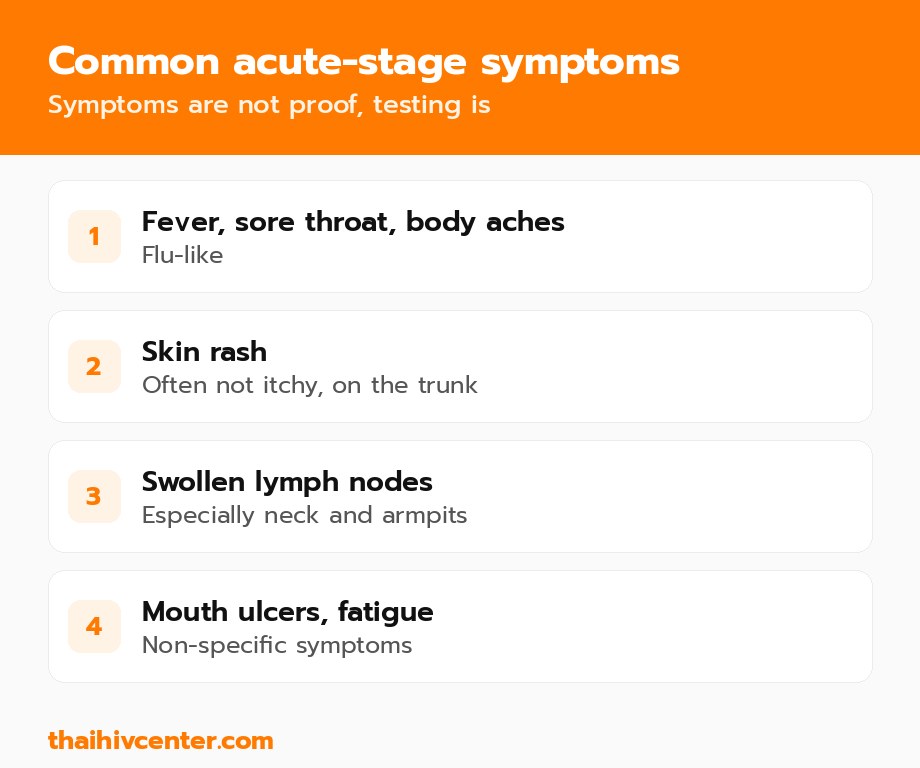
Acute-stage symptoms are often called "flu-like" or seroconversion illness, occurring as the body begins making antibodies to the virus.
Flu-like symptoms
Common symptoms include fever, sore throat, muscle aches and fatigue, which resemble ordinary flu so closely that many people don't suspect a link to HIV.
Rash and swollen lymph nodes
Some people develop a skin rash, especially on the trunk, which is usually not itchy, along with swollen lymph nodes in the neck, armpits or groin, and sometimes mouth ulcers.
Latency: a stage often without symptoms
After the acute stage passes, many people feel fine with no symptoms, which can create the false impression of being cured or free of the virus. In reality the virus remains and slowly affects immunity. With antiretroviral treatment, this stage is prolonged and the body can stay healthy, which is why finding and treating HIV early matters so much.
AIDS-stage symptoms
When immunity is severely damaged, the body becomes vulnerable to opportunistic infections. Symptoms at this stage may include significant weight loss, persistent fever, night sweats, chronic diarrhoea, and infections a healthy body would not get. However, with today's treatment, most people never need to reach this stage.
Summary table of stages
| Stage | Timing | Possible symptoms |
|---|---|---|
| Acute | 2-4 weeks after infection | Fever, sore throat, rash, swollen nodes |
| Latency | Months to years | Usually none |
| AIDS | If untreated | Weight loss, chronic fever, opportunistic infections |
What symptoms do and do not tell you
The most important thing to understand about HIV symptoms is that symptoms alone cannot be used to diagnose.
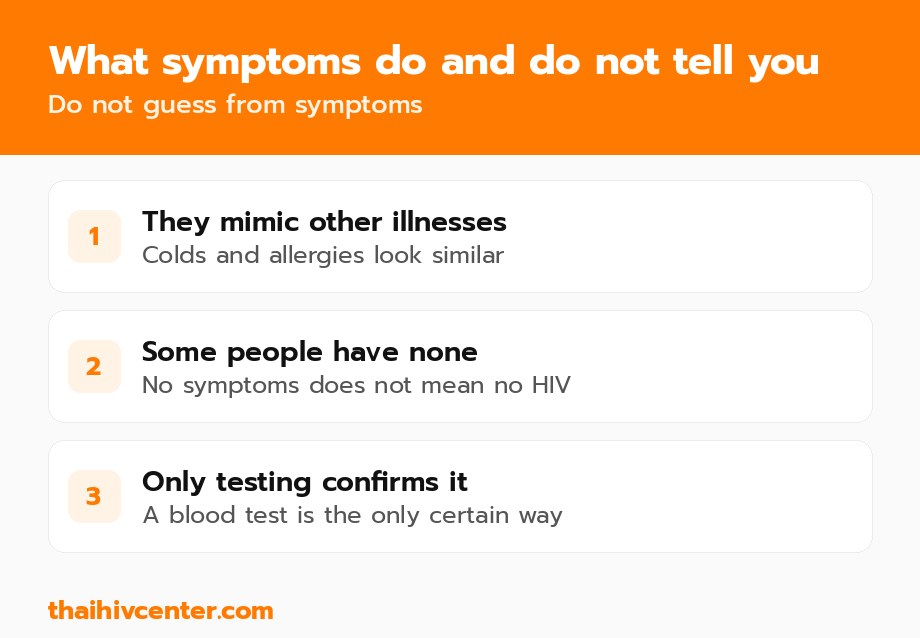
HIV symptoms resemble many common conditions such as colds, allergies or other infections, so having them does not always mean HIV. Conversely, many infected people have no symptoms for a long time, so having none does not mean being free of the virus. For this reason, the only way to know your status for sure is a blood test.
When to test for HIV
If you've recently had a risk, such as unprotected sex, ask staff about the right timing to test, because testing too early in the window period can give a negative result even when the virus is present. Generally, test first at around 2-4 weeks and confirm again at 3 months. To prepare for testing, read Preparing for your first HIV test, and see window-period information in the Testing section.
HIV symptoms in women and men
A common question is whether HIV symptoms differ in women and men. Overall, acute-stage symptoms are similar across genders, such as fever, rash, swollen lymph nodes and fatigue.
Symptoms women may notice additionally
Some women may notice recurrent vaginal infections more often than usual, or changes in their menstrual cycle, resulting from altered immunity. However, these can have other causes too, so they are not a definite indicator.
Symptoms in men
Men usually have general early symptoms such as fever and rash, and sometimes genital sores if another STI is present. Whatever the gender, symptoms alone cannot confirm HIV, only testing can.
The importance of early detection
The reason we emphasise testing over watching for symptoms is that early detection greatly affects long-term health. Starting antiretroviral treatment early protects immunity before it is damaged, so people with HIV stay healthy with a life expectancy close to average. Knowing your status early also helps prevent passing HIV to others, because once treated to undetectable, HIV isn't transmitted through sex. Conversely, waiting until severe symptoms appear before testing may mean the virus has already damaged immunity substantially. Testing when you've had a risk is therefore one of the most worthwhile investments in your health.
Why HIV symptoms differ from person to person
What confuses many people is that HIV symptoms vary greatly between individuals. Some have clear acute-stage symptoms, while others feel almost nothing. This variation has several causes.
Strength of the immune system
Each person's body responds to the virus differently. Someone healthy may have fewer symptoms or recover quickly, while others may have more prominent ones. The immune response in the early phase affects how severe symptoms are.
Viral amount and personal factors
The amount of virus received, age, overall health and other personal factors all contribute to differing symptoms. This is why you shouldn't compare your own experience to someone else's symptoms, because everyone's experience differs, and testing remains the only accurate confirmation.
What illnesses do HIV symptoms resemble?
A key reason symptoms alone can't diagnose is that early HIV symptoms closely resemble many common illnesses. Fever, sore throat and body aches occur in flu, colds and ordinary viral infections. A rash can come from allergies, medication or other skin conditions. Swollen lymph nodes occur in many infections, and fatigue accompanies countless everyday conditions. Because none of these signs is unique to HIV, they cannot on their own point to it. Because of this overlap, seeing these symptoms shouldn't cause panic, but you also shouldn't ignore them if you've had a risk. The best solution is to test for clarity, rather than guessing, which can cause either excessive worry or false reassurance.
After testing, what to do with the result
Once you decide to test, understanding what each result means helps you prepare emotionally and plan.
If the result is negative
A negative result means no virus was found. If you had no risk in the past three months, it is reliable. If your risk was recent, retest after the window period. If you remain at ongoing risk, consider prevention such as consistent condom use, or ask a doctor about PrEP to keep your negative status.
If the result is positive
A reactive screening result must always be confirmed first, and most importantly, a positive result is not the end but the start of treatment that lets you live normally. With today's antiretrovirals, people with HIV stay healthy with a life expectancy close to average. A clinician starts treatment promptly and gives guidance on self-care. Having someone you trust for support during this time helps a lot.
If you have symptoms and had a risk, what to do
If you have worrying symptoms and had a prior risk, the thing to do is not to keep searching symptoms online until anxious, but to get an HIV test. Talking with a public health worker helps assess your risk and advise the right timing to test. If it was a high risk within the last 72 hours, seek advice about emergency medication (PEP) immediately. Taking action to test and consult an expert gives you the real answer and lets you plan your care correctly.
Prevention beats worrying about symptoms later
Rather than worrying and watching for symptoms after a risk, prevention from the start is the best way to care for yourself. Using condoms consistently effectively reduces the risk of HIV and other STIs. For people with ongoing risk, pre-exposure medication (PrEP) is another option that strongly protects against HIV when taken consistently. And if you've had a high risk within the last 72 hours, emergency medication (PEP) can reduce the chance of infection. Knowing about these prevention methods lets you live without constant worry about symptoms and care for your sexual health with confidence. Read more about prevention in the Prevention section.
Frequently asked questions
How many days after infection do symptoms appear?
Acute symptoms, if any, usually appear about 2-4 weeks after infection, but some people have none.
Does having no symptoms mean I'm not infected?
No. Many infected people have no symptoms for a long time. Only a blood test can tell for sure.
I have a rash, should I worry about HIV?
Rashes have many causes, and a rash alone does not indicate HIV. If you're worried and had a risk, test for certainty.
Do HIV symptoms differ in men and women?
Early symptoms are broadly similar, but women may have some additional signs such as recurrent vaginal infections. Testing remains the best confirmation.
How long do acute-stage symptoms last?
They usually last a few days to 1-2 weeks and then fade on their own, which makes many people think they've recovered, even though the virus remains.
Is testing accurate as soon as symptoms appear?
It depends on the test type and time since infection. During the window period a result may not be final; ask staff about the right timing.
Can I have HIV without ever having flu-like symptoms?
Yes. A significant number of people never notice acute symptoms at all, which is exactly why symptoms are an unreliable guide and testing is essential.
If my symptoms went away, does that mean I'm fine?
Not necessarily. Acute symptoms fade on their own as the body enters the latent stage, but the virus remains. Only a test can confirm your status.
Conclusion
HIV progresses through three stages, from the acute stage with possible flu-like symptoms, to the often symptom-free latency, to AIDS if untreated. These symptoms resemble common illnesses and some people have none, so guessing from symptoms is unreliable. The only way to know your status for sure is a blood test, and the good news is that with early detection and treatment, people with HIV can stay healthy and live normal lives. Rather than trying to read meaning into every symptom, the most reliable and reassuring step you can take is simply to test, and to make prevention part of your routine so you can move forward with confidence.
References
- CDC — HIV Basics: Symptoms
- HIVinfo (NIH) — The Stages of HIV Infection
- aidsmap — Symptoms and stages
- National HIV Curriculum (University of Washington)
- HIV myths — Thai HIV Center
This article is for educational purposes and is not a medical diagnosis. If you have concerns, consult a doctor and get tested.