What Is HIV and What Causes It? Getting to Know the Virus Clearly
HIV is a virus that attacks the body's immune system. Its full name is Human Immunodeficiency Virus. Once in the body, it gradually destroys immune cells, and without treatment it can eventually lead to AIDS. But the good news is that HIV today is a condition controllable with medicine and preventable in several ways. This article explains what HIV is, what causes it, how it spreads, how it differs from AIDS, and how it can be prevented or treated, so you understand the virus accurately and without exaggerated fear. Accurate knowledge is an important tool for caring for yourself, preventing infection, and living alongside others with understanding.
What is HIV?
HIV is a virus with a specific target: the human immune system. Unlike ordinary germs, it attacks the very system meant to protect us.
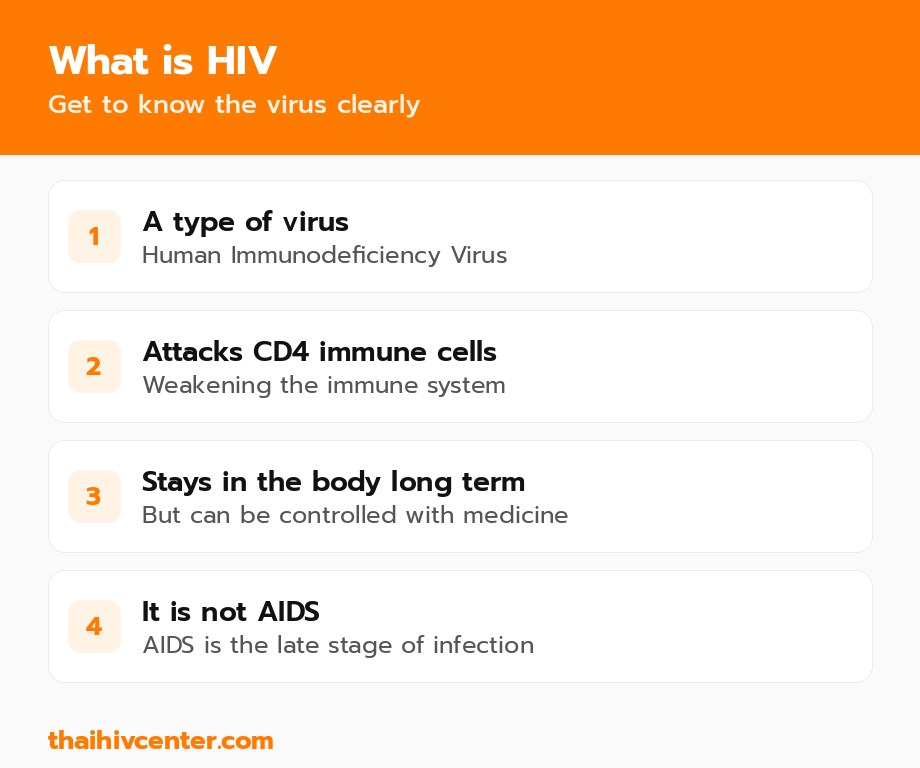
A virus that attacks CD4 immune cells
HIV attacks a type of white blood cell called CD4, which is key to fighting infections. As the virus destroys these cells, the immune system weakens, making the body more vulnerable to other infections. Over time, if the virus is left uncontrolled, this weakening is what allows serious illness to develop, which is why keeping the virus in check with treatment is so effective.
It stays in the body long term but can be controlled
Once infected, HIV stays in the body long term. There is no way to fully eliminate it yet, but antiretrovirals can keep it so low it becomes undetectable, so people with HIV can be healthy. This is a crucial distinction from many other infections. In practical terms, this means the virus being present in the body no longer prevents someone from living a full and healthy life.
What causes HIV and how it spreads
A common question is what causes HIV and how it spreads. Understanding this helps you protect yourself correctly and reduces needless fear.
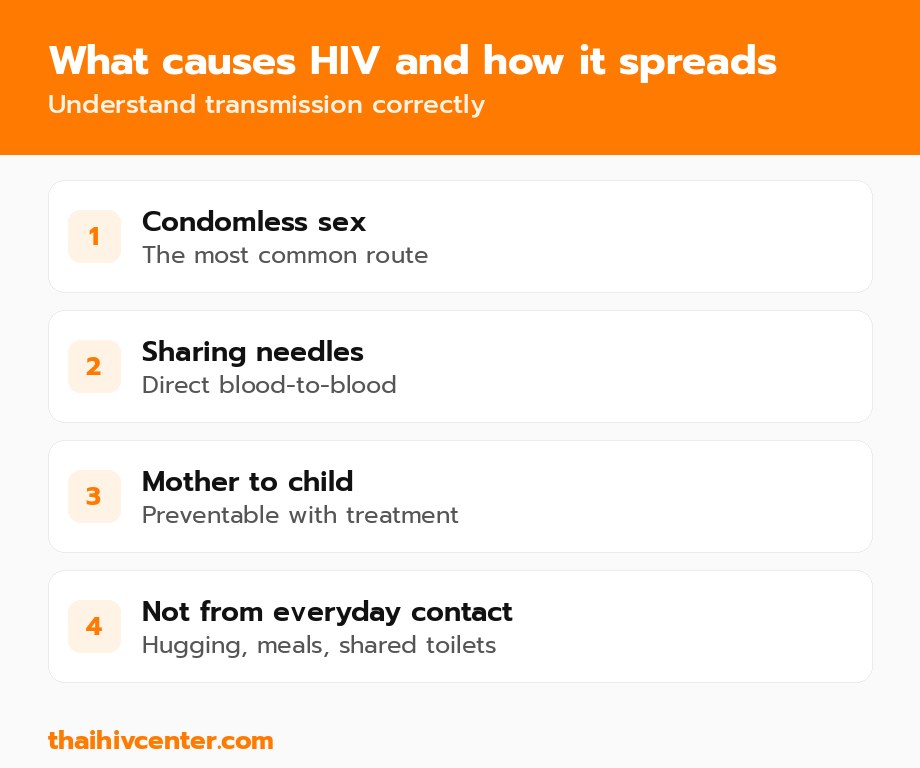
Main routes of transmission
HIV spreads through the exchange of certain body fluids: blood, semen, vaginal and rectal fluids, and breast milk. The most common route is condomless sex, followed by sharing needles, and mother-to-child transmission during pregnancy, birth or breastfeeding, which is preventable with treatment given to the mother and baby. Knowing these specific routes helps everyone understand what does and does not pose a risk, and lets people focus their prevention efforts where they actually matter.
What HIV does not spread through
HIV is not spread through everyday contact such as hugging, handshakes, sharing meals, sharing toilets, or mosquito bites. Understanding this fact helps reduce stigma. Read more at How HIV/AIDS is transmitted.
The origin and history of HIV
HIV was first identified in the early 1980s, and at that time there was no treatment, causing great fear. But over the following decades, medical advances transformed the picture completely. From a once-untreatable disease, it became a manageable chronic condition controlled with medicine. Today, people with HIV who receive treatment can be healthy and live fully, and understanding of transmission and prevention has become much clearer. Looking back shows how knowledge and science turned fear into hope.
Why HIV testing matters
Because many people with HIV have no symptoms for a long time, testing is the only way to know your status for certain. Knowing early has great benefits, if negative, you have peace of mind and can plan prevention; if positive, starting treatment early protects your health and prevents transmission. HIV testing therefore isn't only for people who feel "at risk", it is part of basic health care everyone should do. To learn where and how to test, read Where to test for HIV, cost and free options.
The stages of HIV infection
After infection, HIV progresses through stages. The first is the acute stage in the first 2-4 weeks, when the viral load is high and flu-like symptoms may occur. Next is the latent stage, usually without symptoms, which can last many years, especially with treatment. Without treatment, the virus gradually destroys immunity until it eventually reaches the AIDS stage. Understanding these stages shows why early detection and treatment matter, because treatment can halt the progression.
Who is at risk of HIV?
HIV can affect anyone with risky exposure, regardless of gender, age or occupation. Risk increases in those who have sex without condoms, have multiple partners, have a partner who is infected and untreated, share needles, or have had other STIs. However, having a risk doesn't mean you will definitely get infected, and good prevention greatly reduces risk. What matters is honestly assessing your own risk and testing for HIV regularly if you have any.
How HIV differs from AIDS
Many people use "HIV" and "AIDS" interchangeably, but they differ. HIV is the virus, while AIDS is the late stage of HIV infection where immunity is severely damaged. Having HIV does not mean having AIDS right away, and with treatment, most people with HIV never reach the AIDS stage at all, remaining healthy for decades. Read more at What is AIDS and what causes it.
Summary table: what is HIV
| Aspect | Detail |
|---|---|
| What HIV is | A virus that attacks the immune system (CD4 cells) |
| How it spreads | Condomless sex, sharing needles, mother to child |
| How it doesn't spread | Hugging, sharing meals, shared toilets, mosquito bites |
| Treatable? | Controlled with antiretrovirals; can stay healthy |
Symptoms of HIV infection
After infection, some people have flu-like symptoms in the first 2-4 weeks, such as fever, sore throat, rash and swollen lymph nodes, then usually enter a symptom-free stage that can last years. However, many people have no symptoms, so having none doesn't mean being free of the virus. The only certain way to know is testing. Read more at HIV symptoms from early to later stages.
HIV is preventable and treatable
The most important good news is that HIV is both preventable and treatable today.
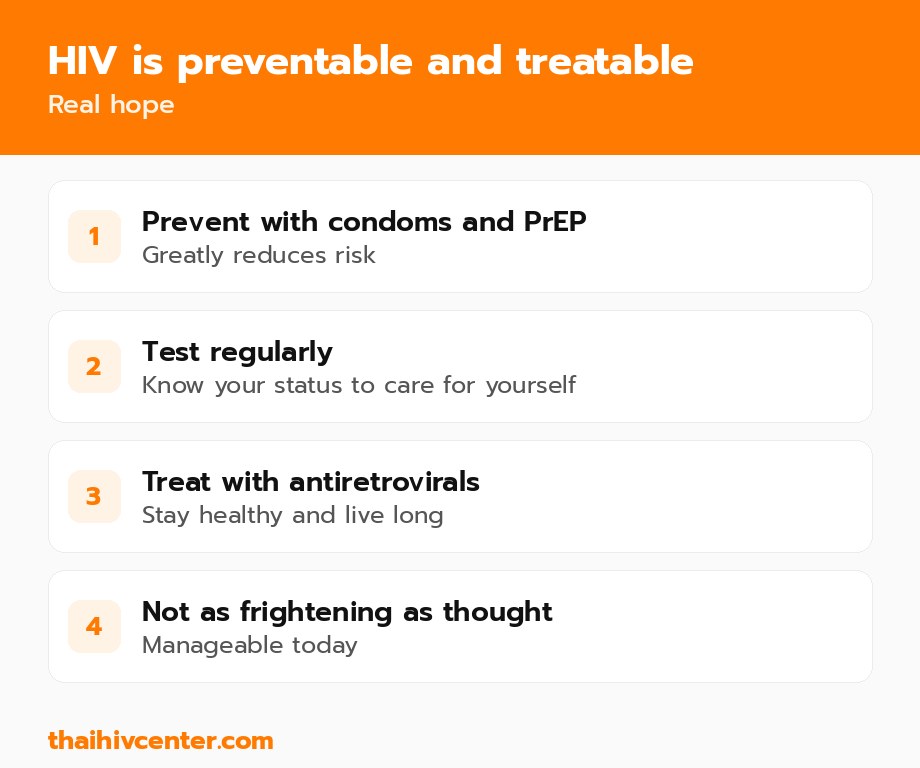
Prevention
HIV can be prevented in several ways, such as using condoms consistently, taking pre-exposure medication (PrEP) for those at high risk, and not sharing needles. Regular HIV testing is also an important part of sexual health care, since knowing your status is what makes every other prevention choice possible.
Treatment
If infected, antiretrovirals can control the virus until it is undetectable, keeping people with HIV healthy with a life expectancy close to average, and not passing HIV on through sex, the principle of U=U. So HIV is not the frightening disease many imagine, but a manageable chronic condition.
How people with HIV live today
With effective treatment, people with HIV today can live like anyone else in almost every way, working, studying, exercising, having relationships and starting families. Women with HIV who receive appropriate treatment can become pregnant and have HIV-negative children. The keys are taking antiretrovirals consistently, attending appointments, and caring for overall health. Support from family and an understanding society plays a major role too. Seeing people with HIV as ordinary people caring for their health is an important step toward a society that is understanding and friendly.
Living with people who have HIV
Because HIV is not spread through everyday contact, living, working or spending time with people who have HIV is completely safe. We can share meals, share toilets, hug and do activities together as normal. People treated to an undetectable level also don't pass HIV on through sex. Treating people with HIV with understanding and respect is not only a matter of human rights but also helps make society friendly and safe for everyone.
Common myths about HIV
Myths about HIV remain a source of fear and stigma, such as the belief that HIV spreads through everyday contact, mosquito bites, or sharing items, none of which is true. Another myth is thinking that getting HIV means dying soon, when today people with HIV who are treated have a life expectancy close to average. And the belief that HIV is a disease of one particular group is incorrect, because HIV can affect anyone at risk. Understanding these facts helps reduce both needless fear and discrimination against people with HIV.
In short: 5 things to remember about HIV
If you remember only a few things about HIV, remember these. One, HIV is a virus that attacks immunity, and is not AIDS. Two, it spreads only through specific routes, not everyday contact. Three, many people have no symptoms, so testing is the only way to know for sure. Four, HIV can be prevented with condoms, PrEP and regular testing. Five, HIV is treatable, and people on treatment stay healthy and don't pass it on, the principle of U=U. Remembering these five points helps you understand HIV accurately and with confidence.
Frequently asked questions
What does HIV stand for?
HIV stands for Human Immunodeficiency Virus.
How long does HIV stay in the body?
Once infected, HIV stays in the body long term. There is no way to fully eliminate it yet, but it can be controlled with medicine.
Can you live a long life with HIV?
With today's treatment, people who take medicine consistently have a life expectancy close to average and live normally.
How do I know if I have HIV?
The only certain way is a blood test, because many people have no symptoms, so testing is the only confirmation.
What's the difference between HIV and AIDS in short?
HIV is the virus, while AIDS is the late stage of HIV infection where immunity is severely damaged. Having HIV does not always mean having AIDS.
How can HIV be prevented?
Through using condoms, taking PrEP for those at high risk, not sharing needles, and testing regularly.
Conclusion
HIV is a virus that attacks the human immune system, spread through specific routes such as condomless sex and sharing needles, not everyday contact. HIV differs from AIDS in that AIDS is the late stage of infection, and having HIV does not always mean having AIDS. Most importantly, HIV today is both preventable and treatable, and people with HIV who receive treatment can be healthy and live fully. Understanding these facts helps reduce both fear and stigma in society. The more accurately people understand HIV, the friendlier and safer society becomes for everyone.
References
- HIV.gov — What Are HIV and AIDS?
- UNAIDS — Fact sheet
- CDC — About HIV
- TheBody — HIV Basics
- How HIV is transmitted — Thai HIV Center
This article is for educational purposes and is not a medical diagnosis. If you have concerns, consult a doctor and get tested.