Can You Get HIV from Oral Sex? The Real Risk Level and Factors to Know
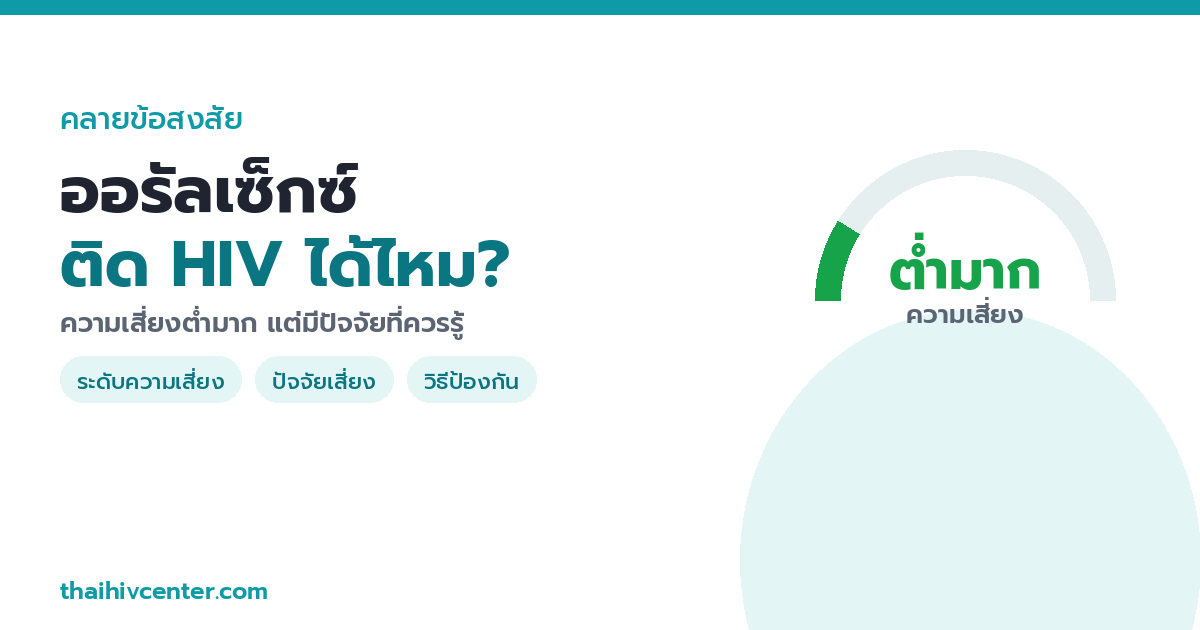
One of the most common HIV questions is can you get HIV from oral sex. The short answer is: it's possible, but the risk is very low compared with vaginal or anal sex. However, the risk is not always zero and can increase under certain conditions. This article helps you understand the real risk level, what raises it, and how to protect or care for yourself, so you can decide with good information — neither over-worried nor careless.
Can you get HIV from oral sex
In theory, HIV can be transmitted through oral sex if infected fluids (such as semen, pre-ejaculate, or vaginal fluids) contact oral mucosa with a sore or abrasion. In practice, though, the chance is very low, because saliva has enzymes and an environment unfavorable to the virus's survival, and the oral mucosa is usually a good barrier. For this reason, oral sex is considered one of the lowest-risk sexual activities for HIV — but it's still worth understanding the factors that can change the risk.
How low is the risk
Compared with other routes, the risk from oral sex is very low. Receptive anal sex carries the highest risk, followed by vaginal sex, while oral sex is so low that transmission is rarely observed. However, "very low" does not mean "impossible," especially when additional factors raise the risk. Understanding this picture helps us avoid overreacting to low-risk activities while staying cautious in higher-risk situations. Read more about how HIV is transmitted for the full picture.
What raises the risk
Although the baseline risk is low, some factors can significantly increase the chance of transmission.
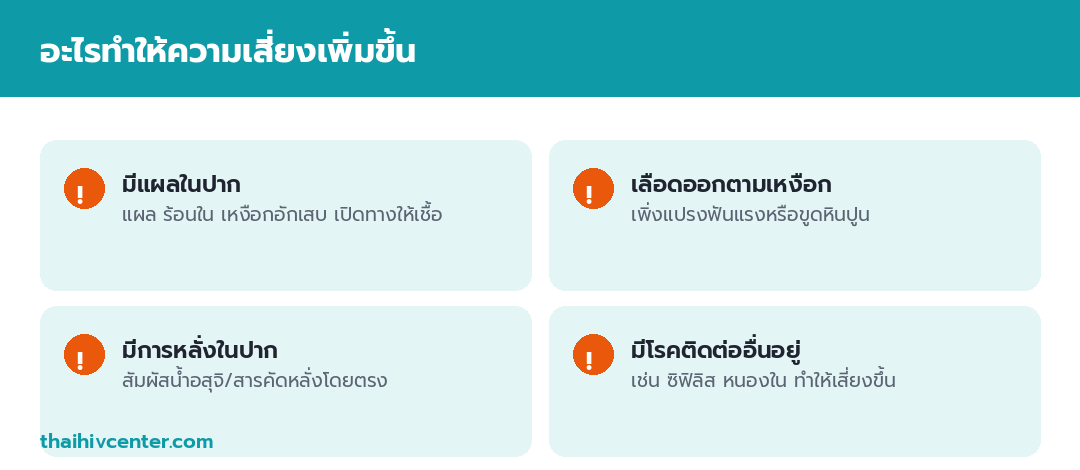
Mouth ulcers — such as canker sores, gum inflammation, or sores from other infections — give the virus an easier path into the bloodstream. Bleeding gums, especially after vigorous brushing or a dental cleaning, also raise risk. Ejaculation in the mouth increases the amount of infected fluid contacting the mucosa, and having another STI such as syphilis or gonorrhea inflames the mucosa and raises susceptibility. Conversely, if the partner with HIV takes antiretrovirals and is undetectable (U=U), the transmission risk is effectively none.
Comparing HIV risk by activity
To make it clearer, the table and image below compare the risk levels of different activities.
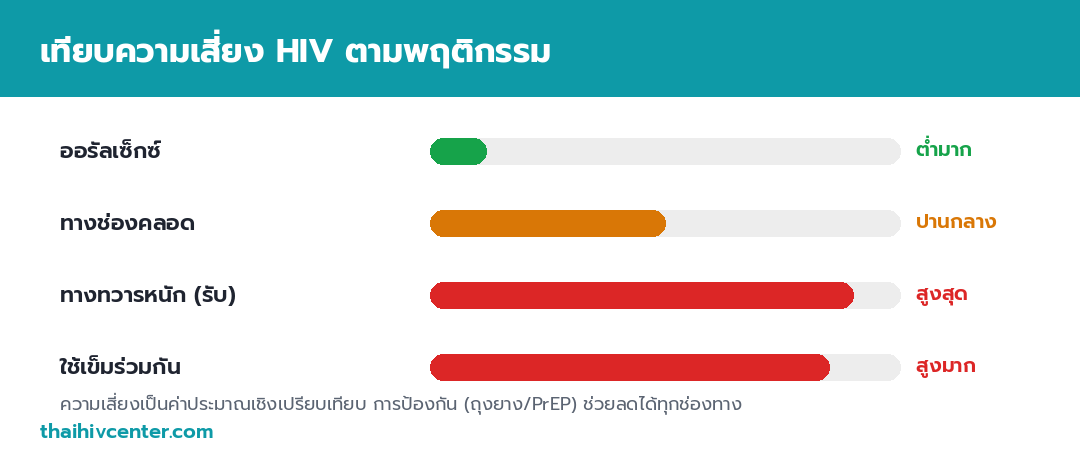
| Activity | HIV risk level |
|---|---|
| Oral sex | Very low |
| Vaginal sex | Medium |
| Receptive anal sex | Highest |
| Sharing needles | Very high |
These are relative estimates, not fixed numbers, but they show that oral sex is in the low-risk group, while needle sharing and anal sex are much higher risk.
Oral sex and other STIs
Although HIV risk from oral sex is low, what many overlook is that oral sex can transmit other STIs much more readily than HIV — such as syphilis, gonorrhea, herpes, and genital warts. These can be transmitted through the mouth and throat and sometimes show no clear symptoms. So sexual-health care should not focus only on HIV but also cover testing for other STIs. If you have a persistent sore throat, mouth sores, or swollen lymph nodes after a risk, consult a clinician.
How to reduce the risk
There are several ways to reduce oral-sex risk. Using a condom or a dental dam is a barrier that reduces direct fluid contact. Avoiding vigorous brushing or flossing before sex reduces the chance of mouth wounds. Not ejaculating in the mouth also lowers risk. In addition, if you have ongoing risk, using PrEP — HIV medicine taken before exposure — greatly reduces worry, and a partner with HIV being treated to undetectable (U=U) is effective prevention. To learn what does not transmit HIV, read more.
Worried you were at risk — what to do
If you're worried after oral sex, first assess by the risk factors above. For ordinary oral sex without mouth sores or ejaculation, the risk is usually very low. But if risk factors were present and it was within the last 72 hours, you can consult about emergency PEP. For certainty, testing for HIV gives the clearest answer. You can see HIV testing methods, use our test date calculator for the right timing, and find a clinic near you.
Frequently asked questions
Is oral sex without ejaculation risky
The risk is even lower without ejaculation, but pre-ejaculate may still contain virus. Without mouth sores, the overall risk is very low.
Does it differ between giving and receiving
Generally, the person giving oral sex (using the mouth) who has mouth sores or receives ejaculation may have slightly more risk than the receiver, but both are low risk.
Can saliva transmit HIV
No, saliva does not transmit HIV, so kissing or ordinary saliva contact is not a risk, unless there is a large amount of blood, which is rare.
What should I test for after risky oral sex
Besides HIV, consider testing for other STIs such as syphilis and gonorrhea, especially if you have a sore throat or mouth sores.
Summary
Oral sex carries a very low risk of HIV compared with other routes, but not zero. The risk rises with mouth sores, bleeding gums, ejaculation in the mouth, or other STIs. Oral sex can also transmit other STIs more readily than HIV. Protection with condoms, dental dams, PrEP, and the U=U principle reduces risk. If worried, don't guess — get tested for certainty, and if you had a high risk within 72 hours, consult about PEP immediately. Find a clinic near you to start caring for your sexual health.