How Is HIV Transmitted? Every Route You Should Know
A question many people wonder about is how HIV is transmitted. Correct understanding of transmission routes is the foundation of protecting yourself and reducing stigma against people living with the virus. The truth is that HIV spreads through only a few routes and is not as easily transmitted as many fear. This article walks you through every route HIV can spread, the fluids involved, and the factors that increase risk.
How HIV spreads
HIV can only spread when an infected fluid in a high enough amount enters another person's body through soft mucous membranes (such as the vagina, anus, or mouth) or directly into the bloodstream. The virus cannot pass through intact skin or survive long in air, water, or on surfaces, so transmission occurs in fairly specific situations.
The 4 main routes HIV can spread
There are only a few real routes of HIV transmission, which can be summarized as four main ones.
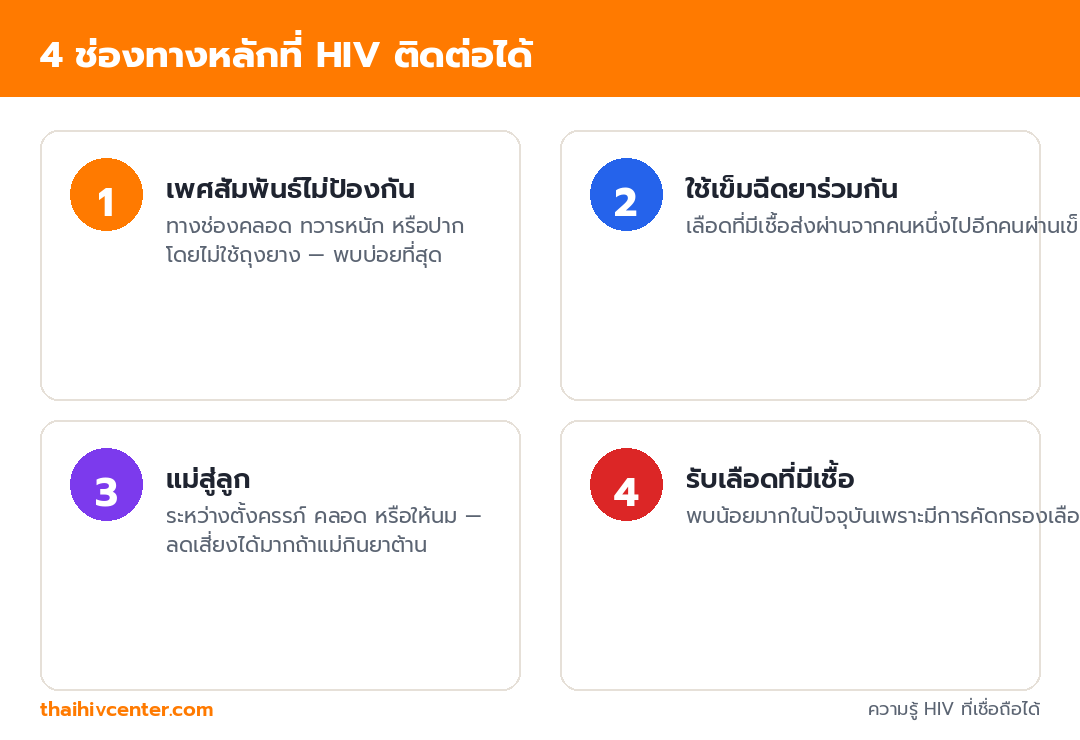
1. Unprotected sex
This is the most common route — vaginal, anal, or oral sex without a condom. The virus in semen or vaginal fluid can enter the body through soft membranes, so using condoms correctly greatly reduces the risk.
2. Sharing needles or injecting equipment
When needles or equipment with an infected person's blood are used, that infected blood can pass directly into another person's bloodstream. Not sharing needles and using clean equipment is very important.
3. Mother to child
The virus can pass from an infected mother to her child during pregnancy, delivery, or breastfeeding. However, if the mother receives appropriate antiretroviral treatment and medical care, the risk to the child is greatly reduced.
4. Receiving infected blood or blood products
Infection from receiving blood occurred in the past but is now very rare, because donated blood is rigorously screened before use.
Body fluids that carry HIV
Not every fluid of an infected person can transmit the virus. HIV is found in a high enough amount to be transmitted only in certain fluids.
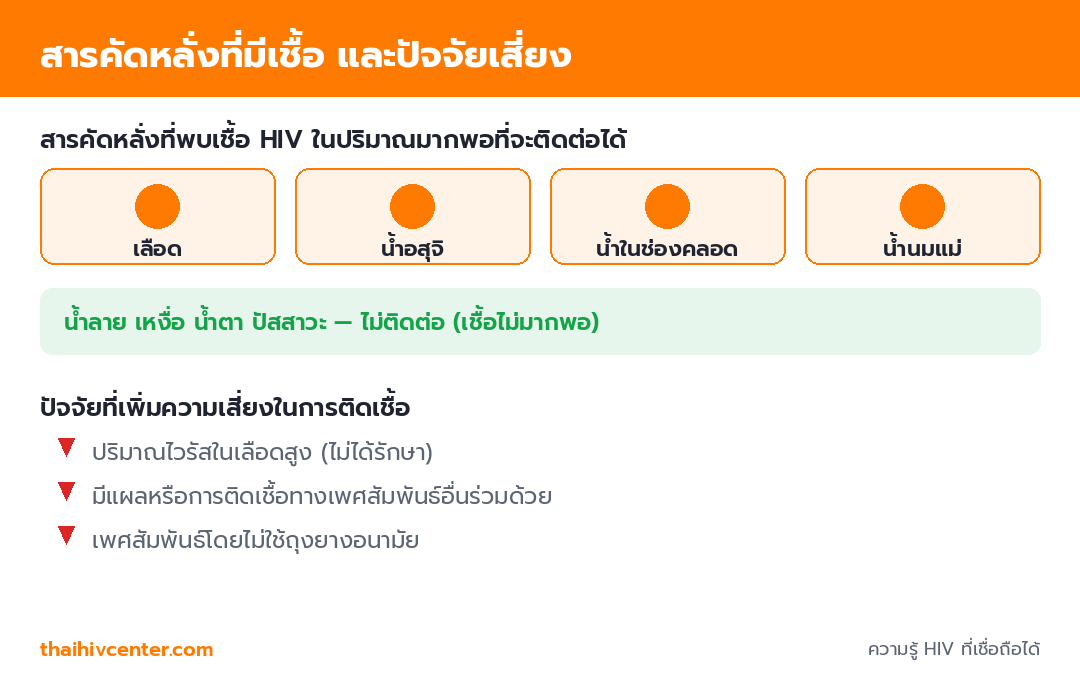
The fluids that carry enough virus are blood, semen, vaginal fluid, and breast milk, while saliva, sweat, tears, or urine do not cause infection because they do not contain enough virus.
Factors that increase the risk of infection
Even with the same route of exposure, the risk of infection can differ based on these factors:
- High viral load — people with the virus who are untreated often have a high viral load, raising the chance of transmission. Conversely, those treated to viral suppression do not pass it on through sex.
- Wounds or other sexually transmitted infections such as syphilis or gonorrhea increase the chance of getting HIV.
- Having sex without a condom increases direct contact with fluids.
How HIV is NOT transmitted
Just as important to understand is that HIV does not spread through everyday contact. You cannot get it from hugging, shaking hands, sharing plates, spoons, cups, or toilets, coughing, sneezing, or mosquito bites. This understanding lets us live normally and respectfully with people who have HIV. Read the basics in what HIV is and the difference between HIV and AIDS.
How to prevent HIV infection
The good news is that every transmission route can be prevented:
- Use condoms correctly every time you have sex.
- PrEP is pre-exposure medicine for people at risk. Read more in what PrEP is.
- PEP is emergency medicine after exposure, which must start within 72 hours.
- Do not share needles, and get regular sexual-health check-ups.
What to do after a possible risk
If you think you have just had a risk, don't wait. Within the first 72 hours, taking PEP may help reduce the chance of infection, and after that you should test for HIV at the appropriate time, because there is a "window period" before the result is accurate. Read more in the HIV window period, and find a testing site at search for an HIV testing clinic.
Frequently asked questions
Can kissing transmit HIV
No. Saliva does not contain enough virus to cause infection, so kissing is not a route of transmission.
Is sharing a toilet or swimming pool risky
No. HIV does not spread through toilets, swimming pools, or shared objects.
Can you get HIV from having sex just once
Yes. If the other person has the virus and there is no protection, even a single time carries a chance of infection, so protecting yourself every time matters.
Can someone on antiretroviral medicine with a suppressed viral load still spread it
No. Under U=U, people who are suppressed to undetectable levels consistently do not pass it on through sex.
Summary
HIV spreads only through blood and certain body fluids, via four main routes: unprotected sex, sharing needles, mother to child, and receiving infected blood. Once you understand these routes, you can protect yourself and stop fearing what does not actually transmit. If you have a risk or want peace of mind, find an HIV testing clinic near you and start caring for your sexual health today.