The Difference Between HIV and AIDS That Many People Get Wrong
Many people use HIV and AIDS interchangeably as if they were the same thing, but they are clearly different. Understanding this difference is not just about terminology — it helps reduce the fear, misunderstanding, and stigma faced by people living with the virus. This article explains how HIV differs from AIDS, how the disease progresses, and why testing positive for HIV today does not mean you will inevitably develop AIDS.
What is HIV
HIV stands for Human Immunodeficiency Virus. It is a "virus" that destroys a type of white blood cell called CD4, a key part of the immune system. When you have HIV, the virus is in your body, and without treatment it gradually destroys immunity over time. Read the basics in what HIV is.
Importantly, HIV is an "infection" that can be controlled with antiretroviral medicine. Many people who receive continuous treatment stay healthy and live normally.
What is AIDS
AIDS stands for Acquired Immunodeficiency Syndrome. It is a "set of conditions" in a late stage that occurs when HIV has weakened immunity so severely that the body can no longer fight off other infections normally, leading to opportunistic infections and serious complications.
Simply put, AIDS is not another virus — it is the most severe stage of HIV infection, which occurs only without appropriate treatment over a long period.
The main differences between HIV and AIDS
To see it clearly, compare the two on key points — from meaning and status to diagnosis and treatment.
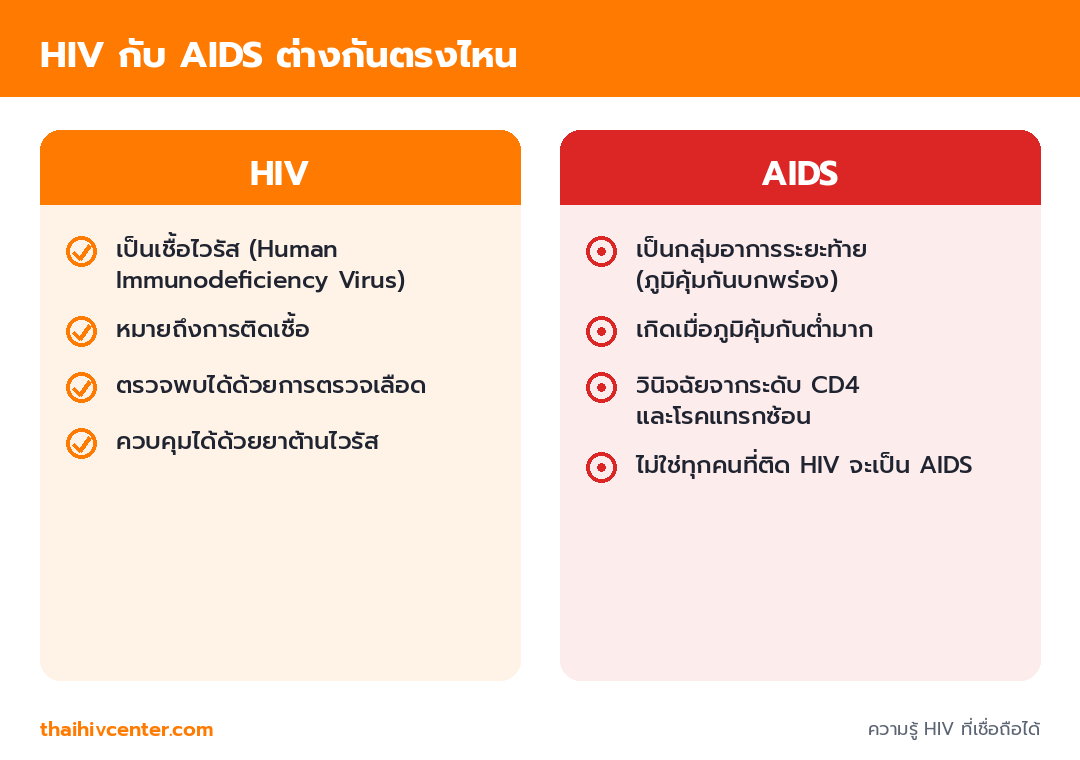
You can see that HIV is the "cause" and AIDS is the "late-stage outcome." If the disease is not left to progress untreated, a person with HIV need not reach the AIDS stage.
Why having HIV does not mean having AIDS
This is where people most often misunderstand. In the past, HIV infection was seen as equal to AIDS and a death sentence, but with today's advances in antiretroviral medicine, that picture has changed completely. People who are diagnosed early and take their medicine consistently can suppress the virus to very low levels, letting immunity recover and preventing progression to AIDS.
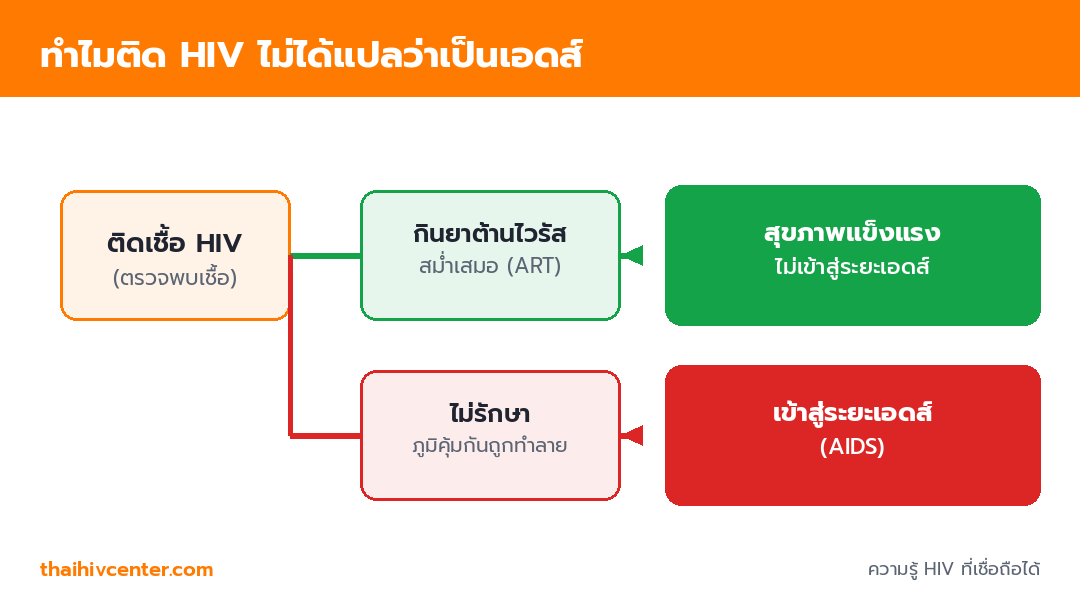
In other words, AIDS today is "preventable" if a person with HIV can access treatment. Early detection is therefore the single most important key to health and quality of life.
How the disease progresses from HIV to AIDS
Without treatment, HIV infection progresses through three main stages:
- Acute stage — in the first weeks after infection, some people have flu-like symptoms and others have none.
- Latent stage — the virus keeps damaging immunity silently, usually without symptoms, and can last for years.
- AIDS stage — immunity is severely weakened, and the body is vulnerable to opportunistic infections and complications.
The time it takes varies from person to person, but starting antiretroviral medicine can stop or slow this process effectively.
Common misunderstandings about HIV and AIDS
- "Having HIV means having AIDS immediately" — Not true. HIV infection and AIDS are different stages, and treatment prevents progression to AIDS.
- "Having AIDS means dying soon" — Today, even people who reach the AIDS stage can be treated, and many regain good health with antiretroviral medicine.
- "HIV and AIDS spread from being near someone" — Not true. Neither spreads through everyday contact.
How to know your HIV status
The only way to know for sure is a blood test, which today is convenient, fast, and confidential. Early detection lets you start treatment in time, before immunity is badly damaged. See an overview in HIV testing, and to find a site near you, search for an HIV testing clinic that suits you.
Preventing HIV from progressing to AIDS
The key is continuous antiretroviral therapy (ART), which suppresses the virus to undetectable levels, letting immunity recover and preventing the AIDS stage. There is also the concept of U=U (Undetectable = Untransmittable), which states that when the virus is suppressed to undetectable levels consistently, it is not passed on through sex. Read more in what U=U is, and see a treatment overview in HIV treatment.
For those not yet infected but at risk, prevention with PrEP and using condoms also greatly reduces the chance of infection.
Frequently asked questions
What is the difference between HIV and AIDS in short
HIV is a virus, while AIDS is a late-stage set of conditions caused by severely weakened immunity.
How long after HIV does AIDS develop
It varies from person to person and can take years without treatment, but taking antiretroviral medicine prevents progression to AIDS.
Can AIDS be treated
Yes. Even after reaching the AIDS stage, it can still be treated with antiretroviral medicine, and many people regain better health.
Is someone on antiretroviral medicine still considered to have HIV
The virus is still in the body, but if suppressed to undetectable levels consistently, they stay healthy and do not pass it on through sex.
Summary
HIV is a virus, while AIDS is a late-stage set of conditions. Understanding this difference helps us view HIV correctly and without prejudice. Most importantly, with early detection and continuous treatment, people with HIV can stay healthy and avoid the AIDS stage. If you have a risk or want to know your status, find an HIV testing clinic near you and start caring for your health today.