HIV Testing Before Marriage or Insurance: What to Test and How to Get a Medical Certificate
Starting married life or planning the future with insurance often comes with a health check-up, which frequently includes HIV testing. A pre-marriage health check helps couples understand each other's health and plan a family with confidence, while pre-insurance testing is part of an insurer's assessment process. This article explains what pre-marriage and pre-insurance testing should include, how to get a medical certificate, where to test, and what to know about HIV results and insurance, so you can prepare correctly and with peace of mind.
Why test before marriage or insurance
A pre-marriage health check has several benefits: it helps couples know each other's health status, detect conditions that could pass to a partner or future child, and plan for children appropriately. Testing is not about catching each other out but caring for health together with understanding. Pre-insurance testing is part of the process an insurer uses to assess health risk before issuing a policy, and the tests and conditions may vary by company and policy type. Understanding the purpose of testing helps you prepare and comply correctly.
What to test before marriage
A pre-marriage health check usually covers several items beyond HIV.
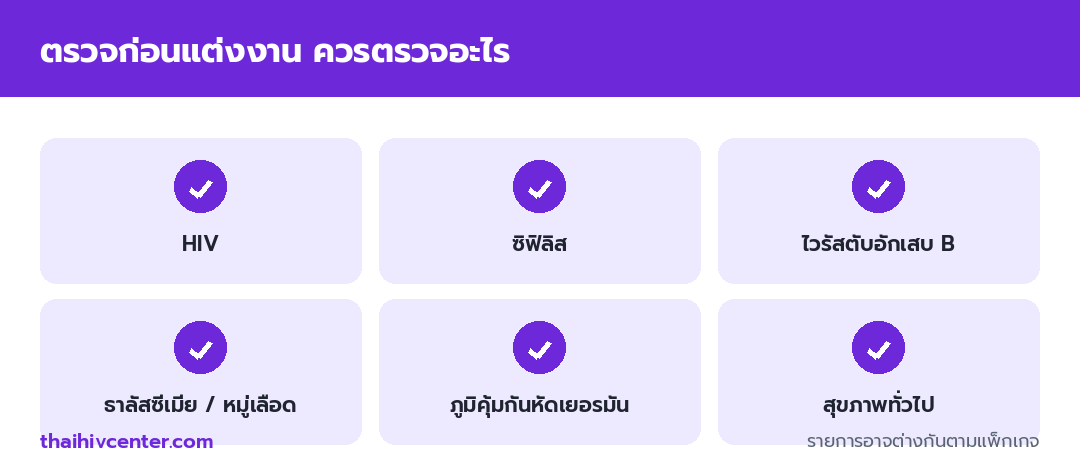
Commonly tested items include HIV to know the status and plan prevention, syphilis which is an STI worth testing, hepatitis B which can transmit through sex and blood, thalassemia and blood group which matter for family planning, rubella immunity especially for women for pregnancy safety, and a general health check. The actual items may vary by each facility's package. Consulting a doctor helps choose what suits your couple. To understand HIV testing in detail, read HIV testing methods.
How pre-insurance testing differs
Pre-insurance testing has a different purpose from pre-marriage testing, as part of an insurer's underwriting process. The tests and conditions depend on the policy type, coverage amount, and each company's policy. In some cases, additional health checks or a health questionnaire may be required, and some policy types may include HIV testing. Importantly, before buying insurance, ask the insurer directly what needs to be tested, the conditions, and the documents required, so you can prepare exactly as specified and clearly understand your rights and policy terms.
Steps to get a medical certificate
Getting a medical certificate for marriage or insurance has a straightforward process.
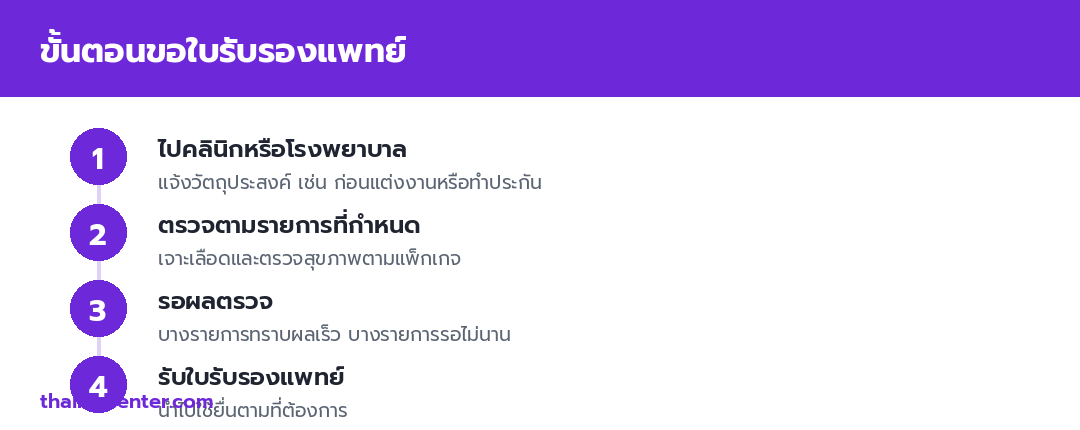
First, go to a clinic or hospital and clearly state your purpose — such as pre-marriage testing or for insurance — so staff arrange appropriate tests. Second, undergo the specified tests, usually a blood draw and health check. Third, wait for results; some are known quickly, others may take a short time. Finally, receive the medical certificate stating the results for your purpose. It's advisable to ask in advance about timing and required documents, and bring your ID card. You can find a clinic near you for convenient testing.
Where to test, and comparing the two
The table below compares pre-marriage and pre-insurance testing.
| Aspect | Pre-marriage | Pre-insurance |
|---|---|---|
| Purpose | Care for a couple's health and family planning | Support underwriting |
| Common tests | HIV, syphilis, hepatitis, thalassemia, etc. | As specified by the insurer |
| Who sets the tests | The couple and doctor | The insurer |
| Document received | Medical certificate / results | Medical certificate in the required form |
Testing can be done at public hospitals, private hospitals, and clinics; costs and details vary by location and package. For HIV testing, some places offer free services under coverage — read more in free HIV testing. And if you want to test for other STIs too, read what to test in an HIV and STI check-up.
HIV results and insurance
The matter of HIV results and insurance is worth understanding carefully. Underwriting conditions and the effect of health status on a policy vary by company and policy type. In some cases, health status may affect the terms or assessment. So the best approach is to ask the insurer directly about details and conditions before deciding, to clearly understand your rights. Importantly, whatever the result, knowing your health status benefits your self-care, and if HIV is detected, there is now effective treatment available free under coverage, keeping you healthy and able to live normally.
Preparing before testing
Before testing, prepare your ID card and ask in advance whether you need to fast, because some general health tests may require fasting. Ask about the result timing and cost to plan. If testing for insurance, bring the insurer's form or requirements so the doctor can complete them fully. Good preparation makes the testing process smooth and ensures you get the documents you need. If you had an HIV risk recently, understand the window period, which may affect interpretation.
Frequently asked questions
Is HIV testing mandatory before marriage
It depends on the package and your choice, but HIV is recommended and often included, because it helps with a couple's health planning.
Does a medical certificate take long
Many items give quick results and a certificate can be issued the same day or soon, depending on the tests and facility.
Does insurance always require HIV testing
Not always — it depends on the type and conditions of the insurer. Ask the company directly.
Where can I get a pre-marriage check
At public and private hospitals and clinics; many have dedicated pre-marriage check packages.
Summary
Health check-ups before marriage and insurance often include HIV testing along with other conditions like syphilis and hepatitis. Pre-marriage testing helps care for a couple's health and family planning, while pre-insurance testing follows the company's conditions. Getting a medical certificate is straightforward — state your purpose, do the tests, and receive the certificate. For insurance, ask the company directly about conditions. Whatever the result, knowing your health status benefits self-care. When ready to test, find a clinic near you to start.