Rapid Test vs Gen 4 vs NAT: Which HIV Test Should You Choose?

Thinking about testing for HIV, many people get confused by the choices — Rapid Test, fourth-generation (Gen 4), and NAT — each called “good” for different reasons. The truth is that no single test is “best” for everyone; each is designed to excel in a different area. What matters more is choosing the one that fits your situation.
So this article isn’t about crowning a winner — it’s a decision guide. It compares all three visually, shows where each shines, and helps match “your situation” to “the right test.” It draws on WHO, U.S. CDC, and Thai Department of Disease Control guidance. See the overview at HIV testing.
The three methods in brief
- Rapid Test — usually detects antibodies, fast and easy, available in clinics and as home self-tests; its strength is convenience.
- Gen 4 (antigen/antibody) — detects both p24 antigen and antibodies at once, so it’s earlier than antibody-only testing; today’s standard screening test.
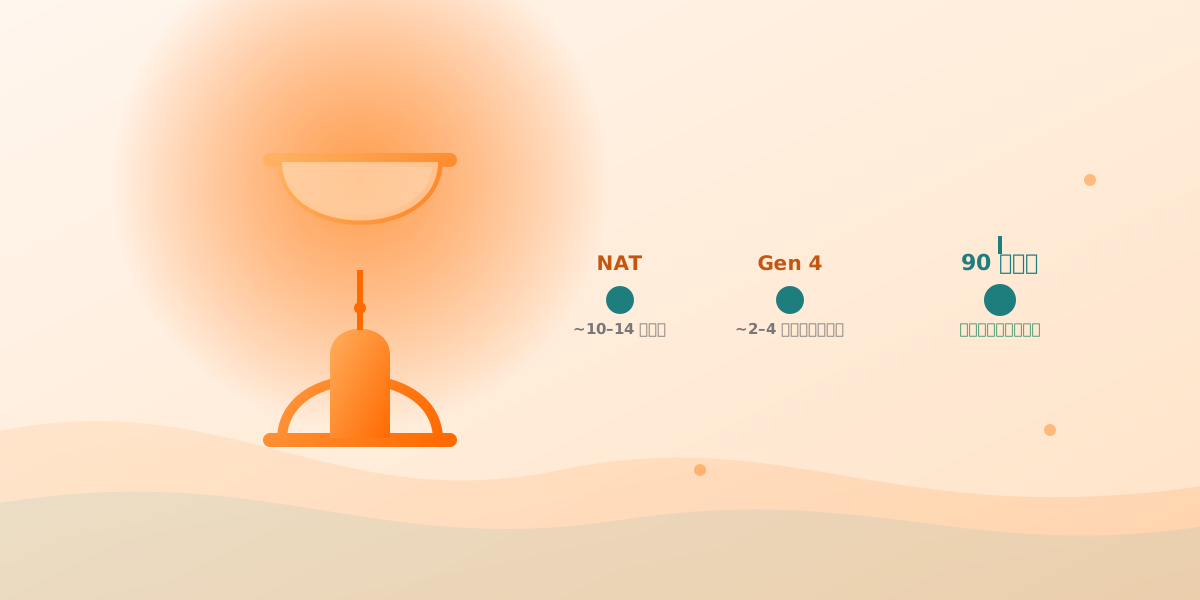
- NAT — finds the virus’s genetic material directly, detecting it earliest, but usually costs more and needs a specialist lab.
For deep dives, see types of HIV test. Here we focus on choosing.
A visual comparison
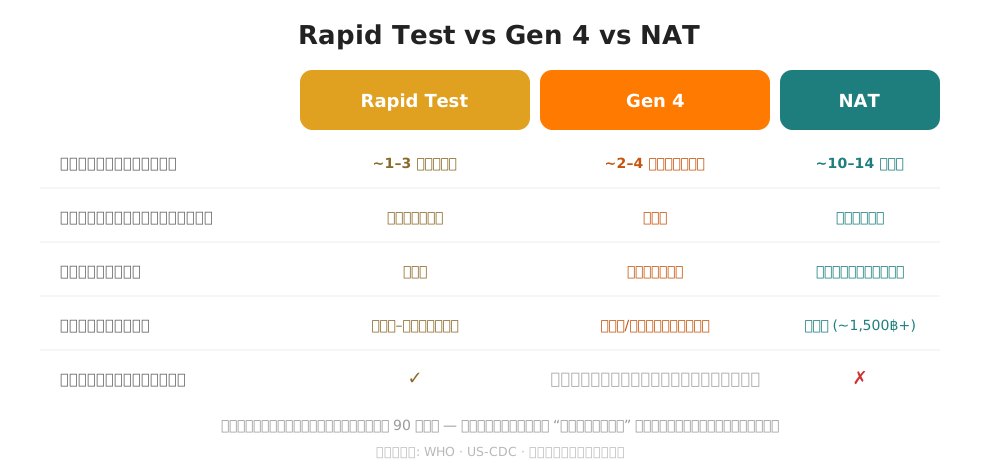
| Feature | Rapid Test | Gen 4 | NAT |
|---|---|---|---|
| Earliest detection | ~1–3 months | ~2–4 weeks | ~10–14 days |
| Early accuracy | Moderate | High | Highest |
| Convenience | High (DIY) | Moderate | Needs a lab |
| Cost | Low–moderate | Free/a few hundred baht | High (~1,500 THB+) |
| Home testing | Yes | Mostly at facilities | No |
No column wins every row — which is exactly why the choice depends on what you value.
Each excels in a different area
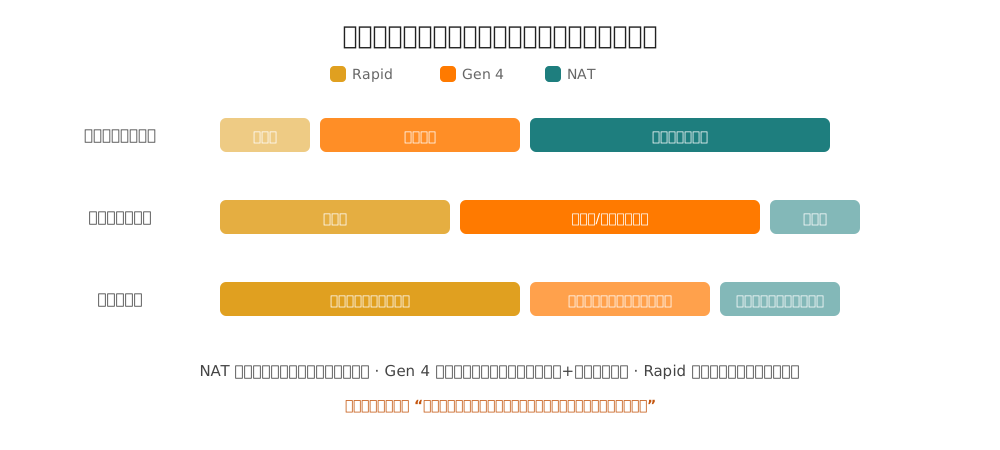
- NAT wins on speed — earliest detection, good for a recent risk needing a fast answer.
- Gen 4 wins on value and accuracy — balanced and often free under coverage.
- Rapid Test wins on convenience — DIY and private.

Like travel: NAT is the express train (fast but pricier), Gen 4 is reliable public transport (good value), and Rapid Test is walking yourself (convenient and free). All reach the destination — for different people.
So which should you choose?
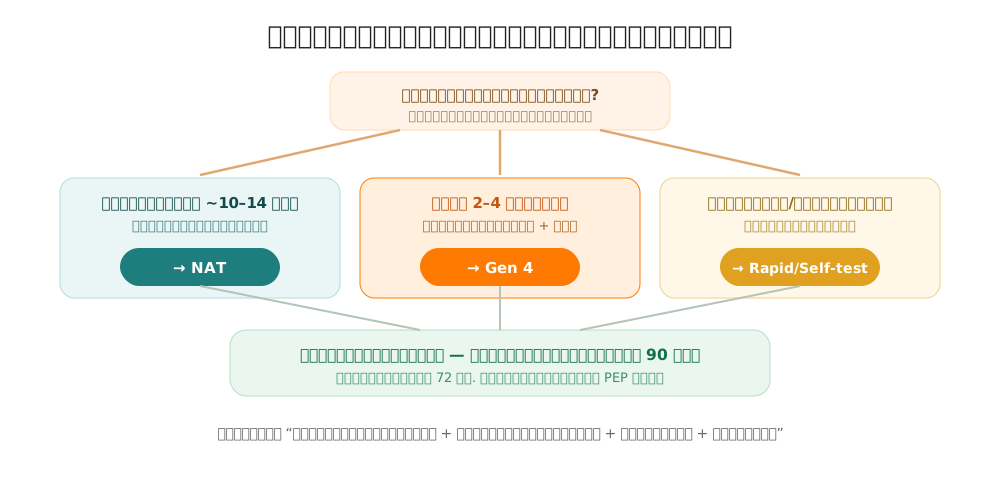
1) Very recent risk (~10–14 days), want the fastest answer → consider NAT. Earliest detection, but costs more and needs a facility that offers it.
2) Past 2–4 weeks, want a free standard test → consider Gen 4. For most people the most sensible choice — accurate, accessible, and often free twice a year for Thai nationals.
3) Prioritise convenience and privacy → consider a Rapid Test or self-test. A good starting point — just confirm any abnormal result at a facility.
Factors to weigh
- Days since exposure — the most important factor.
- Speed needed — NAT if very fast; Gen 4 if you can wait.
- Convenience and privacy — home vs facility.
- Budget — Gen 4 often free; NAT costs more.
- Accuracy needed now — test near each method’s ideal window.

Often the answer isn’t the “best test” but the “right test for now” — and some people use more than one over time.
Example scenarios: which to choose
1 — Recent risk, very anxious: a risk ~12 days ago and you can’t sleep for worry, wanting the fastest answer. NAT is reasonable here — earliest detection, at higher cost — though a negative still needs a later confirmation.
2 — Not in a hurry, want a free test: a risk ~1 month ago, no rush, and you want to use free coverage. Gen 4 fits best — accurate at this point, accessible, and often free twice a year.
3 — Privacy first: a clinic isn’t convenient now or privacy matters a lot. Starting with a rapid/self-test at home is a good first step — just confirm any abnormal result at a facility.
These show the “best” method shifts by person: same question, different answers depending on context.
What applies to every method
- All have a window period — use the test date calculator.
- Confirm at 90 days — conclusive for all methods.
- A reactive screen always needs confirmation — especially rapid/self-tests.
- Within 72 hours — seek PEP first.
Conclusion
Rapid Test, Gen 4, and NAT each excel differently: NAT is fastest but pricier, Gen 4 is balanced and often free, and Rapid Test is convenient and private. None is best for everyone. Choose by days since exposure, speed, convenience, and budget — and remember every method has a window period, should be confirmed at 90 days, and if within 72 hours, ask about PEP first. Start at the calculator and see options at HIV testing.