Free HIV Testing in Thailand: Where Can You Use Your Coverage?

A common misconception is that HIV testing always costs a lot, making people hesitate. In fact, every Thai national has the right to test for HIV free under universal health coverage, at no cost for standard screening. This right is designed so everyone can access testing easily and learn their status sooner.
This article gathers the key facts: what free testing covers, where to get it, how to use your right, and what to know before testing. It draws on Thailand’s National Health Security Office (NHSO), the Department of Disease Control, plus WHO and the U.S. CDC. See testing locations at clinics and test sites.
Thai nationals can test free
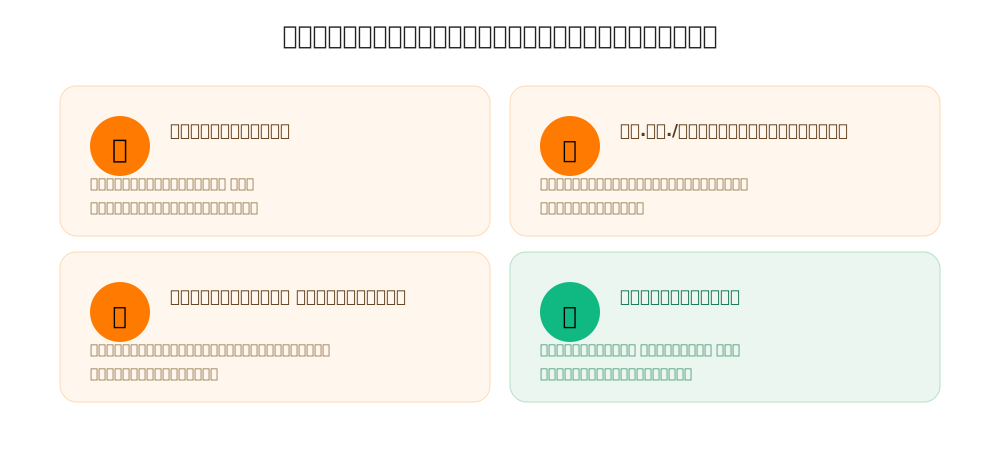
Under Thailand’s universal coverage, every Thai national can test for HIV free twice a year — whether under the Gold Card (universal coverage), Social Security, or civil-servant schemes — using just a national ID card to verify eligibility. The aim is to encourage testing without cost worries, since testing more and knowing sooner means timely care or prevention. See the overview at HIV testing.
What free testing covers
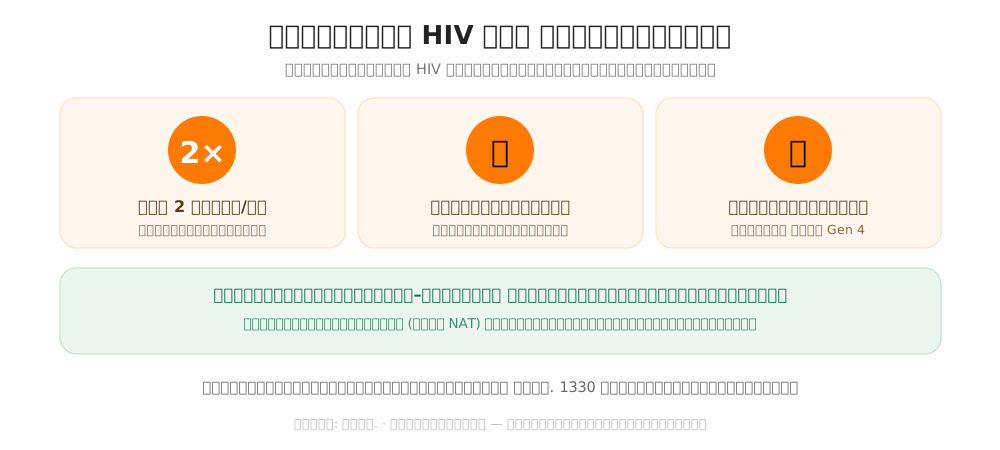
- Free testing twice a year — for all Thai nationals.
- National ID verifies eligibility — no complex paperwork.
- Standard screening — e.g. the accurate, widely used Gen 4 test.
- Pre- and post-test counselling — with referral to care if needed.
However, special tests like NAT (early detection) may cost extra or be used by indication. To compare methods, see types of HIV test.
Where to get free testing
- State hospitals — both your scheme’s hospital and public hospitals generally.
- Sub-district health units and community clinics — primary care near home in many areas.
- Thai Red Cross Anonymous Clinic — a privacy-focused option with counselling.
- Call before you go — confirm service, hours, and documents.
Since details vary by area, see the updated list at clinics and test sites or call the NHSO hotline 1330 for clarity.
How to use your free-testing right
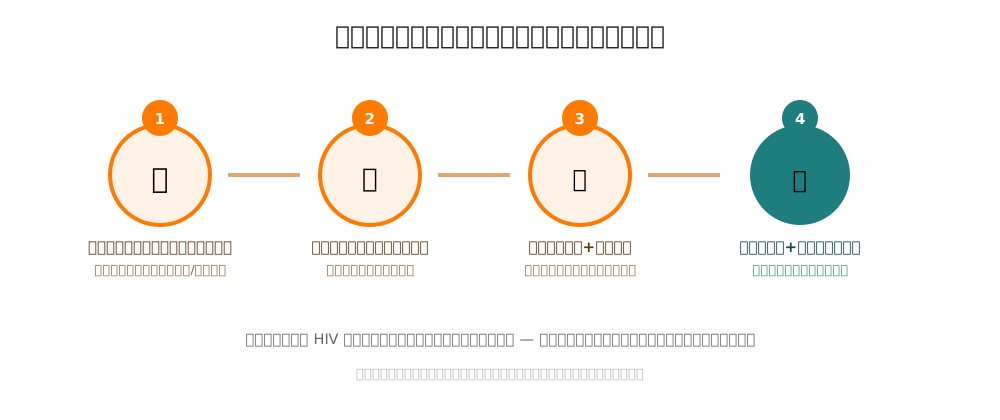
- Contact a facility — ask about HIV testing and hours.
- Bring your ID card — to verify free-testing eligibility.
- Counselling and testing — by standard methods.
- Get your result and advice — and plan next steps if needed.
One plus: HIV testing needs no fasting, so go when convenient; and an abnormal result always gets confirmatory testing for certainty.
How many free tests, and when do you pay?
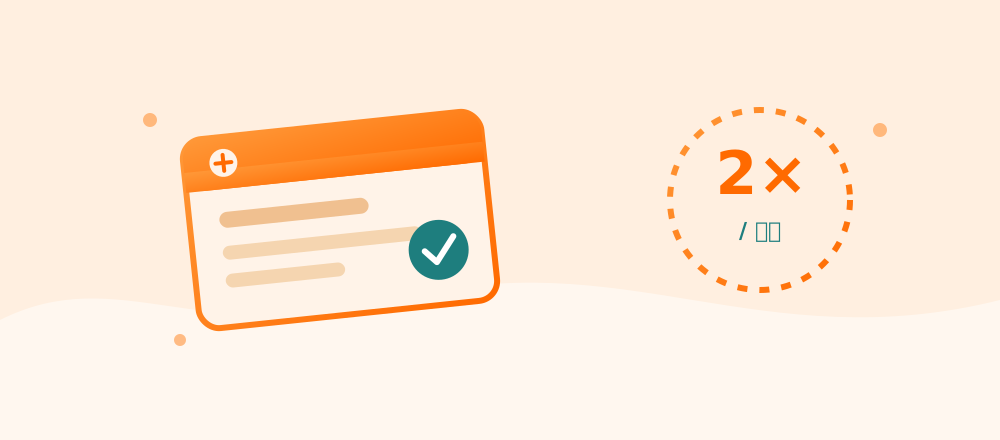
Generally the right covers two free tests a year, enough for most people. Some cases may involve extra cost:
- Testing beyond your yearly entitlement — more frequent testing may cost.
- Special tests — e.g. NAT often costs extra or is by indication.
- Other add-on services — depending on the facility’s policy.
For clarity, ask your facility about terms and any cost ahead of time. The table below summarises what’s free under coverage and what may cost.
| Item | Under coverage (free) | May cost |
|---|---|---|
| Standard screening (e.g. Gen 4) | Free twice a year | — |
| Pre- and post-test counselling | Included | — |
| Testing beyond your yearly entitlement | — | May cost |
| Special tests (e.g. NAT) | By indication | Often costs |
No Gold Card, or a foreigner?
Those under Social Security or civil-servant schemes can still access testing under their own entitlements. Foreigners or those outside Thai universal coverage may face different terms and costs by facility. Ask the facility directly about your case; some civil-society organisations offer friendly, accessible services; and anonymous clinics are another private option. Whatever your status, don’t let cost be a barrier — accessible options always exist.
Who should test, and how often?
Although everyone has the right to free testing, many wonder whether they should test. In principle, anyone can test as appropriate, and some groups benefit from regular testing: those who’ve had a risk (e.g. unprotected sex) should consider testing once past the window; those wanting reassurance, since testing to know your status is good proactive care; and those with ongoing risk, who may benefit from periodic testing as advised. On frequency, coverage allows two free tests a year, enough for most people, though the right frequency varies with risk — so ask staff or a doctor for advice suited to you. Importantly, HIV testing isn’t something to wait for symptoms about, since early infection may have no clear symptoms; testing as appropriate is the best way to know your status.
Why free HIV testing matters
Free testing isn’t just about saving money — it matters for both individual and public health. It lowers the cost barrier, so many who once hesitated feel able to test; it encourages earlier awareness, meaning timely care or prevention and better long-term health; and it helps control transmission, since more people testing and knowing their status improves prevention overall. In practice, cost is often a main reason people delay testing until later than ideal. Free testing under universal coverage removes that barrier and makes HIV testing a normal, accessible part of health care — so using your right is both self-care and a contribution to community health.
What to know before testing
- No fasting — HIV testing isn’t affected by eating; go anytime.
- Count the days since your risk — to clear the window; use the calculator.
- Bring your ID card — to verify free-testing eligibility.
- Within 72 hours of a risk — seek PEP first.
Conclusion
Every Thai national can test for HIV free twice a year under universal coverage, using a national ID card — covering standard screening and counselling. Get it at state hospitals, sub-district health units, community clinics, and the Thai Red Cross Anonymous Clinic. Testing needs no fasting, and an abnormal result always gets confirmation. Don’t let cost be a barrier — knowing your status early is key to care. See locations at clinics and test sites and the overview at HIV testing.