What Causes a False-Positive HIV Test Result?

Getting an HIV result that reads “possible infection” is frightening. But it’s crucial to understand from the start that a reactive screening result is not a diagnosis — screening tests can give a “false positive,” reading as possible infection when the person isn’t actually infected.
This article explains what a false positive is, what can cause it, why testing is designed in two steps to filter these out, and what to do if your screen is reactive. It draws on WHO, U.S. CDC, and Thai Department of Disease Control guidance. See the overview at HIV testing.
What is a false positive?
A false positive is a result reading “possible infection” when the person isn’t infected. It usually happens at the screening step, which is designed to be sensitive to catch as many possible infections as it can — a side effect being an occasional positive without real infection. That’s why medicine never diagnoses from a screen alone; confirmation always follows. See the stages of HIV.
What can cause a false positive?
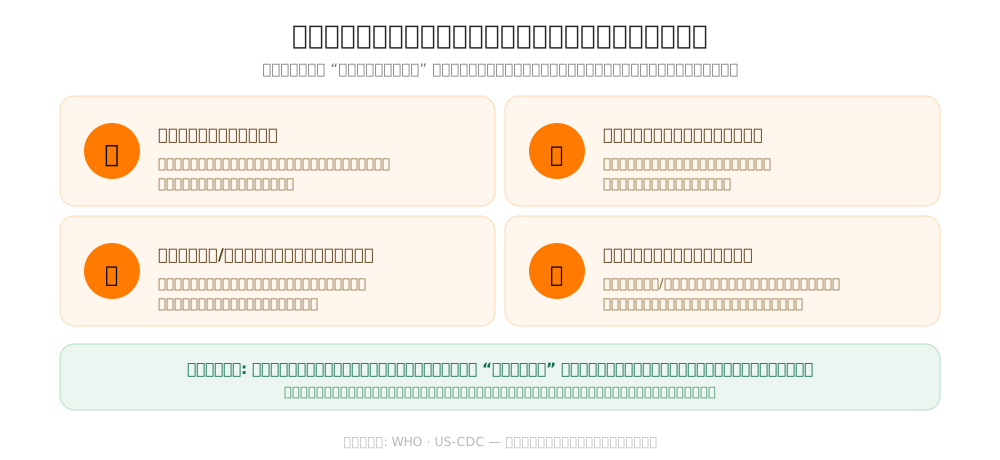
- Pregnancy — certain bodily states can sometimes interfere with a screen.
- Autoimmune conditions — some antibodies can cross-react, skewing a screen.
- Vaccines or other infections — in some cases these can stimulate immunity that affects a screen.
- Technical factors — improper collection/reading or lab-process errors.
These cause a “false positive” at screening — not that you’re infected — and confirmation filters them out.
Why testing has two steps
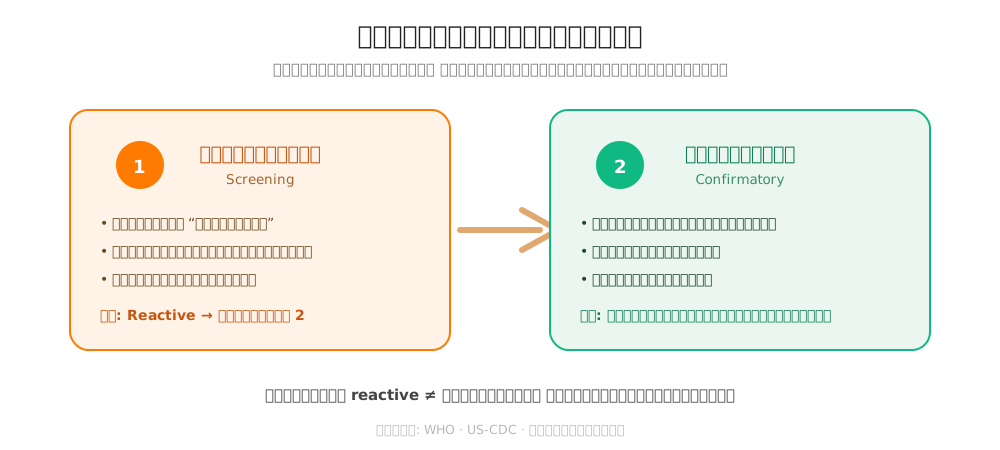
- Step 1 — Screening: designed to be sensitive to catch broadly; this is where false positives can occur. A reactive result goes to step 2.
- Step 2 — Confirmatory: uses a more specific method to filter out false positives and give a conclusive answer.

This two-step system keeps false positives from becoming misdiagnoses. A reactive screen is a “signal to test further,” not a verdict.
How common are false positives?
Modern HIV tests are highly accurate, so screening false positives aren’t common, and confirmation usually filters them out. Still, because screening favours sensitivity, some can occur — normal for medical screening generally, not just HIV. So a reactive screen doesn’t mean you’re infected; don’t jump to conclusions before confirmation.
What to do if your screen is reactive
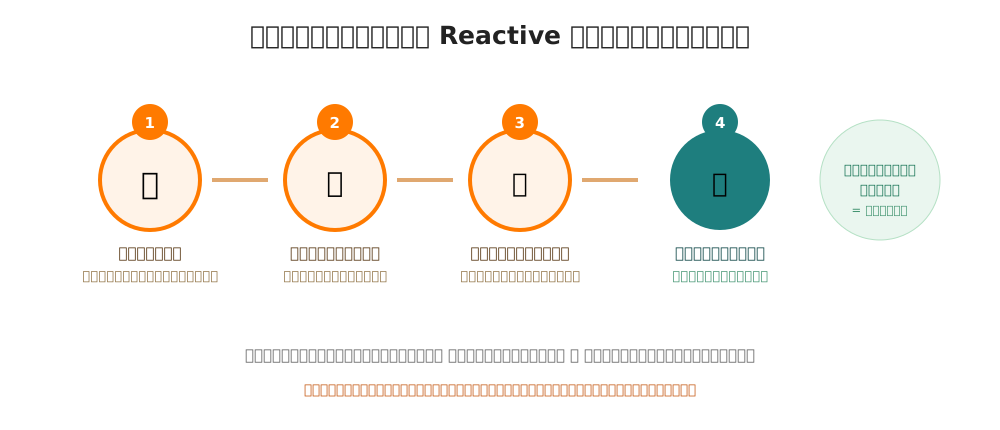
- Stay calm — a screen isn’t a verdict; it may be a false positive.
- Get confirmatory testing at a facility — don’t self-conclude.
- Get counselling — staff can explain and plan next steps.
- Wait for confirmation before any decision — don’t start medication or over-worry prematurely.
If confirmation is negative, the screen was a false positive and you’re not infected; if it confirms infection, knowing early means timely care.
What confirmatory testing involves
Many wonder what “confirmatory testing” means. In short, it’s additional testing with a more specific method than screening, to distinguish clearly whether a reactive screen is a real infection or a false positive. It uses a method different from screening (so the same error isn’t repeated), is carried out by a facility with staff who can explain the result, and gives a conclusive answer you can plan around. So even though screening can produce occasional false positives, confirmation acts as a “second gate” that filters them out — which is why you shouldn’t conclude from a screen alone and should always get confirmation when a screen is reactive.
Don’t panic

The wait between screen and confirmation can be stressful, but knowing false positives are real and the system is built for them helps. If you feel very anxious, talking to a health worker is a good option — you don’t have to face the worry alone.
What about false negatives?
Conversely, a false negative reads “not infected” when the person is — usually from testing too early in the window period. To reduce this, test at the right time (use the calculator), retest and confirm at 90 days if you tested early, and if within 72 hours, seek PEP first. Both false positives and false negatives are managed by right-timing and confirmation.
| Feature | False Positive | False Negative |
|---|---|---|
| Result | Reads possible infection, but not infected | Reads not infected, but is |
| Main cause | Bodily state / technical factors | Testing too early in the window |
| Where it appears | At screening | When testing before the right time |
| How it’s managed | Confirmatory testing | Right timing + retest at 90 days |
Conclusion
A false positive is a screening result reading “possible infection” when you’re not infected — from causes like pregnancy, autoimmune conditions, vaccines/other infections, and technical factors. That’s why HIV testing is two-step: screen then confirm. A reactive screen is a signal to test further, not a verdict. If your screen is positive, stay calm, get confirmation, and seek counselling — and remember false negatives from early testing exist too. Start at the calculator and see options at HIV testing.